Share the post "32-inch: the rumor that’s making drivetrains grind"
In stores as well as at trade shows, the discourse has become almost unanimous. Bike shop owners repeat it: MTB is losing ground, while gravel captures attention, sales, and imagination. A field impression? Not only. Industry figures confirm it: growth is no longer on the full-suspension side, but rather with these hybrid bikes presented as the new freedom on two wheels. And yet… In MTB, there are two absolute certainties: your next bike will be better than your current one, and every novelty is a heresy… until it becomes the norm. And for some time now, a strange number has been circulating in the paddocks, wash stations, and post-ride coffee stops. A number whispered like a swear word: 32.
By Jeff Tatard – Photo: @jefftatard
Thirty-two inches. Nothing official. No flamboyant press release. Just insistent, persistent, almost unsettling rumors.
Because yes, that question, we’ve already asked it. And not just once.
MTB: The Evolution of Wheels (and those who dared)1990s – early 2000s; 26 inches: The Golden Age 2008 – 2012; 29 inches: The Heretics 2013 – 2016; 27.5 inches: The Compromise 2018 – 2022; 29 inches everywhere 2026 – ?; 32 inches: The Whispers |
When 26 inches wasn’t even debated
There was a time, not so long ago, when 26 inches reigned supreme. It was simple: smaller, more agile, more playful. Then one day, someone dared to say that bigger rolled better. The 29-inch arrived. And with it, panic.
“Too big,” “not fun,” “impossible to place,” “good for straight lines and soulless people.”
Result? Today, everyone rides 29… explaining that they always knew it was the future.

27.5 inches: Changing without changing too much
And between the two, some chose the path of wisdom, or caution. The famous 27.5 inches.
The intermediate option. The diplomatic compromise. Large enough to evolve, small enough not to offend purists. A perfect size to say: I’m changing, but not too much.
32 inches: The unsettling rumor
So naturally, when the number 32 starts circulating, the same reflexes return. The same skeptical looks. The same definitive statements based on absolutely zero field testing.
And yet, technically, the reasoning is clear. Almost annoyingly logical.
A larger wheel means better obstacle clearance, increased stability, and superior efficiency on fast terrain. In short, exactly the arguments that shifted the world of XC and marathon towards 29 inches. The difference? This time, frames can handle it, geometries are designed for it, and physics are no longer a surprise on descents.
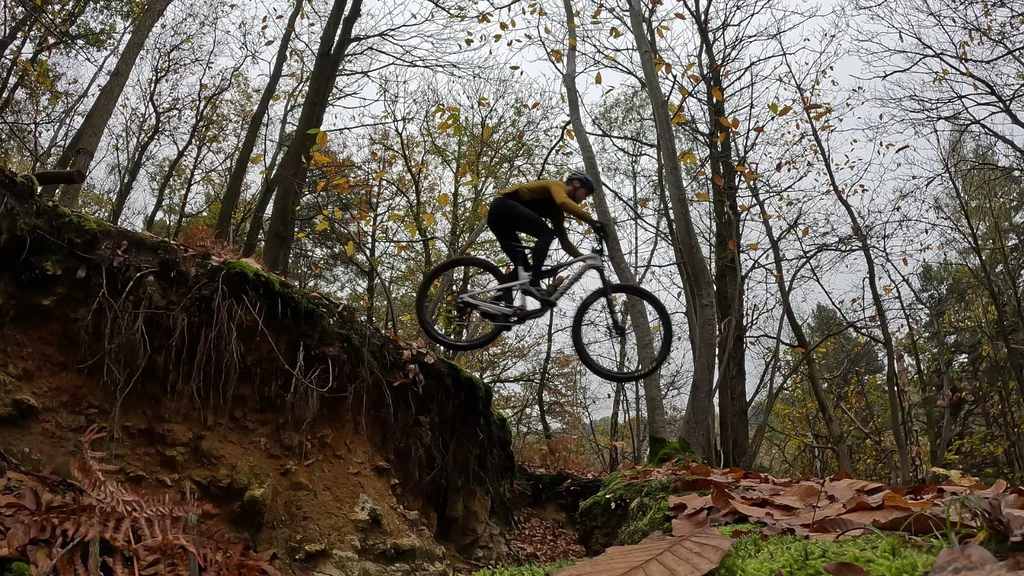
Be careful, we’re not talking about a planetary revolution here. The 32-inch won’t land on all trails tomorrow, nor will it replace the 29 by divine decree. These rumors mainly concern modern XC, long distances, powerful riders, and sometimes… tall riders. Because a bike, however innovative, remains a matter of morphology and terrain.
And perhaps that’s where this rumor is interesting. It doesn’t seek to impose. It suggests. It tests. It observes. It does exactly what MTB has always done: explore how far one can go without losing the essence.
Mock today, ride tomorrow
So no, at 3bikes, no one is saying that 32 inches is the absolute future. But to mock this idea today is to risk riding it tomorrow, swearing it was obvious all along.
These are just rumors.
But in MTB, the biggest revolutions often started… next to the coffee machine.
=> And if you want to know more about this very possible evolution
Share the post "32-inch: the rumor that’s making drivetrains grind"