Share the post "Long-term test of Wheel Mastery Silver Race rim-brake wheels"
While the “classic” combo of mid-range wheels from a few years ago (aluminum rims, rim brakes) is becoming increasingly rare, it remains today the preserve of custom wheel builders to meet very specific requirements. We therefore find Wheel Mastery (formerly Asterion) which is now able to offer a more modern equivalent of the Silver Race presented here. Low sensitivity to crosswinds, reduced weight, contained price, ease of maintenance and longevity, not to mention easy handling uphill, were the expected characteristics for this type of wheel. And in this case, the result lived up to expectations over the 15,000 km covered.
Text: Olivier Dulaurent – photos: 3bikes.fr
The starting point of the test was a phone call to Benoit Stupici, one of the founding members of Asterion, an entity that has become Wheel Mastery as detailed in a recent article. For many years at the forefront of custom wheels, Benoit knows a lot about his favorite subject, whether it’s for wheels capable of withstanding the worst off-road treatment or for a very stiff and aerodynamic setup for the road.
A truly custom build
Systematically during the first exchange, it is first the future user who speaks and describes their physical level, their cycling experience and, of course, their requirements: on what type of road the wheels should perform, at what intensity, and above all, what qualities are expected. This is where the dialogue becomes a very precise search, because not only are the cyclist’s expectations identified over the course of dozens of minutes, but it is also asked what type of pedaling will be associated with the wheels. Because while it is obvious that a heavy/powerful cyclist riding on flat terrain needs different wheels than a light/less powerful cyclist riding in mountain passes, in practice and for major brand wheels, the equipment is the same. Beyond this assessment, it will be noted that the Sunday cyclist tackling Mont Ventoux will use the same wheels as Tadej Pogacar, even though the constraints are obviously not the same.
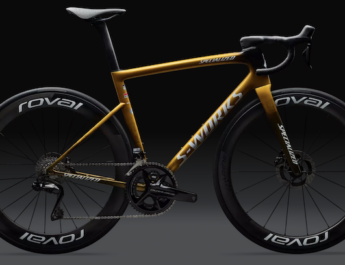
In this case, I had specified to Benoit my expectations for the build dedicated to a Specialized Tarmac S-Works SL6 rim-brake bike, whose handling I found too twitchy on descents with 40mm carbon rims. Stability then became potentially problematic, especially when there was wind. A characteristic probably linked to the bike’s size (61mm) and the fact that Specialized significantly steepens the head angle in large sizes (74° in this case) for the benefit of maneuverability but to the detriment of stability.
To avoid this characteristic, Benoit then guided me towards an unconventional build. Indeed, I first explained that my pedaling style was rather smooth and that the wheels were intended for riding preferentially in mountain passes rather than on the windy plateaus of Picardy.
The builder guided me towards a type of rim that is officially no longer in the catalog but whose characteristics were expected to meet the specifications: aluminum rims, low profile, light, “voluntarily” not very stiff, easy to live with and not very sensitive to crosswinds.
In return, I had to accept less aerodynamic performance, lower stiffness than heavier and wider models, and consequently, the pedaling had to be as described, with limited changes in pace.
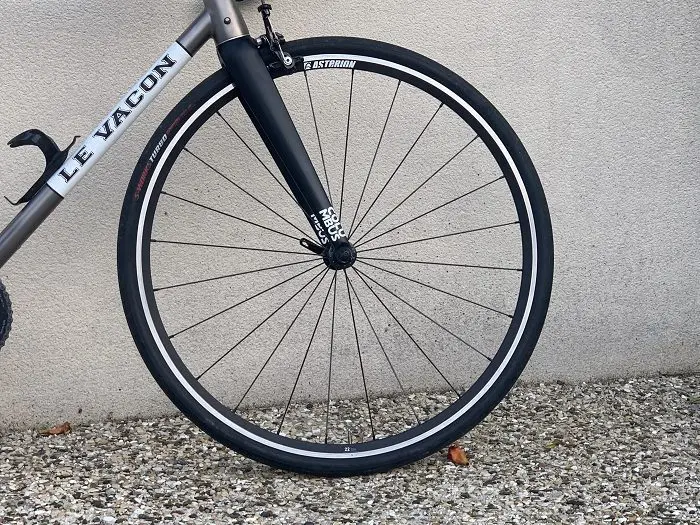
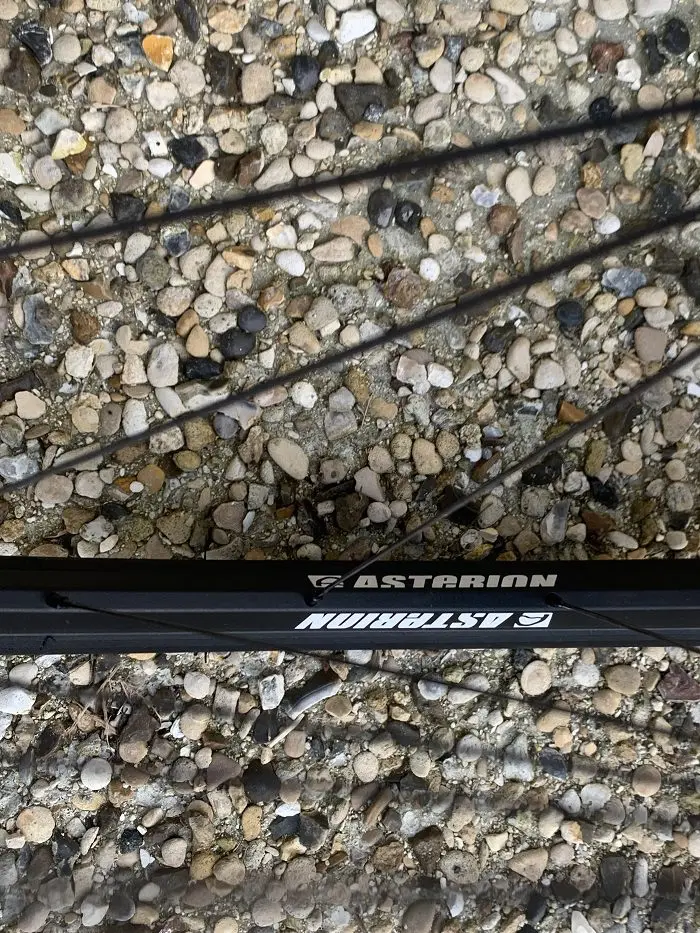
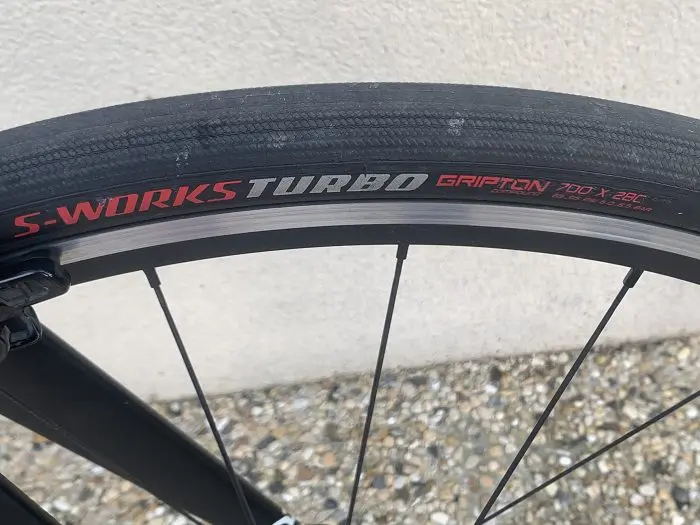
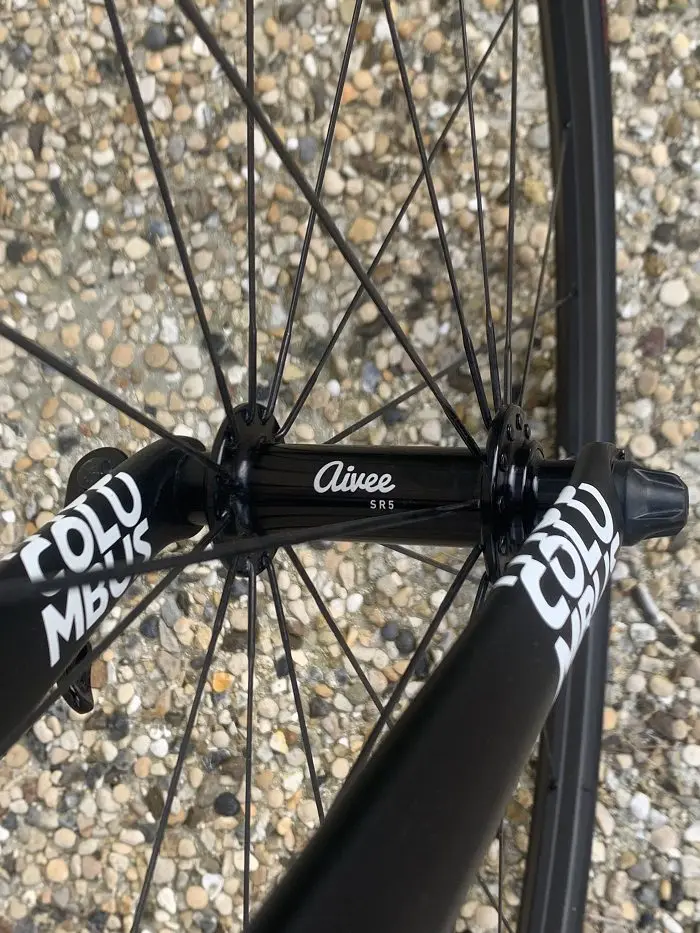
The wheels thus assembled weighed 1371 g on the scale, including rim tape. In terms of external width, the “old” standards were used with an external width of only 18 mm and a rim depth of 22 mm, making the wheels quite aesthetically outdated, especially since they generally accommodated tires with a 23 to 25 mm profile. And even with a 28 mm tire as on the front for the test (the rear remained at 25 mm for space reasons in front of the seat tube), the volume generated by the tires is no longer up to date. The hubs are the excellent Aivee, known for being light and durable.
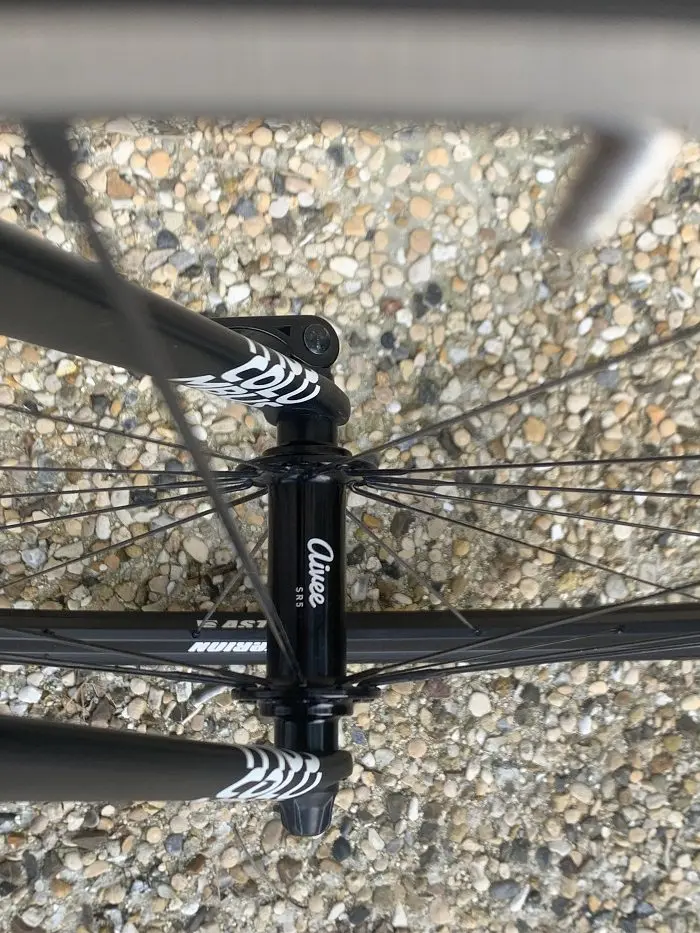
Thus, the wheels have accumulated a total of 15,000 km to date, and continue to be ridden regularly, today with a Levacon titanium frame, which tends to accentuate the certain flexibility of the wheels. It should be noted that no wobble has been observed despite not always perfect roads, and the fluidity of the bearings has remained as on the first day.
On the road
First of all, and regarding the primary quality sought, namely stability, the contract was perfectly fulfilled. In size 61, the Specialized Tarmac SL6 did not suddenly become very stable, but it became significantly more forgiving in case of wind combined with high speeds. The front end thus proved to be significantly less “twitchy,” benefiting increased confidence and more pleasure in descending.
On the flats as well as on descents, this reduced sensitivity to crosswinds allowed for greater peace of mind during rides, especially if they were prolonged. In terms of performance, it is absolutely necessary to separate the scenarios: for riding at a steady pace and on fairly steep mountain climbs (beyond 6/7%), the wheels allowed the pedaling to be accompanied, regardless of the level of fatigue. There was therefore no sensation of “hitting a wall” against the setup. Thus, the perceived feeling was of extremely light wheels, much lighter than the 1371 g actually measured.
Conversely, on flat terrain and for fast riding, possibly with surges on gentle slopes, the setup proves too flexible and the aero is obviously not what one appreciates with 60mm carbon rims. The most striking aspect is during phases where high power is required, such as during sprints or short climbs tackled as quickly as possible. But these characteristics are not flaws because, on the one hand, they were not part of the specifications, and on the other hand, the “color” was announced. In this sense, these are “extreme” wheels because they are adapted to a specific use.
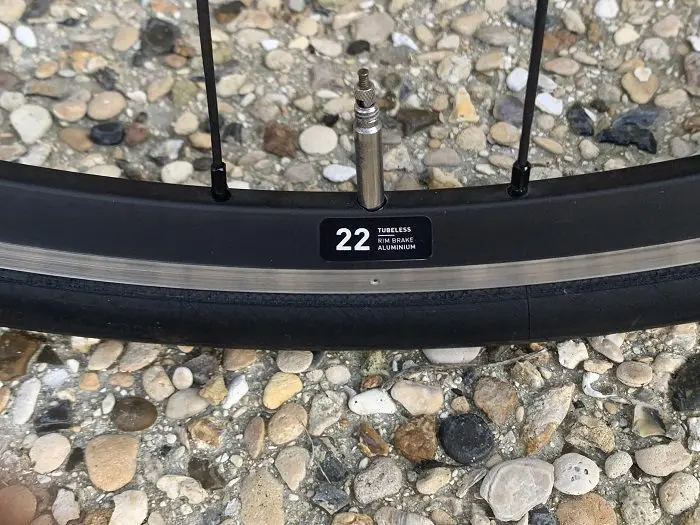
It should be noted that the Wheel Mastery Silver Race are less suited to the Levacon titanium frame than to the Specialized Tarmac SL6. Indeed, the combination of flexible wheels with a frame that is also flexible tends to accentuate the lack of rigidity. In other words, if slightly flexible wheels like these Silver Race “temper” a stiff frame, stiff wheels highlight the work of a flexible frame. Thus, it should be noted that the Levacon, which is not “victim” of a lack of stability, truly benefits from very taut, deep, and therefore carbon wheels.
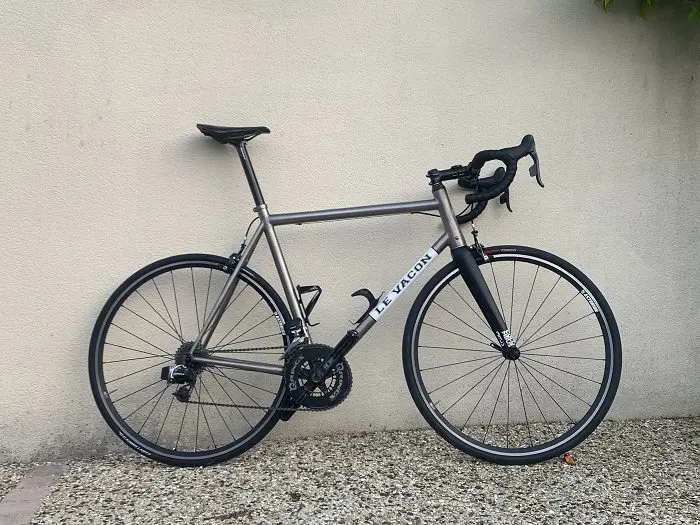
Ultimately, the Wheel Mastery Silver Race perfectly fulfill their promises, or rather their specifications. Concretely and unsurprisingly, they tempered the delicate side in certain situations of a frame that is more agile than stable, while being very easy to live with as soon as the gradient became positive. While the 1371 g on the scale do not place them at the forefront of what one can expect from ultra-light tubed rim-brake wheels, their dynamic behavior, characterized by ease of climbing (at a linear pace), suggested that the weight was much lower than reality. Of course, once back on the flats and for high-speed riding, there are better companions, but again, this was a conscious choice. Because it is obvious that if the question had been “Benoit, would it be possible to build the most performing wheels possible for racing at an average of 45 km/h with incessant accelerations and low elevation gain?”, the build would have been totally different. And that is precisely Wheel Mastery’s great strength: precisely identifying the most suitable equipment for a specific use and user.
Note
Since the first kilometers ridden with the test wheels, things have evolved significantly, including in terms of bikes and rim-brake wheels. Today, the rims used during the test are no longer available, but Wheel Mastery obviously offers the modern equivalent (in terms of dynamic behavior) that goes with the increase in tire widths. Indeed, the wheels now built for the same specifications use 22 mm wide (external) rims, which adds a little weight – and stiffness – without compromising comfort since the air volume is increased and therefore the pressure reduced. Furthermore, in this price range, Wheel Mastery tends to use Hope hubs of recognized quality and still CX-Ray spokes. This results in a complete build for an amount of €875 (compared to €790 for the test wheels). In all cases, the budget remains lower than for a build of the same level of range, but with carbon rims.
The Wheel Mastery Silver Race (rim brake) in brief… The +: lightness, liveliness, low wind resistance, not very tiring, handling, value for money Size: 700c – Rim material: aluminum – Tire compatibility: tubed (tube-type) Tubeless – Brake compatibility: rim brake – Weight for the wheelset: 1371 g with rim tape (604 g for the front, 767 g for the rear – Rim external width: 18 mm – Rim depth: 22 mm – Spoke nipple material: aluminum – Spoke type: Sapim CX-Ray – Number of spokes: 24 front and 28 rear – Freehub body type tested: Shimano – Price: €790 Contact: wheel-mastery.com |
=> SEE ALSO : All our Gear articles
Share the post "Long-term test of Wheel Mastery Silver Race rim-brake wheels"