Share the post "Orbea Terra Race: review of a gravel bike designed for speed"
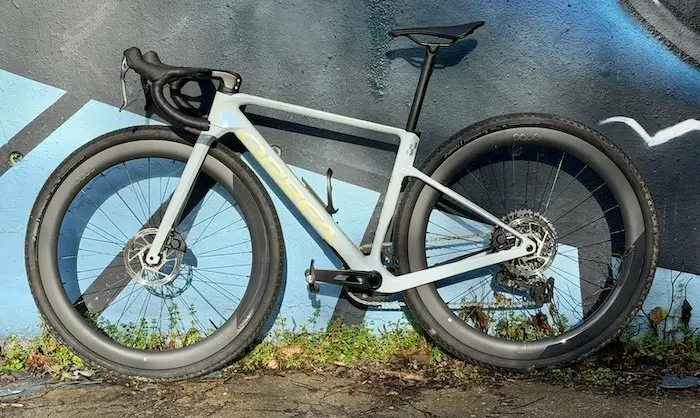
The Orbea Terra Race is one of those recent gravel bikes that fully embrace their performance vocation. Built around an OMX carbon frame, the Basque brand’s top-of-the-range, and equipped here with a SRAM Rival AXS XPLR electronic drivetrain and Oquo carbon wheels with a 50 mm rim depth, it promises an experience close to a road bike, with more tire clearance and geometry capable of handling harsh terrain. On paper, the equation is appealing. But let’s see what this new generation bike is worth in the field of intensive use.
By Guillaume Judas – Photos: ©3bikes.fr
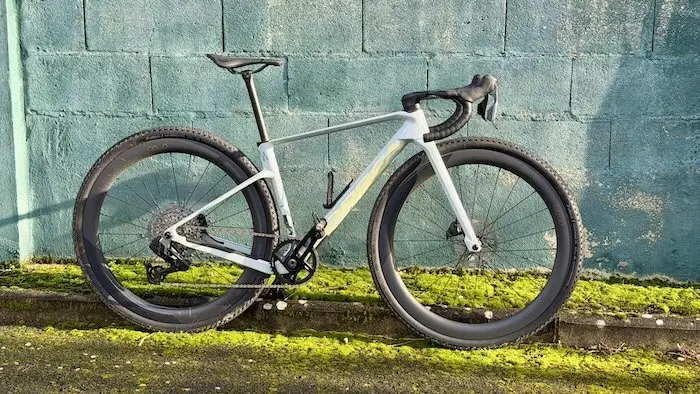
The gravel market has evolved profoundly in recent years. On one side, there are bikes designed for adventure and travel, capable of absorbing hours of bumpy tracks with luggage and accessories. On the other, a racing trend is emerging, inspired by cyclocross and road cycling, and especially by a competition format under the UCI label that is refining over the years, prioritizing speed, efficiency, and lightness. The Orbea Terra Race clearly falls into this second category, and that’s why we were eager to test it.
A bike designed to go straight and fast
Where some frames adopt more versatile orientations, the Orbea Terra Race claims an aggressive approach: profiled tubes, neat integration, assumed structural rigidity, aerodynamic rims, a narrow and very low cockpit, and a relatively stretched-out position. One spontaneously thinks of a comparison with bikes like the Cervélo Áspero or the Factor Ostro Gravel in their most sporty versions. With this bike, Orbea has chosen to speak to a specific audience: riders who want a fast gravel bike, built for races, dynamic rides with friends, and rolling or mixed terrain. That works out well, I’m in the target, or at least I identify as such. This choice is consistent, but it inevitably implies some concessions for those looking for more flexibility, comfort, or ease of use.
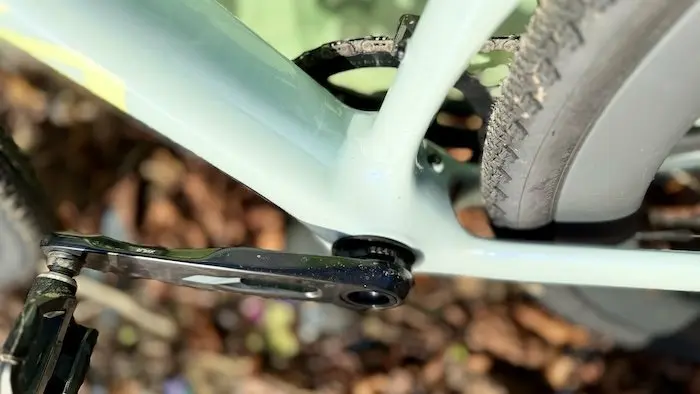
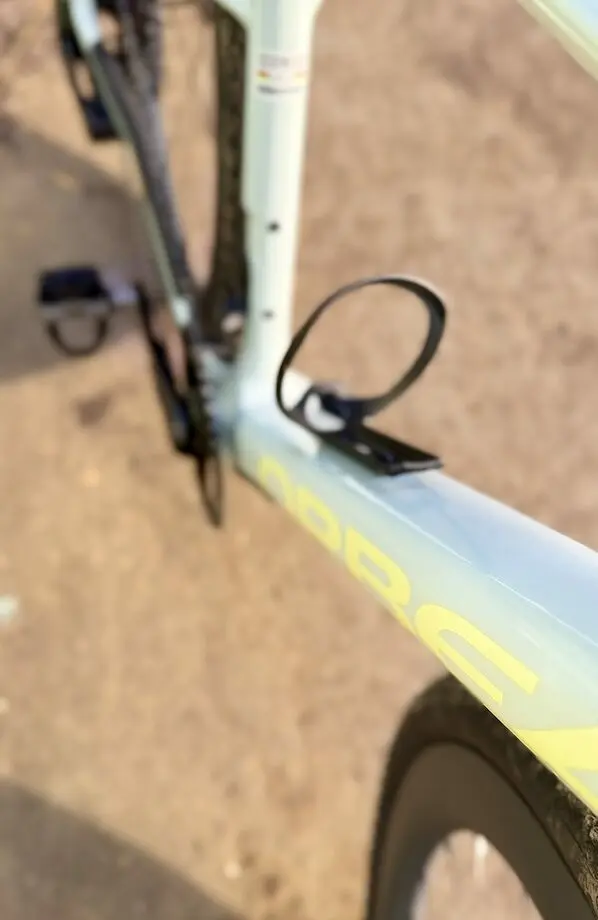
Announced at 910 g, the OMX carbon frame is Orbea’s high-end technological signature. It’s not just about using a certain category of carbon fibers, but an entire manufacturing process designed to optimize rigidity and low weight, in other words, high efficiency. Combined with a carbon fork of the same quality, the Orbea Terra Race frame forms a unit clearly designed to transmit the rider’s power without dispersion.
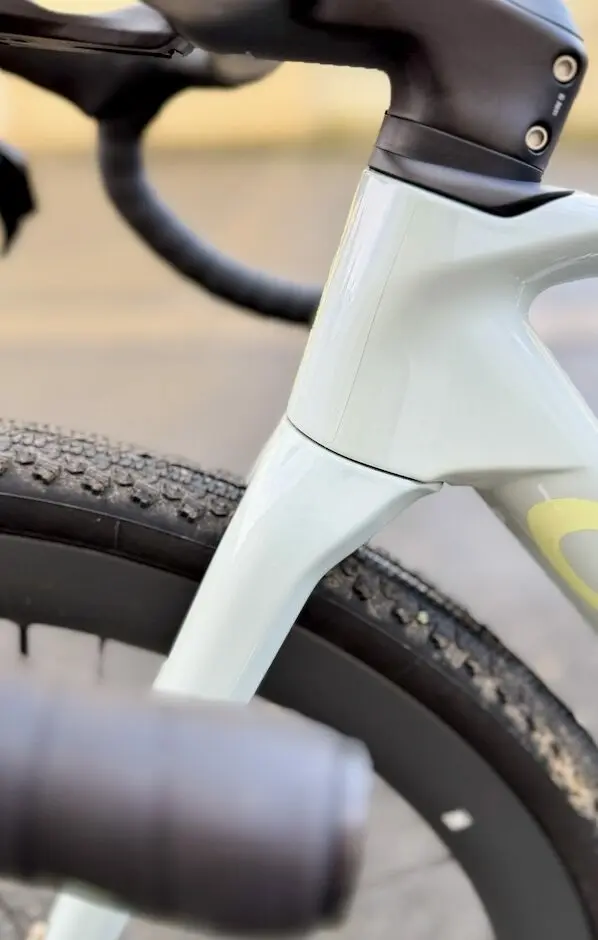
Construction and integration: pure Orbea
With a visually similar silhouette to the brand’s lightweight road bike – the famous Orca – the Terra Race also adopts the very clean integration of the brake hoses, which run entirely within the cockpit and frame for a perfectly aerodynamic appearance. In the same vein, the frame benefits from an internal seatpost clamp and profiled rear chainstays. The rear triangle, in general, is designed to absorb (a little) vibrations, but above all to keep the wheel glued to the ground to promote traction on irregular surfaces. The derailleur hanger is UDH type, which means that the frame, in addition to gaining rigidity at this level for precise gear changes, could be compatible with a cassette featuring even more cogs.
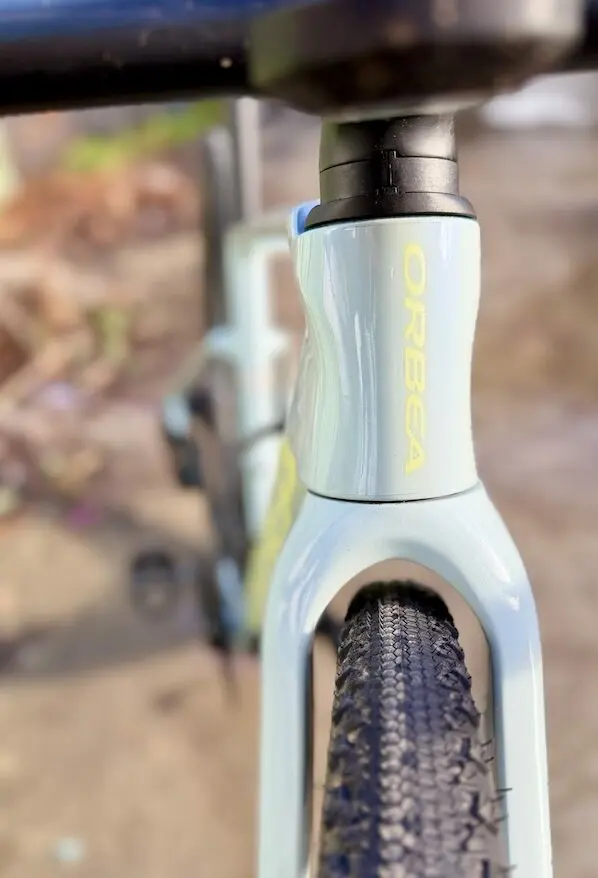
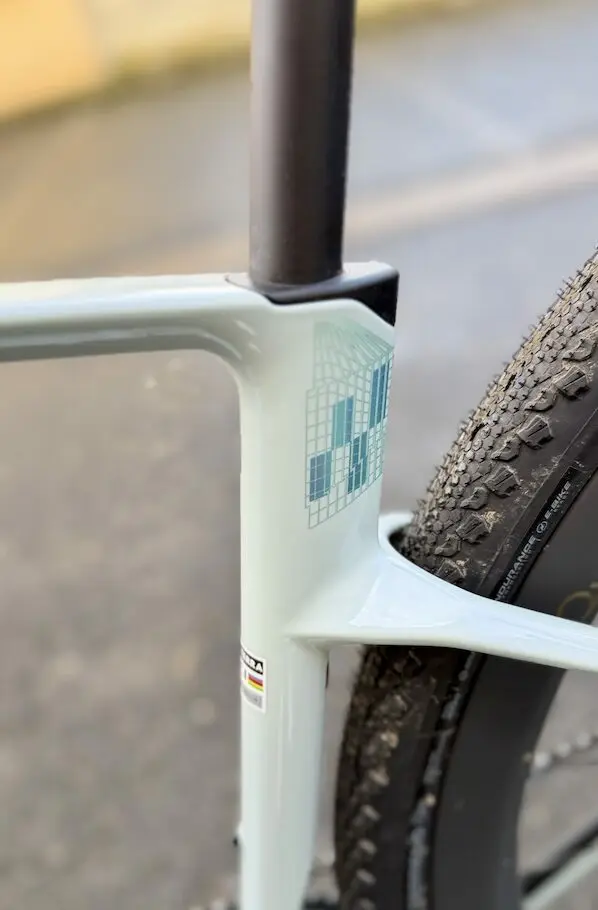
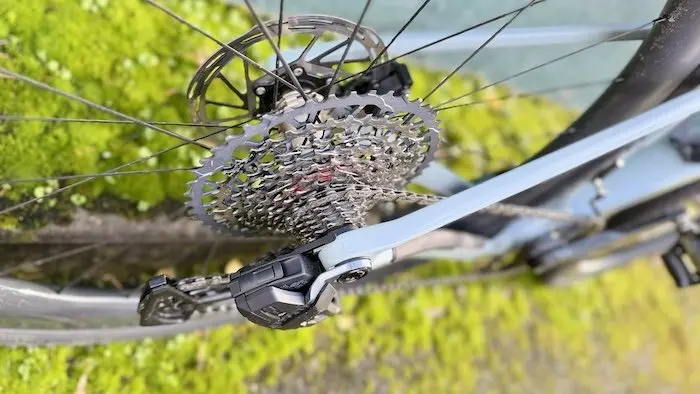
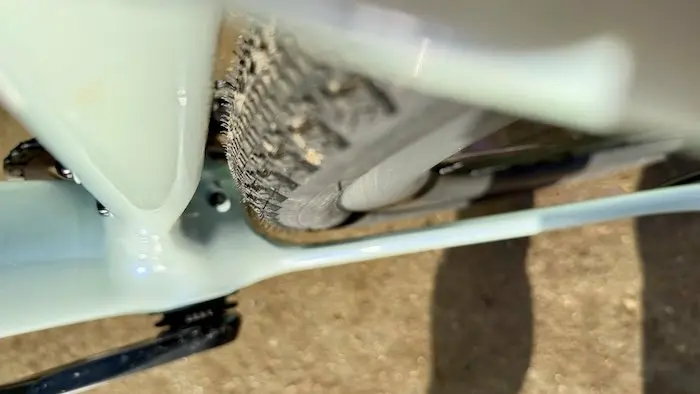
The only compromise to optimal wind performance: tire width, theoretically allowed up to 45 mm, although on the test bike, 40 mm tires (measured at 42 mm) fit “just” with a bit of mud, sand, or dead leaves stuck to the tread.
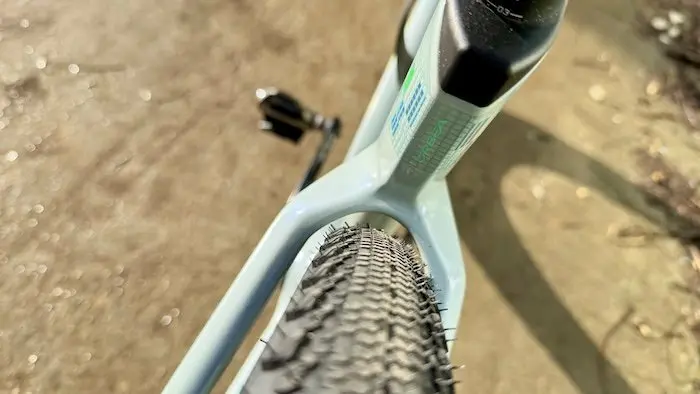
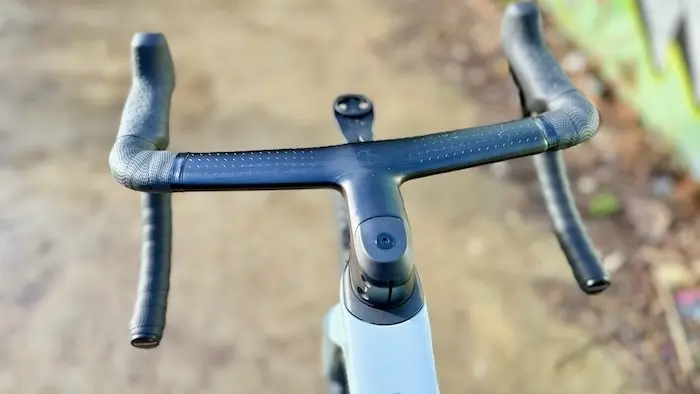
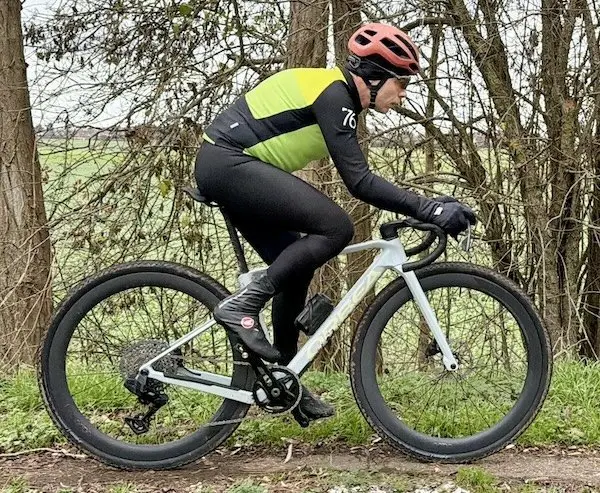
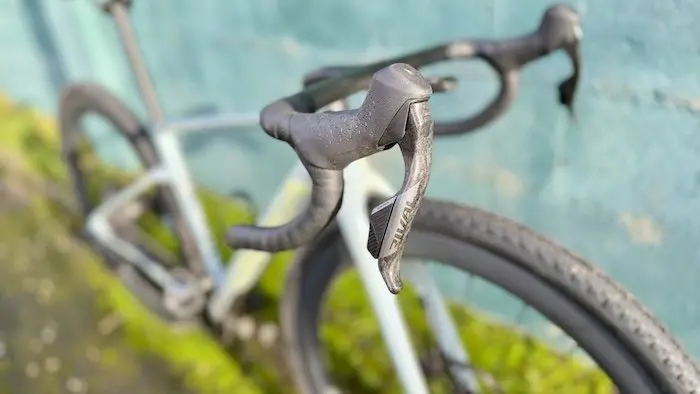
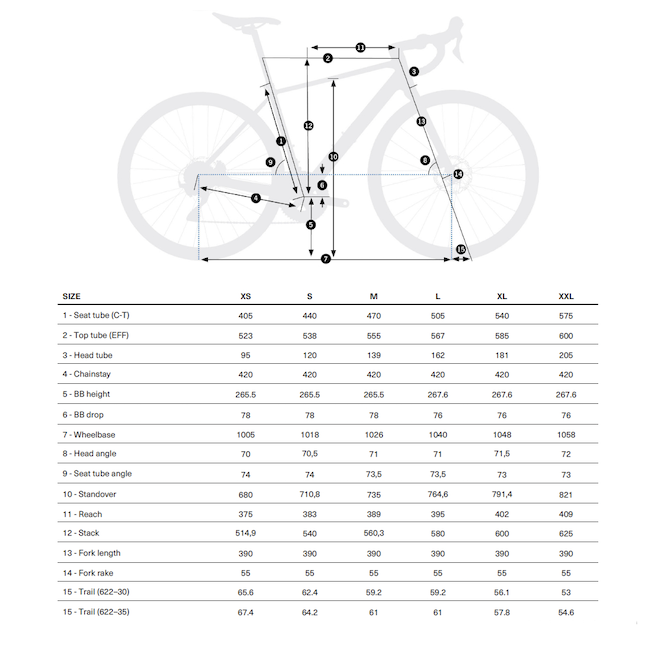
The geometry of the Orbea Terra Race adopts the codes of sporty gravel in 2025-2026: a relatively long reach, a cockpit that encourages engagement, and a noticeable responsiveness in accelerations. The handlebar, in particular, is symptomatic of this new trend of moving away from the wide and flared handlebars of gravel bikes designed for exploration. Here, the integrated aero road handlebar is narrow, with a center-to-center width of 38 cm at the hoods (and 40 cm at the drops) and ergonomics that favor a position supported on the forearms. It goes without saying that with this machine, it’s almost inconceivable to ride with MTB pedals. You put on ultra-stiff carbon road shoes, and you clench your teeth to avoid having to put your foot down in the middle of a mud pit or a rock garden.
The right price
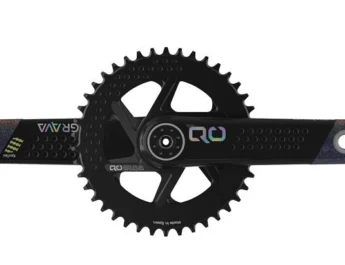
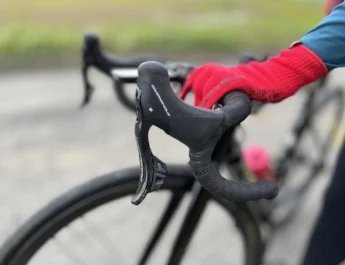
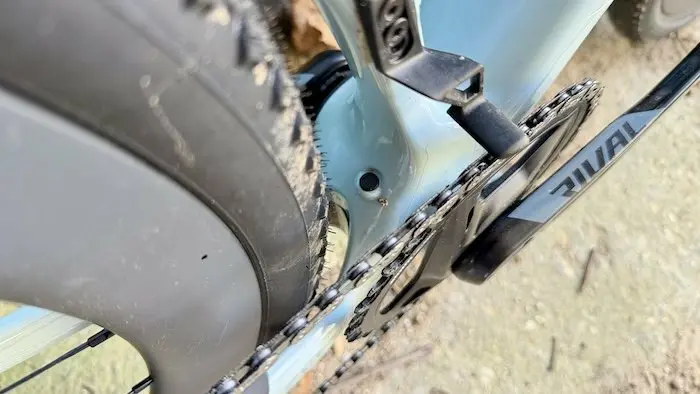
The Orbea Terra Race M31 ELTD tested here is equipped with the SRAM Rival AXS XPLR groupset in a 1x setup with 13 speeds. An electronic drivetrain that is fluid and logical in its gear management, combined with very high-quality braking, whatever the conditions, and which has nothing to envy to the higher-end Red and Force AXS versions. The single 40-tooth chainring is paired with a 10-46 tooth cassette, designed to offer enough gearing for both fast sections and the toughest climbs.
But honestly, I don’t find the choice of a 40-tooth chainring very judicious on a bike dedicated to competition, even in gravel. With a 44 or 46 teeth, the rolling sensations would be better, and one would use the larger cogs more frequently, which also offer better efficiency. This is all the more regrettable as on Orbea’s MyO customization platform (which offers the possibility of choosing color details, other wheels or another saddle, for example), the option of choosing the chainring does not exist on this model.
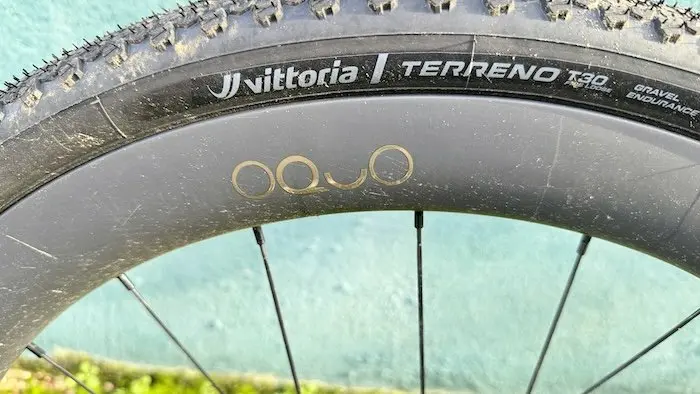
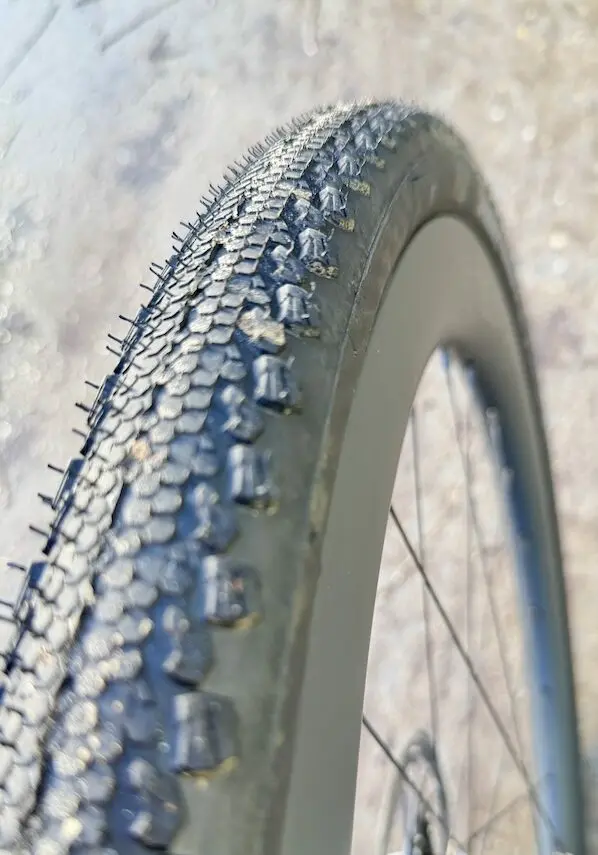
As for the wheels, Orbea has chosen aerodynamic wheels from its sister brand Oquo, with the RP50 LTD, featuring a 50 mm rim depth, an internal width of 25 mm, and a weight of 1420 g. The Vittoria Terreno tires are versatile and perform perfectly on mixed surfaces. Unfortunately, mounted here with inner tubes, they are a bit heavier and more sluggish than when mounted tubeless.
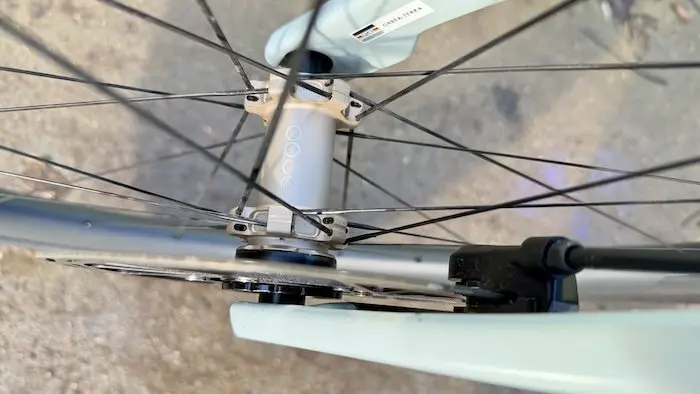
On the spec sheet, it’s hard to fault the Orbea Terra Race M31 ELTD: the integration is clean, the aesthetics racy, the construction meticulous. The wheels are high-performance, the cockpit is perfectly in line with the bike’s spirit, and the groupset is fully up to the demands of the terrain. And all this comes in at €5534, a highly competitive price given the machine’s performance level, which weighs 8.650 kg in size XS.
The flip side of performance
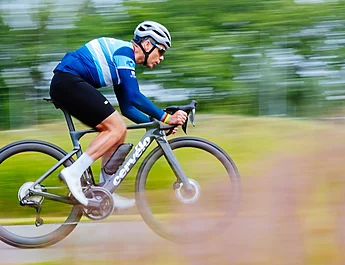
From the first pedal strokes, the Orbea Terra Race impresses with its rigidity. Accelerations are sharp, the absence of frame flex is blatant, and one immediately has the sensation of riding a bike closer to a road machine than a traditional gravel bike. On asphalt, the bike rolls well, and it allows for maintaining a good cruising speed with ease. This is all the more evident as one adopts a relatively high inflation pressure of 3 bars for 40 mm tires. In this situation, there is relatively little rolling resistance compared to so-called “endurance” road tires, and out of the saddle, the bike does not sag laterally due to sidewall collapse. Only the narrowness of the handlebar is a bit surprising at first. With a width of only 38 cm, there isn’t much leverage out of the saddle, and consequently, the steering feels a bit heavy. But it must also be said that on this size XS bike, the head angle favors stability over maneuverability, at 70°.
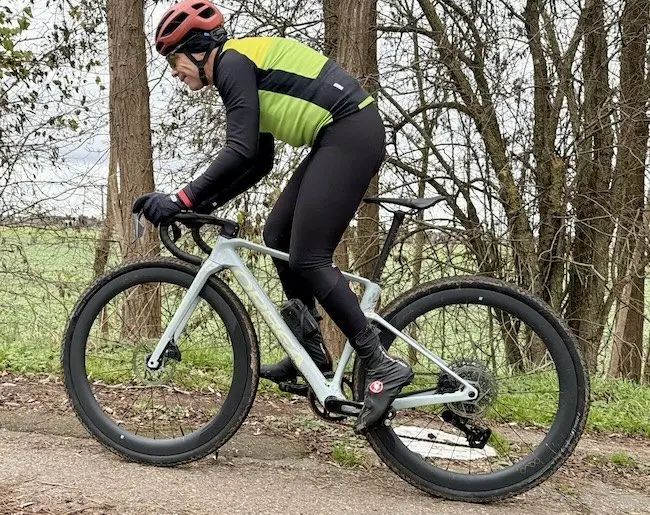
On rolling and well-packed gravel sections, the Orbea Terra Race gives that exhilarating impression of gliding, of maintaining a high cadence without thinking about it. The position is very close to that of an aerodynamic road bike, and you find yourself bending your arms and lowering your head, which adds an unusual speed when passing through certain paths.
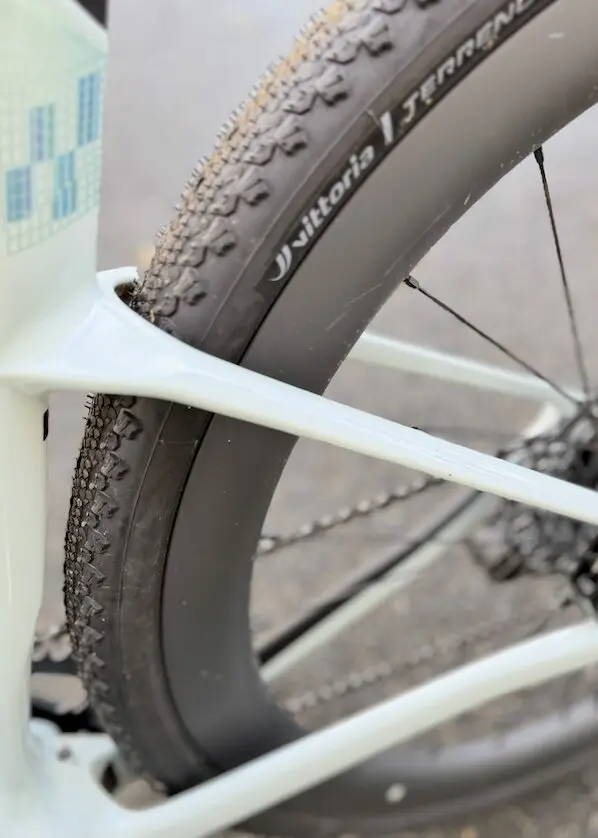
This rigidity, pleasant on smooth terrain, becomes punishing when the surface degrades. Vibrations are transmitted sharply through the steering, without the frame really offering a natural damping solution. What you gain in sporty feel, you lose in endurance. And even if the seatstays are designed to absorb vibrations, the rear wheel bounces and seems to search for traction. After several hours, this firmness takes its toll, and it becomes difficult to maintain a relaxed position.
Adapted pressure
Obviously, things go much better off-road after lowering the pressure to 2 bars. An essential choice for me from the second ride with the Orbea Terra Race, if only to cope with the change in weather conditions, with much greasier terrain. And indeed, the Vittoria Terreno tires perform correctly on a slippery surface, as long as it’s not outright sticky mud. The bike never surprises in trajectory changes and becomes significantly more bearable in rock gardens and in undergrowth on roots. However, returning to the road with such reduced pressure, it floats during out-of-the-saddle efforts and gives the impression of compressing a bit on false flats during powerful accelerations. It’s hard to have it all.
In a straight line, the narrow cockpit favors aero and gives a feeling of precision on fast trajectories. But in technical sections, on tight turns or in root-filled areas, this choice limits maneuverability. You find yourself correcting, repositioning your hands, sometimes anticipating more than on a wider handlebar. The bike is not unstable, but it requires vigilance. The Orbea Terra Race is not a bike designed for tackling obstacles or gymkhana on singletracks. It’s a fast bike designed for all surfaces, but it needs to fly.
A true race gravel bike
The Orbea Terra Race is an exciting bike because it takes a clear stance. Its domain is speed, energetic rides, fast trails, and gravel competitions. It’s genuinely enjoyable to push this bike to its limits, as it responds instantly to every input when you apply power. But this identity comes at a price. Comfort is limited, maneuverability could be improved, and the gearing choices are not sufficiently geared towards exclusive competition.
The Orbea Terra Race is a remarkable bike for going fast, but it needs to be chosen with full knowledge of its characteristics. To such an extent that one could almost choose it as a road bike, just by changing the tires and – once again – the chainring.
In short, if you’re looking for a race gravel bike, go for it; if you want to explore, forget it, or opt for another, more versatile version of the Terra.
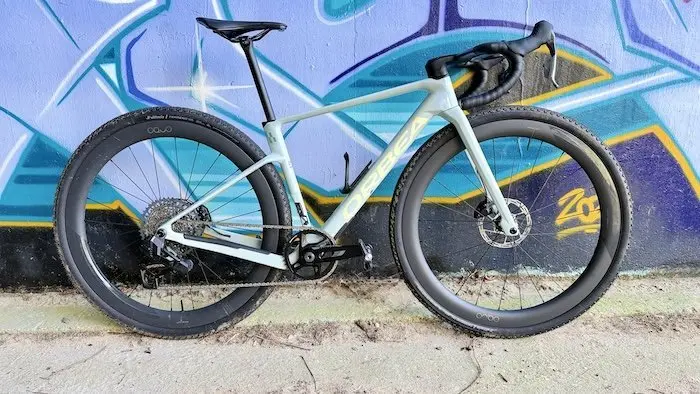
The ORBEA TERRA RACE M31 ELTD in brief…Pros: rigidity, efficiency, geometry, value for money Frame: Orbea Terra Race monocoque carbon OMX – Fork: Terra Race Carbon OMX – Wheels: Oquo Road Performance RP50 LTD – Tires: Vittoria Terreno T30 fine loose Gravel Endurance G2.0 700x40c – Crankset: SRAM Rival 1 XPLR Dub Wide 40t – Rear derailleur: SRAM Rival 1 XPLR 13 sp. – Levers: SRAM Rival 1 XPLR 13 sp. – Brakes: SRAM Rival Disc – Cassette: SRAM Rival 1 XPLR 10-46 13 sp. – Cockpit: Integrated Bar and Stem OC SH-RA10, Road Aero Carbon – Seatpost: OC Performance XP10 Carbon – Saddle: Selle San Marco Shortfit 2.0 Start Up Off Road – Weight: 8.650 kg in size XS without pedals – Sizes: 6 – Colors: 3 + MyO customization – Price: €5534
Contact: orbea.com |
Share the post "Orbea Terra Race: review of a gravel bike designed for speed"