Share the post "Look Keo Blade Ceramic Vision pedal review"
Look Keo Vision pedals started from a long-known piece of equipment – the reflectors on flat pedals of “general public” bikes – to increase their efficiency and thus safety. Based on the observation that, according to their designers, these pedals are 5.5 times more visible than a light mounted on the seatpost, they seem like the ideal equipment for reduced visibility and therefore for winter. Here’s a usage review after 2500 km covered in various light conditions.
Text: Olivier Dulaurent – Photos: www.3bikes.fr, Look
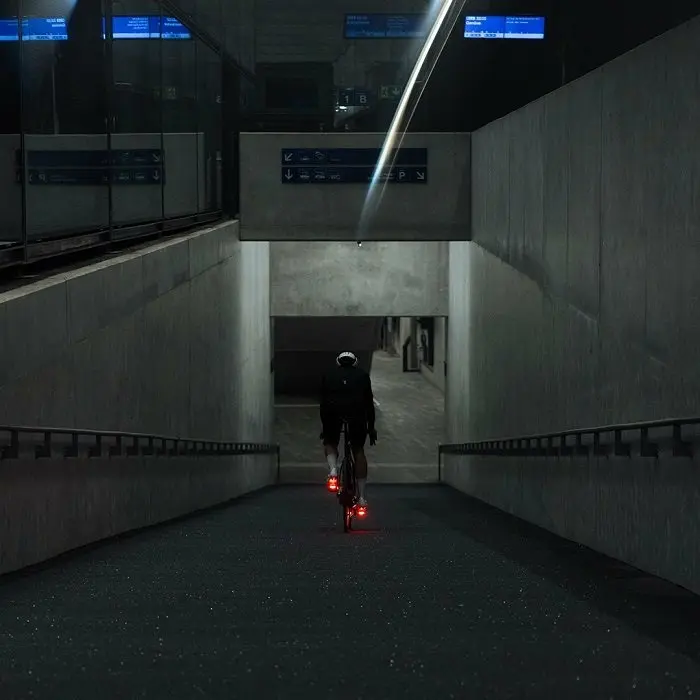
Look pedals from the Vision range had already been briefly presented in the shopping section. Look thus wanted to reinvent cyclist visibility and therefore safety with the launch of the Vision family, pedals integrating a lighting system without affecting the function and thus the performance of the pedal itself.
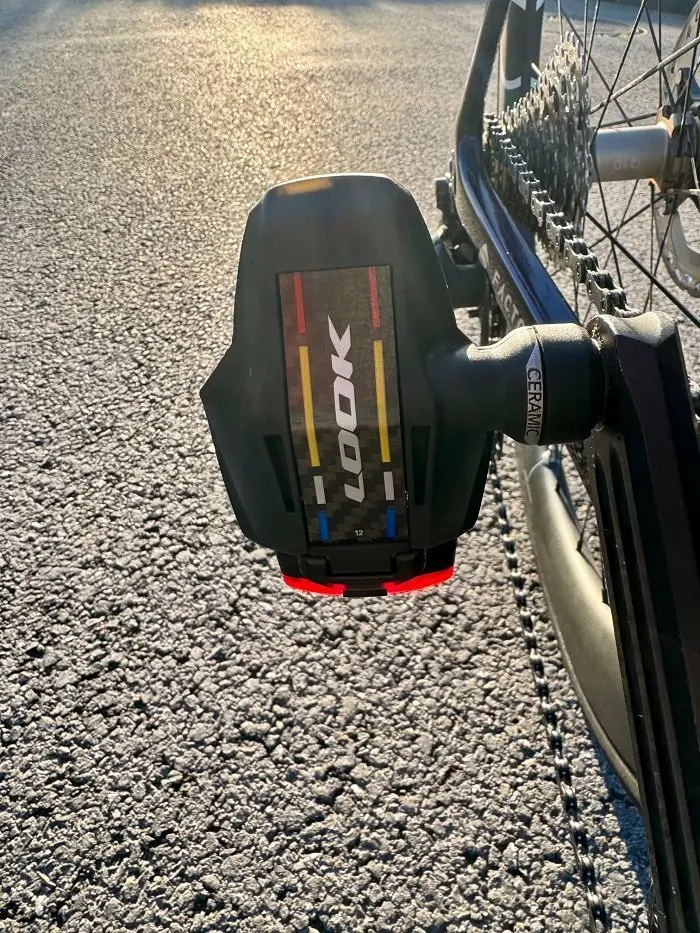
Increased visibility: 5.5x more effective and range up to 1 km
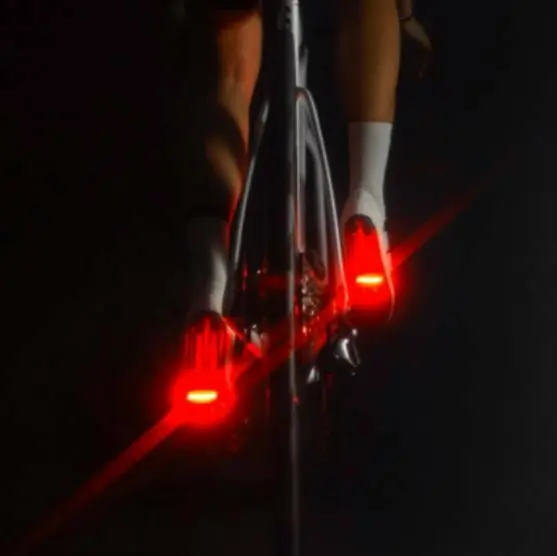
According to Look, the integrated lighting offers 5.5 times greater visibility than a fixed light mounted on a seatpost. This gain is linked to human visual perception, which is more sensitive to moving elements, in this case, the rotation of the pedals. With a light output of up to 60 lumens, the device should ensure detection up to 1 km. The 180° diffusion guarantees omnidirectional visibility, essential in urban or rural environments.
Lighting modes and optimized battery life
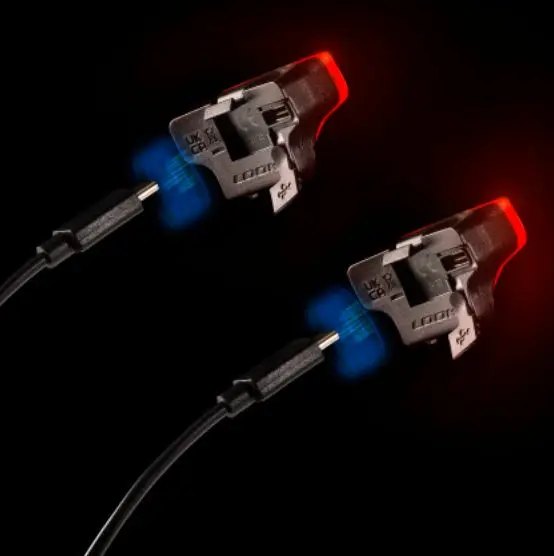
Keo Vision integrate four programmable modes to adapt to light and environmental conditions: Steady (ideal for night rides or foggy conditions), Pulse (recommended in dimly lit urban areas), Day Flash (designed for fast rides in bright sunshine, maximizing perception by contrast), Night Flash (adapted for poorly lit rural roads). Battery life extends up to 40 hours depending on the selected mode, while recharging is done with a USB-C cable and a charge time limited to 2 hours, controlled by an integrated battery indicator.
Integration and ergonomics
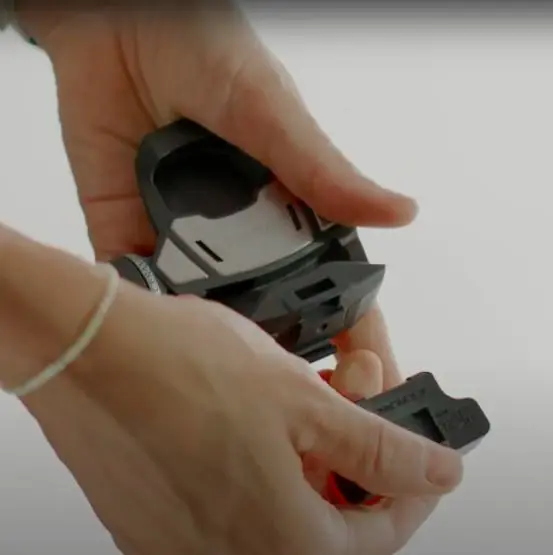
Instant mounting/dismounting is tool-free, thanks to a quick-release system, while the stability of the lighting system is guaranteed regardless of the terrain, even in extreme conditions. The design was intended to be discreet, meaning integrated into the pedal to preserve performance, thus strictly at the same level as the 4th generation Keo Blade pedals (released in 2024).
Resistance and lightness
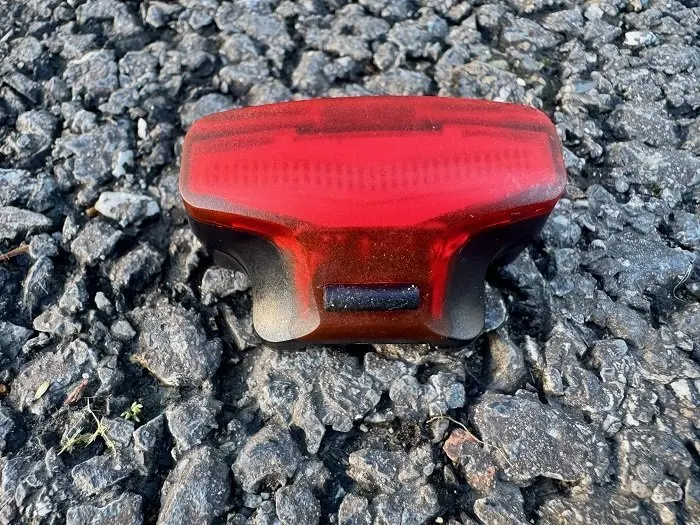
Vision pedals benefit from IPX7 certification, meaning they are completely waterproof, allowing use in heavy rain or even temporary immersion. The weight remains low at 38 g verified (2 g less than announced by Look), a particularly interesting figure given the level of safety offered.
Available versions
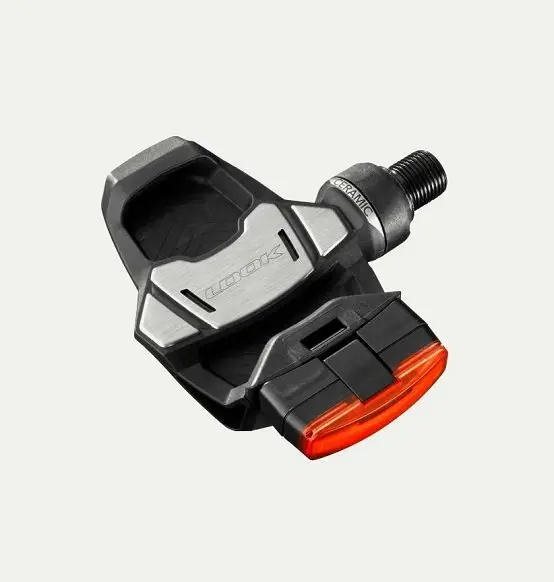
There are two available versions. At the “entry level,” the Keo 2 Max Vision, a 300 g per pair version for €124.90, and “above” them, the Keo Blade Ceramic Vision at 266 g verified (again, slightly less than the 270 g announced) for €249.90, which are the subject of the current test. It should also be noted that, in parallel, Look offers a Kit Keo Vision Upgrade, which is the possibility to equip existing Keo Blade 4 pedals with the Vision lighting module, for a cost of €60.
On the road
Before the first ride, it was preferable to start with 100% charged batteries. To do this, nothing could be easier: they are removed from the pedals very easily and recharging is done using a supplied USB-C cable. Once discharged, the batteries still require 2 hours of charging, so it will be preferable to charge them the day before.
The selection of different modes is done using the small black button located at the back of the pedals. With a minimum of dexterity and without using overly thick long gloves, it is even possible to activate the lighting while riding or even change modes, which can be practical when conditions are changing, for example at dusk or when arriving in a lit urban area – where the intensity of the lighting becomes less crucial compared to riding in the countryside. Obviously, to be sure of having selected the “right” mode, a riding companion should validate the maneuver.
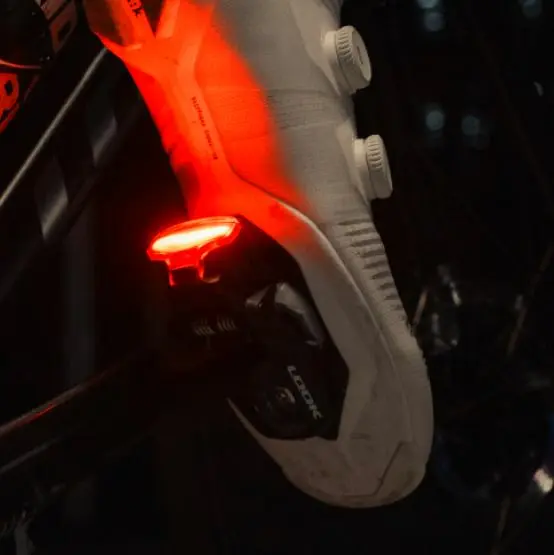
In terms of visibility, given that the legs and feet attached to them are the part of the body that moves the most during the ride, it is very opportune to use them for safety reasons. Until now, cyclist visibility in motion often translated into a reflective detail on the calves or possibly a reflective band attached to the ankle. But by adopting the principle of reflectors, Look has gone much further with the Keo Vision. In addition to this lighting, nothing prevents an addition to the seatpost, a system that has already proven its effectiveness, whether as a “traditional” light or with radars such as the Garmin radar (Varia).
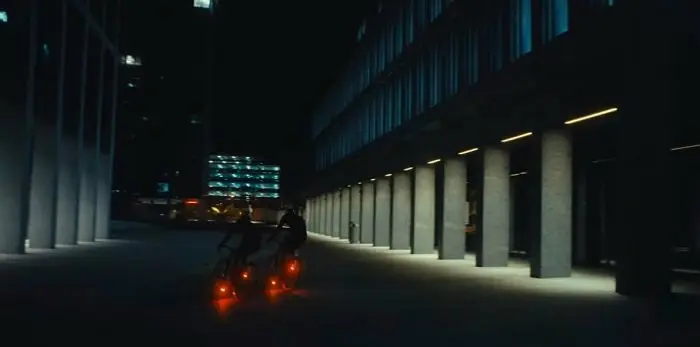
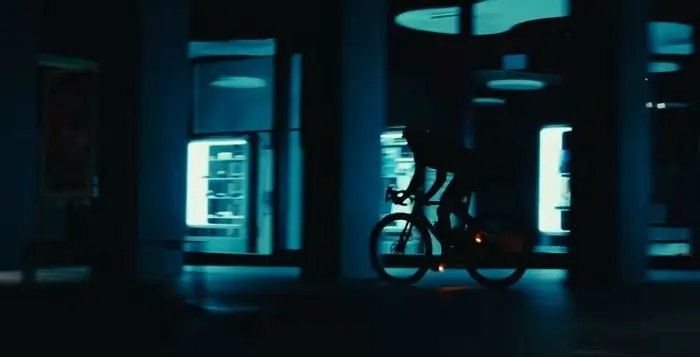
In any case, it is undeniable that Look Vision pedals are visible from afar. Tests carried out with a follow car, on one hand in broad daylight with good visibility and on the other at dusk and then actually present, showed that the cyclist is spotted a few hundred meters before being caught up. In these conditions, it is clear that it is the rotating movement of the red light that attracts the eye. One can even imagine that this movement could save a cyclist’s life, in the unfortunately frequent case of a motorist distracted by their phone. The presence of these two moving light points should then bring their attention back to the road.
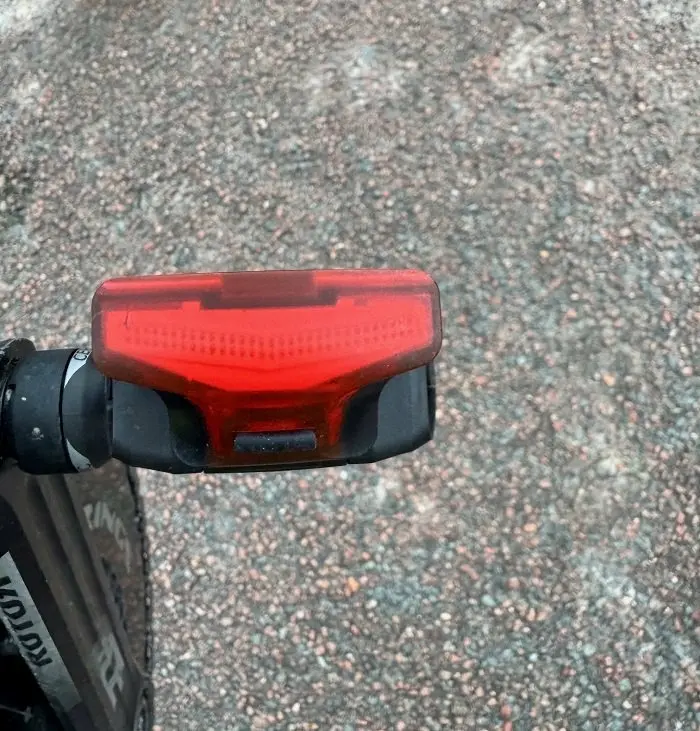
Furthermore, rides carried out with the pedals took place in the presence of other cyclists. Here, unlike lights fixed on seatposts, which can sometimes dazzle those immediately following in a group, the Vision pedals do not cause this problem thanks to their position further away from the visual field.
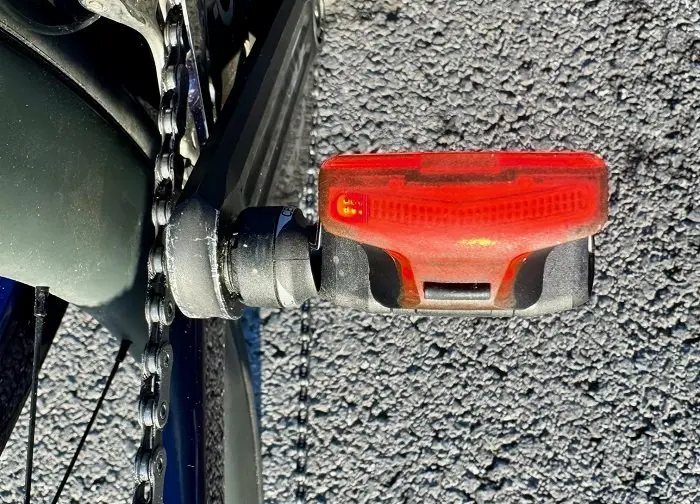
The choice of the most appropriate lighting mode remains. A recent provision (November 2024) legislated on bicycle lighting, through decree n°2024-1074, notably stating that at night or during the day when visibility is insufficient, any motorized personal mobility device or bicycle must be equipped with a rear position light. This light must not be flashing and must be clearly visible from the rear. This therefore suggests that during the day, the two flashing modes are authorized. Conversely, at night, a steady light is mandatory! The ambiguity remains, at the discretion of the cyclist or the police, regarding the conditions of “insufficient visibility”. However, let’s specify that the probability of being fined at night is low. Nevertheless, we are not encouraging the use of a lighting mode prohibited by law, and no study has demonstrated the greater effectiveness of a flashing light compared to a steady one. Indeed, a flashing light naturally attracts more attention from other users and can give the positive impression of a cyclist to be taken into account. However, it can also risk causing increased distraction and even complicate distance assessment for those following, for some motorists.
Whatever the case, and perhaps more than a long speech to explain the visible aspect of the Keo Vision, the video offered by Look provides an excellent rendering of what other road users actually see:
Finally, in terms of the pedals’ actual operation, the Vision model of the Keo Blade Ceramic obviously incorporates the known characteristics of the Keo Blade model (in its fourth version). These pedals are notable for a large support surface, easy clipping in and out with the ability to choose tension (between 12, 16, and 20), and very good energy transfer.
Equipment designed for all seasons
With a basic idea that seems almost simple but is ultimately perfectly executed, the Look Keo Blade Vision appear as a relevant addition to winter equipment, a period when visibility is often reduced. While they can obviously be used all year round (or even by removing the lighting to participate, for example, in a sportive where performance is sought), they will prove very useful in summer, in mountainous areas where unlit tunnels are frequent. Thus, by directly integrating safety into an essential component of the bike, Look encourages a more systematic adoption of lighting, as it comes with no real constraints.
The Look Keo Blade Ceramic Vision pedals in brief…Pros: Visibility therefore safety, ease of mounting/dismounting/recharging, weight, power transfer 5.5 times greater visibility than a seatpost-mounted light – Range up to one kilometer in clear weather – Maximum battery life 40 hours – 2-hour recharge using a USB-C cable – Very high waterproof rating (IPX7) – Three-year warranty and made in France – Four lighting modes available: Day Flash, Night Flash, Pulse, and Steady, with announced battery lives of 10h30, 39h, 5h, and 10h respectively – Easy-to-use lighting module with a simple button press – Stop & Start technology present to save battery when stopped – Visible battery level indicator – Upgrade possible on 4th generation Keo Blade / Keo Blade Power pedals, released in 2024, for a cost of €60 – Price: €249.90 for the Keo Blade Ceramic Vision tested and €124.90 for the Keo 2 Max Vision. Contact: Look |
Share the post "Look Keo Blade Ceramic Vision pedal review"