Share the post "Gaining watts at 3 °C: winter’s hidden advantage"
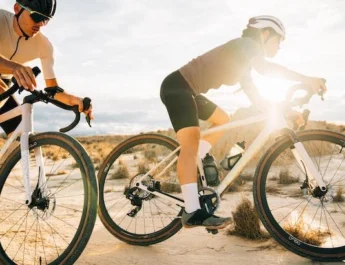
What if 3°C mornings were the key to boosting your FTP before the holidays? Recent research suggests that training in the cold is not just a constraint, but can become a physiological advantage. In a few weeks, VO₂max improves, mitochondria multiply, and the body learns to better use fats as fuel. Here’s how to turn your winter training into a springboard for a great season.
By Guillaume Judas – Photos: depositphotos.com
Cold weather doesn’t have a good reputation among cyclists. Yet, it hides a potential that several research teams have begun to explore: when the temperature drops below 8°C, blood flow distribution changes, the skin is less irrigated, and muscles become prioritized. Slow-twitch fibers, the marathon runners of effort, are more heavily recruited. The result: better pedaling economy at equal power. Some work published in the American Journal of Physiology in 2023 shows that regular sessions in cold environments improve exercise tolerance and metabolic efficiency in trained cyclists.
But that’s just the beginning. Cold acts as a controlled stress signal. It particularly stimulates the production of PGC-1α, a key protein in the creation of new mitochondria – these small cellular factories that convert oxygen into energy. Studies published in the Scandinavian Journal of Medicine & Science in Sports show that exercise combined with cold exposure can increase the expression of genes related to mitochondrial biogenesis and promote better lipid oxidation. In practice: you last longer, recover better, and draw more from fat reserves.
Another, more subtle effect concerns muscle oxygenation: peripheral cooling modifies microcirculation and oxygen availability in the muscle. Some syntheses published in the European Journal of Applied Physiology suggest that adaptations to training in cold conditions involve changes in perfusion and oxygen transport in the long term. We are still far from a “doping” effect, but all these adjustments can support endurance performance.
A Winter Plan
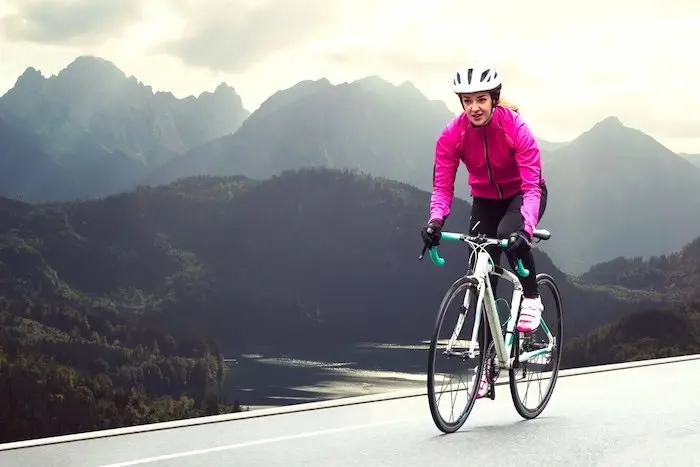
So, how can you benefit without shivering unnecessarily? The principle is simple: three progressive rides per week, with a key trick.
- Start with two hours in Zone 2 when the thermometer reads 3 to 6°C. At the end of the ride, add three eight-minute blocks at 85% of your FTP.
- The following week, increase to two and a half hours with four blocks at 88%.
- Peak at three hours with five blocks at 90%. The idea? Let the cold do its work on vascularization and metabolic activation during the endurance part, then hit hard when the system is well stabilized. That’s where the gains are built.
A Few Precautions
For this to work, a few rules are essential. First, warm up indoors: ten minutes on the indoor trainer at low intensity avoids thermal shock. Next, protect your extremities – warm gloves, shoe covers – but let your torso breathe with a merino base layer and a light windbreaker. Drink warm: an insulated bottle around 40°C helps maintain your comfort and hydration. Finally, finish “on fire”: intervals at the end of the ride maximize training stress. Then slow down for ten minutes with light pedaling to gradually return to normal and limit post-effort cold shock.
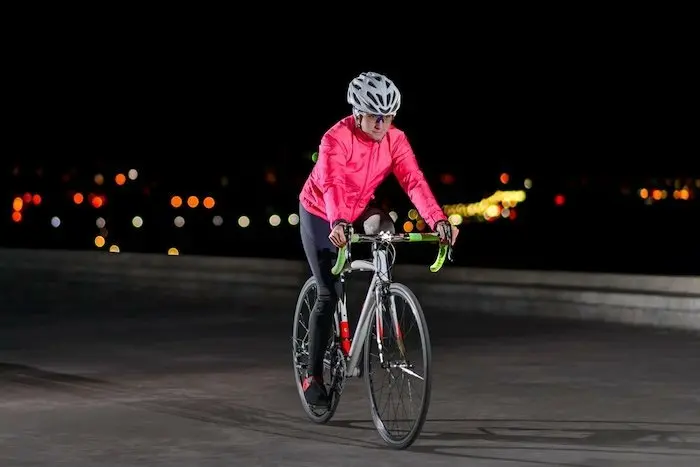
Winter is not a break. It’s an accelerator. The cold doesn’t slow you down: it forges you. Mitochondria multiply, capillaries densify, VO₂max progresses. And while others hibernate in front of Netflix, you’re pedaling towards a stronger spring. So tomorrow, when the alarm rings at 6:30 AM and steam comes out of your mouth, smile: your best coach just woke up.
What is well-demonstrated
|
Sources
Lundström et al. (2023) – American Journal of Physiology – Regulatory, Integrative and Comparative Physiology
Giroud et al. (2020) – Scandinavian Journal of Medicine & Science in Sports
Daanen et al. (2014) – European Journal of Applied Physiology
Share the post "Gaining watts at 3 °C: winter’s hidden advantage"