Share the post "A visit to CMT: titanium in all its welds"
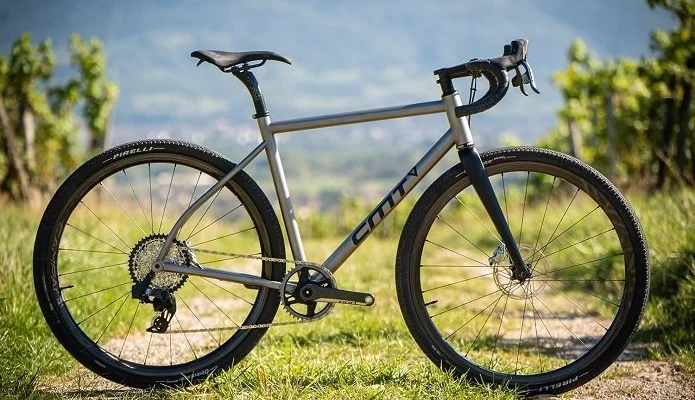
Titanium is a material that has never disappeared despite the hegemony of carbon at (almost) all price points. Praised for its durability, reparability, elastic feel, and comfort, its manufacturing, however, requires skilled labor combining experience and precision. While production is mainly based in Asia, other manufacturers, particularly French ones, are rare, even if gravel cycling tends to bring them back into the spotlight. We can mention Levacon, Caminade, Avalanche, Bordure Cycles, Grade9, and Atelier des Vélos, not forgetting CMT, which concerns us here and is based in a small village in Haute Savoie. November allowed us to tour the premises of the latter.
Text: Olivier Dulaurent – Photos: 3bikes.fr, CMT
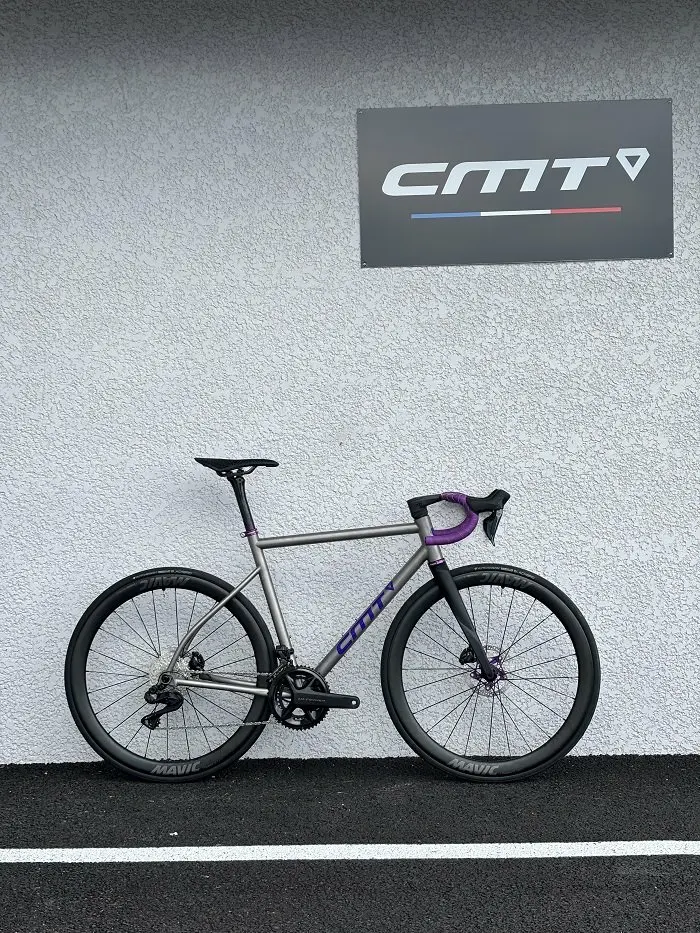
Craftsmanship and passion go hand in hand
CMT’s already rich 20-year history has undergone several transformations – and a health crisis – which have led to its current operation, still with a small team and inevitably limited production due to the omnipresence of carbon. Thus, while Jean-Pierre Ramoul bought the brand in 2022, today Carole handles order taking, customer relations, bike fitting, and bike assembly; Bastien does the welding (for about ten years now); and currently, Robinson is working as an intern on the development of an MTB frame planned for 2026.
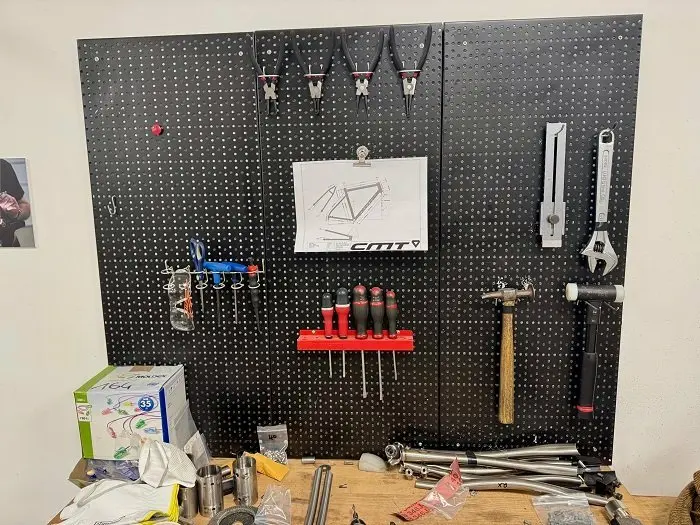
As soon as you step through the workshop door, the visit exudes craftsmanship, meticulousness, and a passion for a job well done. To explain the manufacturing process, Robinson and Bastien work together to explain CMT’s main characteristics (for Custom Made Titanium).

But before thinking about the manufacturing itself, the first step is, of course, making contact with the future user. Carole discusses with them their project, their needs, their riding style, and how they envision their frame. From this exchange, various aspects emerge, such as the desired angle for the sloping top tube, the number of bottle cage mounts, the drillings to accommodate potential luggage racks, the bottom bracket shell format, and, of course, everything related to bike fitting and geometry. It is thus possible to choose a bike that will be, by choice, more stable or more agile.
First, the cyclist
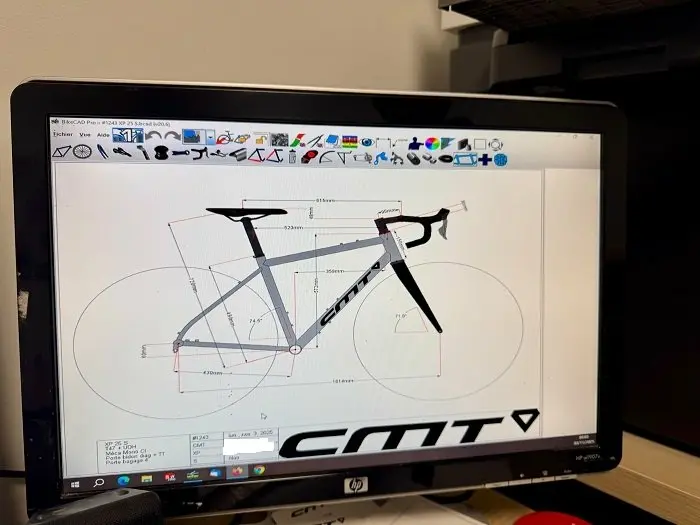
For cyclist positioning, CMT works with Retül, and Carole handles this. Retül is now a reference in the field, as the global system includes how the cyclist actually pedals with a 3D visualization of their pedal stroke. Disruptions in the pedaling cycle can thus be detected and then corrected by adjusting the lengths and angles of the different tubes. Once the cyclist’s position is determined, it is transferred to the Bike Cad interface, a very powerful software that allows visualizing the positioned cyclist on screen, then “playing” with all the angles and checking certain aspects, for example, to ensure that the foot does not touch for a given geometry and cyclist’s shoe size.
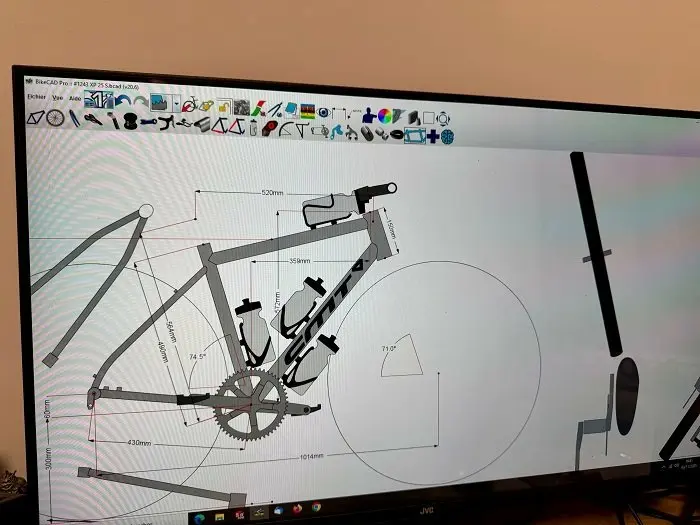
While remaining within certain limits and upon request, it is possible to choose a geometry oriented towards stability or agility, or of course, to be perfectly neutral in this regard. Furthermore, the latest frames produced most often adopt the T47 standard rather than BSA or BB30, while derailleur hangers are now predominantly “UDH” (for Universal Derailleur Hanger). This standard, initially developed by SRAM, aims to standardize derailleur hangers instead of having thousands of references.
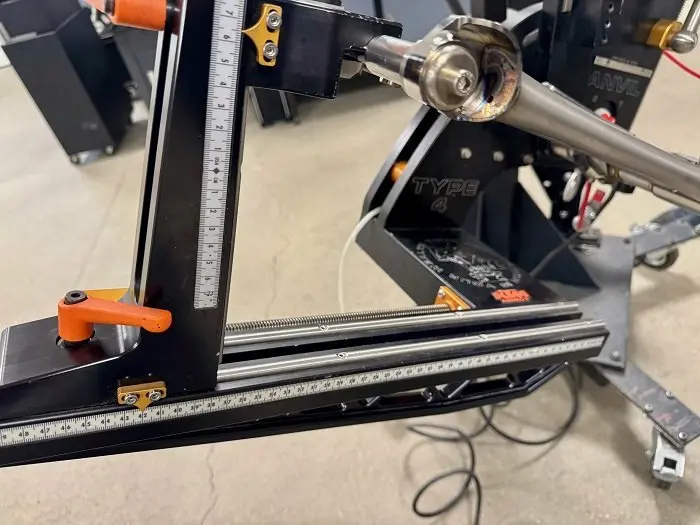
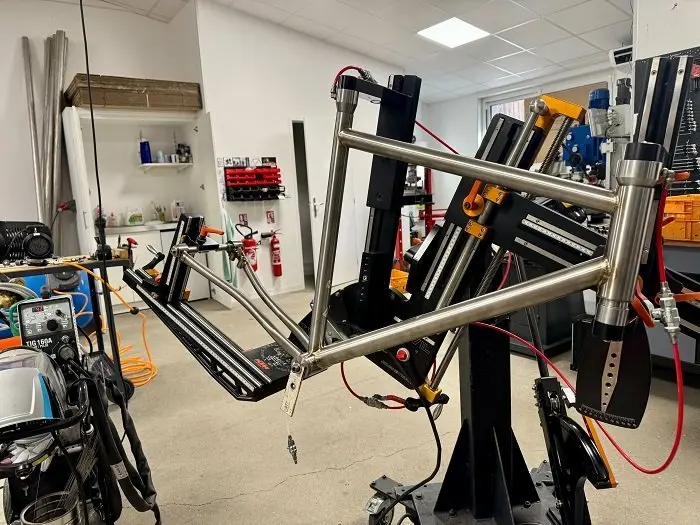
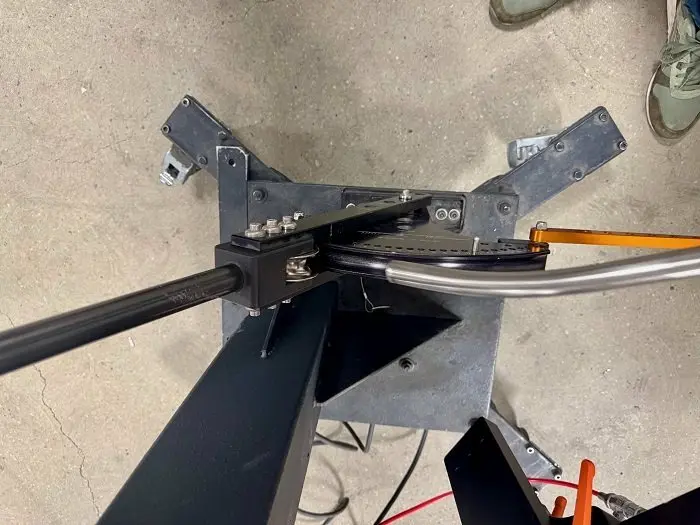
CMT Specifics
While innovations are generally rare in the titanium domain, CMT is currently working on a head tube designed to be lightened in its middle using a machining process, to save weight without losing rigidity. According to its designers, this will save approximately 150 g (depending on frame size), which is always appreciated given that the material leads to heavier frames than carbon ones: expect a minimum of 1300 g for the frame alone, not counting the upcoming gain on the head tube.
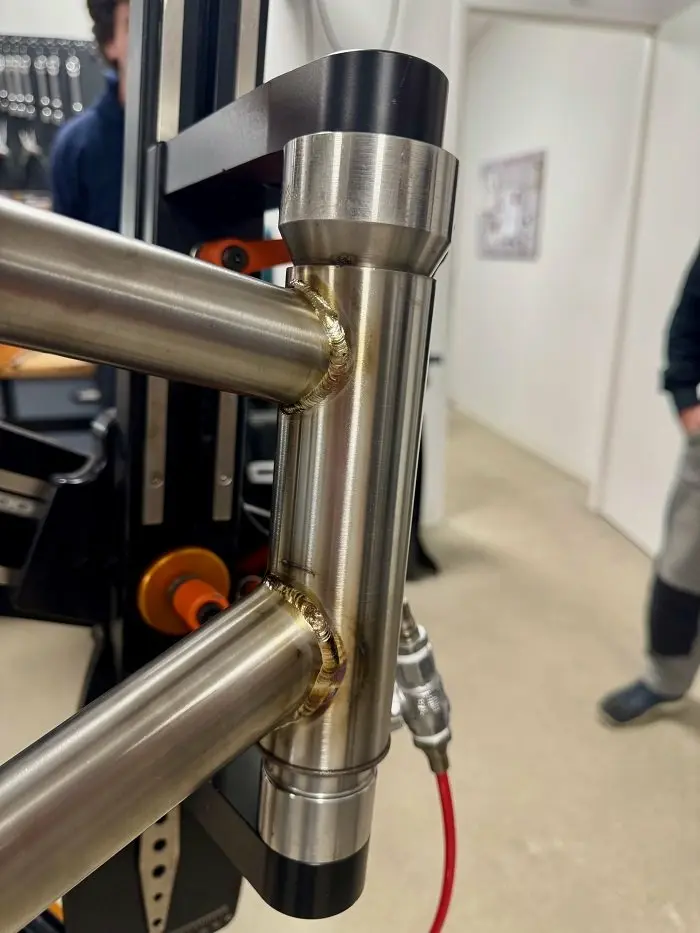
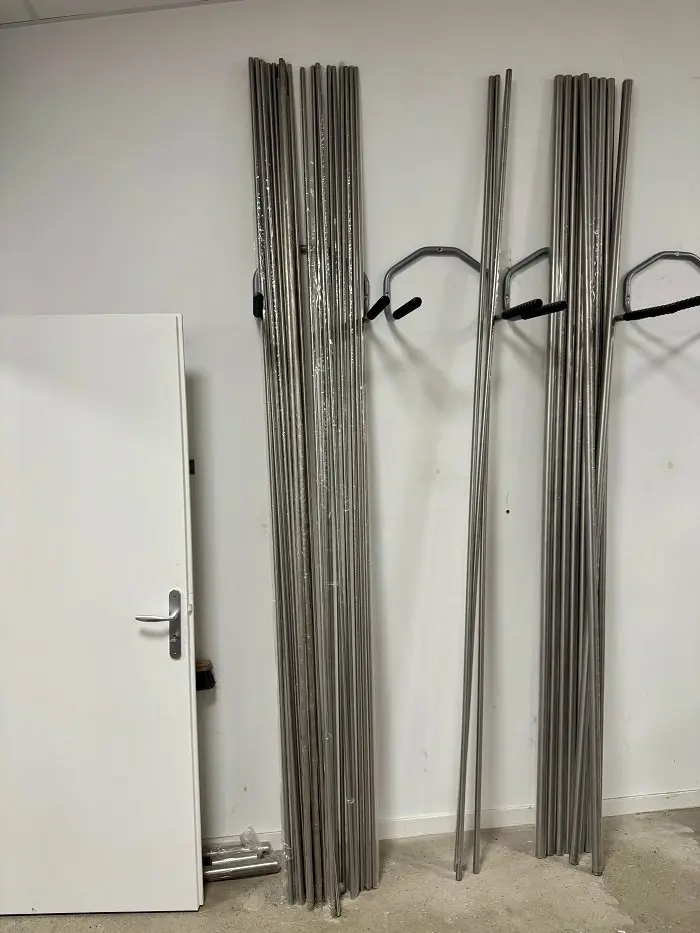
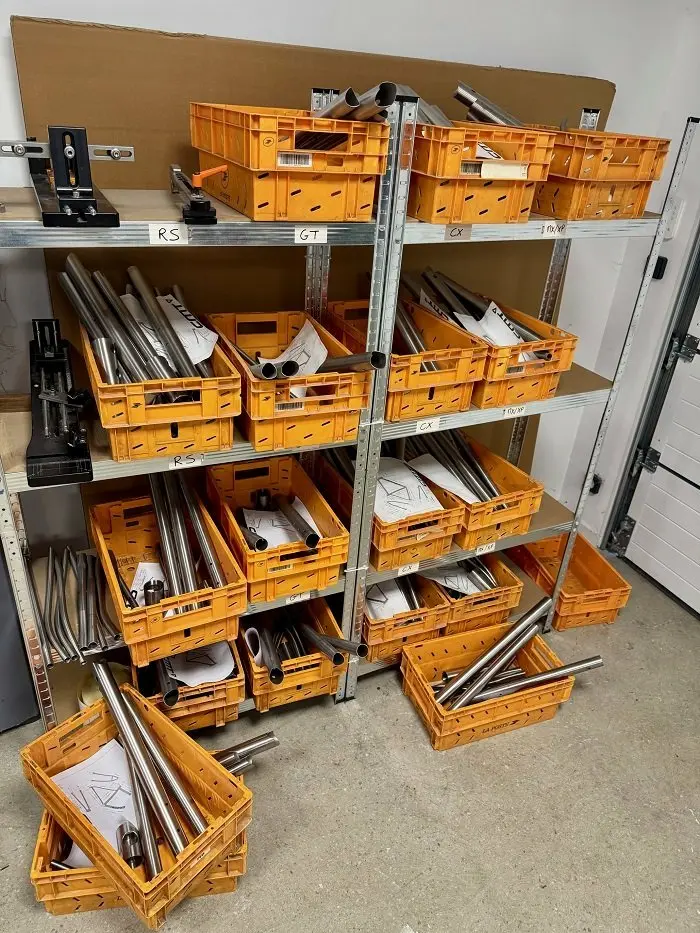
Regarding the titanium used, CMT trusts Grade 9 quality (or Ti 3Al-2.5V for those in the know), meaning a material containing 3% aluminum and 3.5% Vanadium, which are the most commonly used values in the cycling industry. The sight of a frame coming out of the workshop indicates that the tubes – sourced from industry and of constant thickness at 0.89 mm – offer five different diameters ranging from 17 mm for the seatstays to 42 mm for the down tube and even 50 mm for the head tube. According to CMT, this method of working guarantees, on the one hand, consistent mechanical resistance regardless of production, and on the other hand, obtaining ISO certification for all tubes. Conversely, the other French manufacturer Le Vacon, for example, sources from Dedaccia or Reynolds with specific titanium for cycling and obtains differentiated thicknesses on the tubes, which leads to a slight weight reduction.
A diversified range
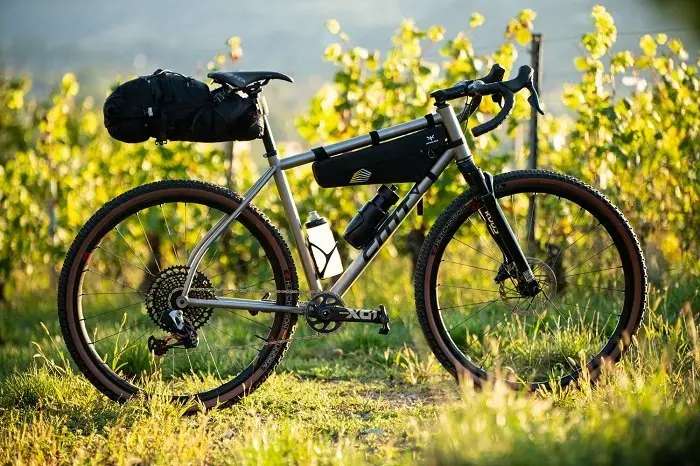
CMT notes that its clientele has changed in 10 years, with a noticeable rejuvenation coinciding with the emergence of Gravel and the enthusiasm for Bike Packing and Ultra Distance. For these disciplines, titanium offers many advantages: strength, a new look for longer (no paint), comfort, custom fit, and significant reparability (as it is always possible to un-weld and re-weld a tube that has suffered significant stress, such as in a fall). Quite surprisingly, and while rim-brake bikes keep their aficionados, the brand has no demand for this format.
Another observed advantage is that while the price of high-end carbon frames has exploded, that of titanium has remained roughly constant over the last 20 years, which means they are less expensive due to inflation over this period.
Thus, today, the frame kit costs 3290 €, including, in addition to the frame alone: bottle cage bolts, luggage rack bolts (if provided, of course), headset, seat clamp, fork, the two thru-axles, and the UDH hanger. This price is valid for all frame kits, with the exception of the MX model, whose fork (telescopic in this case) is different. This price leads to a complete bike with a Shimano 105 electronic disc group and mid-range wheels for around 6000 €. In any case, the configurator on the website allows you to get an exact idea of the price of your own configuration.
Finally, the waiting time once the order form is signed is only around three months, with a slight variability depending on the season. But for custom frames, this “detail” will certainly be welcomed with pleasure by enthusiasts, who number about a hundred per year.
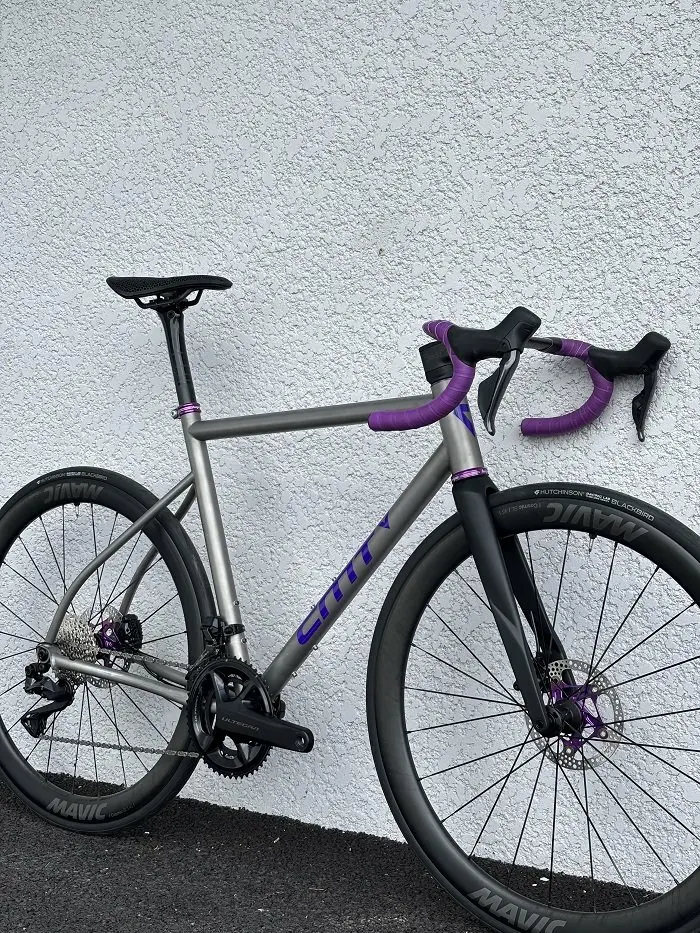
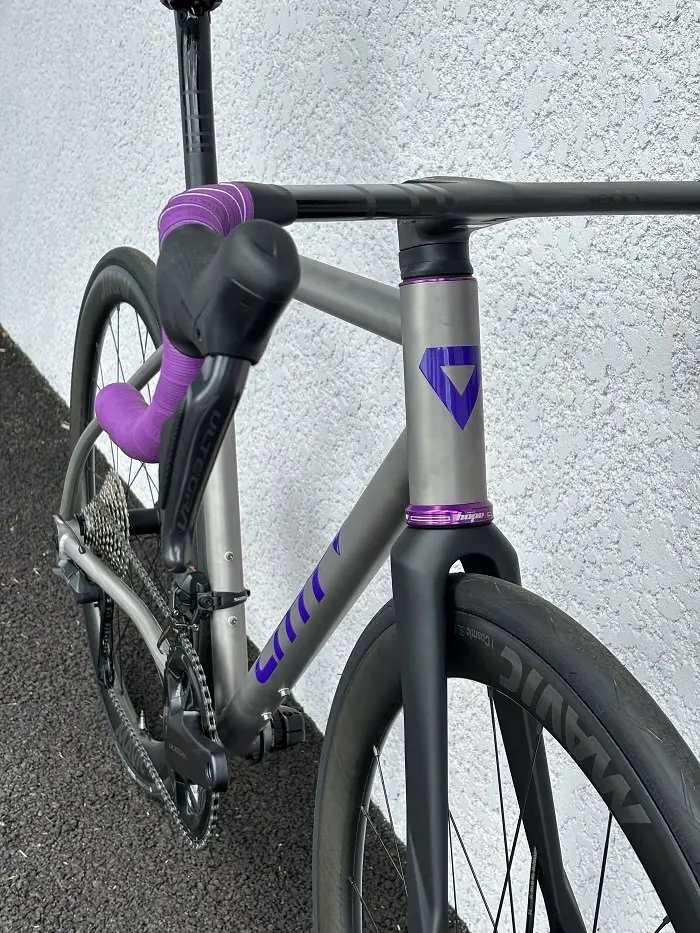
For a complete bike with a Shimano Ultegra disc group, 35 mm deep carbon wheels (1350 g per pair), and a Deda Alanera combo, the cost is 7740 €, a sum lower than most equivalent mass-produced carbon bikes that thus have no “story,” unlike a CMT frame which places human interaction and exchanges at the heart of the project. Furthermore, many parameters can be customized during the assembly of the complete bike, such as handlebar width, stem length, saddle setback, saddle width, crank arm length, rotor size, gear combinations, tire width, tubeless or tubed tire setup, fully integrated or semi-integrated cockpit setup, etc.
Contact: CMT frames
Share the post "A visit to CMT: titanium in all its welds"