Share the post "Blackroll Compression Boots Test: Optimized Recovery"
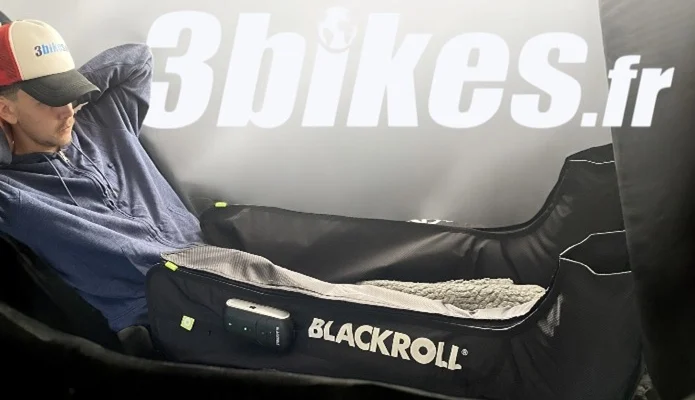
Recovery is now a full-fledged performance issue. We no longer wait until the next day to “see how it goes”: we anticipate. We activate circulation, limit muscle soreness, we aim to be ready on D-day. It is in this spirit that compression boots come into play, particularly the “Compression Boots” model from the BLACKROLL brand. We asked Tiago, a young national-level runner (18 years old, 1.76 m, 54 kg), to test them over several weeks, in two contexts: after intense sessions and during a tapering phase before a race. Here is the story, the analysis, the pros and cons…
By Jeff Tatard – Photos: ©Jeff Tatard
Context and tester profile
Tiago is a promising athlete: at just 18 years old, he competes at national level in half-marathon and running. Slender (1.76 m) but light (54 kg), he has a typical endurance runner’s build, with long legs, reduced weight, and the ability to string together kilometers.
We asked him to participate in this test because he represents a category often overlooked: not an 80 kg cyclist or a bulky footballer, but a pure endurance athlete, whose legs are put to the test, both by sessions and by running volumes. His recovery is an integral part of his progress.
The protocol: 4 weeks of testing, with two usage contexts:
- After an intense session (VMA, threshold, long outing): inducing fatigue, heaviness, muscle soreness.
- Before a race, tapering phase: aiming to optimize fresh legs, reactivated circulation, absence of a “stiff” sensation.
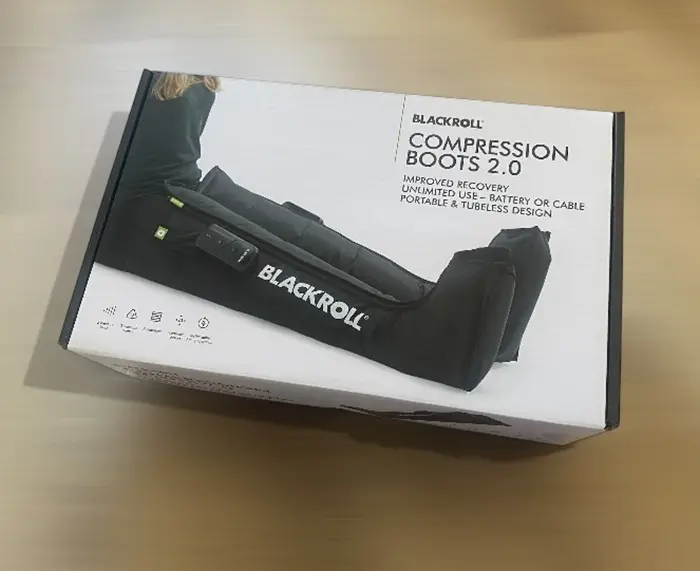
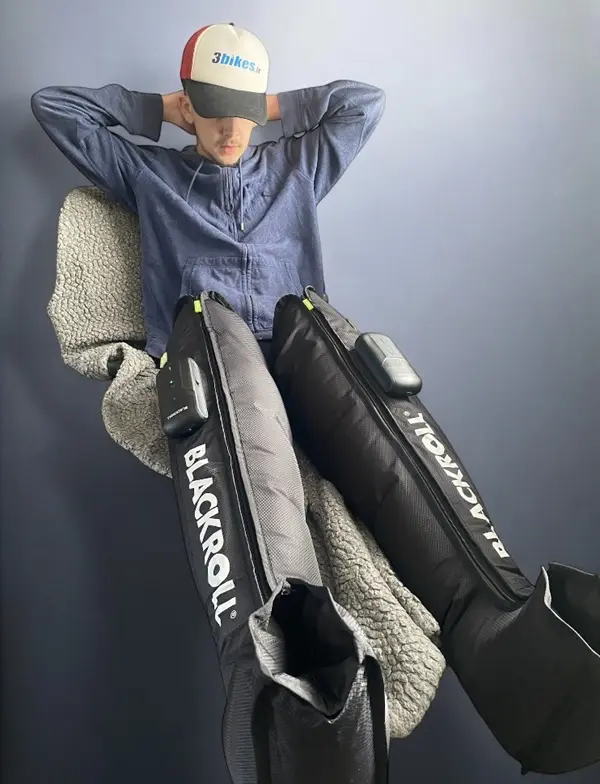
The model tested: BLACKROLL Compression Boots size M (adapted to his build), with battery, five compression chambers, various modes.
But first, a little history… Here is the brand and technology’s background
The BLACKROLL brand was born from a conviction: that recovery, mobility, and care for fascia and muscles should be accessible and effective. Founded in 2007, it first established itself with self-massage rollers, then diversified into recovery accessories.
The entry into the segment of pressotherapy and compression boots testifies to this evolution: from a passive tool to a “technological” tool, but remaining faithful to the “practical + performance” logic. The principle of sequential pneumatic compression is well known in high-level circles: inflating/deflating chambers around the legs promotes venous return, stimulates lymphatic drainage, activates circulation, and reduces the sensation of heavy legs.
BLACKROLL has integrated this into a more accessible format, more “endurance athlete” than “treatment center.” The Compression Boots model therefore fits into this logic: offering runners, cyclists, and triathletes serious recovery equipment, adaptable for home or training camps.
Technical SpecificationsHere is the important data that Tiago, our tester, was able to provide us:
These characteristics make the model a serious candidate for demanding athletes. |
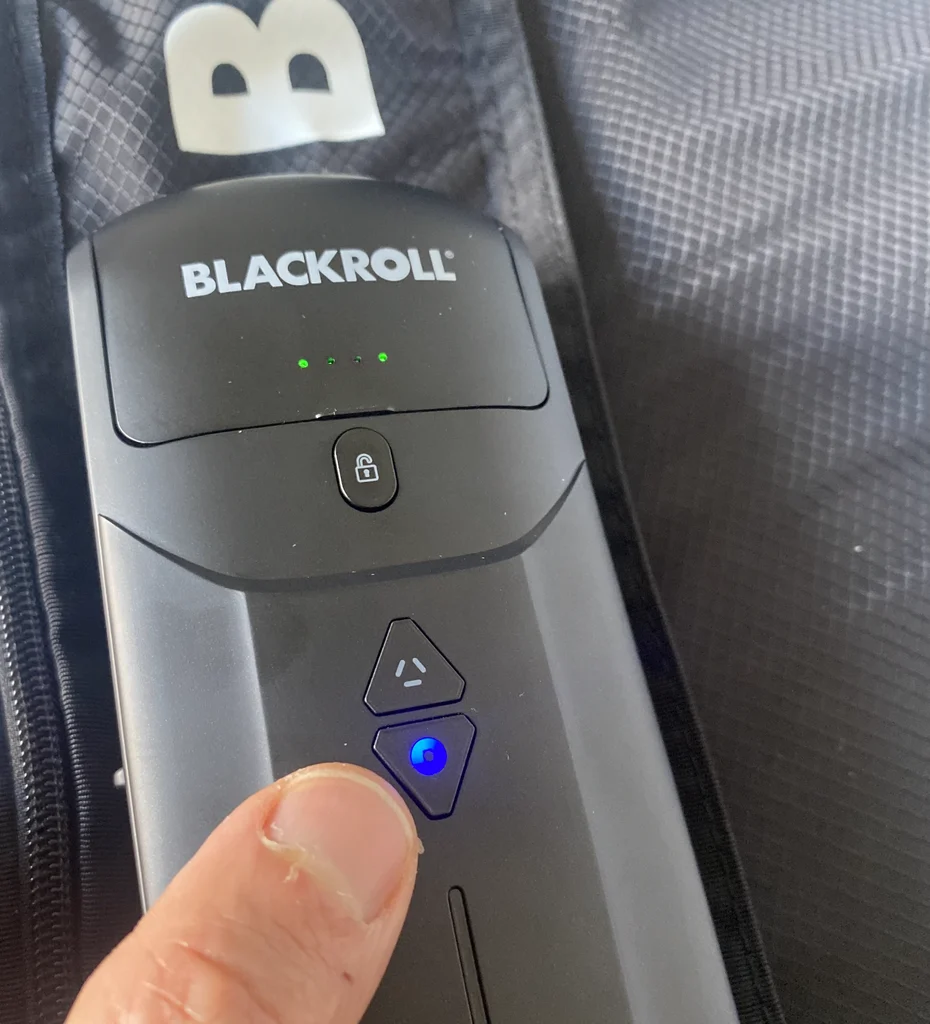
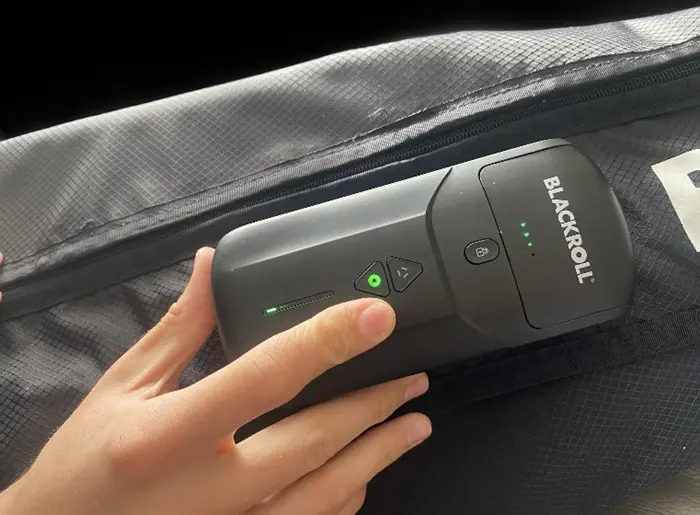
The three compression modes: blue, green, orange
BLACKROLL had the good idea to associate each program with a color, easy to spot on the control module. Each has a different usage logic, which Tiago tested in real conditions.
Blue mode – Drainage (gentle progressive pressure)
- Principle: the chambers inflate from the foot to the thigh, one after the other, then deflate, promoting venous and lymphatic return.
- When to use it: after an intense session or a long run, when legs feel heavy, a little swollen or “congested.”
- Recommended duration: approximately 45 to 60 minutes, medium pressure (around 70–90 mmHg for Tiago).
- Feeling: very relaxing, similar to a slow manual massage.
Tiago: “This is the one I used most often after hard sessions. You feel the blood flowing back down, the calves relaxing.”
Green mode – Active recovery (continuous sequential pressure)
- Principle: the five chambers inflate alternately more quickly, with short cycles. This stimulates microcirculation and the elimination of muscle waste.
- When to use it: on the evening of a training day, or the next morning to “unlock” the legs before resuming training.
- Recommended duration: 30 to 45 minutes, medium to strong pressure (90–110 mmHg).
- Feeling: a little more invigorating, you feel it “working” more.
Tiago: “I often used it the day after a big session, when I still had some stiffness. It really gets things going without tiring you out.”
Orange mode – Re-activation / Pre-competition (fast cycles, lighter pressure)
- Principle: rapid inflation/deflation alternation with gentle pressure. The goal is not to drain but to awaken circulation.
- When to use it: 1 to 2 days before a race, or even on the morning of a competition, to “wake up” the legs without depleting them.
- Recommended duration: 15 to 30 minutes, light pressure (40–60 mmHg).
Tiago: “I used it the day before or before a start. Legs feel more reactive, without any sensation of heaviness.”
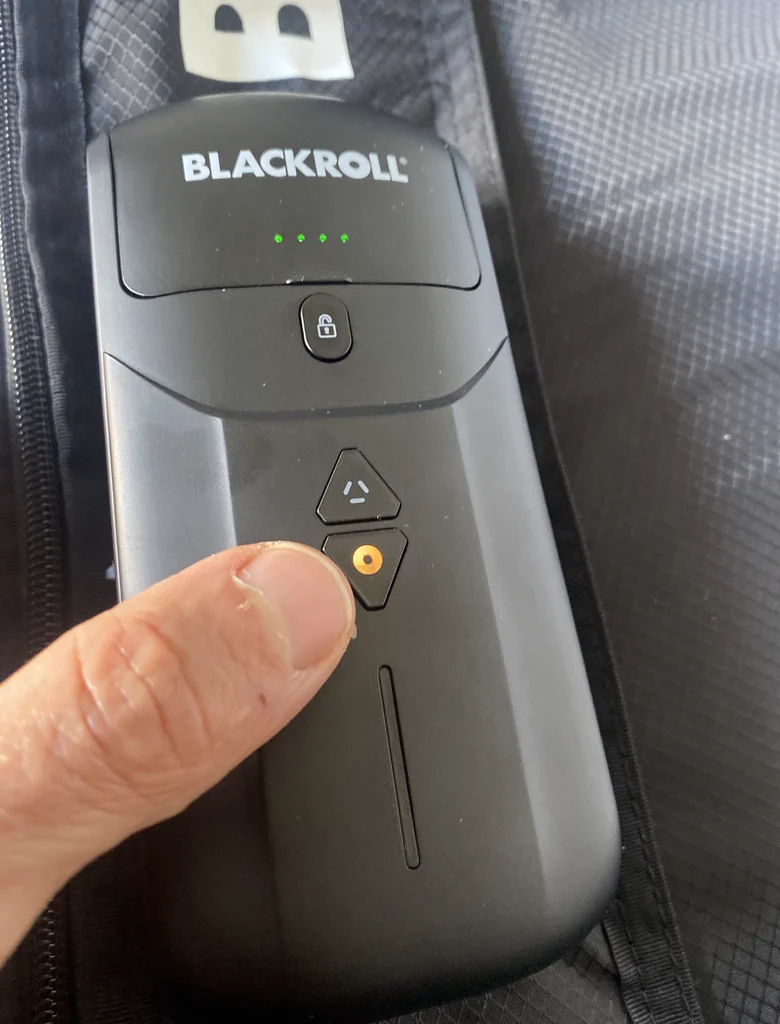
Time and stop settings
The device does not have an ultra-precise automatic timer, but it offers a simple countdown that can be set manually:
- Tiago chose the program (color), the pressure with the +/– buttons, then started the session.
- No “Time” button, you turn it on and it runs for 30 min… and you restart it if you want more.
- Once the time has elapsed, the cycle stops automatically: the chambers deflate gently, and the battery goes into standby.
- If needed, it can be stopped at any time by holding the power button for 2 seconds.
Tiago advises: “It’s better to start with 20 min and gradually increase, depending on the sensation. When you reach 45 to 60 min on blue mode, you already feel a real effect.”
Real-world usage conditions
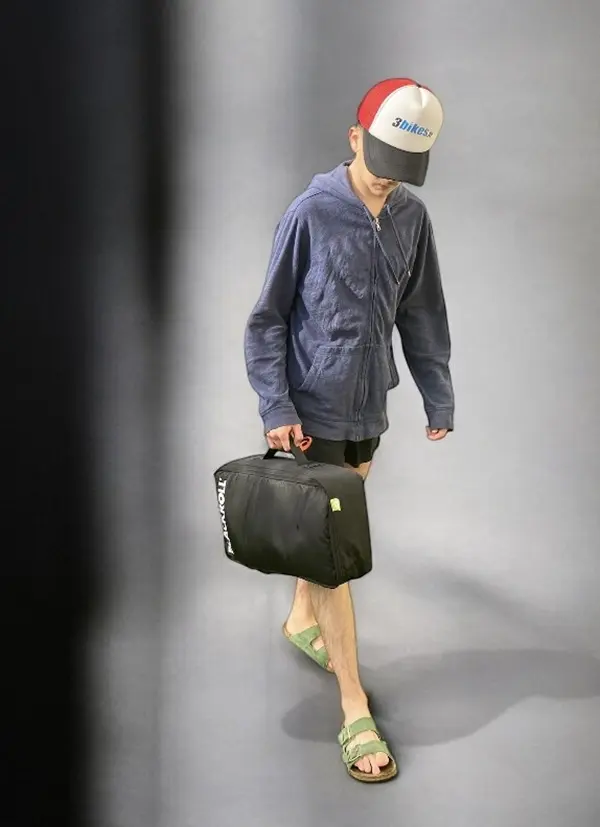
After intense sessions
Over several weeks, Tiago performed typical sessions: 10 to 15x400m at VMA pace, 30 to 45min at threshold in the middle of a 15km run, or 1h30 of sustained endurance. Afterwards, he used the boots for 30 to 60 minutes, medium-high pressure, with legs elevated or semi-reclined.
He noted his sensations: heaviness, stiff calves, a feeling of “congestion.” The next day, he compared his sensations with weeks without the boots.
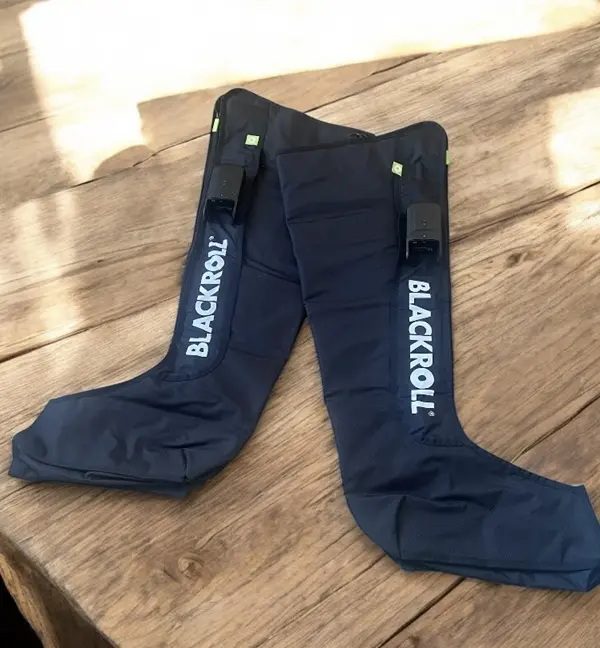
Tapering phase before a race
A few days before a goal, he integrated the usage session before the start: 15-30 minutes of use, low to medium pressure, to reactivate circulation, to “wake up” the legs. On race day, the goal was to avoid that feeling of “yesterday’s legs” or a “difficult start.”
Overall volume
Over the 4 weeks, approximately 8 to 10 sessions incorporating the boots. Alternating contexts of high fatigue / tapering phase. Usage combined with his usual protocol (training, sleep, nutrition) to neutralize variables.
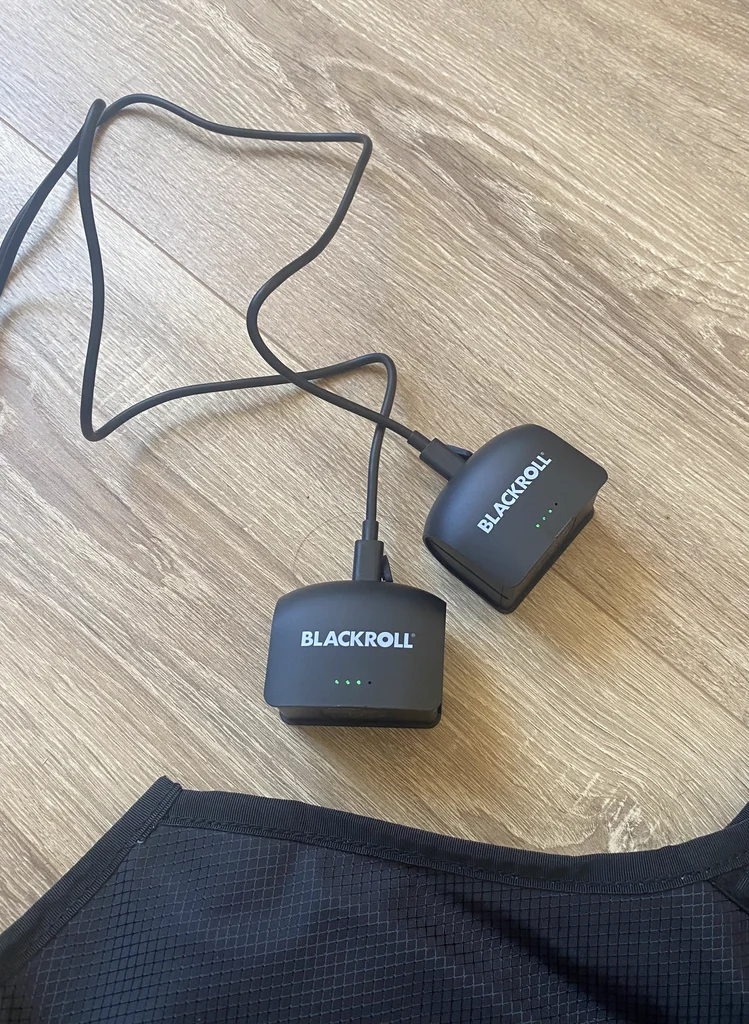
And here are the observed results
The positives
- Battery life: In intensive use, the battery life still reaches up to 3h30. And if the battery is discharged, the device can continue to operate via mains power.
- Lighter leg sensation: After “hard” sessions, Tiago felt a decrease in the sensation of “numb” calves and heavy thighs. He quotes “I felt less like I was carrying my legs.”
- Accelerated recovery: The next day, recovery was smoother. The usual minor muscle soreness was more discreet. This allowed him to string together sessions without “slowing down.”
- Effective tapering: On D-day, or just before, using the boots allowed him to approach the start with “ready” legs, without a “heavy” sensation.
- Convenience / portability: The ability to take the model on trips/training camps was a plus. Quick setup, no excessive noise, simple adjustments.
- Perceived quality: The model inspires confidence. The equipment seems serious, it’s not a gadget. For a young athlete like Tiago, this reinforces the idea of a professional tool.
Points of caution
- Budget: For a young athlete who is still an amateur (even at national level), the investment is not insignificant. It needs to be considered over several seasons.
- Usage position: It is essential to be in a sitting or lying position (feet ideally elevated). If the athlete does not have this slot, the benefit decreases. Tiago notes that on a day he used it standing “by default,” the effect was less.
- Size / adjustment: The M model suited Tiago, and he feared that if he gained some volume in his thighs or legs, the fit would become too tight. In reality, there is no size problem: the pressure is easily adjustable, so all sizes remain suitable. “But be careful to measure the inseam correctly,” reminds us Jacques-Olivier Barral, the brand’s boss in France… especially if your name is Victor Wembanyama and you call Blackroll to order boots!
- Not connected/advanced app: The tested model did not have a sophisticated mobile application with data tracking. For an ultra-connected athlete, this is a small drawback.
3bikes verdict & Tiago’s recommendations
For Tiago, this model clearly provided added value. It’s not miraculous, but when all the boxes are checked (hard session, recovery, tapering), it makes a difference.
According to 3bikes, recommended if…
- You are a competitor or train hard (volume or intensity);
- You aim to recover quickly, to string together training days or to arrive fresh on race day;
- You already have a solid training / sleep / nutrition base and are looking to “step up a notch.”
To be considered with caution if:
- You are an occasional amateur, with moderate training;
- Your budget is tight;
- You don’t have the time slot to use the device in a sitting / lying position.
For the 3Bikes rating, based on Tiago’s test: 4.5/5
The investment is justified for someone who will actually use it. For others, it may remain a “plus” but not a priority.
In conclusion: if we had to advise Tiago or another athlete of his build, we would say: “Yes, take them. But commit to really using them (post-session + tapering)”. Otherwise, they’ll just be stored away… and that would be a shame.
In summary
The BLACKROLL Compression Boots model stands out as a high-end recovery tool, well suited for an endurance athlete like Tiago. It helps reactivate circulation, lighten legs, and approach training or race days with more freshness.
Remember: training is essential. These boots are a supplement, but a useful one if you integrate them correctly.
And if your legs feel “heavy,” “tired,” or you’re reactivating just before a goal: this tool can be a solid ally.
At 3Bikes: we approve.
The BLACKROLL Compression Boots in brief…Pros: very good battery life and possibility to use them also plugged into the mains, drainage efficiency, accelerated recovery, comfort of use, premium finishes, portability. Cons: no connected app (and at the same time, it’s so much simpler…), high price, mandatory sitting/lying use. Technology: 5-zone sequential pneumatic compression – Pressure: 20–120 mmHg – Modes: 3 (drainage, recovery, re-activation programs) – Battery life: ≈ 3h30 – Battery: detachable USB-C Li-Ion – Size tested: M (1.76 m / 54 kg) – Recommended use: 30–60 min post-training or 15–30 min pre-competition – Weight: 1.37 kg per boot Price: approx. €499.90 Contact: blackroll.com |
Share the post "Blackroll Compression Boots Test: Optimized Recovery"