Share the post "Review of the Zipp Super-9 Lenticular Wheel"
When every watt counts and seconds are ticking away on the stopwatch, the Zipp Super-9 makes a striking case: yes, a disc wheel can dip below the symbolic 1,000-gram mark while still accommodating 28-mm low-pressure tires. And no, it doesn’t turn your time trial or triathlon bike into a jackhammer. After extensive testing in training and in races, here’s our take on what this wheel really changes when you’re riding at an average speed of 45 km/h.
By Guillaume Judas – Photos: ©3bikes.fr  With this new Super-9 launched in the spring of 2024, Zipp hasn’t reinvented the lenticular wheel—it’s simply brought it into adulthood. Since 1988, the American brand has been producing solid-wall wheels, but this latest version marks a definitive break from the old dogma that the harder and stiffer a wheel of this type was, the faster it would be.
The Super-9 Tubeless for disc brakes was born from the TSE (Total System Efficiency) philosophy, which refuses to separate aerodynamics, weight, rolling efficiency, and comfort. The result? A hookless rim with an internal width of 23 mm and an external width of 30.4 mm, requiring a minimum 28 mm tyre inflated to a maximum of 4.5–5 bar. Forget the 8 bar of yesteryear that used to crush your lower back at the slightest bump in the road and caused you to lose traction when riding out of the saddle.

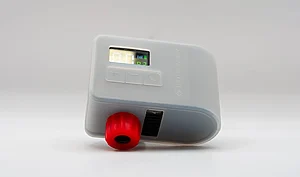
A built-in pressure sensor
At the heart of the system is the ZR1 hub with ceramic bearings and a 66-point engagement freehub body that’s extremely responsive. The specialized carbon laminate increases the wheel’s lateral stiffness compared to the previous generation while reducing weight. On the scale, the wheel weighs in at 999 g, with TyreWiz integrated (the Quarq pressure sensor that helps prevent errors). At €2,750, the Super-9 costs as much as a high-end wheelset. No (pleasant) surprises there. But fortunately, the finish lives up to expectations, with a lenticular shape perfectly engineered in a wind tunnel and parallel sidewalls that start at the hub and taper inward toward the rim’s base. The surface features dimples to control airflow—a common feature with Zipp. => SEE ALSO: Buy the Zipp Super-9 for €2,099 instead of €2,750
 Compared to the competition, the Super-9 plays in the big leagues but refuses to pay the price in weight. The Roval 321 is very slightly lighter (36 g lighter with a 26 tire and latex tube setup) and €250 cheaper, but its 19 mm internal rim width limits it to narrow tires and high pressures. The ENVE SES Disc (1,225 g) offers impeccable build quality but costs an additional €750 for an extra 200 g. The HED Vanquish Pro RCD tips the scales at 1,135 g, but its DT 240 hub is a step below in responsiveness. Only the Princeton CarbonWorks Blur V4 or Wheelscience dare to go any lighter, at the cost of a less reassuring warranty and unpredictable availability.

In short: if you’re already riding a Cervélo P5, a Canyon Speedmax, or a latest-generation Trek Speed Concept, the Zipp Super-9 is the only lenticular wheel that won’t make you miss the 858 NSW when the road gets rough.
Fast, yet comfortable
On the road, the magic happens from the very first kilometers. Its featherlight weight dispels the myth of punishing inertia: coming out of a turn at 48 km/h, the acceleration is just as sharp as with an 858, but once you’re up to speed, the inertia takes over like a high-speed train. On a hilly course, the time difference with just two wheels featuring 50–60 mm high rims amounts to tens of seconds. If you’re racing a time trial in a long-distance triathlon, every watt saved carries over intact to the marathon segment. And if, like our tester today, you’re competing for a (Para)Olympic time trial title, you’ll never be able to blame your Super-9 setup in the rear and 858 NSW in the front. The torsional stiffness turns out-of-the-saddle sections into catapults: no flex, no loss, just a brutal power transfer that further lowers your time.

On the aerodynamics front, Zipp doesn’t disclose any supposed watt savings compared to the previous version of the Super-9, but emphasizes that it’s just as aerodynamic, while accommodating a 28 mm tire without any performance penalty. In the real world, the gain comes mainly from lower rolling resistance—hard to believe for those of us from the old school, but surprisingly evident during testing with a tire pressure of around 4.5 bar.
Comfort? Radical. The vibrations that usually travel all the way up to the neck on a classic disc wheel disappear. The rim absorbs bumps just like a spoked wheel. This allows triathletes to arrive at T2 with legs that feel almost brand-new.
 And then there’s the silence. Almost absolute. Where most lenticular wheels scream their presence with every rotation—and even more so with every gear shift—the Super-9 glides without a whisper. Almost no rhythmic whoosh-whoosh, no annoying whistling at 50 km/h. Only the wind against your helmet reminds you that you’re riding at an outrageous speed. Over a 20-km time trial, this silence becomes addictive: nothing disturbs your concentration—just the sound of your breathing and the tick-tock of the speedometer as it climbs.
A new philosophy
Verdict? The Zipp Super-9 isn’t just a disc wheel. It’s the end of a compromise. For the triathlete who refuses to choose between pure speed and fresh legs for the marathon, for the time trialist who wants to break 50 minutes over 40 km without sacrificing comfort on real roads, it sets a new standard. At €2,750, it’s expensive. But when you cross the finish line 42 seconds ahead and with the feeling of having ridden on velvet, you realize that the real price is the one paid by your rivals who haven’t yet figured out that “smoother is definitely faster.”
The ZIPP SUPER-9 at a glance…Pros: weight, aerodynamics, comfort (relative), ride quality, quiet operation Cons: hookless rim (with a list of compatible tires), price Rim construction: Hookless carbon (hookless) – Hub: ZR1 (ceramic bearings) – Internal rim width: 23 mm – Minimum and optimal tire width: 28 mm – Integrated TyreWiz 2.0 tire pressure sensor (10 g) – XDR or SRAM/Shimano freehub body (Campagnolo freehub body sold separately) – Max. compatible weight: 115 kg – Max. inflation pressure: 5 bar/73 psi – Weight: 999 g – Carrying case and lenticular wheel protector included – Lifetime warranty – Price: €2,750 – Contact: https://www.sram.com/fr/zipp |
Share the post "Review of the Zipp Super-9 Lenticular Wheel"