Share the post "Beginner? No, the gravel bike is not the solution to everything!"
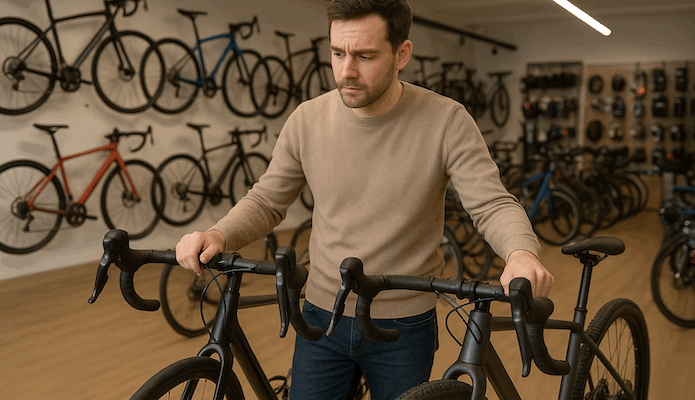
You walk into a bike shop, eyes gleaming, ready to invest in your first “real” bike. And there, they’re praising the gravel bike: “Versatile, comfortable, ready for anything!” Stop. Breathe! If you’re a beginner, the golden rule is simple: choose a bike suited to the type of riding you’ll do most of the time, not one to cope with a hypothetical off-road excursion. We’ll explain.
By Guillaume Judas – Photos: depositphotos.com

A bike for every terrain
There are several types of bikes, adapted to different types of terrain:
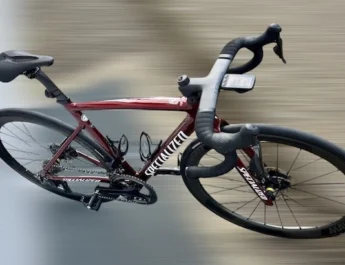
- Road bikes, light, aerodynamic, and with thin tires for asphalt only
- Mountain bikes with flat handlebars, suspension, and large tires for trails, rocks, rough and uneven terrain
- Gravel bikes, in between the two previously mentioned, with drop handlebars but wide tires and endurance geometry for groomed paths and roads
- Time trial, triathlon, cyclocross, or track bikes, which are very specialized disciplines, with machines rarely found in stores
The gravel bike is a bit like the SUV of bicycles: a machine capable of performing equally well on dirt and sand as on the road, and sometimes even on some singletracks in the woods or mountains if they’re not too harsh. A machine faster than an MTB on the road, and with more capabilities than a road bike off the beaten path. Is it therefore the ideal choice if you only want one bike in your garage? Not necessarily.
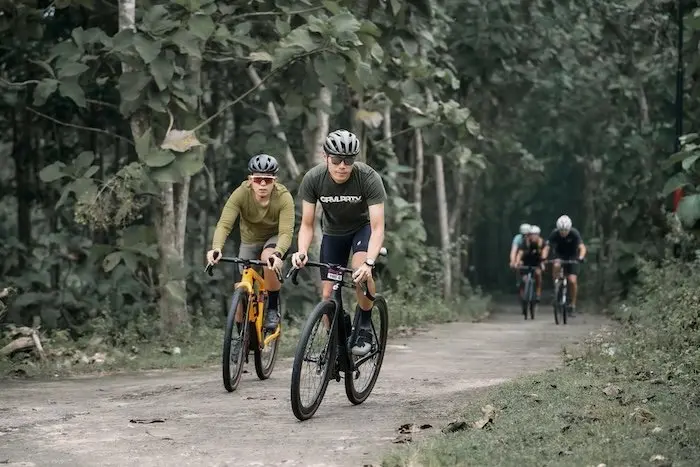
In fact, it all depends on how you envision cycling. If you primarily want to ride on mixed routes, consisting of paths, white roads, undergrowth, bike paths, and paved roads, then it’s probably the best solution. But if your goal is primarily to ride on the road or even to achieve performance, with possibly the option to take an unpaved road once in a while, a gravel bike will very quickly show its limitations.
A poor default choice
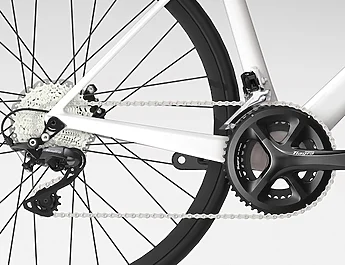
Gravel is appealing on paper because it theoretically allows you to do everything. In reality, as soon as you ride more than 50 km on asphalt, its limitations become obvious. The more upright position of a geometry designed for endurance and handling capabilities makes you lose watts against the wind and tires you out faster at high speeds. The less rigid frame leads to a loss of pedaling efficiency. The larger, knobby tires produce much more rolling resistance. The extra weight makes accelerations less punchy. And the drivetrain, often with a single chainring, imposes gear gaps that are too wide between each cog on flat roads or when riding in a group. In short, it’s most often an average bike everywhere, instead of an excellent bike where you really need it.
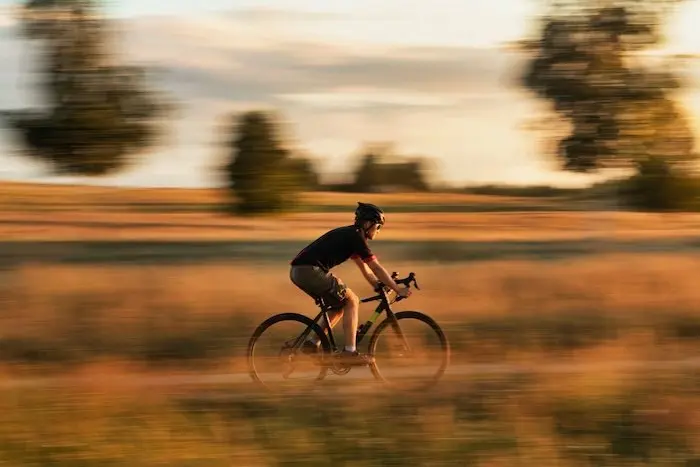
Be careful, we are not saying that gravel bikes are bad bikes, far from it. They are machines designed for allroad use, and to tackle all the difficulties inherent in this type of route. If you are aiming for gravel races, long distances without hesitation to cut across fields, if you want to get away from traffic as often as possible, or even if you want to commute sportily with a bike capable of safely riding on bike paths, gravel is for you. But choose it with full knowledge of the facts.
The increased capabilities of modern road bikes
For those who are not sure they will never take shortcuts, the good news is that today’s road bikes have evolved. Most frames, whether entry-level, mid-range, or high-end, accept tires up to 32 or 35 mm in width, which is plenty for riding on rolling paths without problems. Some even go so far as to accept 650b gravel wheels for an occasional escapade. With these new capabilities, you retain 95% of a road bike’s performance, while keeping the door open to adventure, without sacrificing your daily rides.
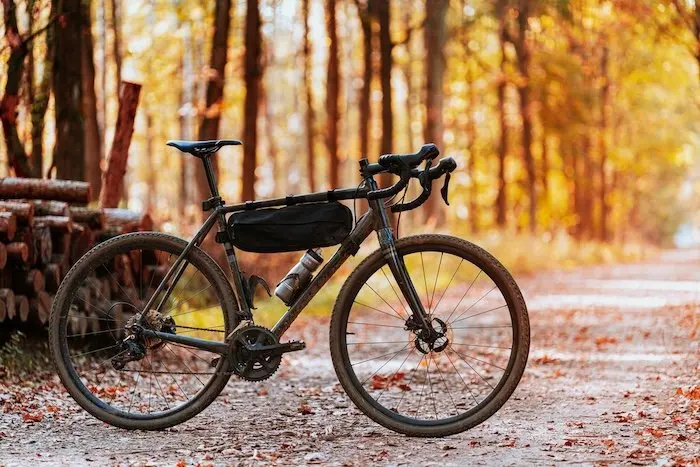
Buying a gravel bike for hypothetical rides is a mistake
With a gravel bike, you can do almost anything, it’s true. But it’s a bit like running with trail shoes on the sidewalk: it works, but it’s less efficient, less fluid, and ultimately less enjoyable. Choose the type of bike that excels where you’ll be pedaling most often. You’ll ride faster, more often, longer, and with a smile. The day you really want to explore the trails, rent or buy a second-hand bike: it’s cheaper than making the wrong choice for your first one.
Share the post "Beginner? No, the gravel bike is not the solution to everything!"