Share the post "Cyclists and their microcosm: love in a low gear"
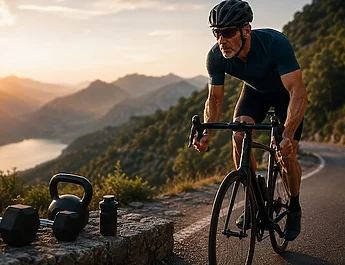
There are moments, on the sidelines of an amateur race or a club ride, when you wonder if cycling hasn’t become a small pedal-powered sect. Not a dangerous sect, no: just a joyfully self-contained brotherhood, with its codes, customs, and priests in black bib shorts. You enter it somewhat by chance, you stay out of love… and you rarely leave unscathed. Because yes, the cyclist builds everything around their passion. Meticulously. Like a small architect of watts. Their life becomes a puzzle where each piece must serve the grand project: ride more, ride better, ride when others are sleeping. Non-initiates find it excessive. We call it discipline.
By Jeff Tatard – 3Bikes.fr / Photos ©3Bikes
The World According to FTP
The cyclist is a being who doesn’t “just ride a bike”: they live cycling. They know the 7-day weather forecast, the wind schedule, the composition of their gel, the weight of their wheelset, and, above all, the average power of yesterday’s ride, which they’ve already uploaded to Strava before even taking off their gloves. Their sociability? Algorithmic.
“Kudos” have replaced handshakes, WhatsApp groups have replaced aperitifs, and discussions revolve around FTP, TSS, and “base training.” Try to bring up a current event at a cyclist’s dinner: you’ll be swept away by a passionate debate on the comparative advantages of tubeless ready or old-school tubulars.
“Tell me what you ride, and I’ll tell you who you are.” |
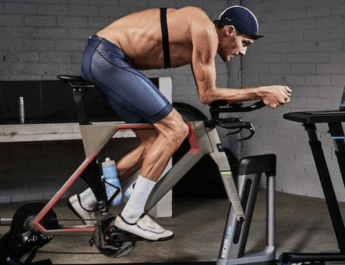
Every microcosm has its castes. For us, the bike is a religion of useful appearance: the contemplative gravel rider, the purist roadie, the meticulous triathlete, the nervous racer, the philosophical bikepacker… In short, everyone preaches their gospel and looks at others with a mix of curiosity and slight condescension. A pure road cyclist is a type who calls mountain biking “the other thing,” who says “we’ll ride at a steady pace” to talk about a casual outing, and who considers a brunch without glycogen not a meal.
But the tribe doesn’t stop there. The most fascinating thing is how everything else: job, love, friendships, etc., eventually revolves around the bottom bracket and 172.5 cranks (160 for Poggi). Many choose a job that “leaves time to ride.” The most organized invent a tailor-made profession: cycling coach, mechanic, photographer, content creator, watt-obsessed podcaster. Others even find love on the bike. It’s not inbreeding: it’s sentimental logistics. Same passion, same schedules, same smell of embrocation cream.

Why So Closed Off?
Some criticize cyclists for living in a bubble. It’s somewhat true. But it must be said that it’s nice in this bubble: air, asphalt, and a little pain. Cycling, an endurance sport, shapes a monastic ethic: early rising, eating just right, suffering cleanly. Anything that deviates from the training plan becomes suspect.
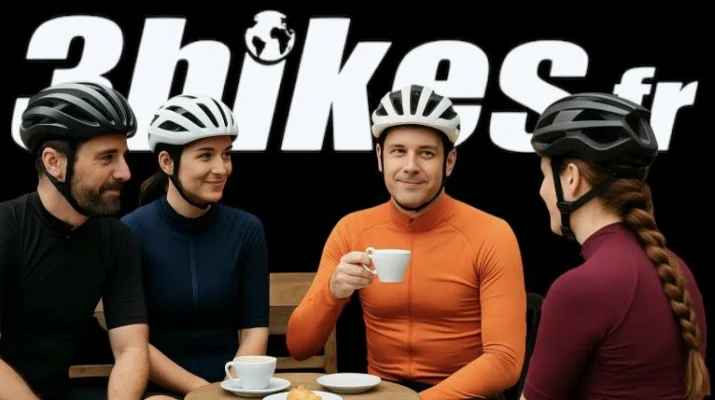
And then there’s the very concrete dimension: riding at 40 km/h in a peloton is an act of trust. You don’t lend your rear wheel to just anyone. It’s a matter of survival, not snobbery. The problem is that this safety requirement sometimes turns into a comfortable self-contained group: you ride with the same people, you talk with the same people, you share the same Strava… and you forget a bit about the rest of the world.
Cycling, a Mirror of a (Very) Organized World
But it must be said: this phenomenon is not unique to us. We find the same closed circles among mountaineers, triathletes, jazz musicians, researchers, or high-level gamers. Wherever passion becomes a way of life, it tends to create its own boundaries.
The cyclist, however, has an advantage, in addition to their dialect: their bubble rolls. It gets aired out. And even when closed off, it crosses landscapes at 35 km/h when we said Z2. Maybe that’s why we feel so free, while remaining so similar.
Some Clichés (That Die Hard)
|
The Bottom Line…
Ultimately, this closed-off nature is neither serious nor definitive. It speaks of a quest for intensity. Cycling is a language that takes time to learn to speak. And those who have learned it enjoy speaking it among themselves. But nothing prevents inviting others, provided you slow down a bit, take off your helmet on the terrace, and describe the ride in ways other than the number of watts.
Cycling doesn’t isolate. It’s our way of making it a fortress that sometimes does. But a peloton remains a community in motion: all it takes is a sign, an outstretched elbow, a shared wheel to reopen the road.
And what if the real challenge, in the end, was to pedal hard enough… not to go in circles?
=> Find all our societal articles: All our Magazine articles
=> And for more serious stuff (really!), take a look at this fascinating study on cyclist identity and social interactions:Understanding cyclist identity and related interaction strategies – ScienceDirect
Share the post "Cyclists and their microcosm: love in a low gear"