Share the post "Nicolas Bodin embarks on the “diagonale du cœur”"
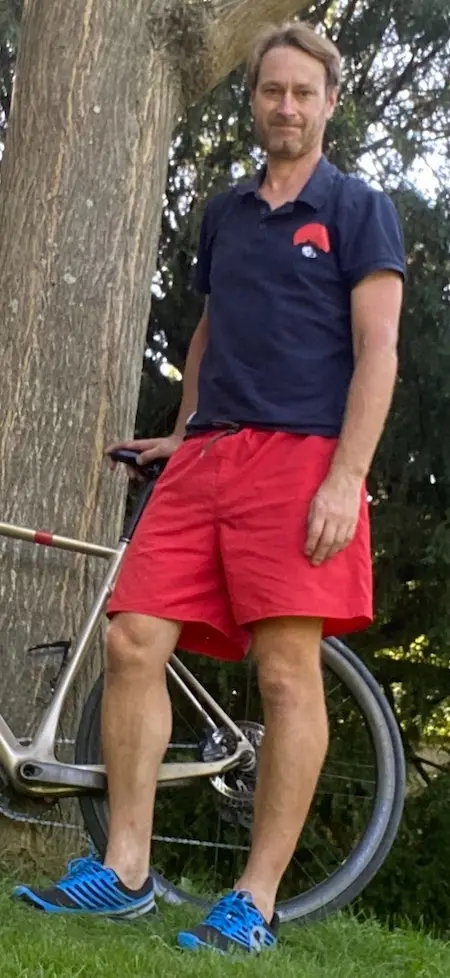
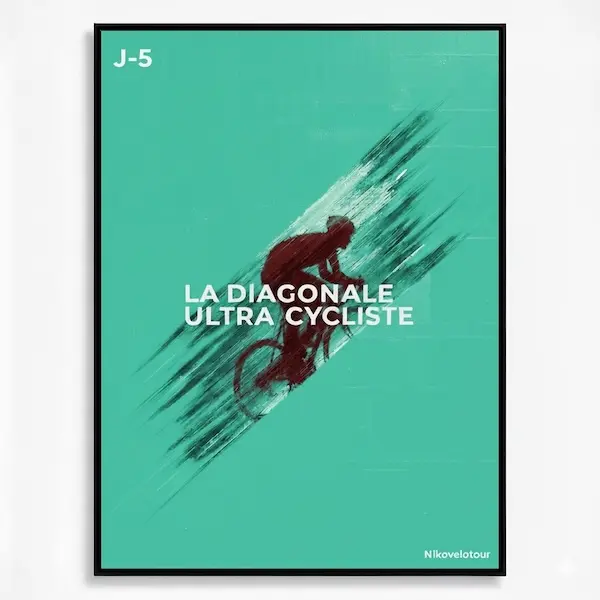
There is something tranquil in Nicolas Bodin’s voice, a simple, slightly dreamy way of speaking that makes you want to listen. You sense in him the gentleness of school teachers who know how to transmit knowledge, but also an inner strength, almost stubborn, like those who wake up every morning with a clear goal: to do a little good around them. This Saturday, October 18, Nicolas embarks on a 1700-kilometer journey across France. He has named it La Diagonale des faibles densités (The Diagonal of Low Densities), a name that, in itself, says a lot: a love for the land, for slowness, for forgotten roads, for villages we pass through without seeing, and where life still beats…
By Jeff Tatard – Photos: @nikovelotour / NIKOVELOTOUR.COM
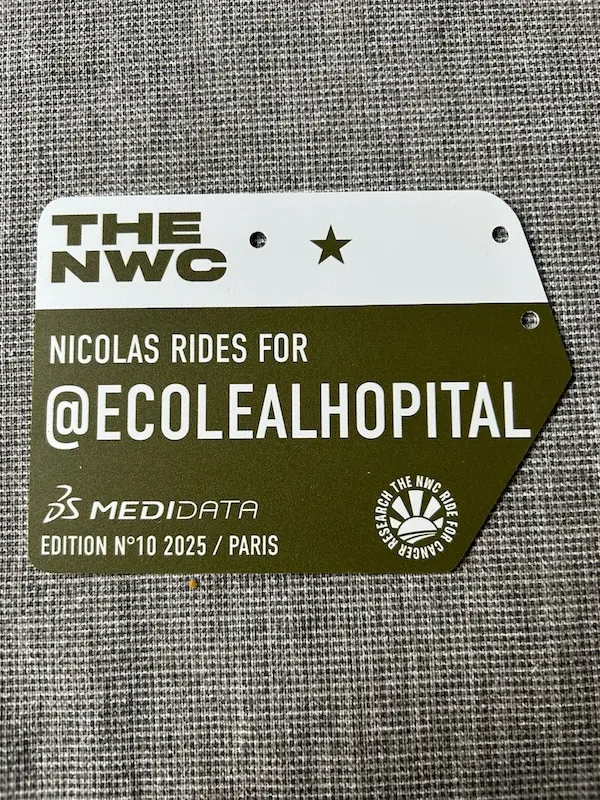
But behind this extraordinary sporting challenge, there is another battle, infinitely greater: that of the association L’École à l’Hôpital (School at the Hospital), which supports sick children so that illness does not cut them off from knowledge, curiosity, and the world. It is for them that Nicolas cycles. Every meter, every climb, every moment of fatigue will have a meaning: that of paying tribute to these children who fight, to these teachers who continue to teach in hospital rooms, and to these volunteers who bring light back where everything could darken.
A Map, a Daughter, a Realization
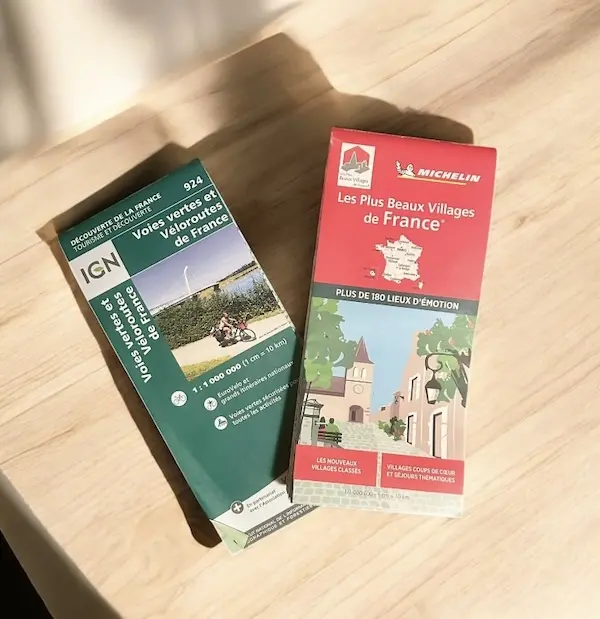
It all started with an ordinary dinner in a family kitchen… On the wall, an old, slightly yellowed map of France, one of those that used to hang in classrooms. Nicolas keeps it there as a nod to his profession as a school teacher, and no doubt also as a landmark, a reminder of what he transmits to his students every day.
That evening, one of his daughters looked up at the map and asked him:
— “Dad, which city have you never cycled through?”
He thought for a moment, then replied: “Saint-Dizier, I think…”
She immediately retorted: “Do you know that city is in the diagonal of emptiness?”
The word struck him. The diagonal of emptiness. A concept learned in geography classes, referring to that large band of French territory where population density is lowest. But in this child’s remark, Nicolas heard something else: a promise of adventure, of discovery, and a kind of tribute to these territories that are no longer looked at, but which form the beating heart of the country.
That day, he was supposed to leave for a charity Paris-Luxembourg ride for L’École à l’Hôpital. He ultimately gave it up to stay with his daughter. It was at that precise moment that the realization occurred: “I said ‘deal’. This will be a new challenge, a new way to act for the association, and perhaps a way to reconnect with what I love most: meeting people.”
That same evening, he delved into readings about the diagonal of emptiness. And in his head, the journey had already begun.
A Diagonal Full of Meaning
The name of the challenge, La Diagonale des faibles densités (The Diagonal of Low Densities), is not insignificant. It is a poetic counterpoint, a way of reminding us that what we call “empty” is often full of riches: stories, accents, solidarities, landscapes.
For Nicolas, it is a France with a human face: that of village cafés where people still take the time to talk, of bakeries that open at dawn, of roads lined with fields, of territories said to be “forgotten” but which only ask to be seen. “I believe that by traversing this France, we better understand the country we live in. We discover passionate people, projects, villages that are reborn… And I like to give meaning to my journeys by placing them under the sign of encounter.”
It is not a race, nor a quest for performance. It is a journey as much internal as external, a way to reconnect both with the territory and with oneself.
L’École à l’Hôpital, a Promise Kept
Behind the challenge, there is a cause. And behind the cause, a personal story. About ten years ago, one of his daughters was hospitalized for a week. By chance, in the hospital corridors, Nicolas met volunteers who intervened with hospitalized children to continue teaching them, accompanying them, and maintaining that fragile link between school and life. “Their dedication moved me deeply. I promised myself that one day, I would do something for this association.”
Since then, every one of Nicolas’s sporting projects is dedicated to L’École à l’Hôpital. And if his body provides the effort, it is his heart that gives direction.
Solo Preparation
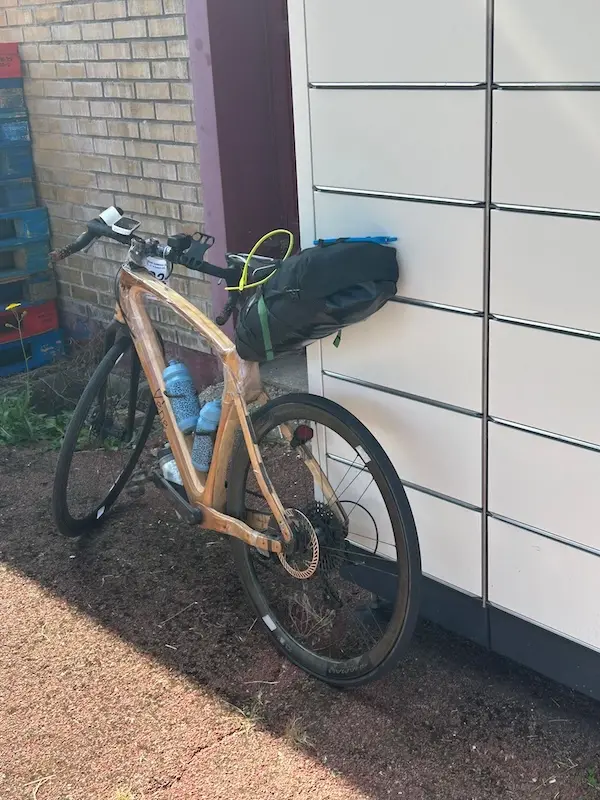
Nothing professional about any of this. No staff, no support car, no logistics partner. Just a man, his bike, and a lot of conviction. The idea of the diagonal only came at the end of the summer. So since September, Nicolas has been doing long rides, a few charity races, and running sessions to maintain his fitness.
But he also brings the experience of a summer of 3500 kilometers on the roads of France, meeting inhabitants and discovering landscapes. He is a real-world cyclist, one of those who know that at 6 PM, in a small town, the hunt for food becomes a sport in itself.
He prepares each stage, identifying possible stopping points: inns, Warmshowers, private homes, sometimes even a bus shelter or a bank vestibule. “Often, I sleep where the road takes me. It’s not always comfortable, but that’s also the beauty of it.”
The Call of the Southwest
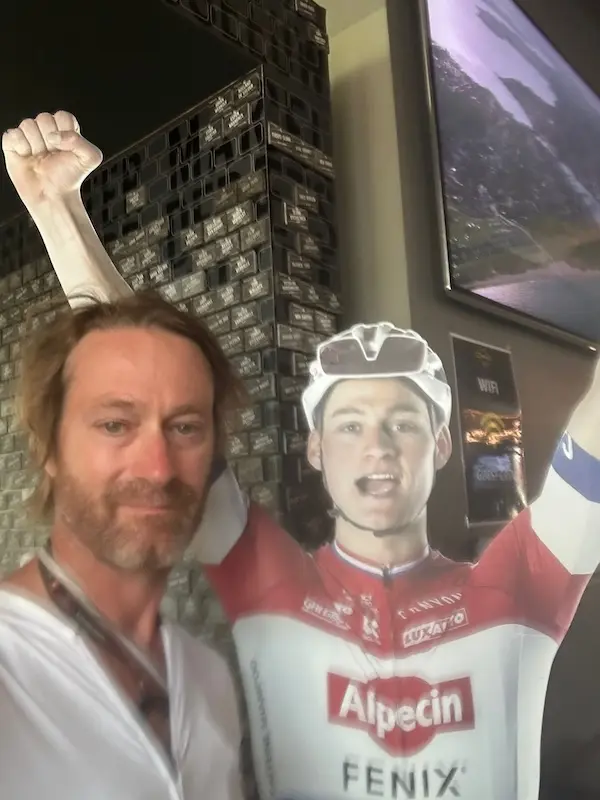
When asked which section attracts him the most, he doesn’t hesitate: the arrival in Hendaye. After hundreds of kilometers crossing France from northeast to southwest, touching the Basque coast will have a special flavor. “It’s the most southwestern point of France. And then, we pass through villages that smell of rugby, that local sport I used to play.”
But before that, there will be the Tulle-Montauban stage, the one he dreads the most. A lot of elevation gain, a long distance, and that feeling of crossing “the emptiness”. He smiles: “That’s exactly what I’m looking for.”
Alone, but Never Isolated
Riding without assistance is a choice. A gamble on oneself, a pact with solitude. It means managing sleep, food, breakdowns, doubts. It means relying on oneself and the road, accepting that one can only count on what’s in the bike bags… and in the heart. “It’s like in life: you have to make choices. Don’t carry too much. Find the right balance. Everything is more complicated without a support car, but everything is more beautiful too.”
Fatigue? He manages it with micro-naps, sometimes on the side of the road. Solitude? He transforms it into encounters. Because in every village, there is always someone to ask him where he comes from, where he is going, and why he is doing all this. And these exchanges, however brief, are for him the true reward of the journey. “I’m not afraid of solitude. What I fear most is running out of water or food. But even that, you learn to manage.”
The Teacher and the Cyclist
Nicolas is a school teacher. And it shows in his demeanor, in the quiet rigor he applies to everything he undertakes. Before leaving, he checks every detail: lights, equipment, GPS tracks. But he also knows how to let go. Detours, unforeseen events, encounters — all of this is part of the journey. “It’s also a form of reverie that is good to cultivate.” Rigor, yes. But also poetry.
The Cause, the Passion, and Resilience
In his gaze, one senses the sincerity of a man with a purpose. He speaks of the cause with respect, without pathos. He speaks of cycling with gratitude. For him, cycling is a tool for freedom, connection, and resilience. “I don’t compete. What I love is the journey, internal and external. It’s about going towards others, creating connections, understanding life elsewhere. And cycling helps me overcome challenges, to get out of difficulties. Every journey is a form of resilience.” He doesn’t seek to prove, but to traverse — the country, time, and his own vulnerabilities.
The Citizen’s Gesture
At the end of each stage, Nicolas will practice plogging, an activity that involves picking up trash while running. A small gesture, but a great symbol. “I read an article about it a year ago, I experimented with it for a month. It left an impression on me. And I told myself I could do it during my challenge. Because one commitment does not preclude another.” It’s his way of reminding us that effort only has value if it serves something greater than oneself. That sport, ultimately, is a tool for education, connection, and sometimes repair. “Sport must show that anything is possible, whatever one’s level. It must also remind us that we can give our strength, our time, in service of a cause.”
A Societal Ideal
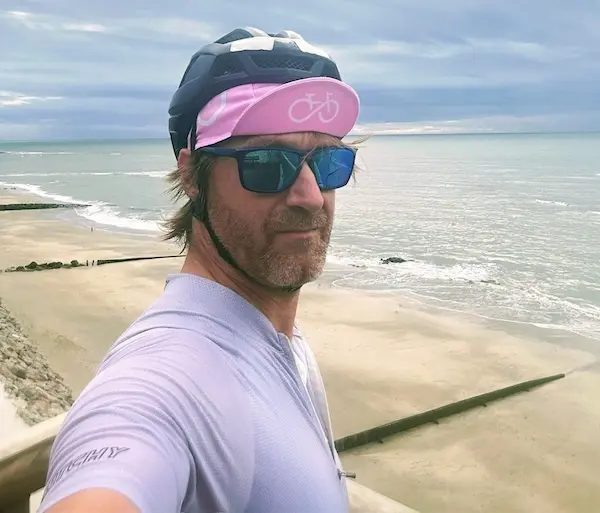
When you listen to him, you realize that Nicolas Bodin is a utopian, but the active kind. Not one who dreams with folded arms, but one who pedals to prove that things can change. He even has very concrete ideas: “Why not tax professional sports transfers by 1% to fund associations and clubs?” It’s not a quip. It’s a conviction. To give meaning, time, and a little justice to a world that sometimes lacks it.
What the Adventure Teaches Him
When he talks about what this challenge teaches him, he doesn’t talk about watts, speed, or performance. He speaks of dreams, humility, transmission. “It teaches me to dream by tracing my path. It teaches me humility because nothing is ever guaranteed. It teaches me resilience, to believe that the best is always ahead. And I hope it will inspire my children, show them that anything is possible, provided they put their heart into it and serve others.”
A Mark on Consciences
What Nicolas hopes for is not to be remembered himself, but for what his story will have awakened in others. “When someone tells me that meeting me has restored their confidence in a less selfish world, I tell myself I’ve won the day.” So yes, if his adventure can encourage someone to get back into sports, to volunteer their time, to sort their waste, to reduce their plane flights… he will tell himself that it was all worth it.
A School Teacher’s Lesson
If he had to address a child, a young person, a reader, Nicolas would not seek to moralize. He would simply say: “Go for it. Launch yourself. Build your project, and you will be proud of it. Some will tell you it’s useless or crazy. But if you find meaning in what you do, then that’s what matters most. And even if you fail, you will have already won.” Perhaps that’s what the diagonal of low densities is, ultimately: a path where the density of humanity is maximal.
Epilogue
In a few hours, Nicolas will hit the road. Alone, unsupported, with his bike bags, his maps, and his smile. He will cross forests, plains, hills, villages with modest names, cafés where half-pints are still served by hand. He will talk, listen, pick up trash, take breaks on benches, sometimes sleep under the stars.
And every morning, getting back in the saddle, he will think of those hospitalized children for whom learning is an act of resistance, of those teachers who continue to transmit knowledge despite the walls, of those volunteers who remind us that solidarity is not an empty word.
Yes, Nicolas Bodin will trace his diagonal. But what he is truly drawing is a map of the heart, that of a France that still moves forward with the strength of courage, connection, and kindness.
Share the post "Nicolas Bodin embarks on the “diagonale du cœur”"