Share the post "Axel Carion – What the world teaches us (to watch)"
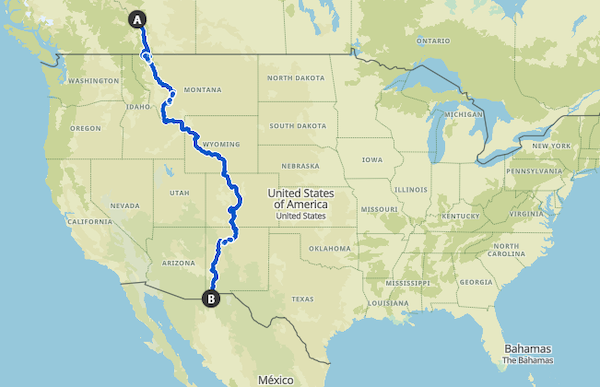
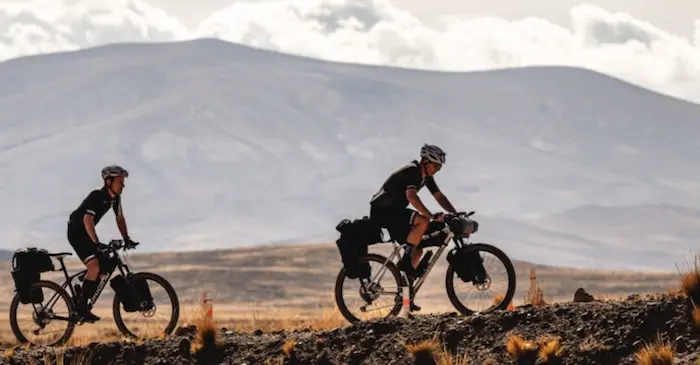
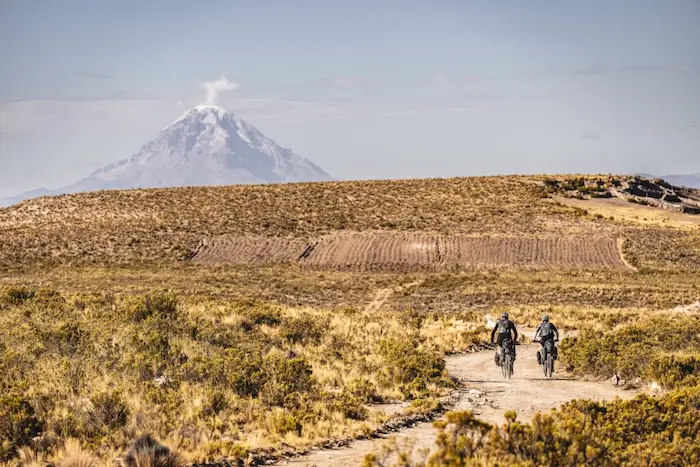
Day breaks over the Divide. Montana dust clings to the low sunbeams, the trail stretches like a clear scar amidst the mountains. Two silhouettes advance in silence, side by side. One knows exactly where he’s putting his wheels. The other is learning to read the world. Axel Carion and Greg have been riding since dawn. Their shadows lengthen on the trail like two parallel lines: the first, straight, sure, that of experience; the second, hesitant, that of discovery. Canada is already far behind them. Ahead, Mexico. Between the two, 4400 kilometers of altitude, cold, heat, and dust: the Great Divide Mountain Bike Route.
By Jeff Tatard – Photos: All Rights Reserved
We spoke to Axel on the phone this Sunday evening in October, the day before a new BikingMan event in Brazil. He spoke quickly. Not a nervous speed: a clarity of mind. His words were precise, like someone who has seen and understood a great deal. He wasn’t trying to convince; he was sharing.
« To repeat the same experience is a mistake. The second time, the real victory is to share it. » That’s exactly what he did on the Divide: coming back to pass it on.
The Professional and the Novice
Axel Carion is not a challenge enthusiast. He is their architect. Founder of BikingMan, he knows fatigue, solitude, mechanics, logistics, doubt, and risk management. It’s his profession. By his side, Greg, a novice. He had never experienced an expedition of this magnitude. Between them, there is this difference in density that makes the duo fascinating: mastery on one side, discovery on the other.
Axel carries everything: navigation, strategy, tempo, security. But he doesn’t make it a burden. For him, it’s natural. « When you master something, you’re not crushed by responsibility; you’re liberated by it. » He knows what he’s doing, and it’s this quiet certainty that allows Greg to be guided.
On the road, he observes, learns, imitates. Axel doesn’t talk much. He shows. He instills confidence without promises. Between them, the bond is woven without words. « Silence is our true connection. When you no longer need to speak to move forward together, that’s when you’re in the right place. »
The Endless Days
Days on the Divide begin before light. The cold is still sharp, numb fingers struggle to dismantle the tent. Coffee heats on the stove, smelling of metal and dust. By six o’clock, they are already on the trail.
Fifteen-hour days. An average of ten and a half hours on the bike. Barely five hours of sleep. Axel manages like a watchmaker. He knows how to measure, anticipate, repair. Not an ounce of panic, never a wasted movement. He speaks of pain as data, not a drama. « Pain, you welcome it, you read it, you integrate it. It’s information. »
In the evening, when the light fades, they stop. No hotel, no comfort. Just the thin fabric of the tent, the repetitive gestures of bivouacking. The sounds of the wind, insects, sometimes an animal unseen. Silence returns, even denser. And in this silence, a rare peace.
The Father
When asked about this love for the road, he doesn’t trace it back to America or cycling. He traces it back to childhood. In the Carion household, there were six of them: three brothers, three sisters. A lively house, voices, movement. His father imposed nothing. He opened doors. « He didn’t teach me to conquer; he taught me to explore. And to explore isn’t to take; it’s to understand. »
He pauses. « I never really thanked him for that. »
From this upbringing, he retains a principle: permission. Not in the sense of laxity, but of trust. The kind given to someone known to be capable of trying. It is this freedom that he transmits today.
The Wife and Son
When he speaks of his wife, the speed of his voice changes. The precision remains, but the tone softens. « She understands that every departure is a part of me. She doesn’t try to hold me back; she helps me return. » And then he mentions their son. Eighteen months old. « He is the most beautiful thing. He’s not a reason to stop leaving. He’s a reason to come back better. »
He, who spent months riding alone, now sees the road differently. Fatherhood hasn’t curbed the explorer. It has guided him. « I want him to see the world in a way other than through a screen. »
Reality Versus the Speed of the World
The word ‘real’ comes up often. Axel is not against technology. He uses it, understands it, teaches it. But he knows its limits. « We are connected to everything, except ourselves. » For him, expedition is a form of gentle resistance. A way to remind us that to live is to feel. The wind, the cold, hunger, fatigue: reality, in all its texture. « You can’t tell everything. You have to live it. »
The wind, the cold, hunger, fatigue: reality, in all its texture. « You can’t tell everything. You have to live it. »
When he rides, he cuts everything off. No phone, no network. The world shrinks to breathing, the sound of the chain, the horizon. It’s a physical disconnection, but above all, a mental one. A discipline.
Ego and Measure
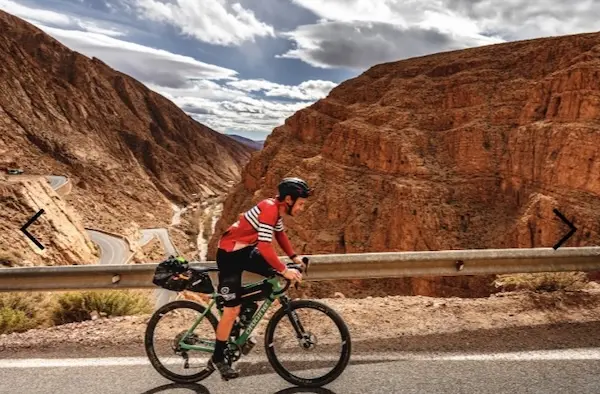
His relationship with ego is disarmingly lucid. « Ego is what makes you leave. But if you let it drive, you get lost. » It’s not a moral discourse. It’s an observation. « The mountain, he says, doesn’t congratulate you. It accepts you or it ignores you. »
There’s no podium on the Divide. No spectators. No applause. « Numbers tell nothing. What matters is the invisible trace. » This precision, he owes to his profession. In the world of BikingMan, he has seen hundreds of adventurers pass through. Those who finish are not always the strongest; they are the most balanced. Those who know how to listen to the world.
Exact Beauty
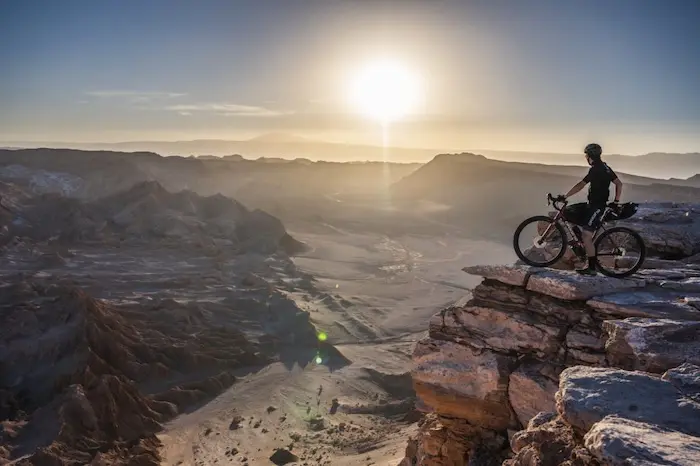
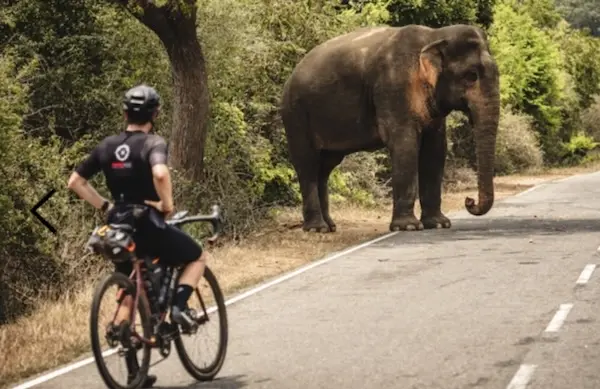
When he describes nature, his voice takes on an almost scientific tone. He speaks of geology, air density, light. He doesn’t seek poetry; he seeks exactitude. « Nature isn’t beautiful; it’s just. And that’s why it moves us. » Nights in the tent don’t leave spectacular memories. No perfect images. What he retains is the silence. « What I remember is the absence of noise. When everything stops, only you remain, and that’s enough. »
Resilience
Axel often speaks of resilience like an elastic band. « The more you pull, the more it stretches, the more it adapts. But if you pull too hard, too often, it loses its tension. It doesn’t break; it empties. » This image resembles him: concrete, without pathos, but with an implacable accuracy.
For him, resilience is not a virtue. It’s a fine mechanism, a balance to monitor. Each expedition stretches the elastic band a little further. The mind, the body, lucidity: everything stretches. So, to prevent it from losing its tension forever, you have to give it meaning again. « Meaning is what restores the tension. »
And that’s where Greg enters the scene. Riding with him means changing perspective. Seeing the world through his eyes means rediscovering the freshness of the first departure. Axel explains this like a CinemaScope effect: suddenly, the field widens, the perspective changes. « We discover differently what we thought we knew. »
He recounts this idea by linking it to a universal memory: that of a child falling. « A baby doesn’t cry because it’s in pain. It cries when it meets its mother’s worried gaze. It reads the pain in her eyes. » That’s where everything plays out: in resonance. The gaze of the other shapes perception, gives it a framework, a depth.
With Greg, it’s exactly that. « Through his gaze, I understood what I do differently. He helps me read my own actions. It’s not pedagogy; it’s a form of shared intelligence. » He doesn’t speak of teaching, but of a mirror. What one experiences, the other understands differently, and in this silent exchange, each expands. Resilience then becomes something greater: a flexibility of mind, an ability to let oneself be permeated by the other’s vision without losing one’s own.
Greg, the Sharing
The relationship between Axel and Greg is not one of two equals. It’s that of a professional and an apprentice. But not in hierarchy: in benevolence. Axel observes, corrects, reassures. Greg learns, listens, imitates.
They don’t need to talk to each other. Silence does the work. « Together, we go more accurately. » The phrase comes back often. Not faster, not further: more accurately. What is striking is Axel’s tranquility. No fear, no tension. He carries the mental load without feeling it. It’s part of him. He doesn’t talk about it; he lives it. Sharing, here, is not sentimental. It’s a science of presence. A way to show that mastery is only valuable if it opens up.
The Return
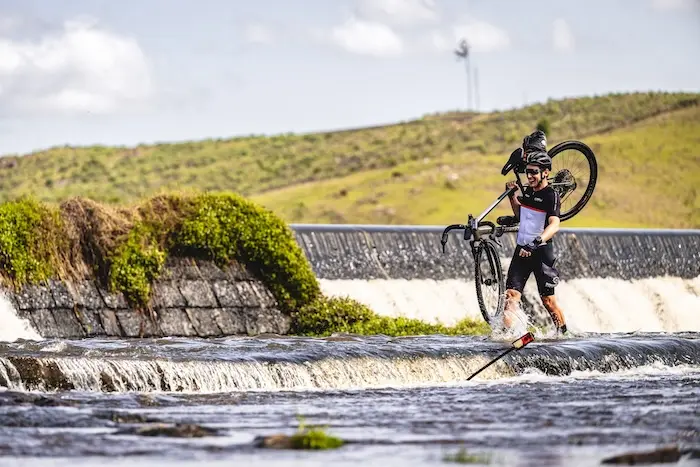
Upon returning, the world moves too fast. Always. « When you come back, you have the rhythm of the wind. The world, it has the rhythm of Wi-Fi. It takes time to readjust the speeds. » He finds his family again, normality, the light of a dust-free morning. The body is still tense, the mind already elsewhere. He knows the emptiness of returning well. But he no longer flees it. He accepts it as a stage of the journey. « The expedition doesn’t stop when you put down the bike. It continues within you. »
The Legacy
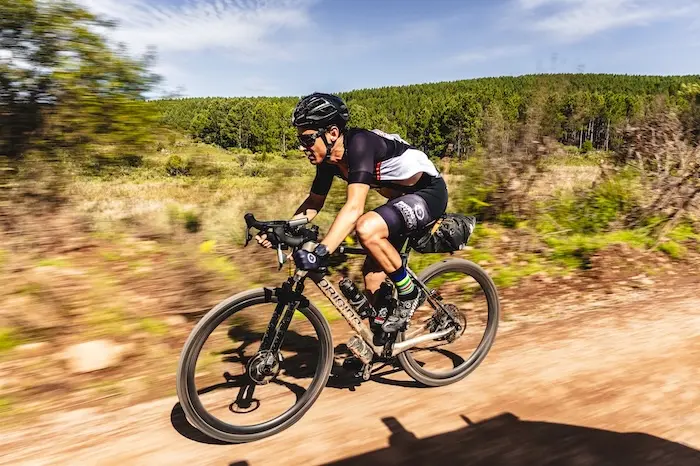
Towards the end of the conversation, Axel’s voice softens. One senses the man more than the adventurer. He speaks of his children, future departures, the mark he wants to leave. « I’m not looking to leave traces, but passages. » Everything is there. No quest for glory, no record. A trajectory. His own, made of precision, meaning, listening. And now, of transmission.
He also says: « The world is bigger than us. And that’s why we must go and understand it. » They covered the line from Canada to Mexico in twenty-six days. But what Axel truly traversed was time. His own, Greg’s, that of the modern world. What he teaches is not performance, it’s harmony. The harmony between rigor and wonder, between mastery and trust. When he speaks, everything becomes simple: move forward, look, understand. And we understand that what he seeks is not at the end of the road, but in the way of being there. He doesn’t ride to reach; he rides to connect. Space, others, and what within him still remains curious about the world.
He says: « The meaning of an expedition isn’t what you discover; it’s what you become capable of seeing. » So we fall silent for a moment. Because we understand that the real adventure isn’t about pushing limits, but about making them porous. To feel that everything communicates: the body, nature, thought, silence. And if the road were to stop there, between Canada and Mexico, we now know it would continue elsewhere. In Greg’s gaze. In his son’s. In Axel Carion’s rare way of making the world bigger, simply by looking at it better.
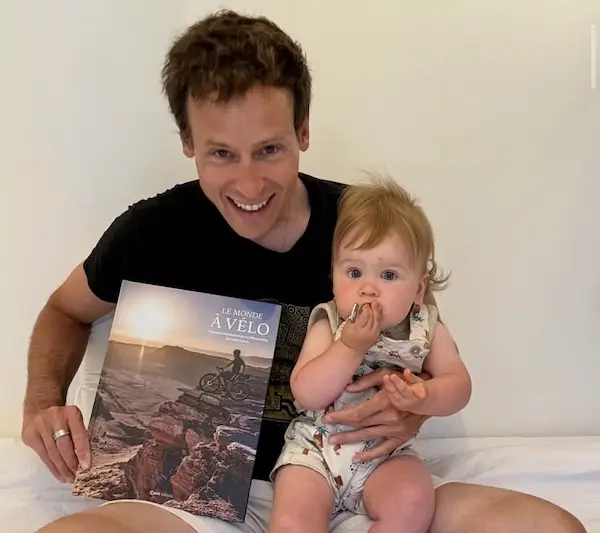
To read: The World by Bike – by Axel Carion and David Styv
Discover Axel Carion’s world, expeditions, and projects on his official website: https://axelcarion.com
Share the post "Axel Carion – What the world teaches us (to watch)"