Share the post "Troc Vélo: the end of an era?"
There was a time when Troc Vélo was the go-to place. We’d spend hours there, rummaging through ads, comparing frames, unearthing a legendary pair of wheels or a forgotten handlebar.
It was a somewhat artisanal, somewhat “catch-all” corner of the web, but terribly vibrant – a haven for enthusiasts, with that forum atmosphere from the early days of the Internet. Today, when you go back, it feels like entering an attic where everything has been moved around. The charm is gone, and so is the logic. And most importantly… cyclists are leaving.
Text: Jeff Tatard – Photos: 3bikes.fr, troc-velo.com
Since the takeover, it’s been an uphill battle
Since its acquisition by Alltricks, now a Decathlon subsidiary, Troc Vélo is no longer running smoothly. Officially, the idea was noble: to promote the circular economy of cycling. In practice, many feel they have lost a free and communal space, swallowed by the machine of organized commerce.
Fred, a long-time user, sums up this unease well: “Before, I found everything easily. Now, I spend more time searching than buying. The organization is unreadable, the filters are useless, and you come across duplicates galore.”
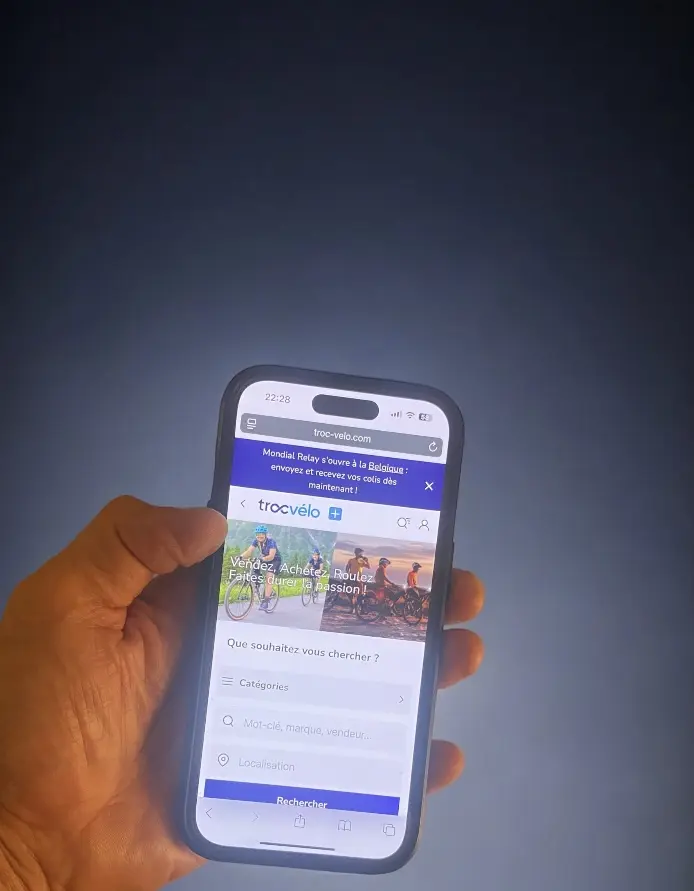
It’s hard to argue with him. The user experience has become confusing. Between professional ads, reconditioned bikes, paid “boosts,” and disorganized categories, it’s easy to get lost. And when you finally find an interesting bike, it’s often at the other end of France, posted three months ago.
Thierry rages against a two-speed system
Thierry, for his part, doesn’t mince words. “Those who pay to highlight their ads are clearly favored. The rest of us no longer exist. Troc Vélo has become a showcase for those who can afford to pay for visibility.”
This feeling of injustice comes up often. By trying to professionalize the platform, the site has lost its community spirit. You now find more shops and professional sellers than actual private individuals. The balance has been broken: Troc Vélo looks more like a giant catalog than a space for exchanges between enthusiasts.
Seb, for his part, has turned the page
Seb regularly sells and buys equipment. “Before, I used to post my ads on Troc Vélo and Leboncoin to increase my chances. Now, I only post on Leboncoin. I sell faster, without bugs, and I get ten times more contacts.”
It’s hard to fight against the Leboncoin juggernaut, which has become the benchmark for second-hand goods – even for experienced cyclists. Clear interface, efficient messaging, secure payment, national visibility: the perfect combo. And, paradoxically, it’s on Leboncoin that the real second-hand community has reformed, with its own codes, negotiations, and finds.

A specialized site that has become commonplace
Troc Vélo nevertheless had an incomparable asset: its specialization. Precise sections, detailed technical specifications, highly targeted ads.
It was the haunt of “gear geeks,” those who can recognize a Chris King hub by ear or who debate the threading of an Italian bottom bracket shell.
But today, the site gives the impression of having lost its DNA. Between the highlighting of “premium” ads, reconditioned pro bikes, and the outdated interface, its soul has been diluted. Even the design seems stuck between two eras: neither vintage nor modern, just tired.
The Decathlon Effect: Missed Opportunity?
The acquisition by Decathlon could have given Troc Vélo wings: more resources, more visibility, more security. But the effect was the opposite. Many users felt it was an industrial appropriation of a passionate space. Behind the words “second life” and “circular economy,” some primarily see a commercial strategy aimed at directing users towards Alltricks or Decathlon’s reconditioned offers.
“It feels like Troc Vélo mainly serves as a showcase for their products, not a neutral place for exchanges,” confides a cycling professional. It may not be intentional, but perception matters. And in a world where trust is paramount, the slightest ambiguity drives people away.
A possible return to the source?
All is not lost. Troc Vélo remains a goldmine for anyone looking for a rare part or a specific bike. The community still exists, dispersed but loyal. But to win back its audience, the platform will have to rediscover the clarity, neutrality, and user-friendliness that made it successful.
A real technical facelift, transparency on sponsored ads, and above all, a return to the original spirit: that of a swap meet between cyclists, not an online supermarket. Fred, again, concludes accurately: “If Troc Vélo wants to exist, it must become what it always was: a site for enthusiasts. Not a disguised ad page.”
The final word from 3bikes.fr
Troc Vélo is somewhat a symbol of an era when the Internet still resembled a workshop among friends. Today, the used bike market has become industrialized, and passion has sometimes given way to performance – even in ads.
But who knows? Perhaps one day, we’ll rediscover the pleasure of browsing Troc Vélo like we used to browse a bike swap meet. With a coffee in hand, without worrying about algorithms, just for the joy of stumbling upon a good deal.
Share the post "Troc Vélo: the end of an era?"