Share the post "Pierre Rolland, from mountain panache to the school of ultra"
On the phone, his voice is smiling. She speaks quickly, she digresses, she returns to the heart of the subject like suddenly standing on the pedals: « I have always been a rider ready to attack, offensive, with panache. That doesn’t fade. » Pierre Rolland no longer has a WorldTour bib number, but he keeps the same mindset: the desire to go for it, to dare, to learn. His playground has changed — TV sets, marathons, self-supported events — but not his way of inhabiting the effort. And his motto holds in four words that have followed him to social media: « Attaque de Pierre Rolland ». He even registered it, out of pragmatism as much as mischief. Panache, reinvented.
By Jeff Tatard – Photos: ©Bikingman, DR
The beginnings: a cyclo-cross bike and « the cheapest » tires
The origin is nothing like a career plan. A college friend, licensed in a road club, takes him along one Wednesday: « Come see ». The coach lends him a bike… a cyclo-cross bike. Pierre tries mountain biking, then a few cyclo-cross races, then road cycling — with entry-level tires mounted on that same bike. No cycling lineage, no predetermined destiny: tinkering, curiosity, pleasure. Very quickly, however, the codes are imprinted: the joy of progress, the discipline of the collective, the obviousness of sensations. At 14-15, he knows above all that he loves it and wants to transform that desire into work. If the 15-year-old Pierre listened to him today, what would he tell him? « Nothing more than what he did: be courageous, train, move forward. »

The pro years: summits, missed opportunities, and an offensive signature
One could list a palmarès, recall Alpe d’Huez, the breakaways that make you get off the couch, the great solo efforts in the Giro. But what he remembers first is a way of inhabiting the race. Attacking when everyone is calculating, injecting movement into an era of power meters: « I wanted to win and have fun. You don’t change that temperament. »
He doesn’t only have victorious refrains. Two regrets mark his memory. First, the Vuelta, « never approached at 100% », always at the end of a post-Tour cycle: no stage won in Spain, even though the terrain suited him perfectly. Then, the 2013 polka dot jersey lost the day before the Champs Élysées, a new points rule that « disadvantages attackers » and a carousel of jerseys that left him wanting more. Regrets are not burdens for him: they are spurs.
As for the phrase that became a meme — « Attaque de Pierre Rolland » — he has experienced it all: annoyance, a wink, self-deprecation. « I prefer to be associated with someone who attacks than with an economical rider. » The seal is set.

Transitioning without fading: the shift to commentary
Retirement comes when he could still continue « on projects that didn’t suit him ». And above all, a new fear creeps in on descents: « It’s getting faster and faster, all the time. » He decides to stop. A few hours after the announcement, La Chaîne L’Équipe calls him. Twenty days of contracted work, four times more in the end as the evidence becomes clear: Pierre is comfortable on air. He doesn’t play a role: he explains. The set is not a team bus, but the mission is similar: read the race, make the invisible visible, transmit without jargon on a generalist channel.
He refuses to have his « style » written for him. He brings the style: technical precision, rider’s experience, and measured humor — « we are not a 100% cycling channel ». His duo with other consultants, notably with Christophe Riblon, creates a useful balance: one keeps the sensation of updated effort in his muscles, the other brings valuable memory. And his personal practice, still intense and modern today, nourishes his analyses: it prevents, he says, « forgetting that it hurts ».

The need for objectives: maintaining a life that moves forward
Stopping competition means losing a metronome. For fifteen years, existence moves from objective to objective: Paris–Nice, the Tour, the Classics, the Tour again. The calendar dictates everything: lifestyle, renunciations, concentration. Afterwards, the silence of the finish line can be deafening. Many experience it. Pierre found a simple safeguard: recreating desired milestones. A half-marathon, then a successful Paris Marathon (better than the half, and that counts), night rides Lyon–Genève of 300 km, and especially ultra-cycling: the patient and obstinate school of long distances.
He likes this double benefit: the objective restores discipline… without constraint. « If friends call me for dinner, I go. I no longer close myself off. » Training structures, but doesn’t lock down. And then comes the other gift of endurance: introspection. In running, he quickly reaches the flow; on the bike, he needs hundreds of kilometers. But the result is the same: you truly talk to yourself, far from the noise.

BikingMan 555 Maroc: learning anew, at a human level
Event: 500 km, 8000 m D+, less than 60 hours, around Marrakech, self-supported. This is the BikingMan 555 Maroc, a gravel format launched by BikingMan (ultracycling championship founded by Axel Carion), scheduled from September 19 to 21, 2025. It is above all the ideal laboratory for a « former road racer » who wants to unlearn what he knows and relearn what he ignores. « The hardest part is signing up, » he says. « After that, you respect your preparation, you make the right choices of equipment and nutrition, and on D-Day, you enjoy it. »
Except that ultra-cycling likes to remind you that confidence is earned. At the 20th kilometer, the old habit of « like at home » paths catches up with him: he arrives too fast in a rut, rear tire damaged, plug, CO₂, fingers sticky with sealant. Nothing serious, everything to learn. « I immediately told myself: you’re going to have to ride for real, cleanly, steadily. In ultra, if you trash your equipment, you’re dead. » Paradoxically, starting among the last offers him a gift: crossing paths with everyone, smiling, encouraging, taking the human measure of the caravan.

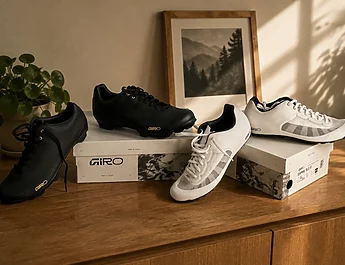
The equipment? Minimalist, almost as a challenge. Road shoes on gravel (he had read the terrain — little portage expected), light bikepacking bags. Moral of the story: next time, he will train loaded, for a long time, because a bike with 5–8 kg of cargo is no longer the same bike; the back, shoulders, hands tell the truth. Another detail that isn’t one: tubeless tells its miracles in silence. At home, changing his tires, he sees the small latex balls caused by the sealant, so many punctures avoided. That’s ultra-cycling: a sum of small, concrete intelligences.

And then, beyond technique, there is the pact. He explains it without pathos: when you line up, you commit people — the brands that support you, the organization that trusts you, BikingMan that opens the door, the media that expects a story. You must then be serious without taking yourself too seriously: do things properly, let the terrain transform you, come back grown.
| BikingMan 555 Maroc (September 19–21, 2025) 500 km — + 8000 m — 60 h max — self-supported — Marrakech / High Atlas (Oukaïmeden pass, > 3000 m). A gravel format designed for athletic travel, consistency, self-sufficiency, and wonder. BikingMan, led by explorer Axel Carion, fosters this culture of respectful self-transcendence in territories. Website: www.bikingman.com |

The gravel community: fewer watts, more connections
He likes this different sociability. On the road, it’s every man for himself; in gravel, you wait for each other, you repair together, you smile at each other. You can come for performance, of course, but the dominant grammar is elsewhere: sharing the path, embracing the unexpected, changing your relationship with numbers. « There’s less of the metric stacking that saturates the screen. And above all, there’s room for all levels of commitment. » Gravel, he says, is the ultimate bike: you can go to work, hop a curb, ride on a greenway, attach a bikepacking bag, or line up for a championship. Versatility as an active principle.

Here again, realism is never far away. To young people tempted by a full gravel career, he reminds them of the current economic reality: beautiful images don’t always pay the bills. « Before attracting brands, you need time, results, a community. And you don’t earn a living as surely as in the WorldTour. » A responsible message — freedom comes at a cost, and that’s perfectly fine if you accept it.

Media through simplicity: videos that make you want to ride
On social media, his educational capsules appeal because they breathe the workshop and the Sunday outing. They talk about pressures, tires, plugs, small latex balls, gear choices, shoes — and gently tease a pair of socks that are too high. Nothing to sell: « I share what I missed when I was young. The feedback makes me want to continue. » Popularizing is not simplifying: it’s translating expertise into accessible actions. On TV as in video, the thread is the same: make people love cycling by making it less intimidating.
What ultra-cycling re-emphasizes: confidence, patience, lucidity
At the 555, he mainly learned to put long-term perspective back into things. To sign up, prepare, not burn out his equipment, accept that the right pace is the one that takes you straight, for a long time. Not to fantasize about the myth of pure suffering: ultra rewards care — of the body, of nutrition, of stolen sleep when possible, of mechanics. And mentally? « Yes, I doubted; that’s normal. But it’s better to have doubts at the start than in the last 20 kilometers. » An ultra-cycling phrase, that: put away pride, listen to the terrain, let the journey do its work.

Tomorrow: extending the focus
His head is full of projects, without confining himself. A real BikingMan 1000, in an unknown territory — Morocco version 1100 km, Corsica, Brazil: « Get out of the comfort zone, think big and exotic. » Bordeaux–Paris, relaunched by an organizer he knows, tempts him. A marathon under 3 hours (he has the engine, the appetite, and the ability to structure his preparation). An Ironman, for the joy of disciplines meeting. An ultra-trail one day — the UTMB, the Diagonale des Fous — why not? He laughs: « The list is long. » We mostly hear that it’s alive.

Commenting while remaining a rider
His weeks are written between the set and the tracks, between headset-mic and bike helmet. This continuous ribbon creates a rare quality: not to forget. Not to forget the wind that wears you out, the shoulder that aches, the hunger pangs that creep in, the fear that seizes you on descents. On air, it’s audible. He doesn’t “dominate” the race, he returns to it with words. And his modern practice — gravel, self-supported, equipment tests — keeps his sensors connected to what today’s cyclists, pros and amateurs alike, experience.
One sentence to summarize?
When I ask him for the final verdict, he laughs, then doesn’t deflect the ball: « Always on the attack. Attaque de Pierre Rolland. » There is neither nostalgia nor posture. Just the simple idea that momentum is a daily choice. You can leave the WorldTour, you don’t give up the drive. You change the scenery, not the verb. You go from the dreamed polka dot jersey to the sticker bib of a 555, from a mythical climb to an Oukaïmeden pass that chokes you at 3000 m, from watts to the silence of a night in the desert. You learn other gestures — properly installing a plug, carrying a windbreaker, reading a trail — you find the same joys: the attack, again, but at the right pace.

BikingMan wanted their name mentioned: here it is, in the right place. Because ultimately, BikingMan 555 Maroc is not just another trophy on a shelf. It’s a pivotal chapter: the one where Pierre, the attacker of the Alps, relearns to win differently. Win what? Nothing but a finisher’s jersey and above all: stories that last — and that’s a lot. Win the desire to do it again, further, longer. Win what you win when you don’t mark the world with a palmarès, but with traces.
So yes, Rolland is a consultant on L’Équipe 21, content creator, ambassador, a very serious Sunday runner, ultra-curious about long distances, father of small videos that teach you how to inflate a tubeless and smile at socks that are too high. He is above all what he loves to do, and it shows.
The final scene could be simple: late afternoon, Marrakech exhales its heat, the “red city” truly glows red. He tightens a bikepacking bag strap, glances at the shifting sky, thinks of the Oukaïmeden pass waiting for him in the night. Nothing heroic, nothing theatrical. The right gesture: start at the right pace, take what the road gives, stay on the attack. And keep learning.
Share the post "Pierre Rolland, from mountain panache to the school of ultra"