Share the post "AliExpress and cycling: a profile of a buyer between good deals and counterfeiting risks"
We could also have titled it: « When low-cost shakes up habits ». And yes, just mentioning AliExpress in a discussion among cyclists is enough to ignite the debate. For some, the Chinese platform has become a hunting ground for good deals; for others, it remains synonymous with counterfeiting, risky purchases, and disillusionment. But who are these buyers who take the plunge? And what drives them to order their cycling equipment from the other side of the world?
By Jeff Tatard – Photos: DR
The Rational… and Pragmatic Cyclist
Carlos doesn’t hide it: « 90% of my bike purchases go through AliExpress ». Frames, wheels, components… he has already bought five or six frames, all received without unpleasant surprises. His calculation is simple: « For the price of a branded frame, I get six on Ali. At worst, it’s a consumable. »
A pragmatic logic: the typical AliExpress buyer is not necessarily looking for prestige, but for functionality at the best price.
The Informed Consumer, Who Accepts the Risk
Sébastien adds: « You shouldn’t think about reselling them. » Indeed, it’s impossible to go through Leboncoin, where ads for non-certified products are often blocked for suspicion of counterfeiting. The AliExpress buyer therefore assumes that their equipment has little resale value: they buy for themselves, not for the secondary market.
Grey Areas: When Counterfeiting Creeps In
Denis perfectly illustrates the flip side of the coin: the only time he was disappointed was with a drivetrain chain. Blue and grey Shimano packaging very close to the original version, but beyond the fact that there wasn’t the famous lubricant coming out of the new chain’s box, it was mainly that after a few rides the chain had stretched. « Clearly not the same quality. »
The same observation applies to clothing: approximate sizing, variable finishes. Here, the typical buyer knows they are playing with the limits of counterfeiting – and they choose their battles. Chains and textiles: risky. Frames, wheels, generic accessories: often a good deal.
Savings, the Main Driver
Fred summarizes the clinching argument: « You save a lot of money. » Even if prices have increased in recent years, and shipping costs have become heavier, the equation remains advantageous. Especially since logistics have improved: delivery sometimes in five days, thanks to European stocks. Max testifies to this with his wheels, which arrived in less than a week, in perfect condition.
The Buyer Influenced by Reviews
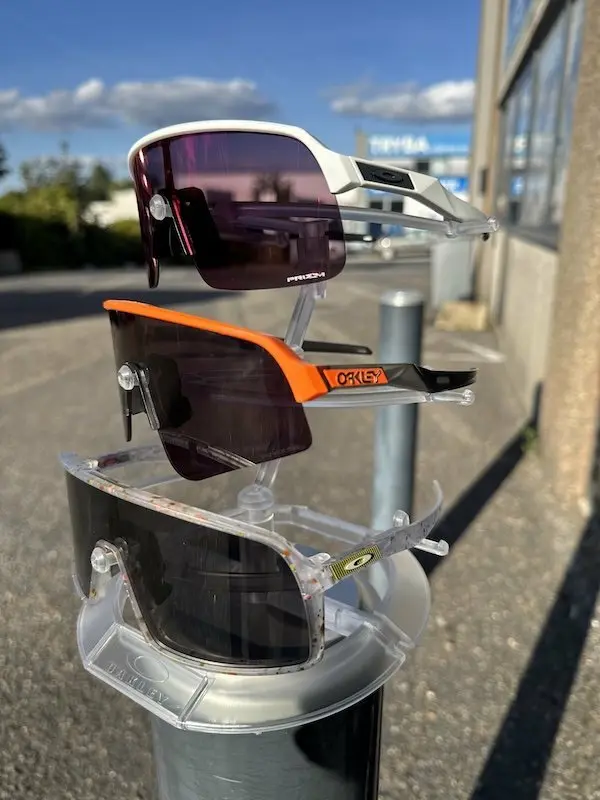
The profile wouldn’t be complete without an essential trait: the reliance on online reviews. Like Yann, who orders (fake) Oakley-branded glasses « between 15 and 25 € », with only one disappointment out of five purchases. « I always look at the reviews and posted photos. »
The AliExpress buyer is therefore community-oriented: they rely on the experience of other consumers, which partially compensates for the lack of an official warranty.
The Purist Versus the Copycat
But there are also the die-hards like Dany, an Oakley fan, capable of detecting a counterfeit from a simple photo. For him, there’s no question of compromising: he prefers to pay full price for an authentic pair. Because, he reminds us, « if there are no more authentic items, there will be no more counterfeits either ». A salutary reminder: behind every copy, there is a brand that invests in research, development, and innovation.
The Ethical and Economic Dilemma
Because this is where the shoe pinches: these purchases indirectly weaken the ecosystem that advances cycling equipment.
Major brands spend massively on R&D, sponsorship, and specialized distribution. Buying a generic frame at a low price means benefiting from technological advancements without funding their costs.
AliExpress Buyer Profile
- Pragmatic: they seek the best value for money, not the label.
- Selective: they know which products to avoid (chains, textiles) and which ones to bet on (frames, wheels, accessories).
- Influenced: they scrupulously read reviews, track photos, and compare experiences.
- Aware: they know they are sometimes dealing with counterfeits and accept that their purchase has no resale value.
- Rational but opportunistic: they take advantage of good deals, while accepting the risk of an unpleasant surprise.
Conclusion: Between Temptation and Responsibility
AliExpress reflects a very contemporary contradiction: the desire to democratize access to high-performance equipment, and at the same time the weakening of the players who truly innovate.
The AliExpress buyer is like the modern cyclist: passionate, informed, but also torn between their passion and their wallet.
The question is not just whether « it’s worth it » to buy on AliExpress, but also what price – in the broad sense – we are willing to pay for cycling innovation to continue to exist.
Share the post "AliExpress and cycling: a profile of a buyer between good deals and counterfeiting risks"