Share the post "What to eat before, during, and after an indoor trainer session"
The indoor trainer is a valuable ally for those who want to train seriously, maintain their physical condition, or work on specific areas, without depending on the weather or shortening days. However, some forget that nutrition around the effort is important to optimize each session. With adapted nutrition before, during, and after your indoor trainer workouts, you will improve your performance and accelerate your recovery. Here are our tips for refueling properly, even when riding at home.
By Guillaume Judas – Photos: https://fr-eu.wahoofitness.com/, zwift.com
Nutrition before an indoor trainer session must provide quickly available energy while ensuring good hydration. Unlike road or off-road training, where various factors can mask poor preparation, every effort is felt immediately if you lack fuel when pedaling in place, especially when using an application that measures your watts.
Before the effort, it is important to be perfectly hydrated. To do this, drink 300 to 500 ml of water in the one to two hours preceding the session. If possible, to anticipate the effects of heat, which are inevitable when pedaling in place, opt for a drink with electrolytes.
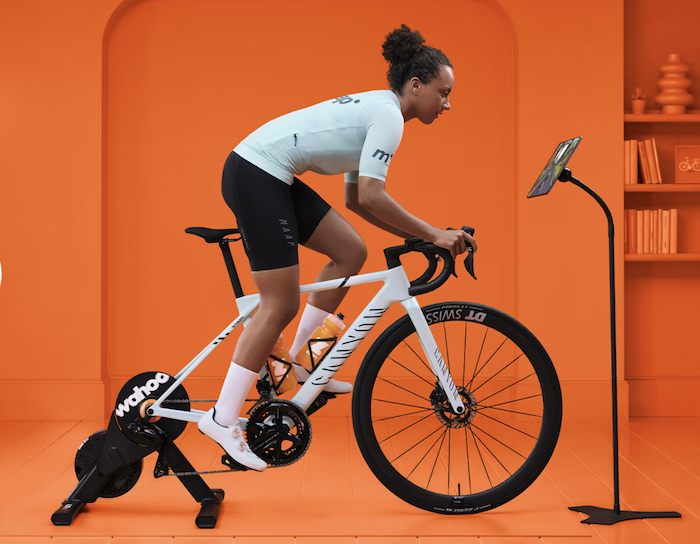
Before the session, avoid foods that are heavy to digest, such as fats (fatty cheese) or complex proteins (fried eggs). Prefer easily digestible carbohydrates, such as oatmeal, banana, wholemeal bread with honey, or energy bars. For morning sessions, fruit juice with oatmeal or yogurt may suffice. The key is to find what your stomach tolerates, without a feeling of heaviness or acidity.
During the session: staying performant
Nutrition during an indoor trainer session is crucial, especially for long or intense workouts. Of course, you avoid certain risks associated with bonking, because since you are at home, you can interrupt the session anytime and head to the fridge. But don’t forget the demands of an indoor trainer session, with no coasting moments and with well-calibrated effort series. A drop in energy risks being counterproductive for the quality of the training, as well as for recovery. The advantage of being at home is that you have your drinks and other refreshments within reach. You just need to plan the right quantity.
For hydration, take a sip of water or an energy drink every 10 minutes. For an intense session, aim for at least one liter per hour. For solid food, prioritize fast carbohydrates like energy gels or dried fruits. Avoid foods that are difficult to digest so as not to hinder your performance.
This type of training has the advantage of allowing you to experiment with different nutritional strategies without external distractions. Adjust the quantity and type of carbohydrates according to your sensations to find the ideal formula.
After the session: optimizing recovery
Recovery after training is essential to replenish glycogen stores, rehydrate, and repair muscle fibers. A good post-session strategy accelerates recovery and prepares you for subsequent sessions.
After the effort, you must first consume carbohydrates, fast ones in the case of a very intense workout or a virtual competition, or more complex ones in the case of an intermediate session. Good habits start with consuming fruits, cereals, wholemeal bread, or a drink with maltodextrins. For proteins, don’t forget to consume Greek yogurt or eggs, to promote muscle repair.
And of course, don’t forget to drink water and beverages rich in sodium, potassium, and magnesium to compensate for mineral salt losses due to perspiration. Ideally, consume solid food within 30 to 60 minutes after the effort. For an intense session, a complete meal with carbohydrates, proteins, and vegetables is recommended.
Specificities of indoor trainer workouts
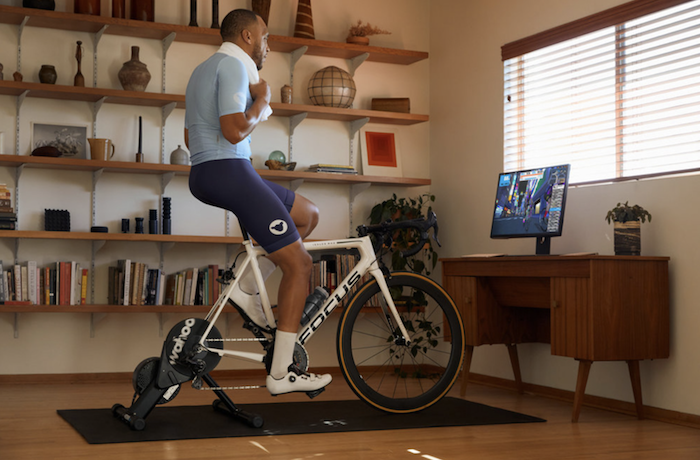
Indoors, perspiration is often more significant than outdoors, which makes fluid and electrolyte intake crucial. Furthermore, the constant intensity of indoor trainer effort allows for better planning of carbohydrate intake, without the uncertainties of an outdoor ride.
Under these conditions, optimized nutrition improves your performance during each session and enhances the benefits of your workouts. With adapted preparation before, strategic refueling during, and effective recovery after, you will get the most out of your indoor trainer sessions while staying fit all year round. However, each practitioner is unique: test, adjust, and find the combination of foods, liquids, and timing that suits you.
Share the post "What to eat before, during, and after an indoor trainer session"