Share the post "When a bike costs the price of a racing motorcycle: an old racer’s thoughts"
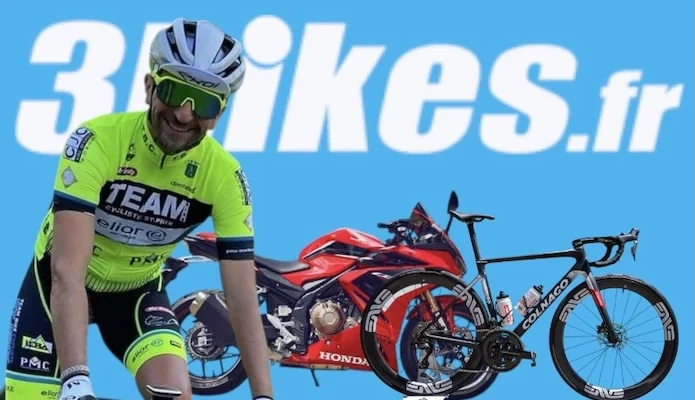
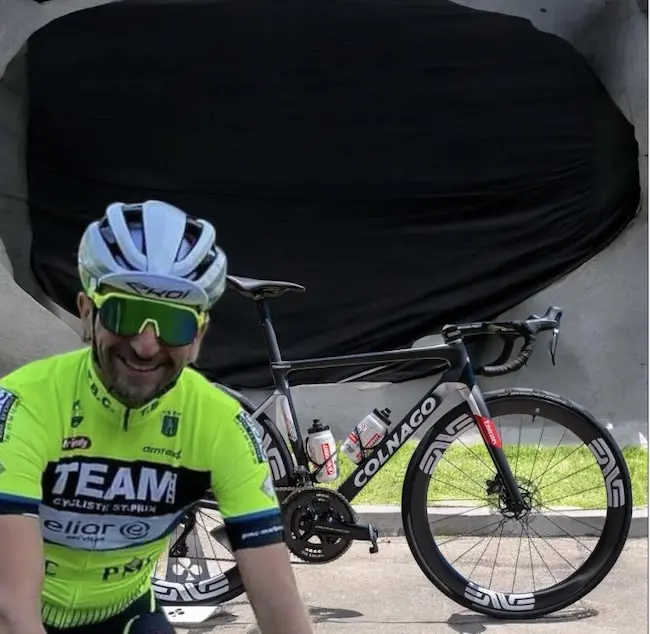
Some comparisons are amusing, others are thought-provoking. The one recently shared with us by Carlos Lopes, a former high-level motorcycle racer and now a passionate cyclist, clearly falls into the latter category. Last spring, Carlos treated himself to an exceptional bike: a Colnago V4Rs equipped with Dura-Ace and Enve wheels, for a bill approaching €14,500. An impressive sum, even in a market accustomed to elite prices. However, his perspective as a former motorcycle racer puts things into perspective: for him, his competition machines at the time cost barely more than a current high-end bicycle.
By Jeff Tatard – Photos: All Rights Reserved
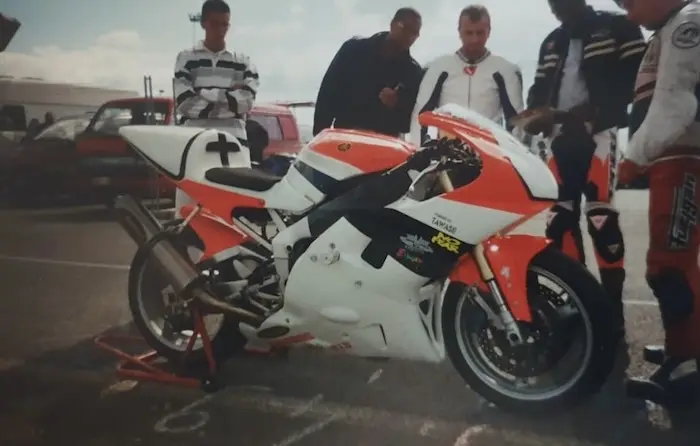
A Racing Motorcycle for Less Than €20,000
« Back then, my competition motorcycle cost me less than €20,000, says Carlos, still amused by the contrast with current figures. For that price, I had a custom-built machine: lightened chassis, prepared suspensions, an engine tuned to deliver its power over a very precise range. Every part was designed to withstand extreme stresses, but also to be quickly replaced or adapted depending on the circuits. It was a true mechanical laboratory, not just a speed machine. And my pair of slick tires, I got them for €250. Today, that’s barely the price of a set of high-end road tires. »
It’s hard not to be surprised. A racing motorcycle, with its rudimentary but already advanced onboard electronics, its composite materials, its perfectly machined components, therefore cost barely more than a modern road bike equipped with the latest carbon. The comparison is striking: it raises questions about the evolution of costs, but also about how certain industries have managed to transform passion into a luxury market.
The Economic Paradox of the Bicycle
This remark raises a question: is the bicycle not currently poorly positioned in terms of price?
One could invoke the volume effect, the power of the industrial structure, or the weight of motorcycle budgets, often supported by large manufacturers. But in Carlos’s case, these were not showcase prototypes or show machines: we are indeed talking about real competition motorcycles, prepared in detail, with unique parts calibrated to withstand the intensity of a championship.
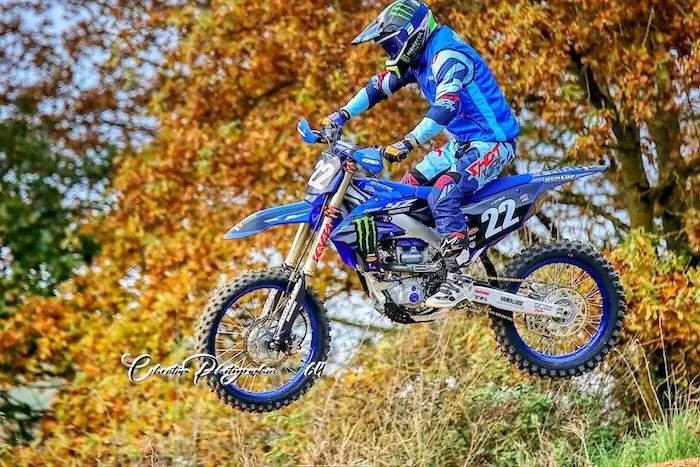
« The most ironic thing, smiles Carlos, is that my motocross bike, which I still ride today, cost me less than my road bike. And yet, it’s a much more complex machine, with an engine, a gearbox, sophisticated suspensions… In short, a whole mechanical universe that a bicycle doesn’t have to bear. »
On the other hand, the bicycle, even in its most exclusive versions, remains an assembly of carbon frames, aero wheels, and electronic drivetrains. Certainly, innovation is real, materials are ever more optimized, and developments are constant. But the surge in prices seems to be fueled as much by marketing, organized scarcity, and the pursuit of a prestige image as by pure engineering. The high-end bicycle has transformed into a status object, sometimes closer to luxury than to raw performance.
Passion, Prestige, and Perceived Value
Where the comparison truly becomes fascinating is in the notion of perceived value. A competition motorcycle is measured primarily by its raw performance: top speed, acceleration, lap time on the track. The bicycle, on the other hand, mobilizes more intangible criteria: the quest for extreme lightness, the aura of a brand, the prestige associated with certain components.
Ultimately, a high-end bicycle far exceeds its mere technical reality. It transforms into a symbol, an identity marker, an object of passion. It is undoubtedly this extra dose of irrationality that explains why some cyclists agree to invest as much – or even more – than for a racing motorcycle.
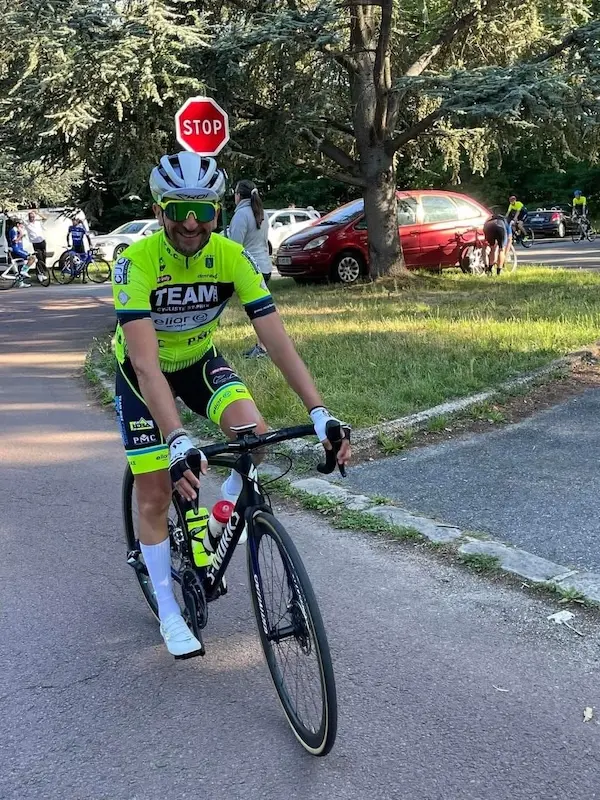
Carlos knows a thing or two about that. Always accustomed to fine machinery, he didn’t wait for his Colnago V4Rs to experience the very high level. Before that, he was already riding a Specialized S-Works Tarmac SL7, equipped with high-end SRAM. An exceptional machine, displayed at a price higher than that of… a complete motocross bike. A paradox that illustrates how much, in the world of cycling, value lies as much in image as in mechanics.
A Reflection Worth Pondering
Carlos Lopes’s remark forces us to reconsider the hierarchy of prices between two mechanical worlds that, at first glance, seem similar. Yes, there is something unsettling about realizing that a competition motorcycle, bristling with unique parts and designed to withstand extreme stresses, could cost less than a current high-end bicycle. But this paradox is also indicative of the uniqueness of cycling: a universe where passion, more than strict technical rationality, dictates its law.
For the bicycle is not just an assembly of carbon and sophisticated components. It embodies an imagination, a sense of belonging, a part of ourselves that we project onto the machine. The price, therefore, is no longer just a market value: it becomes the expression of a commitment, a desire, sometimes even a status.
Ultimately, the real question is probably not how much a bicycle or a motorcycle costs, but what we are willing to invest – in money, in time, in passion – for fully experiencing these emotions. And from this point of view, whether it’s motorized or pedal-powered two-wheelers, emotion remains the most beautiful currency.
Share the post "When a bike costs the price of a racing motorcycle: an old racer’s thoughts"