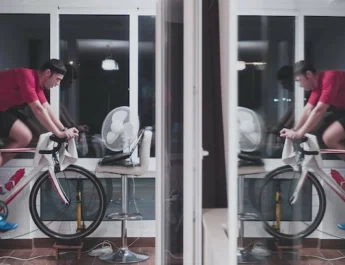
Share the post "When triathlon forges the cyclist – and vice versa: the example of Théo Ramirez"
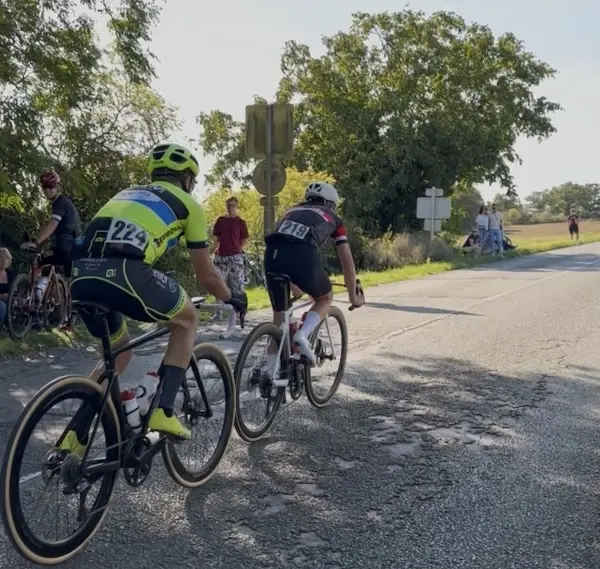
One Saturday in September, on the rolling roads of Margny-sur-Matz, a young man started a cycling race almost incognito. A triathlete by training, he rarely competes in this type of event. Yet, that day, he blew up the peloton with the strength of his legs, before flying solo to victory. His name: Théo Ramirez, 20 years old, licensed with Amiens Triathlon. This performance, impressive in its audacity and mastery, is not just a simple race success. It poses a fascinating question for all endurance enthusiasts: what does triathlon bring to cycling, and vice versa? Through his journey and his words, Théo invites us to delve into this fertile dialogue between two disciplines that mutually enrich each other – and to understand how, from this complementarity, a more complete athlete is born.
By Jeff Tatard – Photos: All rights reserved
His victory in this cycling race where we met him for 3bikes was not only remarkable for its style. It illustrates a fascinating question for all endurance enthusiasts: when a triathlete switches to cycling, what makes him special? And conversely, what can a triathlete learn from cycling culture?
Through his journey and his words, we will explore this dialogue between disciplines, rich in lessons for all who love to ride, run, swim… or simply progress.
Triathlon, a school of endurance and mental strength
Triathlon is a sport where you learn to manage. Manage your body, your energy, your effort. No wheel to follow, no teammate to close gaps: performance is primarily individual. Théo summarizes it this way: “In tri, you’re alone against yourself. You can’t hide.”
This school forges valuable qualities for cycling:
- Long-distance endurance: knowing how to maintain sustained intensity for several hours.
- Effort management: pacing yourself without getting carried away too early.
- Mental resilience: enduring pain, taming fatigue, staying clear-headed despite suffering.
This background largely explains Théo’s ease in Margny-sur-Matz. Where others would blow up after an attack, he held on. Where some would doubt, he kept pushing. And he draws a golden rule from it: “I’d rather arrive completely spent at the end than wait for the sprint without having done anything.”
The contribution of cycling: intensity and strategy
But the story is not one-sided. Cycling also has a lot to offer a triathlete. First difference: race dynamics. A peloton lives on brutal accelerations, recovery phases, tactical attacks. Where triathlon imposes a linear effort, cycling teaches how to manage surges. Théo frankly emphasizes: “In cycling, it works in bursts, with phases of intensity and recovery. It’s not the same effort as tri.”
Second contribution: collective strategy. Reading a race, understanding who is collaborating, who is temporizing, knowing how to position oneself: these are skills little used in triathlon but crucial on two wheels. Even if Théo was surprised by certain attitudes – “much less collaboration than in tri” – he recognizes that this experience opens up a new field of learning for him.
Finally, there is the high-intensity volume. Riding in a nervous peloton, multiplying attacks, holding a breakaway: these are all physiological stimulations that enrich triathlete training, which is often focused on regularity.
The Ramirez example: a hybrid balance
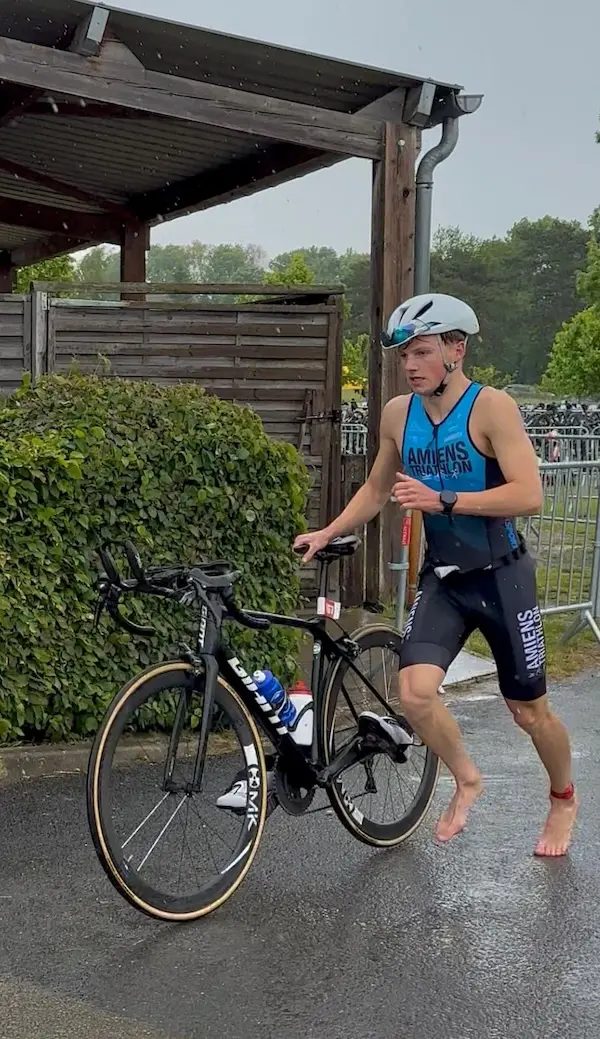
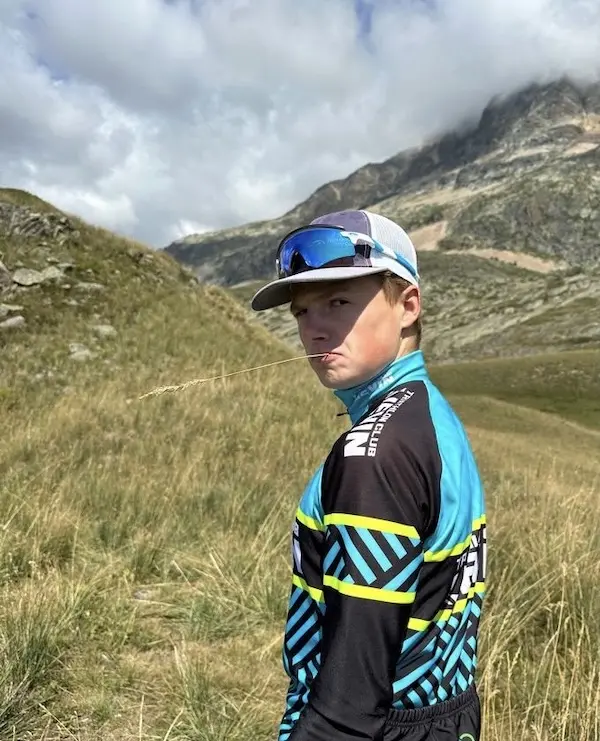
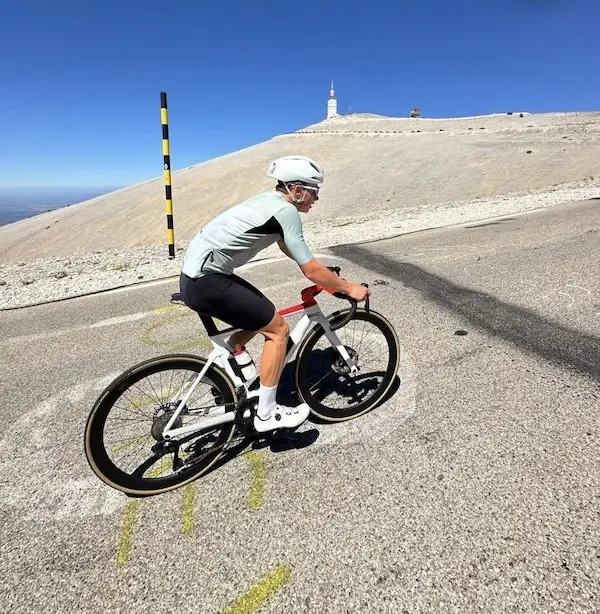
Théo’s journey perfectly illustrates this dialogue. In winter, he rides little, focusing on swimming and running. Cycling returns in spring, then becomes central in summer, when triathlons calm down. “This summer, I almost only cycled. I enjoyed myself in the mountains, climbing cols flat out. No precise plan, just the desire.” A hybrid training, both structured by his coach and dictated by his sensations. A few PMA sessions added recently to sharpen his explosiveness, but always with this simple compass: pleasure and listening to his body.
And that’s his unique quality. Between the rigor of triathlon and the freedom of cycling, Théo finds a balance that allows him to progress without limiting himself.
The mental aspect, a common thread
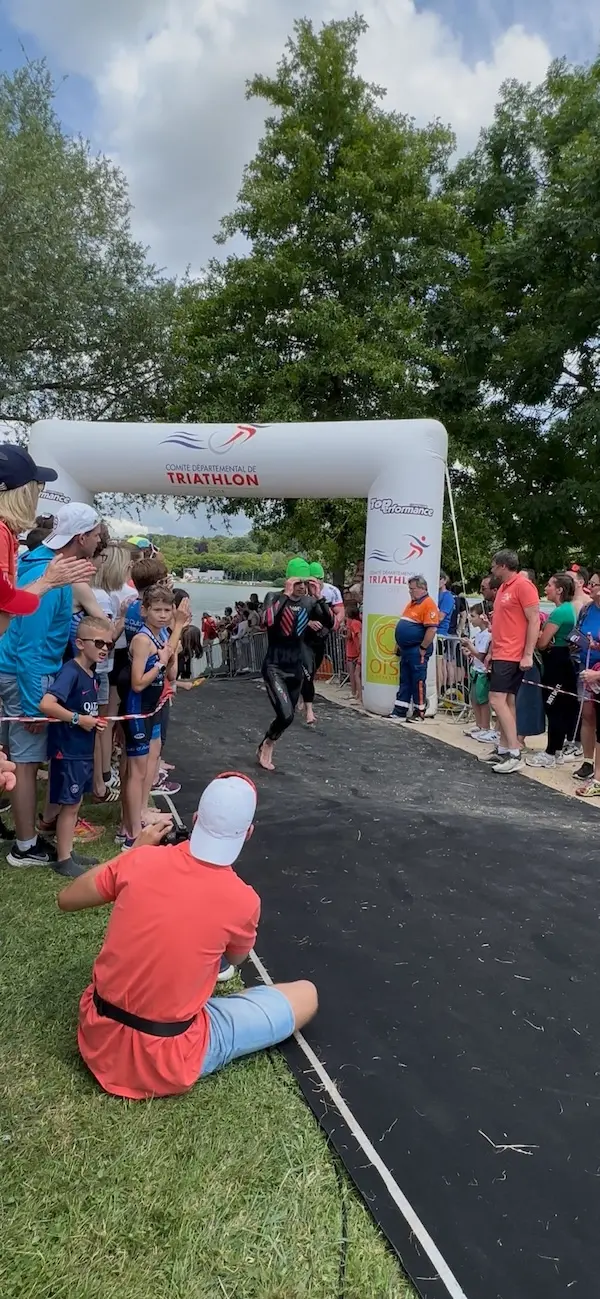
Whether we’re talking about triathlon or cycling, one constant returns: the mind decides as much as the legs. Théo says it clearly: “I look at my bike computer, I know it’s going to hurt, but I prefer to give it my all.” This approach, inherited from triathlon, helps him in bike races. But the reverse is true: the tactical demands of cycling force him to think differently, to move beyond a simple duel with himself.
Thus, each discipline nourishes his mental game:
- Triathlon teaches individual resilience.
- Cycling imposes collective reactivity.
For a complete athlete, combining the two ensures a richer, more adaptable mental approach.
Inspirations and philosophy
Like many young French triathletes, Théo grew up admiring Vincent Luis, a model of consistency and panache. On the cycling side, his references are just as telling: Thibaut Pinot for emotion, Remco Evenepoel for audacity. We better understand his choices: riders capable of attacking from afar, riding alone, giving everything. Men who prefer to fail having dared rather than win without panache.
And Théo concludes with a maxim that summarizes his entire state of mind: “To enjoy myself and put in the km, to do what I want, because it’s not in twenty years that I’ll have to do it. I feel better on my bike than in a nightclub.”
What readers can take away
For our cycling readers, Théo’s story is much more than a tale of victory. It’s a source of concrete lessons:
- Try other disciplines: swimming, running, varying your training enriches cycling.
- Train alone: learn to trust your sensations, to build an effort without the help of a group.
- Value pleasure: don’t forget that performance is also fueled by immediate enjoyment.
- Play both sides: the rigor of tri + the nervousness of cycling = a more complete athlete.
And for triathletes, the lesson is clear: daring to face a peloton can strengthen explosiveness, tactics, and intensity management.
And to conclude: a dialogue to cultivate
Théo Ramirez’s victory in Margny-sur-Matz is not just a local news item. It is the symbol of a richness to be exploited: that of the bridges between disciplines. Triathlon forges valuable qualities for cycling: endurance, management, mental strength. Cycling, in return, sharpens intensity, tactics, and race instinct. Together, they build complete athletes, capable of facing all situations.
Théo is only at the beginning of his journey. But his example reminds us of a simple truth: the boundaries between endurance sports are meant to be crossed. And it is in these back-and-forths that the most beautiful breakaways are born.
Share the post "When triathlon forges the cyclist – and vice versa: the example of Théo Ramirez"