Share the post "Should you skip breakfast before riding?"
Cyclists, you’ve always been told that breakfast is sacred, especially before a ride! It boosts recovery, recharges your batteries, and keeps your mind sharp. But what if we questioned that? What if skipping breakfast could be an asset for your cycling performance? We’ll explain why intermittent fasting could become your new best friend on the road (or not).
By Guillaume Judas – Photos: depositphotos.com
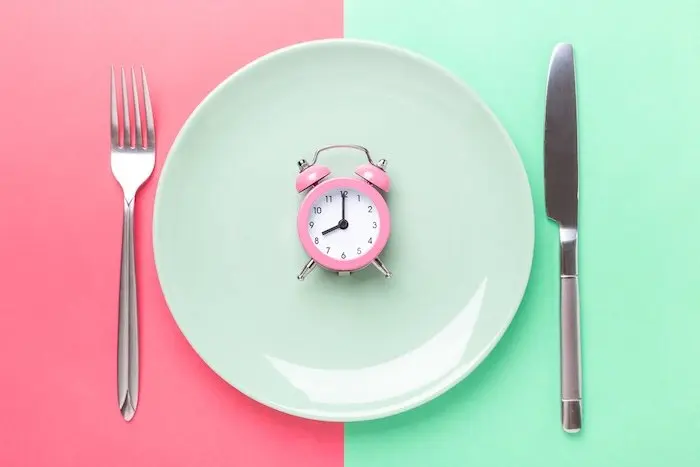
Fasting is in your DNA
In the time of hunter-gatherers, there was no toast or muesli upon waking. Our ancestors ate when they found something to fill their stomachs, often after a long hunt. Their bodies knew how to draw on fat reserves to sustain themselves. This ability, called lipolysis, is still within us. By skipping breakfast, you awaken this superpower: your body learns to burn fat, perfect for refining your physique or lasting longer on long rides.
- Source: “Overnight Fasted Exercise on Weight Loss and Body Composition” (Hackett & Hagstrom, 2017). Link: https://pubmed.ncbi.nlm.nih.gov/28229509
Forgetting breakfast to sharpen your form
When you don’t eat in the morning, after 16 hours of fasting (the night counts!), your metabolism switches to “fat-burning” mode. Ideal if you want to lose weight or boost your endurance. Studies show that with intermittent fasting, you can lose 3 to 10% of your weight in 6 to 12 weeks, without changing the amount of calories, just by modifying meal times. Why? Because without breakfast, there’s no glucose spike, so less insulin, the hormone that stores fat. Instead, glucagon and adrenaline (especially during exercise) release fats and boost your performance.
- A 2020 study on elite cyclists showed that the 16/8 protocol leads to a 3-10% weight loss in 6-12 weeks, while improving body composition. Link: https://www.welovecycling.com/wide/2022/06/21/the-effects-of-intermittent-fasting-on-athletic-performance/
To gain endurance
On the bike, bonking occurs when your muscles run out of glycogen (stored sugar). By fasting, you train your body to burn fat rather than sugar. With training, your muscles even convert glycerol (from fats) into glucose to fuel your pedal strokes. The result: you push back the threshold at which you abruptly lose energy, and long rides become smoother.
- Source: “Intermittent Fasting for Athletes: What Does the Science Say?” (TrainingPeaks). Link: https://www.trainingpeaks.com
Classic breakfast, a trap for cyclists?
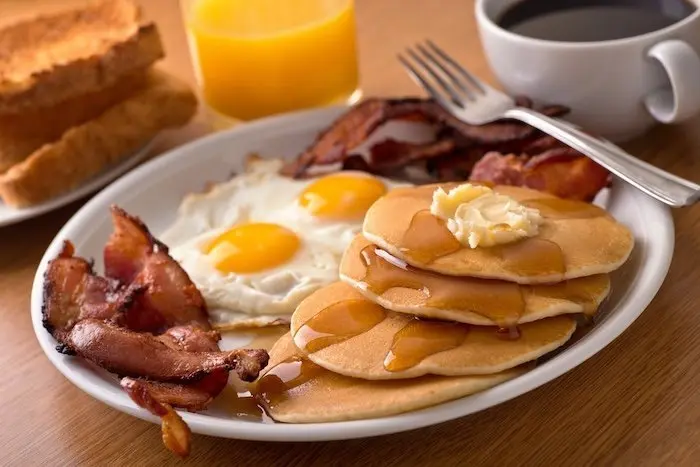
The French breakfast – white bread, cereals, jam – is a carbohydrate bomb. It causes insulin to spike, promotes fat storage, and can leave you feeling raplapla halfway through your ride. If you can’t do without it (especially before a morning ride), opt for an English breakfast: eggs, bacon, or plain soy yogurt. These foods, rich in protein and lipids, avoid insulin spikes and support your muscles without weighing you down.
- Source: “The pros and cons of intermittent fasting for cyclists” (Elo Health, 2021). Link: https://elo.health
Fasted ride: how to organize yourself
- Morning ride: don’t panic, your muscles are still full of glycogen, even without breakfast. After the effort, hydrate with coffee or tea to curb hunger. If you give in, have hard-boiled eggs or nuts, but avoid carbohydrates to prolong lipolysis.
- Midday ride: this is the perfect time for a fasted session. You’re in the middle of a 16-hour fast, ideal for burning fat. A ride at an easy breathing pace boosts lipolysis, but bring dried fruit just in case. For interval training, adrenaline and the Cori cycle (conversion of lactic acid to glucose) protect you from bonking.
- Post-ride recovery: after the effort, take advantage of the metabolic window to refuel. A lunch with protein (meat, fish, eggs) and vegetables is ideal. If you eat starches, choose quality ones (whole wheat bread, brown rice) to replenish glycogen without excess.
In the saddle without breakfast: how-to guide
Skipping breakfast is easier than it seems. The night already gets you halfway to the 16 hours of fasting, and many aren’t hungry upon waking. Start slowly: try a fasted ride on an indoor trainer or without straying too far from home. Hydrate well (water, tea, coffee) to calm your appetite. With practice, your body adapts, and cravings disappear. Paleo diet enthusiasts can even skip starches at lunch to maximize fat burning.
Skipping breakfast is like adjusting your gears to climb lighter. It requires a little adaptation, but it can make you more enduring and sharper. Test it, listen to your body, and find your rhythm.
Warnings and practical advice
Intermittent fasting offers benefits, but it’s not for everyone. Beginner cyclists or those with medical conditions (diabetes, hypotension) should consult a professional before starting. High-intensity efforts can be affected by a lack of glycogen, so plan your intense rides during your eating window. Finally, avoid overcompensating by eating too much after fasting, as this can negate the benefits. To maximize the effects, start gradually, hydrate well, and prioritize nutrient-rich foods during your meals.
Share the post "Should you skip breakfast before riding?"