Share the post "Jean-Yves Couput: the cycling sociologist"
There are encounters that feel like a simple exchange. And then there are those where you leave the table — or, in our case, a long interview — with the feeling of having traveled. Not in kilometers, but in ideas, images, emotions. Jean-Yves Couput is one of those. He is a man who has not only ridden on the roads of Europe, but who has observed, decoded, and interpreted them. A former racer turned strategist, a cycling enthusiast who has learned to see it as a language, an ecosystem, a mirror of society. When he speaks, you hear as much the former sprinter as the philosopher, the marketer as the poet.
By Jeff Tatard – Photos: All Rights Reserved
Cycling as an Antidote
It all starts with a piece of paper. A simple school medical check-up, barely eight years old, and this phrase scribbled like a verdict: « Tendency to be overweight… » No long explanations. No psychology. Just these words that sting. His grandfather, then retired, didn’t bother with speeches. He enrolled Jean-Yves in a cycling club.
And then, the click: Sunday rides of fifty kilometers, the square handlebar bag, the Michelin map slipped under the transparent plastic. Raw freedom, the opening horizon. « It’s like a virus you never try to cure, » he confides to me. And already, the fascination for the stories this sport carries: the epics, the failures, the heroes.
The 80s: Epic, Baroque, Human
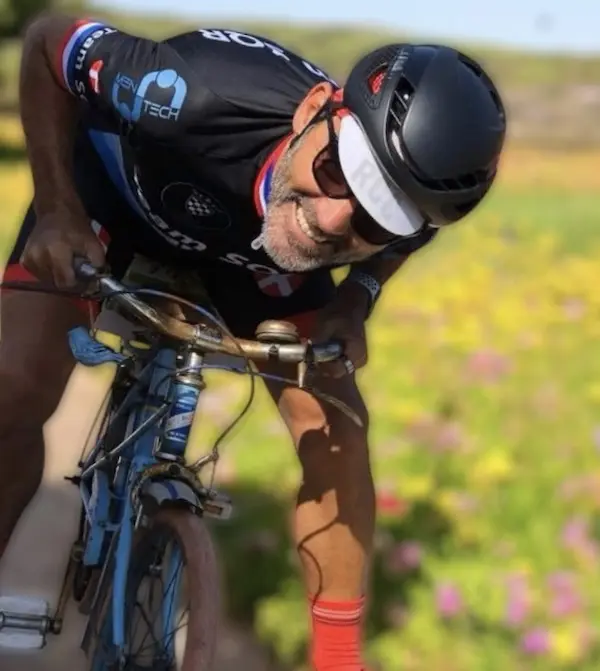
When discussing his competitive beginnings, Jean-Yves chooses three words: Epic, Baroque, Human. Epic, because it was a time when you won « with your physique. » Champions had square jaws, they gritted their teeth. Baroque, with jerseys saturated with sponsors, padded helmets reserved for tough riders, steel frames with lugs sculpted like ancient temples. Human, because nothing brings people closer than shared suffering.
And he refuses to give in to the cliché of « it was better before »: « I will never say it was better before, nor that it is better today. » For him, each era has its own truth.
Sciences Po: Thinking About Sport Differently
Jean-Yves studied at Sciences Po. A training that changed his way of seeing cycling: « It taught me to think about sport beyond sport. » He speaks of cycling as a « living system » where federations, organizers, broadcasters, and teams intersect. A space where technique is just one piece of a vast political, economic, and cultural puzzle.
The Purity of Effort
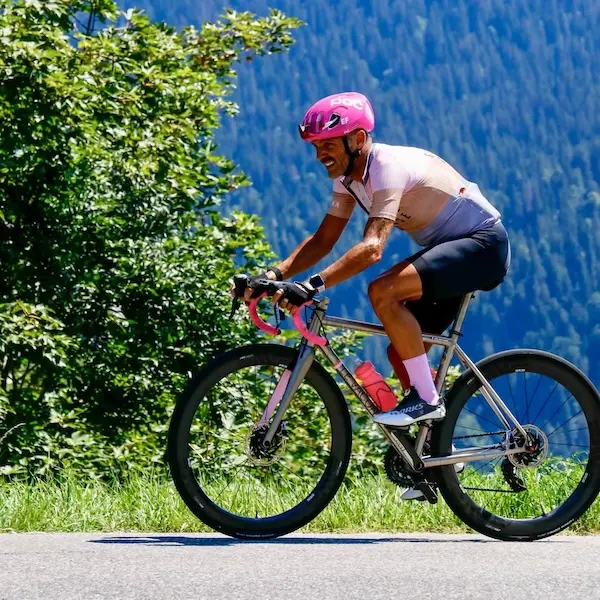
The former sprinter retains a precise memory of the quintessence of effort: « The last 250 meters are about technical perfection in mastering balance, shoulder-to-shoulder contact, wheel to the millimeter. » There, every gesture counts. There, when everything aligns, « you raise your arms. »
From Instinct to Data
What has changed the most? « Data. » Today, you no longer ride only with your legs and instinct, but with sensors, calibrated plans, a surgical science of nutrition and effort. Yet, Jean-Yves smiles: « As early as 1981, I was already using a heart rate monitor and keeping a precise training log. »
What will never change, according to him, is the truth of the road: « At some point, there is no more technology. You find yourself facing yourself, just you, your physique and your mind… The ceiling is always that of suffering. »
The Relationship with the Body
When discussing the evolution of the relationship with the body, he becomes serious. « High-level sport is incompatible with long-term good health. » He thinks of the extreme demands of Grand Tours, the power-to-weight ratios that border on obsession. What revolts him are the imposed standards, the dictatorship of minimal weight. « This must remain a personal choice, supervised by a medical team. »
Thinking Experience Before Product
After his career, Jean-Yves was a key player in community marketing at Salomon. A school of listening. He draws a lesson from it that cycling could remember: « Start from the needs of practitioners, their frustrations, and only then design the product. »
He is amused by the industry’s promises: « They sell 7% aerodynamic gains on a frame that represents 10% of the drag. That’s 0.7%… Seriously? » And he concludes: « Give us maintenance-free, comfortable, safe… and beautiful bikes! »
A Story Above All
Storytelling? Yes, but not just any way. « We don’t create stories to sell, we sell because we have a story to tell. » Otherwise, it’s a dime novel. The story, for him, must carry a truth, an emotion. It is what begins to bring the brand to life in people’s minds.
The Poetry of Wood
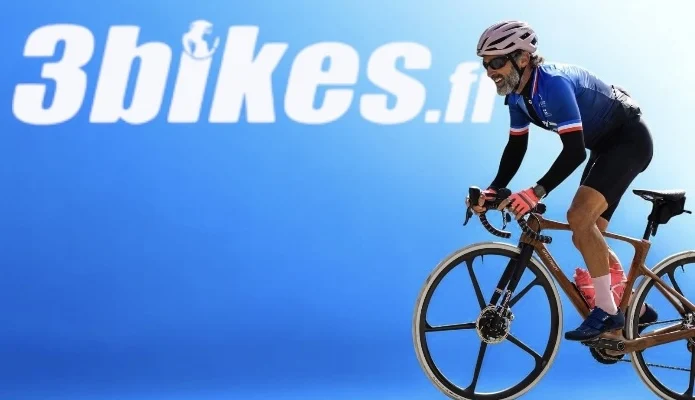
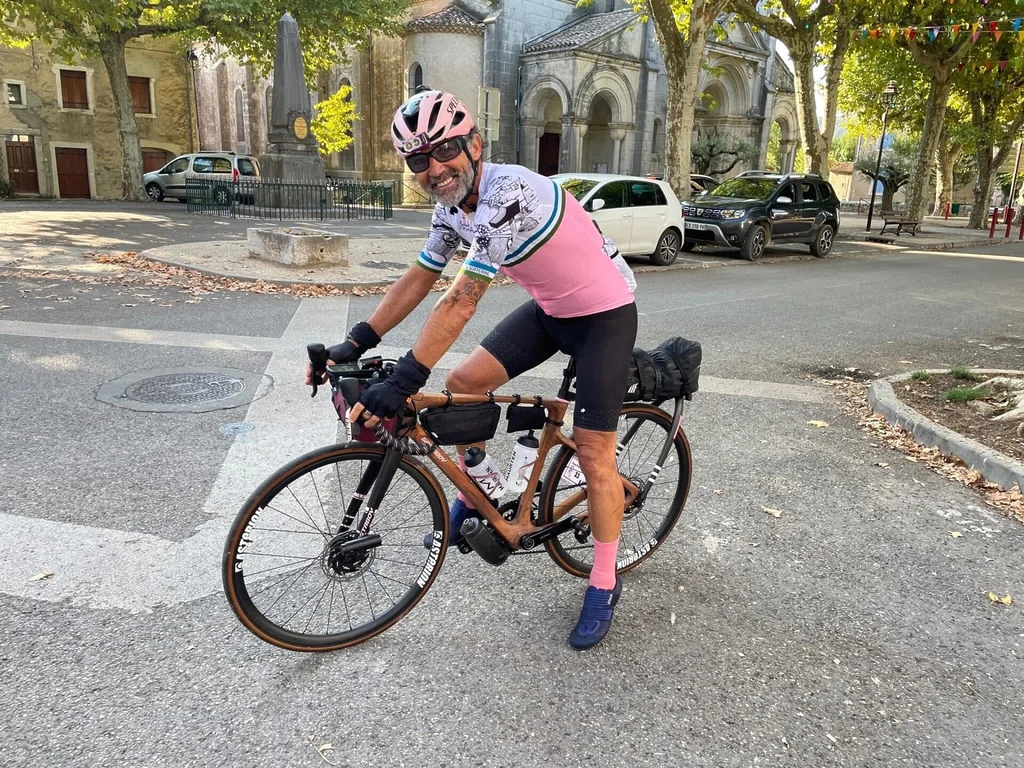
You sometimes encounter Jean-Yves on a wooden bike. A unique object, crafted by an artisan in over 250 hours. « Wood is a living material. Something inexplicable happens. » Paradox: this bike, a kilo heavier than a high-end carbon frame, has given him some of his best climbing times.
Experimentation and Gravel
Experimentation still exists, he says, citing the Concours de Machines where artisans overflow with ingenuity. And then there’s Gravel: « It’s the bike without borders, without limits, without preconceptions. » A free alchemy that blends genres and reinvents the practice.
Cycling as a Living Culture
Jean-Yves does not see cycling as a permanent revolution, but as a constant evolution. Not just as a sport, but as a tool for mobility, as a culture, as an economy.
His dream? A practice that accompanies one throughout life, « from balance bikes to electric assist bikes ».
And he reminds us that cycling has already been a powerful social lever: « It contributed to the liberation of women, offering them autonomy and independence long before society granted them these rights. »
Hidden Pleasures and Life Lessons
His hidden pleasure? Descending fast, pushing the braking limits, playing with the trajectory. What has cycling taught him? That you can go further than you imagine, and that no « high » or « low » is definitive. « On a bike, as in life, moments of depression give way to euphoria a few minutes later. »
If he had to give advice to a young person: « Only consistency in effort and pleasure pays off. »
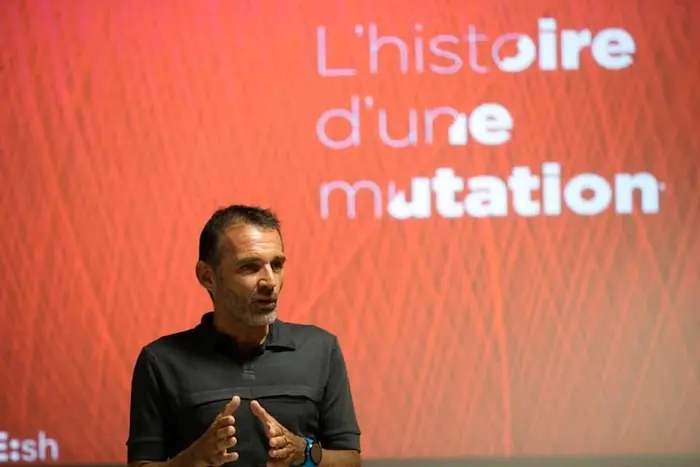
Leaving Jean-Yves Couput, one retains the impression of having spoken as much about cycling as about life. The man does not merely pedal: he observes, analyzes, transmits. He speaks of suffering and beauty, of marketing and freedom, of wood and carbon, of technology and instinct.
And perhaps that is his greatest lesson: to understand that cycling is not just a sport. It is a mirror. And what it reflects is always ourselves.
Share the post "Jean-Yves Couput: the cycling sociologist"