Share the post "Why pin on a race number and compete against others?"
Participating in Competitions: A Powerful Lever for Cycling Progress
Cycling is much more than just a sport: it’s a quest for continuous improvement, a discipline where every pedal stroke can bring you closer to your goals. While training is the foundation of progress, participating in competitions or sportives is a true catalyst for reaching the next level. Here’s why lining up at a starting line can transform your practice and help you become a more accomplished cyclist.
By Guillaume Judas – Photos : depositphotos.com
Pushing Your Limits Beyond Training
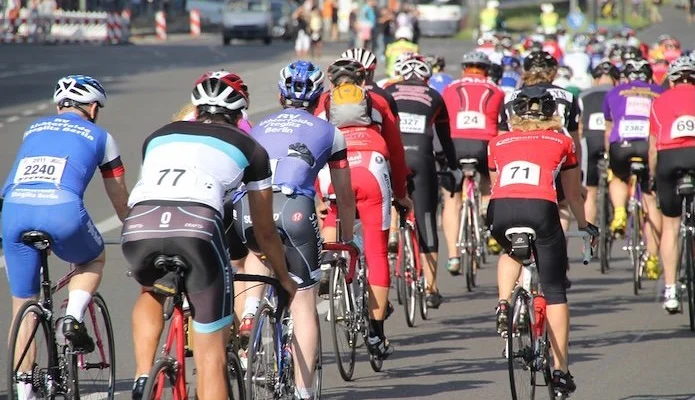
During a training session, you work hard, follow a plan, and push your limits. But a race is a whole different dimension. In competition, adrenaline, the presence of other riders, and the stakes of the moment push you to go further, well beyond what you would do alone. The dynamic of a race, with its pace dictated by the peloton or the pressure of the clock, forces you to mobilize physical and mental resources that you don’t always tap into during training. These particular conditions make all the difference: you discover your true potential.
In a sportive or a classic competition, you don’t just pedal, you give your best. Whether it’s to stay in the wheels of a fast peloton, hang on in a decisive climb, or sprint for a place, every moment forces you out of your comfort zone. This unique intensity forges not only your physique but also your mental strength.
Structuring Your Training Around a Clear Goal
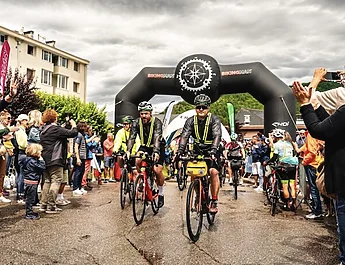
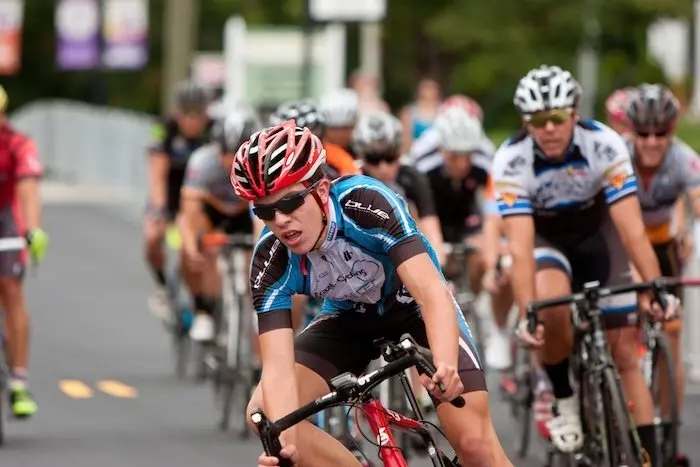
Participating in a race, whether it’s a sportive like the Étape du Tour or a competition in FFC, FSGT, or UFOLEP, gives you a concrete goal. This goal becomes the guiding thread of your training. A precise objective structures your preparation and gives meaning to each training session in the months or weeks leading up to the race. You stop aimless rides or disjointed training. You plan your weeks to work on your endurance, power, technique, or recovery based on the date and requirements of the event.
A clear goal, such as completing a 150 km sportive with 3,000 m of elevation gain or aiming for a podium in your category, motivates you to get fully involved. You get up early to ride, you take care of your diet, you work on your weaknesses. This discipline, fueled by the desire to perform on race day, is a powerful engine for progress.
Learning to Manage the Unexpected and Refine Your Strategy
On race day, things don’t always go as planned. Never, even. Wind, a crash in the peloton, a puncture, or a climb steeper or faster than expected: these contingencies are part of the experience. Participating in competitions or sportives teaches you to manage stress and make decisions under pressure. Stay in the peloton or attack? Save your strength or try a breakaway? Every race is a lesson in strategy and adaptation.
Cyclists who regularly participate in competitions develop a better ability to manage their effort and read the race. You learn to anticipate peloton movements, optimize your positioning, and pace your efforts to avoid exhaustion. These skills, acquired in real-life situations, enrich your technical and tactical toolkit, making you more complete.
Analyze to Progress
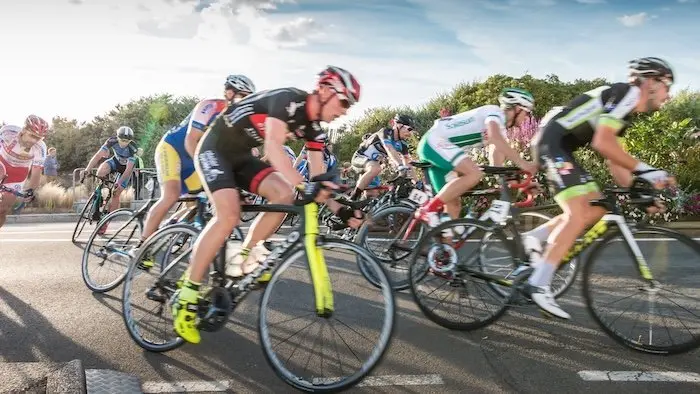
A race doesn’t end at the finish line. The post-race is a key step for drawing lessons. What worked? Where did you show weaknesses? Was your effort management optimal? By analyzing your performance, whether through data (power, heart rate) or your feelings, you identify your strengths and weaknesses. This reflective approach allows you to precisely target the aspects to work on for your next event.
For example, if you cracked on a climb, you’ll know you need to strengthen your climbing work or improve your FTP. If you mismanaged your nutrition, you’ll adjust your fueling strategy. Every race becomes a learning opportunity, a springboard for progress.
Competing Against Others, Competing Against Yourself
Participating in competitions or sportives also means measuring yourself against others and against yourself. The confrontation with other cyclists, whether they are stronger or at the same level, pushes you to give your maximum. It reveals your limits, but also your unsuspected capabilities. This personal challenge is an incredible engine for progress.
Furthermore, the race atmosphere – collective emulation, encouragement, the feeling of accomplishment at the finish – strengthens your motivation and passion for cycling. Every event is a unique experience, rich in emotions, that leaves its mark on you and pushes you to come back stronger.
Practical Tips for Getting Started
If you’re convinced, here are a few steps to integrate competitions or sportives into your practice:
- Choose a suitable goal: an accessible sportive to start with, with a distance and elevation gain adapted to your level, or a local race in your category.
- Plan your preparation: work with a coach or use platforms like Strava or Zwift to structure your training.
- Find out about the event: study the course, the difficulties, and prepare your strategy (effort management, nutrition).
- Learn from others: participate in group rides to get used to riding in a peloton.
- Analyze your data: use a power meter or heart rate monitor to evaluate your performance and progress.
By pushing your limits, structuring your training, learning to manage the unexpected, and analyzing your performance, you become a more complete, more confident, and more motivated cyclist. So, set a goal, sign up for a race, and discover how far you can go. The starting line is just the beginning of the adventure!
Share the post "Why pin on a race number and compete against others?"