Share the post "Review of the Van Rysel RCR-F Pro Decathlon AG2R La Mondiale 2025"
Van Rysel RCR-F Pro: The Aerodynamic Powerhouse at a Competitive Price
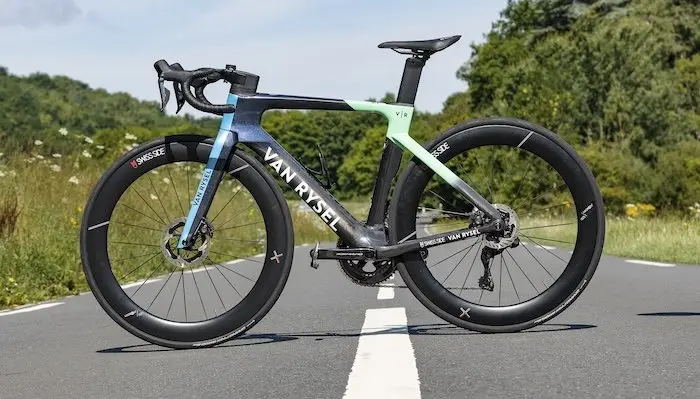
Van Rysel, Decathlon’s high-end cycling brand, has made a remarkable comeback in the professional peloton thanks to its partnership with the WorldTour team Decathlon – AG2R La Mondiale, which has been in place for two seasons. Following the RCR Pro—which was already a hit with riders in 2024—the northern French brand is unveiling the RCR-F Pro, an aerodynamic road bike designed in collaboration with experts from Swiss Side. This model aims to compete with the best bikes on the market, while remaining more affordable than its competitors. Has it succeeded? Let’s take a closer look.
By Guillaume Judas – Photos: ©Vincent Lyky
A Bold Ambition
The Van Rysel RCR-F Pro is part of Decathlon’s strategy to offer high-performance racing bikes at competitive prices. As a global sports giant, Decathlon has the human and technical resources needed to design bikes that rival premium brands. The partnership with the AG2R La Mondiale team—renamed Decathlon–AG2R La Mondiale in 2024 and Decathlon CMA CGM starting in 2026—illustrates this long-term commitment to professional cycling. To meet the demands of the WorldTour, a bike was needed that could measure up to the best—in a sport where equipment plays a key role.
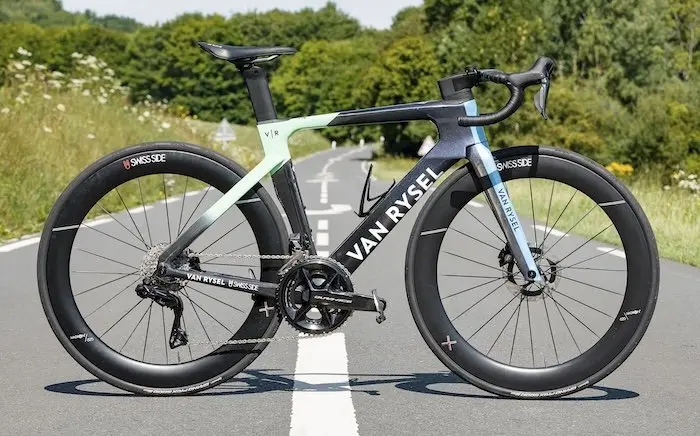
Launched in the spring of 2025, the RCR-F Pro is an evolution of the RCR Pro, already prized for its balance between aerodynamics and lightness. Unlike its predecessor, which was optimized for hilly to mountainous terrain, the RCR-F Pro focuses entirely on aerodynamics. With its bold lines, it is designed to slice through the air and transfer power without energy loss.
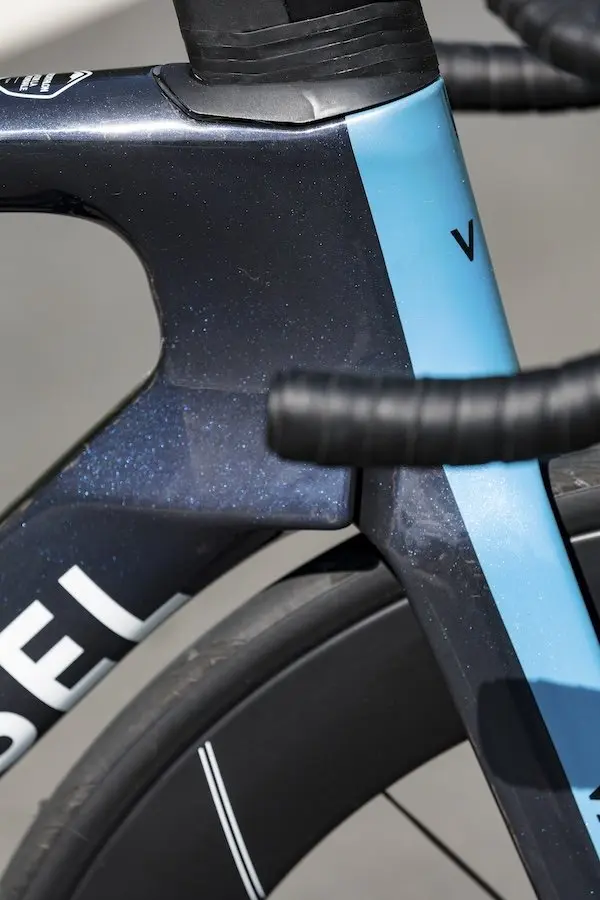
However, it comes at the expense of lightness: the frame weighs 1,010 g (size M, unpainted), the fork 420 g, and the complete bike weighs around 8 kg, despite its high-end components. This model is therefore designed for fast, moderately hilly routes, where it excels, as confirmed by wind tunnel tests conducted by the German magazine Tour, which rank it among the best in the WorldTour.
Models in the lineup
The Van Rysel RCR-F Pro is available in several versions, all offering excellent value for money:
- RCR-F Pro Signature: SRAM Red AXS, Zipp 454 NSW wheels => €9,000
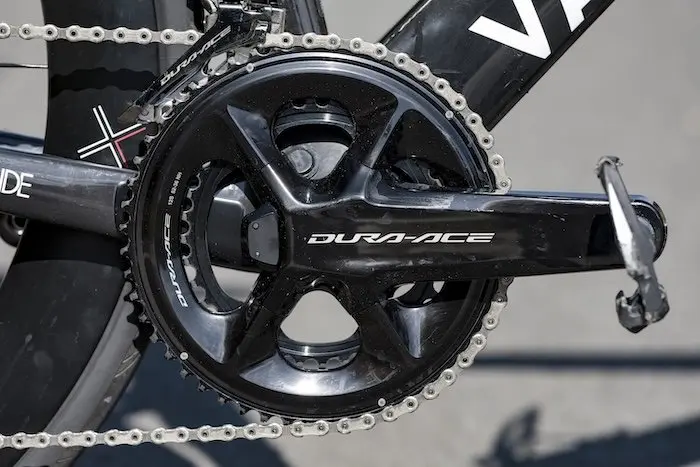
- RCR-F Pro Decathlon AG2R La Mondiale, Shimano Dura-Ace Di2, Swiss Side Hadron² 625 Ultimate wheels => €8,999 (our test bike)
- RCR-F Pro Inferno: SRAM Red AXS single-chainring, Zipp 454 NSW wheels => €8,500
- RCR-F Pro Violet: SRAM Force AXS, Zipp 404 SW wheels => €6,299
- RCR-F Pro Violet: Shimano Ultegra Di2, Swiss Side Hadron² 625 Classic wheels => €6,199
- RCR-F Pro Gray: SRAM Rival AXS, Van Rysel VR 50 wheels => €4,500
- RCR-F Pro Gray: Shimano 105 Di2, Swiss Side Hadron² 625 Classic wheels => €4,490
Please note that all models come with a Quarq, Shimano, or Inpeak power meter.
=> Buy the Van Rysel RCR-F Pro Decathlon AG2R on sale for €7,999.99
A Heavyweight in Its Class
The RCR-F Pro stands out with its Super High Modulus (60T) carbon frame, weighing 1,010 g (size M, unpainted), and a 420 g fork, numbers that fall short of the lightest bikes (with frames weighing less than 700 g), but are fairly common for bikes designed purely for fast riding on flat terrain.
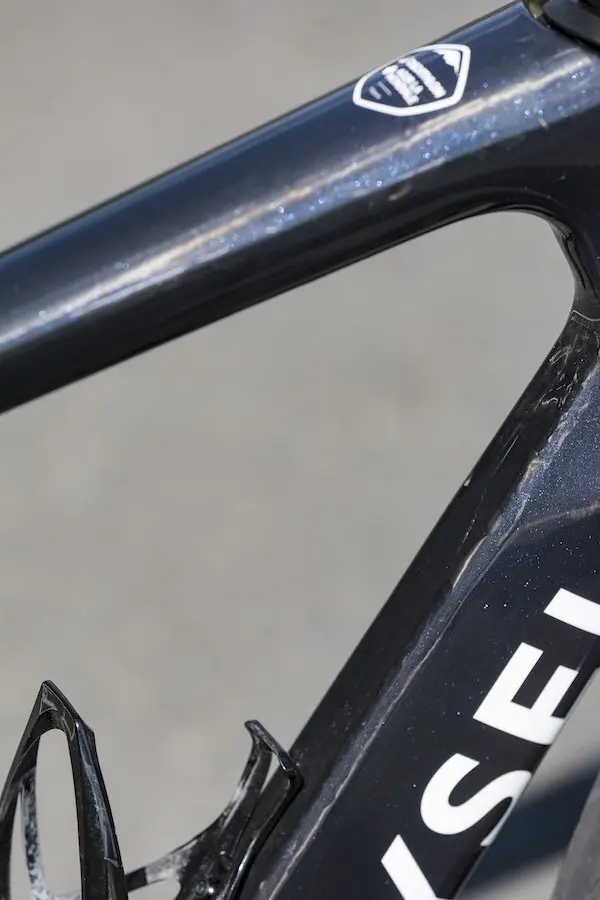
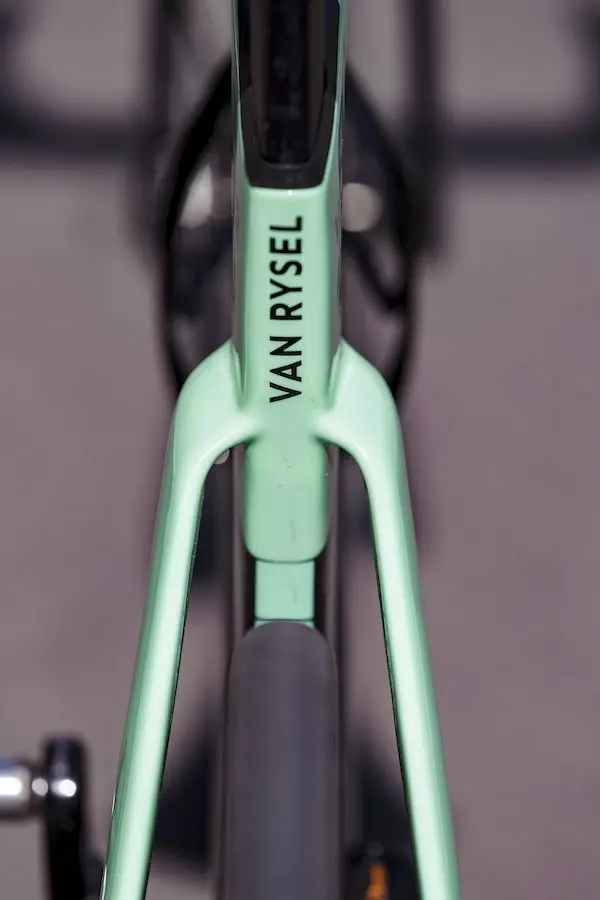
The RCR-F Pro frame, composed of 517 hand-laid carbon parts, was optimized in a wind tunnel with the help of experts from Swiss Side and ONERA (the French National Office for Aerospace Studies and Research), with a reported gain of 13 watts at 45 km/h compared to the RCR Pro. It features profiled tubes optimized for aerodynamic efficiency at wind angles ranging from -15° to +15°. The head tube, which is 7% stiffer than that of the RCR Pro, is designed to provide precise handling at high speeds. The lowered seat stays and cockpit reduce drag while improving stability in a speed-seeking position.
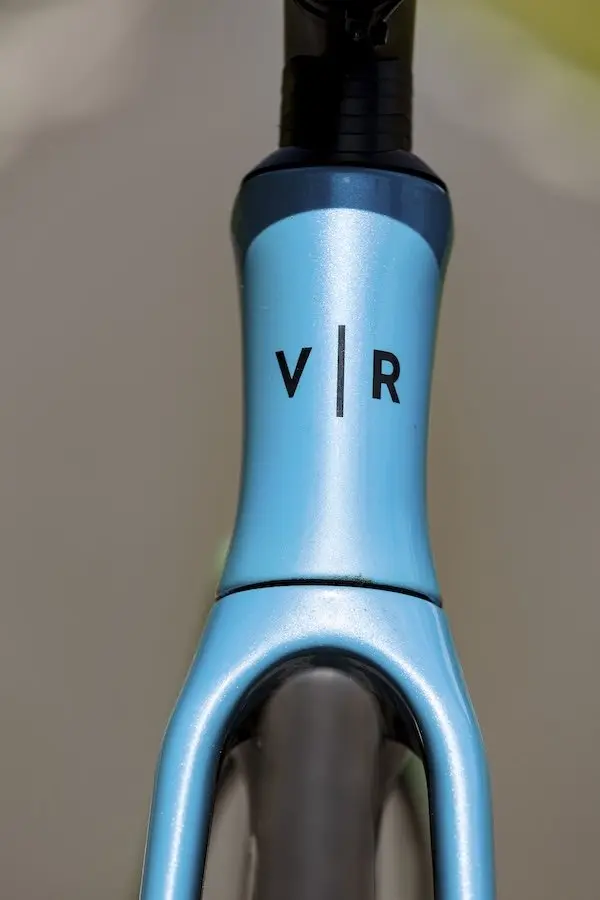
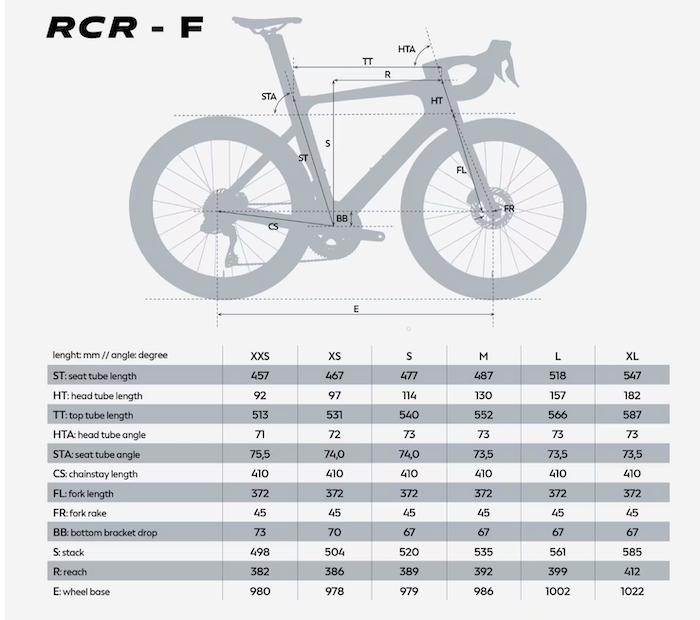
The bike’s geometry also promotes a very aggressive riding position, with a relatively low head tube and a fairly long reach compared to each frame size. This isn’t a bike meant for taking in the scenery, but rather for riding with intensity.
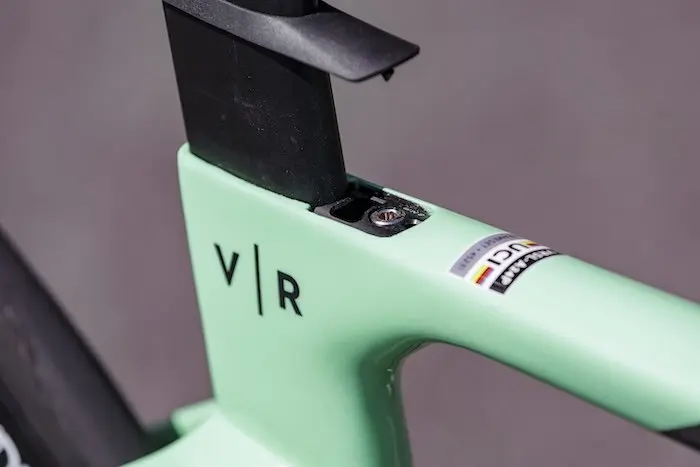
The heavily tapered seatpost is extremely easy to adjust—whether for saddle angle or position within the frame—thanks to a sturdy clamping system that can be accessed with a 5 mm Allen wrench. Van Rysel didn’t try to shave off a few unnecessary grams here, opting instead to prioritize reliability and practicality. We appreciate that. The same goes for the headset, the direct-mount derailleur hanger, and the brake hose routing inside the head tube—all of which exude high-quality craftsmanship. The RCR-F Pro is a perfectly finished frame that inspires complete confidence.
Comfort in Focus
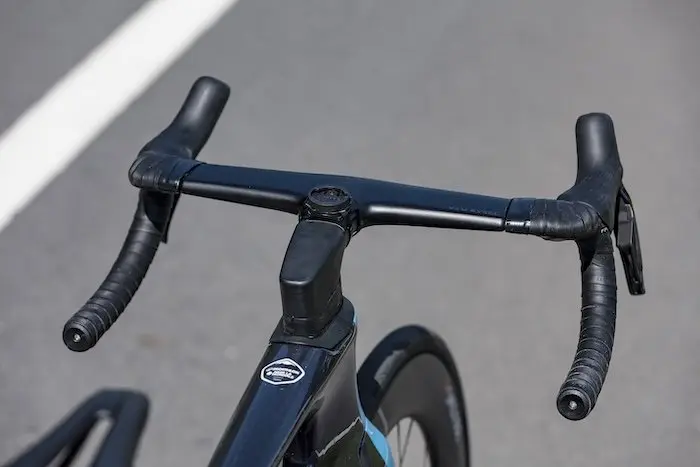
The integrated cockpit, designed in collaboration with Deda, features a 12° flare between the section where the brake levers are mounted and the lower section, resulting in a 6 cm difference in width for our size S test bike (36 cm wide at the top and 42 cm at the bottom). Despite my initial concerns upon seeing the test bike, I found the cockpit very comfortable, with ideal ergonomics for my build and the way I typically position my hands while riding. While the very narrow upper section doesn’t provide much leverage when standing up with your hands on the grips, the lower section allows you to position yourself perfectly, without any tension. While each frame size naturally comes with a specific handlebar width and length, one might wonder about the options offered by Decathlon stores for exchanging handlebar sizes when purchasing a new bike—something that’s typically possible at a traditional bike shop.
Unsurprisingly given its profile, the Van Rysel RCR-Pro isn’t a bike that does much to dampen road vibrations. The frame accommodates tires up to 33 mm wide for those who’d like to tone down its aggressive character a bit, but keep in mind that this version of the bike was designed as a complete aerodynamic package, featuring Swiss Side Hadron² 625 Ultimate wheels— which aren’t exactly lightweight but are incredibly efficient, and 28-section Continental GP5000 S TR tires. These tubeless tires come with inner tubes, which adds a bit of weight to the bike. To truly benefit from the performance, comfort, and road feel of a tubeless setup, you’ll need to have it maintained—as is typically done at a bike shop.
A pleasant surprise on the road
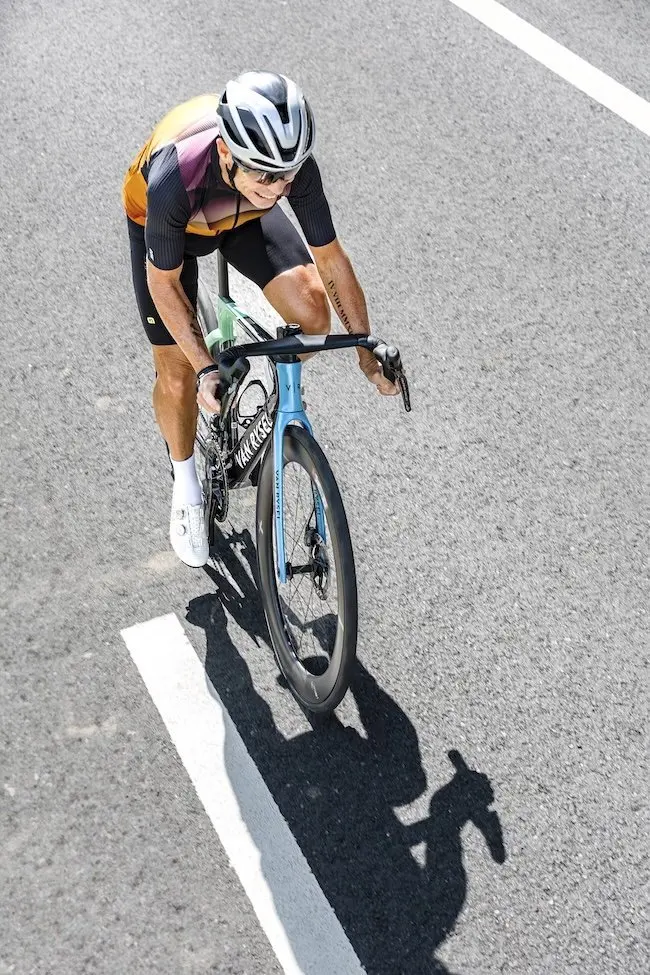
As I unboxed it and made the initial adjustments, I expected a clunky bike that would be demanding on the road—at least when riding at my usual training pace. With the pedals and a bottle cage, the RCR-F Pro still weighs in at nearly 8 kg, which is a bit heavy for a €9,000 bike. But the combination of a very stiff frame and aggressive geometry surprisingly delivers precision and responsiveness. The RCR-F Pro feels as sharp as a blade during accelerations and line changes, while demonstrating exhilarating stability at high speeds.

Whether riding out of the saddle or pushing the bike hard to change pace, the bike shows no weakness. The stiffness seems ideally distributed, with a very firm bottom bracket under pedaling force and a completely rigid front end thanks to a head tube that’s perfectly aligned with the steerer tube.
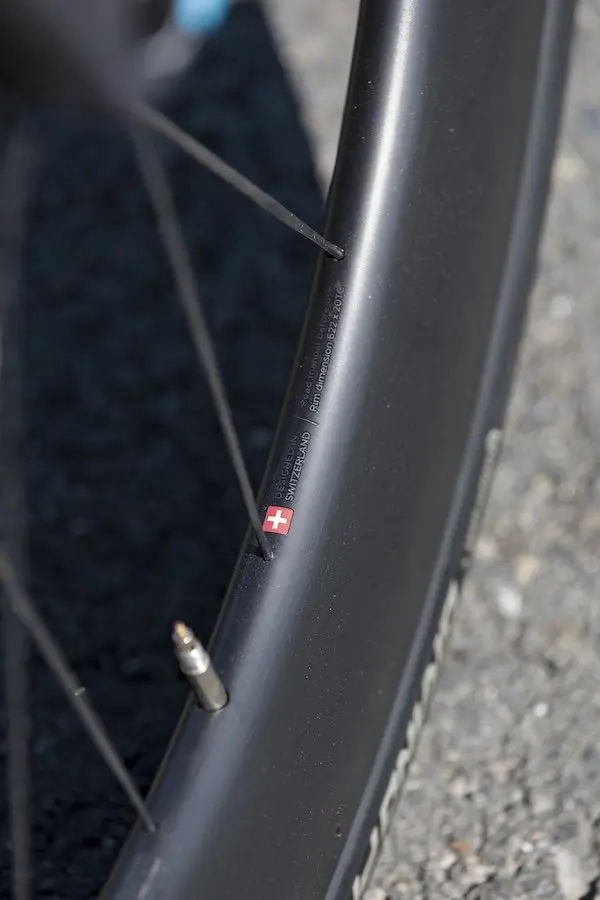
The wheels are heavy (nearly 1,700 g per pair), with a rim height of 62.5 mm and tubeless tires (300 g each) mounted with inner tubes. But they’re smooth and stiff, and when you stand up quickly on the pedals while leaning on the handlebars, you never feel them wobble in the middle of the frame.
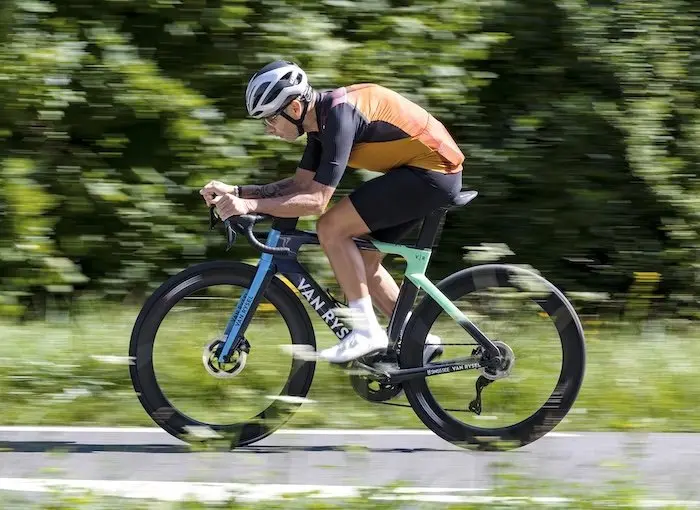
On flat terrain, the bike’s aerodynamics and stability become apparent as early as 35 km/h. The RCR-F Pro makes it easy to maintain a high cruising speed regardless of wind conditions, thanks in large part to its exemplary stability. It is barely affected by crosswinds, which makes for a very comfortable ride. The cockpit’s ergonomics provide a perfectly natural position for the hands and torso when pushing for speed, while still allowing for a fairly relaxed posture—further enhancing riding comfort. The bike bounces a bit on rough surfaces, but it makes up for it with those little details that make it a pleasure to ride. And the faster you go, the more it’s in its element. I was once again pleasantly surprised while riding down an open descent at over 65 km/h, where the RCR-F stays on course without wobbling, whereas other bikes require a lot of attention in these conditions.
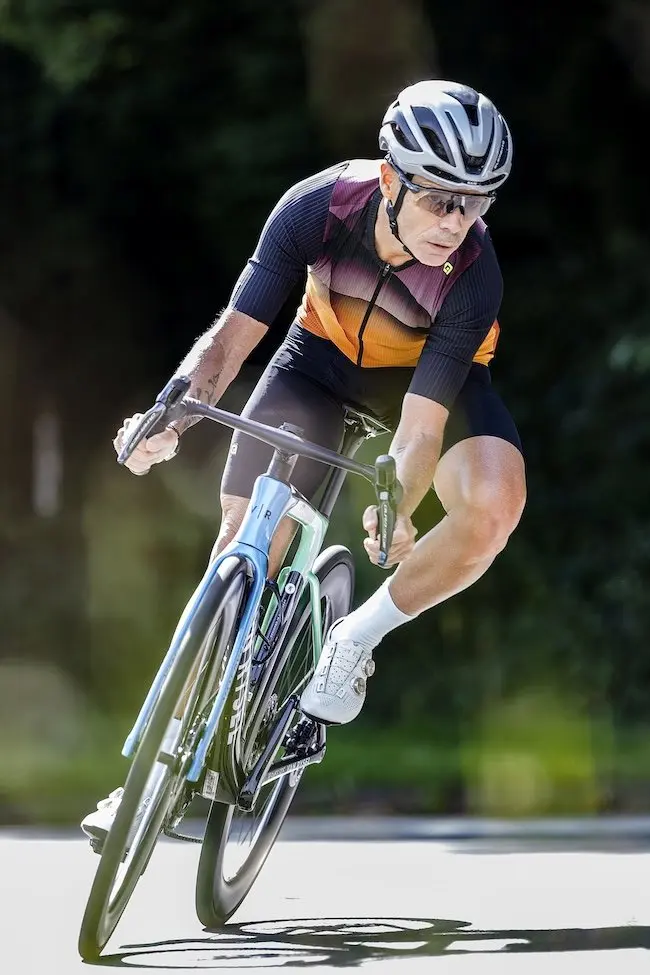
On short, gently sloping climbs, the RCR-F Pro performs admirably thanks to its overall efficiency—provided you tackle them dynamically. If the gradient exceeds 6 or 7 percent and you approach it at low speed, the bike is a bit difficult to get moving again, due to its weight, its stiffness—which eliminates any spring effect when you stand up on the pedals—and the very narrow spacing of the brake levers, which limits the lever arm. Fortunately, the bike in this configuration makes up for it with a flawless drivetrain and gear ratios that allow you to keep your legs turning at a steady cadence to avoid stalling on the climb.
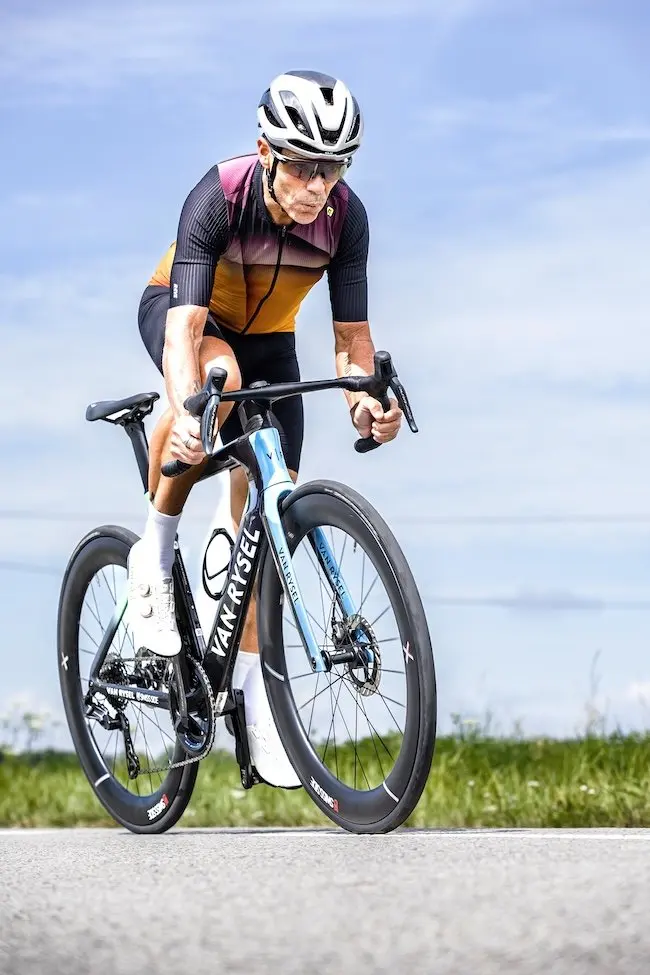
An RCR-F Pro at the Cutting Edge
Undoubtedly, the Van Rysel RCR-F Pro is at the cutting edge of today’s road bike efficiency, where it competes directly with bikes like the Canyon Aeroad or the Cervélo S5—true industry benchmarks. Its efficiency is very high, as is its stability—a quality I particularly appreciate when riding fast. But it’s also stiff and precise to handle, and ultimately just as exhilarating to ride on hilly routes, where short climbs and frequent accelerations alternate with long, straight stretches across open fields.

However, it remains a pro bike—powerful but demanding on mountainous routes and for recreational cyclists who are lightly or moderately trained, or who simply ride at an average speed below 30. Its geometry also clearly favors an aggressive riding position, which isn’t for everyone—especially those of us who aren’t as flexible.
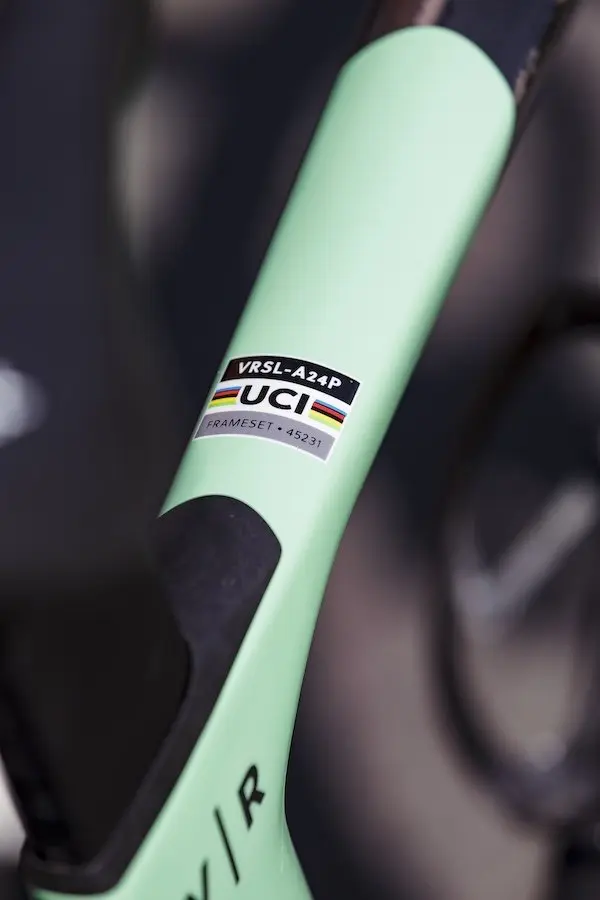
With the RCR-F, Van Rysel demonstrates its ability to offer a bike that competes with the best WorldTour bikes, at a very competitive price—even for this high-end model, which is identical to the one used by the Decathlon-AG2R La Mondiale pros. However, given that the bike is sold in Decathlon stores—which typically specialize in retail bikes for the general public—you’ll need to take into account the limited options for adjusting the size of certain components, which may prove essential for a hassle-free riding experience.
=> Buy the Decathlon AG2R La Mondiale Van Rysel RCR-F Pro on sale for €7,999.99
The VAN RYSEL RCR-F PRO Decathlon AG2R La Mondiale at a glance…Pros: performance, aerodynamics, stability, stiffness, build quality, cockpit ergonomics, value for money Frame: UHM (Ultra-High Modulus) carbon – Fork: UHM carbon – Handlebar/stem: Van Rysel by Deda integrated monoblock – Wheels: Swiss Side Hadron² Ultimate 625 – Tires: Continental GP5000 S TR, 28 mm – Crankset: Shimano Dura-Ace Di2 12-speed 52-36 (with Shimano Dura-Ace power meter) – Derailleurs: Shimano Dura-Ace Di2 12-speed – Shifters: Shimano Dura-Ace Di2 12-speed – Brakes: Shimano Dura-Ace – Cassette: Shimano Dura-Ace 12-speed, 11-34 – Saddle: Fizik Vento Argo 00 – Seatpost: Carbon RCR-F – Number of sizes: 6 – Total weight: 7.645 kg (size S, without pedals). Price: €8,999 – Contact: vanryselcycling.com |
Share the post "Review of the Van Rysel RCR-F Pro Decathlon AG2R La Mondiale 2025"