Share the post "Menopause: why metabolism slows down and what to do"
Since the start of the Tour de France Femmes, several readers have written to us to ask a simple, yet crucial question: “Jeff, I ride, I pay attention to what I eat, I move more than I did at 30… and yet, at menopause, I gain weight. Is this normal?” The answer is yes, and no. Yes, because metabolism changes during this period of life. No, because something can be done about it. And that’s precisely what we’re going to explore, based on the most beautiful event of the season: the Tour de France Femmes avec Zwift 2025, where some riders continue to perform despite the years… and hormonal upheavals.
By Jeff Tatard – Photos: depositphotos.com, ©A.S.O. Pauline Ballet/Thomas Maheux
Impressive Performances, a Revved-Up Metabolism
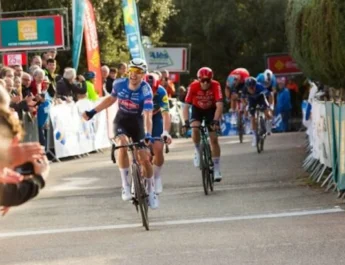
We saw it again this year: Marianne Vos, at 38, won the first stage in Plumelec with the same ease as ten years ago. She is not the only one to shine beyond 35: Mavi Garcia won the second stage solo at 41 and a half; Annemiek van Vleuten dominated the peloton until her retirement at 41, with a finely tuned athlete’s metabolism and exemplary rigor.

On the Tour, some riders burn more than 7,500 kcal per day, according to studies conducted by the Women’s WorldTour. Their basal expenditure skyrockets, they eat every two hours, and regeneration is taken as seriously as training.
This is an optimized, supervised functioning, but it relies on a simple principle: their metabolism is running at full throttle. Which, after a certain age and in the absence of appropriate monitoring, is no longer as obvious for most women.

What Science (and Field Experience) Says
Dr. Laurent Aumont, former PSG doctor and now medical advisor to high-level athletes in cycling and triathlon, confirms: “Menopause disrupts hormonal balance and how the body uses energy. It is often at this time that women notice unexplained weight gain. It’s not a question of discipline or effort; it’s a question of biology.”
According to him, this phase must be approached proactively: strength training, individualized nutrition, and more structured training. “What worked at 30 is no longer enough at 50. But it’s not inevitable. You just have to change your approach.”
What Really Changes at Menopause
The scientific literature is clear. At menopause:
- Estrogen levels drop, which disrupts the regulation of fat mass, glucose metabolism, and appetite.
- Muscle mass decreases by 3 to 8% every ten years from age 40, if nothing is done.
- Basal metabolism slows down, which reduces caloric expenditure at rest.
- Stress and sleep management become more difficult, which alters satiety regulation.
A study published in The Journal of Clinical Endocrinology & Metabolism (2015) confirms that the menopausal transition is associated with an increase in visceral fat mass, independently of total weight.
What the Pros Do… and What We Can Adapt
Some athletes like Kristin Armstrong (triple Olympic champion, gold medalist at 43) or Jeannie Longo in her time continued to perform very late, by integrating adapted protocols:
- Targeted strength training to maintain lean mass
- Short high-intensity sessions to stimulate metabolic hormones (GH, testosterone, etc.)
- Chronobiological nutrition (carbohydrates well-placed around effort, fractionated proteins)
- Medical hormonal monitoring if necessary, within the framework of a validated protocol
Even without aiming for the podium, these principles also apply to amateur cyclists.
5 Simple and Effective Levers to Regain Control
1. Make strength training an ally
Two sessions a week, even short ones, are enough to reverse the trend of muscle loss.
2. Adapt nutrition to real needs
Do not eliminate carbohydrates, but time them around workouts. Eat more protein (1.2 to 1.5 g/kg/day). Prioritize whole, fiber-rich foods.
3. Intensify effort intelligently
One high-zone session per week (intervals, FTP, sprint) can boost metabolism more effectively than 3 hours at low intensity.
4. Respect recovery and sleep
Regeneration is not a luxury; it’s a necessity. Without it, metabolism remains stuck in “economy” mode.
5. Consult a professional if in doubt
Sports doctor, nutritionist, or endocrinologist: do not face these upheavals alone.
Conclusion: Cycling, a Lifelong Journey
What the Tour de France Femmes reminds us is that performance has no fixed age. That metabolism is a lever that can be adjusted. And that the body, even after 50, can still surprise — provided you understand its rules. As Dr. Aumont says: “Women’s bodies evolve, but they remain capable of performing. You have to listen to them differently, not abandon them.”
So yes, menopause marks a turning point. But it is neither a hindrance nor an end. It’s just a stage. Like a slightly longer climb. And we know: in cycling, it’s often the hardest ascents that leave the most beautiful images.
Share the post "Menopause: why metabolism slows down and what to do"