Share the post "A study identifies the most effective team strategies for reducing aerodynamic drag by up to 76%"
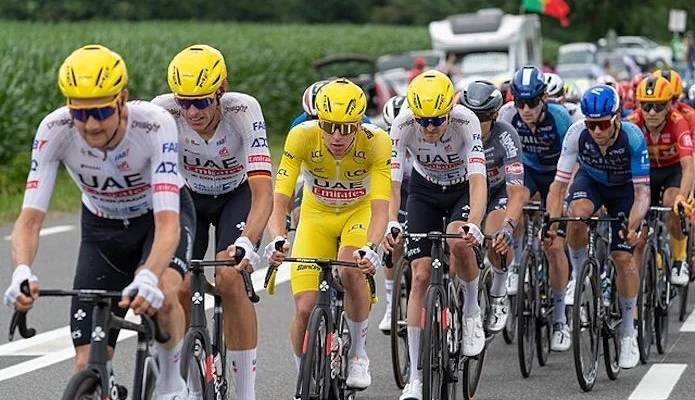
A recent study, conducted by Heriot-Watt University in collaboration with Ansys (a Synopsys entity), analyzes the impact of team strategies in the peloton on aerodynamic efficiency, with direct applications to the 2025 Tour de France. Energy savings for a team leader can reach 76%.
Photos: Filip Bossuyt, Hugo LUC, DR
Led by Professor Bert Blocken, this research uses computational fluid dynamics (CFD) simulation to quantify the reduction in aerodynamic drag based on the configurations adopted by teams. The results, published on July 21, 2025, highlight the strategic importance of formations for optimizing rider performance in a demanding race of over 3,000 km.
Methodology and Objectives
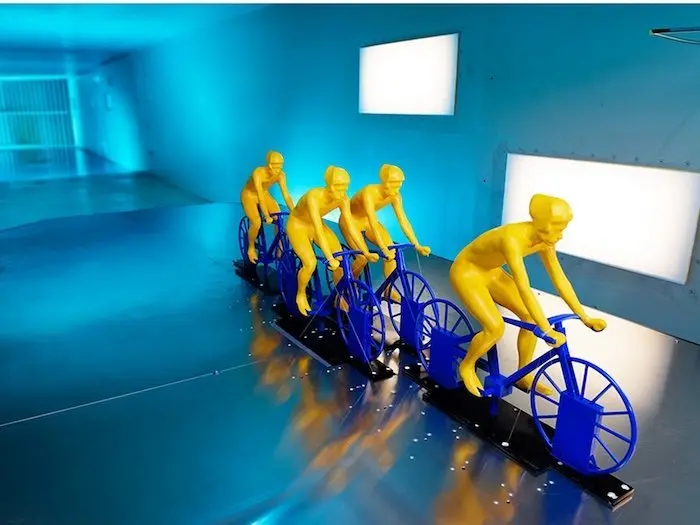
The study aims to evaluate how peloton formations influence the aerodynamic drag of the protected rider, thereby saving energy for key moments of the race. Researchers modeled a cyclist using Ansys’ CFD technology, analyzing airflow around formations of three, four, and five riders. Simulations focus on conditions without crosswind to isolate the effect of the configurations.
Results of Analyzed Team Strategies
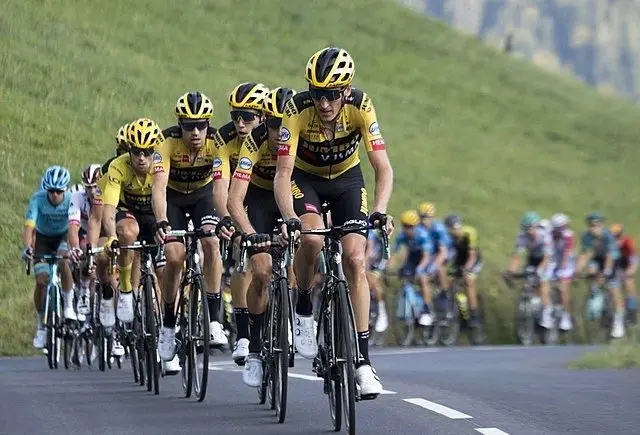
Inverted Triangle (3 riders): The protected rider benefits from a 60% drag reduction, meaning a residual drag of 40% compared to an isolated position.
Diamond (4 riders): The leader’s drag is reduced by 62%, with a residual drag of 38%. This configuration also improves the aerodynamic efficiency of the teammates.
Train (5 riders): With two pairs of teammates positioned in front of the leader, drag is reduced by 76%, meaning a residual drag of 24%. This is the most effective formation for the protected rider.
Implications for Teams
The results confirm the effectiveness of strategies intuitively adopted by professional teams. According to Frédéric Grappe, performance director at Groupama-FDJ, the choice of formation depends on race dynamics and tactical objectives. For example, the five-rider train is ideal for protecting a leader in fast sections, while the diamond may be preferred to balance the team’s overall effort. The study provides quantitative data allowing teams to refine their tactics before the race, although variables such as rider morphology or the presence of vehicles may influence results in real conditions.
Contribution of Technology
The use of CFD simulation, derived from aerospace engineering, allows for precise analysis of airflow and its interactions with riders. Thierry Marchal, director of industrial programs at Ansys, emphasizes that this approach makes the physics of cycling accessible to the general public while offering advanced tools to teams for optimizing their performance.
Conclusion
This study provides scientific validation for team strategies in terms of peloton placement used in professional cycling, with drag reductions of up to 76% in optimal configurations. Although limited to conditions without crosswind, the analysis offers valuable insights for sports directors and riders, reinforcing the importance of aerodynamics in modern competition.
Share the post "A study identifies the most effective team strategies for reducing aerodynamic drag by up to 76%"