Share the post "Tips: how to master your ego on the road"
To be good at cycling, it takes much more than simply riding a bike: it’s about a balance between effort, strategy, and self-control. Yet, it happens to all cyclists, recreational, amateur, or professional, to get carried away by an impromptu challenge on the road. That’s when the ego refuses to stay in the background. And most of the time, it’s totally counterproductive. Here’s why.
By Guillaume Judas – Photos: depositphotos.com
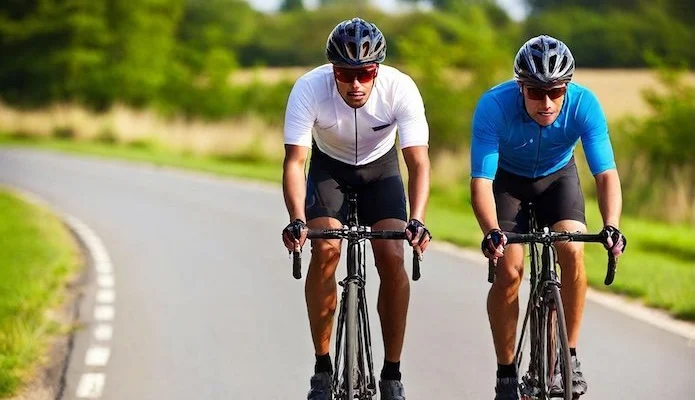
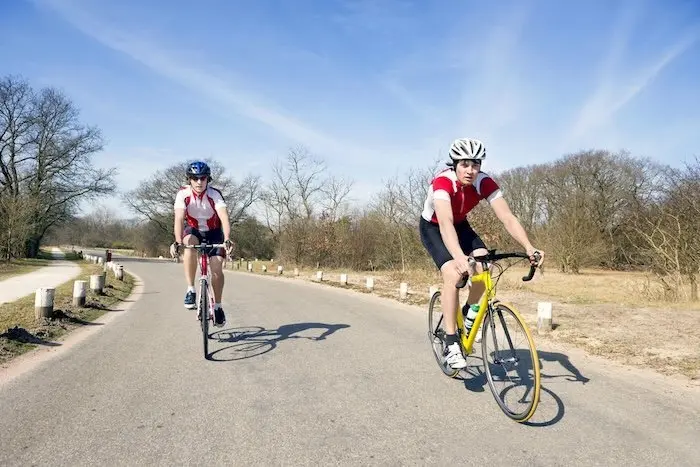
You’re riding normally, you overtake another cyclist, and suddenly, they latch onto your wheel. You stay calm, but then a climb appears. They, en danseuse, give it their all… and the cockfight is on! You feel the urge to prove to them that you’re not there to mess around. Does that sound familiar?
Conversely, you’re riding quietly on the small chainring, enjoying the scenery, a cyclist overtakes you, sometimes without a greeting. It’s stronger than you, you take their slipstream, follow their pace, and even pass them when they seem to struggle against the wind, pretending not to push hard while you’re going into the red to impress them. Does that still sound familiar?
Or, you have a ride at a defined pace planned. You start in a group so you don’t get bored, but halfway through the route, your companions start racing each other on the climbs and every false flat, and the session ends at race pace. Are you there?
The Ego in Ambush
These are frequent situations that we all encounter on our usual training routes. However, letting yourself be challenged at the slightest opportunity doesn’t bring much when you’re following a structured training plan.
Many riders admit afterwards that they might have pushed a little too hard compared to what was planned in the training schedule. “There was a colleague ahead,” or “a guy passed me, I wanted to follow…”. The ego, this invisible engine, can transform a quiet ride into an improvised duel. And while staying calm in the face of such provocation is sometimes difficult, that’s where the key to your progress lies.
Why Stay in Your Zone?
The classic mistake is to let yourself be distracted from your main objective. You train for yourself, to progress, to build a solid foundation in the long term. Every ride must serve your training plan, not your momentary pride. Going outside your target zones (heart rate, power, or pace) to “remettre quelqu’un à sa place” (put someone in their place) risks compromising your efforts and results.
Practical Tips to Stay on Track
Do you find it hard to curb your enthusiasm once you’re on the bike? Before hitting the road, take a moment to clearly define your intention, reminding yourself why you’re getting on your bike: is it a recovery ride to let your legs rest, an endurance training session to build your base, or perhaps an interval session to boost your power? Keeping this goal firmly anchored in your mind will help you stay aligned with your main objective.
When someone latches onto your wheel or suddenly accelerates to challenge you, resist the impulse to react and let them go at their own pace, because your progress depends exclusively on your own consistency and not on the actions of someone else. A watch or a power meter can become your valuable ally to maintain your target zones, alerting you as soon as you deviate from the plan and inviting you to wisely regain your focus.
Finally, if the urge to compete tickles you, transform this energy into an inner motivation by mentally noting this challenge for a dedicated ride where you can fully unleash yourself, while respecting the structure of your training program.
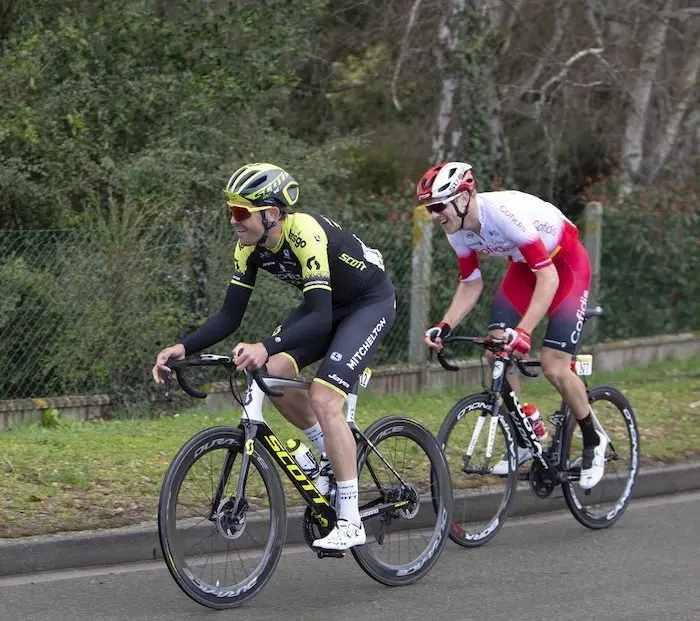
Of course, following the initial plan despite temptations also serves to allow you to capitalize the maximum energy for sessions that require you to be able to produce very high intensities. Or for the upcoming competition(s). If you follow a coach’s advice, they have already anticipated all of this. That’s their job. Yours is to listen to them and follow the plan.
The True Winner
The one who progresses is not the one who wins an impromptu duel on a climb, but the one who follows their plan with discipline. The next time a “cockfight” arises, smile inwardly, stay focused on your zones, and know that the real victory is your personal evolution. So, ready to tame your ego to go further?
Share the post "Tips: how to master your ego on the road"