Share the post "Nitrate: Cyclists’ Discreet Yet Powerful Ally"
Long confined to the world of health nutrition, dietary nitrate has carved out a prominent place in the routines of high-level cyclists. Now present in many preparation protocols, it attracts as much curiosity as it does questions. Is it really effective? When and how should it be used? José Lopez, a coach specializing in running and cycling and performance optimization, sheds light on this natural compound that has become a strategic tool.
By Jeff Tatard – Photos: deposiphotos.com / DR
A natural vasodilator that improves pedaling economy
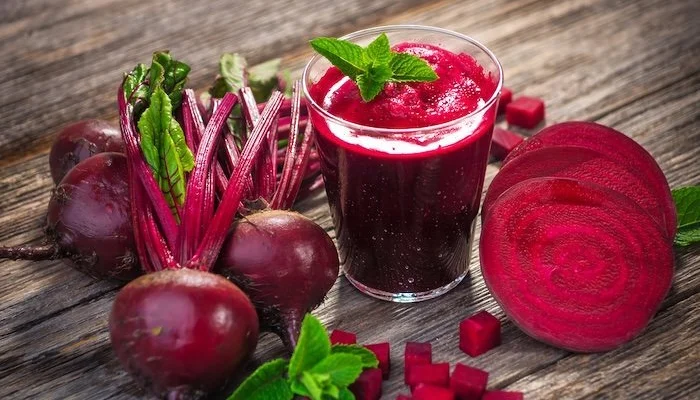
Nitrate is a compound naturally present in certain vegetables, notably beetroot, spinach, and celery. Once ingested, it is transformed by the body into nitrite, then into nitric oxide, a molecule with well-known vasodilatory properties.
“What this changes for a cyclist, explains José Lopez, is better blood circulation, and therefore a better supply of oxygen and nutrients to the muscles. And that, on a steep climb or in a time trial, is not a minor detail.”
But the most interesting effect remains what is called pedaling economy: at equivalent intensity, the muscles consume less oxygen to produce the same effort. Concretely, you tire less quickly, recover faster, and can sustain high power outputs for longer.
Scientifically evaluated and validated effectiveness
Several studies, notably those conducted by the University of Exeter, have confirmed these effects: a 3 to 5% reduction in oxygen consumption, an increase in high-intensity endurance, and in some cases, measurable gains over efforts lasting 5 to 30 minutes.
José Lopez also observes this in the field:
“For riders who already have a good level of training, the benefits are not huge, but they are real. For those looking to progress or optimize their peak form, nitrate is a real asset.”
He specifies, however, that the effects can vary depending on individual sensitivity, fitness level, or even oral flora (a key step in nitrate transformation).
When and how to use it?
Timing is essential to fully benefit from the effects of nitrate. Optimal absorption occurs 2 to 3 hours before the effort, and its peak effectiveness is generally reached within this window.
José recommends two strategies:
• For one-off use: 400 to 600 mg of nitrate (generally via a concentrated, higher-quality juice), 2 to 3 hours before a race or a key training session.
• For a loading phase: 300 to 400 mg per day for 3 to 6 days before an important event, which allows for saturating reserves and optimizing cumulative effects.
The ideal is to test during training before a race. Beetroot juice can cause digestive discomfort or stomach aches in some people if poorly tolerated.

Which products to choose?
Nitrate can be found in:
• Natural foods: beetroot, arugula, spinach, celery, lettuce
• Concentrated beetroot juices (most commonly used by athletes)
• Nitrate-standardized powders or capsules
“I prioritize natural products, organic if possible, and brands that guarantee stable dosages. There’s a lot of marketing around nitrate right now, but not all products are created equal,” José reminds us.
He also emphasizes regularity: “It’s not something you take once like a gel. It’s part of a global preparation strategy, just like sleep, training, or hydration.”
Limits to be aware of
Even if nitrate is legal, natural, and generally well-tolerated, it is not a miracle cure.
“If you sleep poorly, if your training is shaky, or if your diet is unbalanced, nitrate won’t work magic,” concludes José Lopez. “But if everything is in place, then it’s clearly a performance factor.”

In conclusion,
Nitrate is neither a doping agent nor a passing trend. It is another tool in the modern cyclist’s arsenal, keen to optimize every detail. Its strength? It is natural, accessible, and backed by science.
However, it must be used with rigor and common sense. In a sport where every watt counts, nitrate will never replace training… but it can, sometimes, make a difference.
Share the post "Nitrate: Cyclists’ Discreet Yet Powerful Ally"