Share the post "Heat Training: boost your performance with heat training"
Heat training, or heat acclimation training, is gaining popularity for optimizing cycling performance. This method involves deliberately raising the body’s core temperature during specific sessions. Much more than just preparation for races in hot weather, it improves endurance and efficiency, even in temperate climates. Discover its benefits, application, and precautions.
By David Polveroni – Photos: @corebodytemperature
Why adopt heat training?
Studies show that heat training increases plasma volume (up to 10%), improves thermoregulation (earlier and more efficient sweating), and reduces heart rate at a given intensity. Body temperature drops by 0.2 to 0.4 °C, promoting comfort and performance over long distances. It also boosts hemoglobin mass and mitochondrial enzymes, improving lactate thresholds and FTP by 5 to 8%.
Concrete example: Mads Pedersen
2019 World Champion, Mads Pedersen uses heat training for races like Milan-San Remo. On the indoor trainer, dressed warmly and without ventilation, he maintains a core body temperature above 38.5 °C. “It’s terrible, but terribly effective,” he confides on the Long Distance podcast.
His method: pedaling at 255-270 watts, letting his heart rate climb from 110 to 180 bpm. Today, pros like Pogacar integrate this practice, sometimes as an alternative to altitude training.
How to structure an effective protocol?
A heat training protocol spans 8 to 14 days, aiming for a core temperature of 38.5 °C for 60 to 90 minutes.
Options include:
- Rides in hot weather
- Indoor trainer sessions in a poorly ventilated room
- Warm clothing indoors
- Sauna or hot bath post-training (20-30 min)
Plan 5 to 7 weekly sessions, after quality workouts, at low intensity (max Z2) to promote adaptation. For example, combine 1h30 outdoors with exercises, then 1h on the indoor trainer.
Monitoring with temperature sensors
Sensors like the Core Sensor continuously measure core temperature, allowing for the prevention of overheating, adjustment of exposure duration, and quantification of thermal load.

Precise monitoring ensures optimal adaptation without exceeding physiological limits.
Garmin indicates our heat acclimation on some bike computers, but how accurate is this indication really? I invite you to reread Jeff’s article on this subject.
Example of a 10-Day Protocol
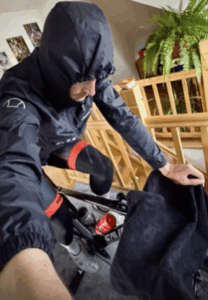
Days 1 to 5: 60 min endurance (Z1/Z2) with warm clothing (leg warmers, skullcap, long jersey, windbreaker).
Day 6: add a sauna or hot bath post-training.
Days 7 to 10: 60 min in a hot environment, maintaining an internal temperature above 38.5 °C.
For a long-term effect, integrate 2 to 3 weekly sessions (8 to 14 sessions in total).
Essential precautions
Heat training is demanding. Hydrate properly (sodium + electrolytes), plan recovery, and adjust training load. In case of dizziness or excessive fatigue, stop immediately. This method requires gradual progression to limit physiological stress.
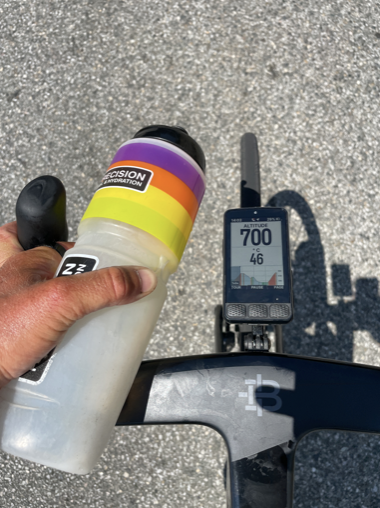
Heat Training vs Heat Adaptation
Do not confuse heat training and heat adaptation. Heat training stimulates physiological adaptations to perform in all conditions, while heat adaptation specifically prepares for races in hot weather, such as the Étape du Tour. The two approaches overlap but have distinct objectives.
Conclusion: a powerful method for everyone
Heat training improves endurance, accelerates physiological adaptations, and boosts performance, even in cool climates. Used by pros and accessible to sportive riders, it requires rigorous planning and precise monitoring. Integrate it to prepare for your challenges, like the Étape du Tour!
Share the post "Heat Training: boost your performance with heat training"