Share the post "Training in the mountains: an ideal playground for progress"
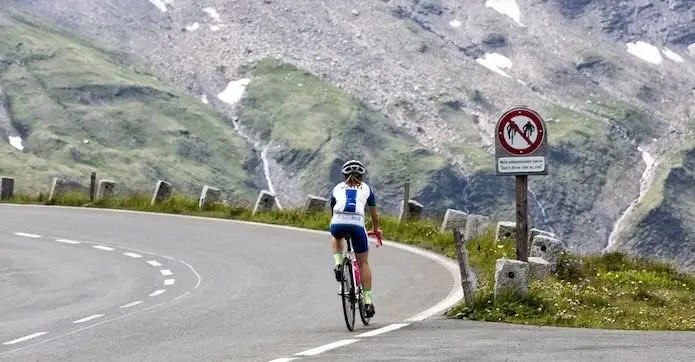
Training by climbing mountain passes is much more than just a bike ride in a magnificent setting. It’s a unique opportunity to work on your physique, refine your technique, and strengthen your mental game. Here’s why climbing mountain passes should be part of your routine if you’re looking to improve in cycling.
By Guillaume Judas – Photos: ©depositphotos.com
Regularly climbing mountain passes in training offers a definite advantage not only for better climbing, but also for overall physical fitness improvement. Those who live close to the mountains often benefit from this. For others, there are few sessions that can substitute for long climbs of 15 minutes or more. This explains the success of altitude training camps, or at least in a mountainous region, for those preparing for their big summer goals or who simply want to boost their performance.
A Perfect Environment for Managing Intensities
Mountain pass ascents offer an undisturbed terrain: no intersections, no red lights, no stop signs. You can fully concentrate on your exercises, whether it’s for working on specific intensities, uphill sprints, or prolonged threshold efforts. This continuity allows for clean and effective work, without external interruptions. You control your effort and can push your limits with complete peace of mind.
Technical Work for Optimized Pedaling
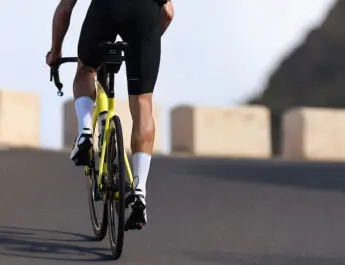
Climbing a mountain pass is an opportunity to refine your pedaling technique. Whether you’re seated to maintain a sustained rhythm or out of the saddle to relaunch the effort, the climb forces you to feel every pedal stroke. To eliminate as much as possible all dead spots in the pedaling cycle to optimize your efficiency. This context helps to refine the fluidity of your movement, better distribute effort between your legs, and optimize your posture. Over time, these technical adjustments result in increased efficiency, which you will also feel on flat terrain.

Targeted Muscle Strengthening
Mountain passes intensely engage the quadriceps, glutes, and core muscles. Each climb is a true muscle strengthening workshop, where you develop not only your power but also your muscular endurance. Long ascents, often demanding, push you to work on your resistance to fatigue, a valuable asset for long rides or competitions.
A Mental Challenge to Push Your Limits
Climbing a mountain pass is also a mental battle. Steep slopes, the length of the ascents, and the onset of fatigue test your determination. It’s in these moments that you learn to manage your effort, pace your energy, and get to know yourself better. Each conquered pass strengthens your confidence and your ability to endure difficult moments, essential qualities for any cyclist.
A Complete Training Ground for Progress
In summary, training in mountain passes means giving yourself a complete training ground, where physical, technical, and mental aspects develop in synergy. Each climb is an opportunity to progress, to better understand your body, and to push your limits. Whether you are an amateur or a competitor, mountain passes are a school of rigor and perseverance.
Often, It’s the Icing on the Cake
Those who live on flat terrain can, of course, achieve fitness in other ways, thanks to specific training on the flats or by climbing a succession of short hills. But it is often longer and more tedious, and not always as effective.
A well-structured mountain training camp at the end of spring or beginning of summer nevertheless provides that little extra that can make the difference for finishing the Étape du Tour well, for example (the goal of many participants), or for stepping up a level during amateur summer races.
Our advice: if you are already properly trained, plan an eight-day camp, which is the ideal duration. And alternate two consecutive days with 2500 to 3000 m of elevation gain with a very light recovery day where you will still climb an “easy” pass with a very small gear. You should feel the effects a few days after your return to flat terrain.
And You, Do You Climb Mountain Passes?
If you are lucky enough to live near the mountains, do you integrate mountain passes into your training? What benefits do you gain from it? And if the mountains are far away, have you ever considered altitude training camps to work on these specific qualities? Share your experiences, your favorite passes, or your tips for improving uphill!
Share the post "Training in the mountains: an ideal playground for progress"