Share the post "What if we stopped obsessing over pedaling cadence?"
Pedaling cadence is essential data for many practitioners during training. But is it always so important?
In the world of cycling, cadence is often a central concern. Many riders, whether amateurs or competitors, often wonder what the right cadence to adopt is. They set a precise goal, often influenced by preconceived ideas, and feel frustrated if they don’t reach that magic number. However, this obsession can be counterproductive. Here’s why it’s time to stop overanalyzing your cadence and let your body take the reins.
By Guillaume Judas – Photos: depositphotos.com
The Illusion of the Perfect Cadence
Many cyclists are convinced that there is an ideal cadence, often between 80 and 100 revolutions per minute (rpm), which they absolutely must achieve to perform well. This quest pushes them to force a higher cadence during endurance rides, at the cost of an increased heart rate and premature fatigue. Similarly, during interval training, they expend unnecessary energy to maintain a specific cadence, sometimes to the detriment of effort quality.
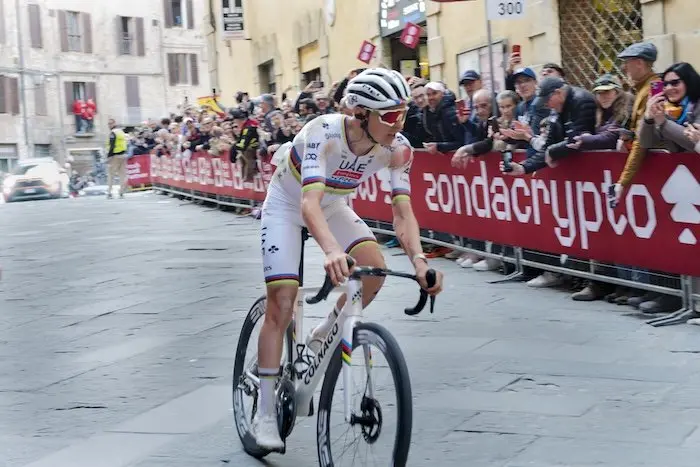
But the truth is simple: the perfect cadence does not exist. Your body is an intelligent organism that, when pedaling, naturally adapts to produce power in the most efficient way possible. This optimal cadence varies from one individual to another. For some, it will be lower (around 70-80 rpm), for others, higher (90-100 rpm or more). Studies, such as that by Chavarren and Calbet (2009), show that muscle fiber type plays a key role in this variability. Forcing yourself to ride at a cadence outside your natural cadence range consumes more energy and accelerates fatigue, which can compromise your performance.
When Cadence Matters (and When It Doesn’t)
This does not mean that cadence is always unimportant. There are specific situations where aiming for a specific cadence can be beneficial, particularly during training designed to provoke physiological adaptations.
For example, high-cadence sessions, where you deliberately pedal above your usual range, stimulate the firing frequency of motor neurons. This leads to faster synchronization between agonist muscles (which produce effort) and antagonist muscles (which stabilize), as demonstrated by Dorel et al. (2009).
These targeted workouts can improve the fluidity of your pedal stroke, making your movement more efficient. Over time, this work can even increase your base cadence: an endurance ride at 80 rpm could naturally evolve towards 90 rpm. But the essential thing is that this evolution should not be forced. It results from a progressive adaptation, where your body adopts a new cadence as the most efficient for producing power.
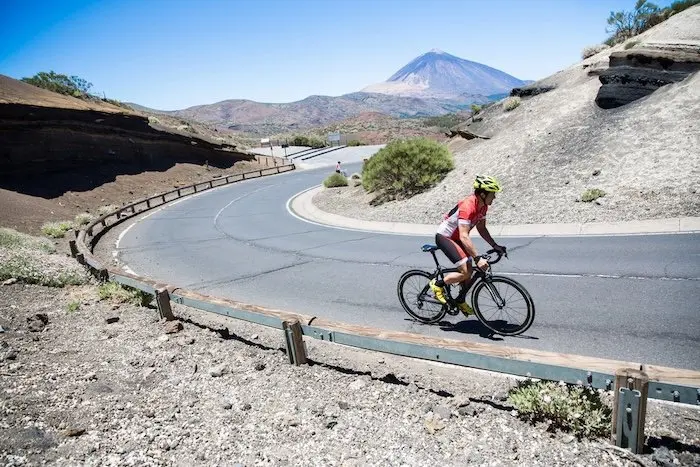
Outside of these specific workouts, trying to maintain a predefined cadence is often a waste of energy. During a classic ride or an endurance session, it is much more effective to let your body find its natural rhythm. This allows you to pedal with ease, preserve your energy, and fully enjoy the experience.
You will also notice that during intense efforts, you will naturally tend to increase your pedaling cadence. This is normal, because high power cannot be achieved (or maintained) solely by pedaling with force (at a low cadence).
Let Your Body Take Control
The obsession with cadence is a perfect example of some practitioners’ tendency to over-intellectualize their practice. By wanting to control everything, we forget a fundamental truth: the body knows what it’s doing. By trusting it, you optimize not only your energy efficiency but also your enjoyment of riding. A ride should not be a constant struggle to reach an arbitrary number on your bike computer.
So, how do you apply this approach?
Here are some practical tips:
Listen to your sensations: focus on the fluidity of your pedaling and how it feels, rather than on the numbers.
Vary your workouts: incorporate specific high or low cadence sessions to stimulate adaptations, but don’t impose them on every ride.
Accept your variability: your natural cadence can change from day to day depending on your form, fatigue, or the terrain. That’s normal.
Pedal Freely, Perform Better
In summary, stop focusing on your cadence. Let your body find its natural rhythm, the one where it produces power with the least effort. Reserve targeted cadence exercises for specific workouts, and for the rest, enjoy the freedom of pedaling without constraint. You will save energy, reduce fatigue, and most importantly, rediscover the joy of riding.
Share the post "What if we stopped obsessing over pedaling cadence?"