Share the post "Antoine Vayer, the man who disturbs (again)"
The more you read him, the more you might believe Antoine Vayer is a man of numbers. The more you listen to him, the more you understand he is above all a man of principles. The very same principles that, in professional cycling, sometimes seem to be on the way to extinction. A former coach turned columnist, statistician, publisher, digital troublemaker, whistleblower before the term existed, but also a physical education teacher and father of five boys, Antoine Vayer is anything but a simple character. Is he divisive? No. It’s the people who don’t understand, he says. A free electron? Yes. But not for show. To stay upright. Because “not selling yourself out is still rather pleasant.” While the peloton keeps turning, he keeps digging. The substance. The meaning. And sometimes the grave of a certain kind of cycling. We met him for an exclusive interview and here is the story…
By Jeff Tatard – Photos: A. Vayer personal collection/©DR
The coach before the controversialist
When asked when he moved from the field to the platform, the answer comes quickly, sharp: “My role has always been to coach.” And he is quick to recall that he was the first full-time coach hired in professional cycling, a pioneer of training 2.0, of the use of sensors, of modern methods. Before being a columnist, he was a builder. And that is perhaps what gives weight to his outbursts: they come from someone who has seen the inside of the machine.
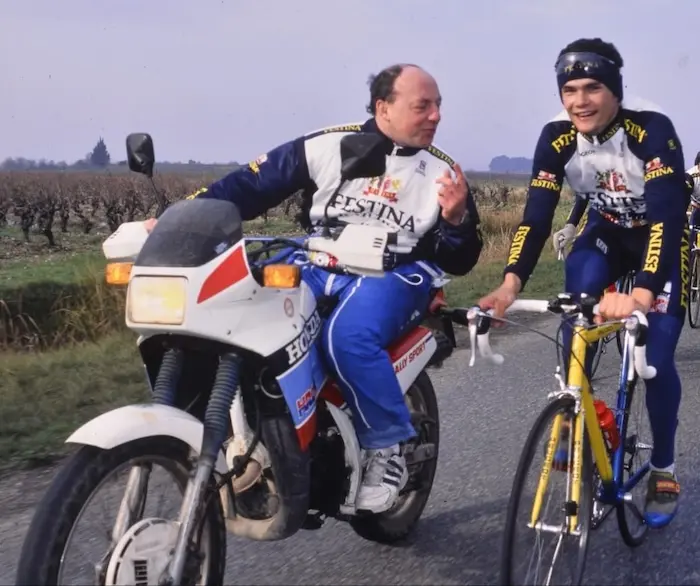
But very early on, raising the alarm was self-evident. First internally. Then in 1998, when nobody wanted to listen any more. So he spoke. And some still haven’t digested it.
Festina: the founding fracture
“1998 was a relief.” The man who had seen the Festina team become world number 1 did not hesitate to leave the ship. He could have stayed. A lawyer then offered to quadruple his salary. He refused. It is not a pose, it is a nature. Freedom, for him, is not negotiable. Neither for money nor for prestige. Because “the problem isn’t me. It’s that there aren’t enough people like me.”
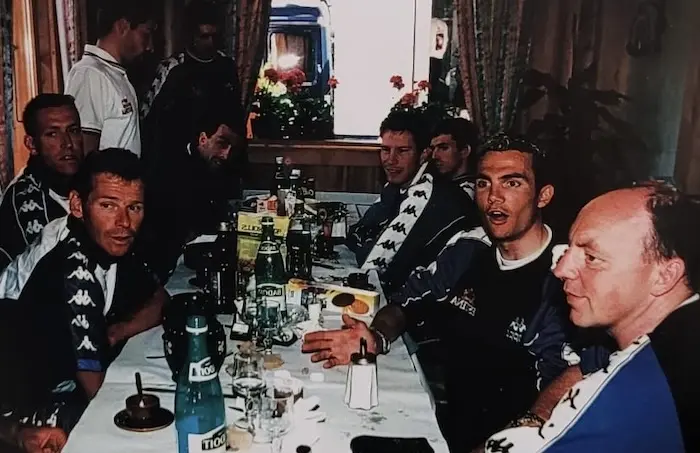
Some called him a traitor. He speaks of a citizen’s duty. He does what many dream of doing: he says what he thinks, at the cost of everything else. Loyalty? “I don’t understand that word, in a gangrenous system.” Cheating, he says, must be killed, not tolerated.
Sport, watts and the absurd
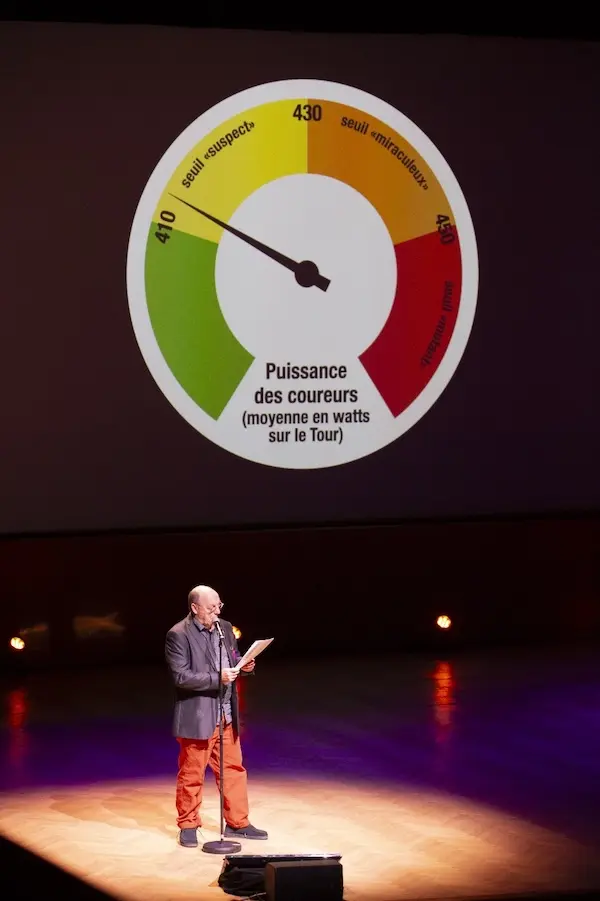
Antoine Vayer is often caricatured as a technician obsessed with watts. He laughs about it. “Those who say that are idiots. They don’t read what I write.” Since 1999, he has been creating a new genre: sports data journalism. With the tools he himself introduced: heart-rate monitors, power meters, analysis methods. Even today, half of the coaches in the peloton use tools he popularised. He doesn’t chase honours. He chases scientific consistency.
But those who reduce him to an Excel spreadsheet should spare themselves the effort: he can also write poetry. And, sometimes, he is still moved by a race. Provided the cheating has eased off. Which is, as you will have understood, rare.
A cutting voice, but never empty
On social media, he cuts. He slices. He stings. But not for pleasure. “I’m not divisive. It’s the people who are divided.” The nuance is subtle, but it sums up the man: he doesn’t need an audience. He needs to speak. That’s all. And if it hurts, too bad. He couldn’t care less. “Not a fig, as they say.”
He also admits to sometimes being too kind. To not having hit hard enough, often enough. You’d think you were dreaming. Him, who has fired off the scuds and set teeth grinding all the way into the corridors of the UCI? But no. He could have gone further.
Intelligence and fire
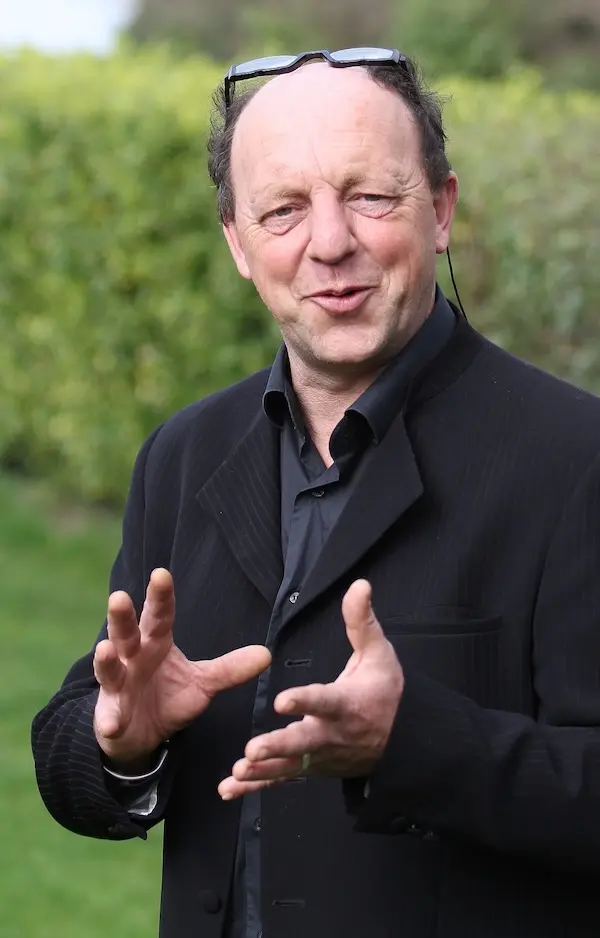
Antoine Vayer is the rare alliance of science and morality. He knows sport from the inside, but looks at it with the eyes of a sociologist. And of a citizen. He has faith in intelligence. It is even what disheartens him most: the lack of height, ethics and vision among those who lead.
He speaks of the Peter syndrome among executives. Of journalism fallen back in line. Of this cycling that feeds on its own excrement. Yes, he talks like that. But never gratuitously.
And yet, he is not tired. Because “denouncing is a great source of energy.” He feeds on his mission. Like a disillusioned knight, but one who does not let go of the sword. Nor of the punchlines.
The lone cowboy
People think he is alone. He calls himself a “poor lonesome cowboy.” But he has a clan. Anonymous people. Riders who thank him off the record. Volunteers from sites such as cyclisme-dopage.com. He also has a large family, five boys, a wife in remission from cancer. And days so full that he sometimes passes out from lack of sleep. He is not an idle provocateur. He is a man who is overstretched, driven, organised. The troll, for him, is a tool, not a profession.
The system does not want to change
He has been consulted. In Paris, Lausanne, even rue de Varennes. Senior civil servants. Politicians. But none of them really wanted to change. Not in depth. Not in a disinterested way. So he co-founded Change Cycling Now, wrote manifestos, proposed concrete reforms. Nothing moved. Or very little.
“Cheaters could be eliminated in a few months. But nobody is interested.” There it is. The reformer’s admission of failure. And the promise of an intact commitment.
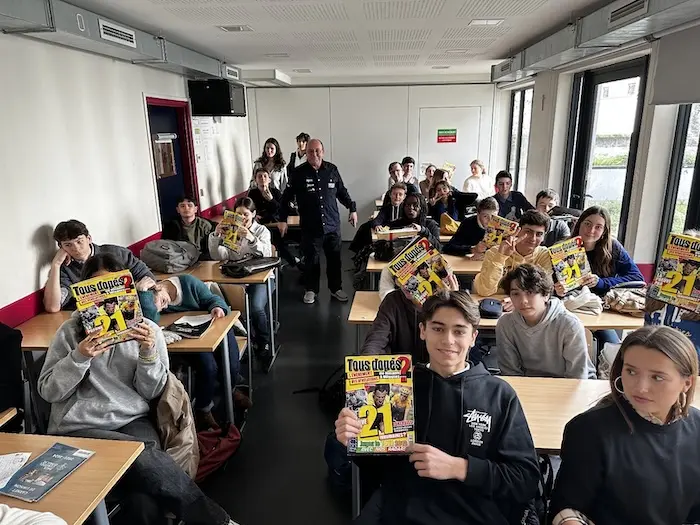
Is cancel culture a symptom, not an accident?
He says it between two sentences: we should talk about cancel culture. Because it is there, too, in cycling. When a man like him, who can neither be bought nor silenced, is sidelined not for his mistakes, but for his truths.
In a sport riddled with silences, free speech becomes suspect. So it isn’t debated. It is blacklisted. The figures are not refuted. The messenger is attacked. The culture of banishment has replaced that of debate. And as long as cycling prefers communicators to contradictors, it will remain sick.
And tomorrow?
What if he came back? What if he accepted an official role? He has his doubts. But does not close the door. He has solutions. He has the method. He knows the field. What he doesn’t have is the certainty of being heard. And above all: faith in those who are already in place.
So he carries on. His own way. One eye on the watts, the other on the world. One foot in sport, the other in the truth. Antoine Vayer is not here to please. He is here to wake people up. And if you disagree, all the better. “You move forward better with a bit of contradiction.”
Share the post "Antoine Vayer, the man who disturbs (again)"