Share the post "Nicolas Chatelet: 1000 kilometers to get back to basics"
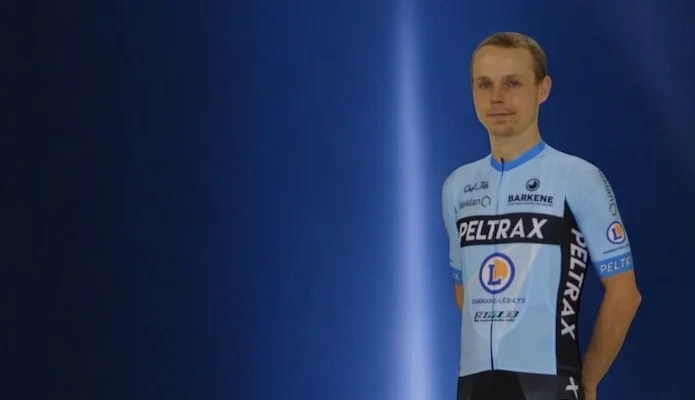
Just a few days after achieving the feat of winning the very first edition of the Race Across Spain, Nicolas Chatelet opened his door to 3bikes.fr for an exclusive interview… Still marked by the fatigue of this epic 1000-kilometer crossing, but with the sparkling eyes of those returning from an inner journey, he told us with sincerity, intelligence, and emotion what it means to push one’s own limits. His story is a lesson in self-transcendence, but above all an invitation to believe in what truly matters.
By Jeff Tatard – Photos: ©Julien Rabier / DR / Instagram Raceacrossseries
It all started with a calendar coincidence. A mathematics teacher, Chatelet had been scrutinizing the dates of the Race Across France for two years, without ever being able to participate, constrained by his school obligations. But this time, Spain opened its arms to him. The school holidays aligned. Destiny was in motion.
The Goal? First, to finish.
In the harsh world of ultracycling, aiming for a specific place doesn’t make much sense: too many parameters are beyond control. “My only goal was a time: 40 hours,” Nicolas explains. A pure, personal challenge, far from podiums and spotlights.
On the day of the start, in Santander, the tension was palpable. Navigating by following a GPS track in an unfamiliar large city, without making a mistake between the bike paths, is not natural for him. But once past the urban area, the kilometers stretched out, the road unfolded, and the adventure could begin.

Solitude over 1000 kilometers?
… Nicolas Chatelet fully embraces it. No music in his ears. No distractions. Just the wind, his breath, and his wandering thoughts. “These are the moments I seek,” he confides, “going from euphoria to distress in a few minutes, learning to welcome both.”
Among the most beautiful memories of this Race Across Spain, he recalls a section shared in the night with Damien Vuillier, an absolute reference in the world of 1000 km ultra-endurance events. “These moments of complicity in the darkness remain etched in my memory.” And then, there are the volunteers, their smiles, their humanity, who become so many landmarks in the journey of effort.

But the race was far from a smooth ride. The last night was a terrible ordeal: 250 kilometers with only two water bottles, after having lost a crucial resupply. Thirst gnawed, lucidity wavered.
But once again, experience spoke. Searching for a fountain, remembering Open Runner maps, adapting, never panicking. “I train to ride dehydrated,” he says with a half-smile. A training few would dare to attempt, but which, that night, saved the race.
Nicolas Chatelet’s victory is not based on a flash of brilliance.
It is the culmination of meticulously managed effort and intelligent preparation. His training, inspired by that of elite racers, combines intensity and volume, with shock weeks that can reach 45 hours in the saddle. Add to that impeccable mental hygiene: stopping caffeine before the race, zero sleep debt, and the ability to mentally break down the distance.
His equipment remains minimalist: a Cannondale fitted with extensions, a strict minimum for food and safety, and almost total autonomy between aid stations. Above all, Chatelet adopts a deeply profound ultra-endurance philosophy: “A 1000-kilometer ride is like repeating my daily bike commute 100 times. If one commute is easy, why wouldn’t 100 be?”

This logic of simplicity is his secret weapon. By breaking down the effort into elementary actions, he makes the impossible accessible.
Why inflict such ordeals upon oneself?
The answer lies in a few words: “To travel with myself.” Nicolas Chatelet doesn’t chase glory, nor even victory. He rides to cross his own shadows, to touch his own lights.
And he learns with every kilometer. The race reminds him, for example, that the body possesses fascinating plasticity: injured in the hand before the event, unable to hold his handlebars, he discovered that, during the effort, his body knew how to compensate, to reinvent its movements.
No complex mental strategies, no mystical mantras: only the love of raw effort, and the ability not to dramatize difficult moments. At the finish line in Madrid, it was a scene of rare beauty. No spectacular outpouring, but hugs, sincere smiles shared with volunteers and other riders. Fatigue did not prevent gratitude. “With the awards being presented 40 hours later, we had time to see the next riders arrive, to chat, to share. It’s magical.”

Already, Nicolas Chatelet is looking further ahead. Next summer, he will take the start of the legendary Transcontinental Race, one of the most demanding events in the world. For this new odyssey, he will benefit from the support of Cycles Lekeuss and the Brame group.
His ambition remains unchanged: “to explore his limits, with humility and passion.” And to those who also dream of taking the plunge into ultra-endurance, his advice is clear: “Go for it. No matter the event, no matter the format. Dare. It’s by doing that we learn.”

By crossing the finish line of the Race Across Spain, Nicolas Chatelet did much more than traverse a country. He reminded each of us that the greatest journey is often the one we undertake within ourselves. Kilometer after kilometer. Dream after dream.
Share the post "Nicolas Chatelet: 1000 kilometers to get back to basics"