Share the post "Beginners: how to quickly gain 2 km/h"
Increasing your average speed by 2 km/h might seem ambitious when you’re new to cycling, but it’s a realistic goal with the right methods. Whether you ride for pleasure or to take on your first personal challenges, this speed gain can make your rides more rewarding. No need to be a pro or invest a fortune: by combining technical adjustments, a little practice, and some smart choices, you can achieve it quickly. Here are five key areas to boost your speed: strengthen your physical condition, optimize your position, improve your pedaling technique, and adopt a good strategy on the road. Let’s go into detail!
By Guillaume Judas – Photos: depositphotos.com / alphaspirit(Federico Caputo)
1. Gradually strengthen your physical condition
Speed depends first and foremost on your engine: your legs and your endurance. There’s no question here of becoming a high-level athlete and training like a pro, but a few targeted exercises can quickly boost your physical condition, especially if you’re just starting out and don’t know how to go about it.
- Regular rides: ride 2 to 3 times a week, even for 30-45 minutes. Regularity improves your cardiovascular endurance, essential for maintaining a higher speed. The frequency of your training is key to progressing quickly and sustainably.
- Add accelerations: during a ride, do 5 intervals of 1 minute where you pedal faster (80-90% of your max effort), followed by 2 easy minutes. This strengthens your muscles and your entire cardiovascular system, while getting your body used to higher speeds.
- Off-bike training: simple exercises like squats (3 sets of 15 repetitions) or wall sits (hold for 30 seconds, 3 times) strengthen your thighs and glutes, which are essential for pedaling harder.
In one month, these efforts can increase your power by 5-10%, which is about 1 to 2 km/h on your average.
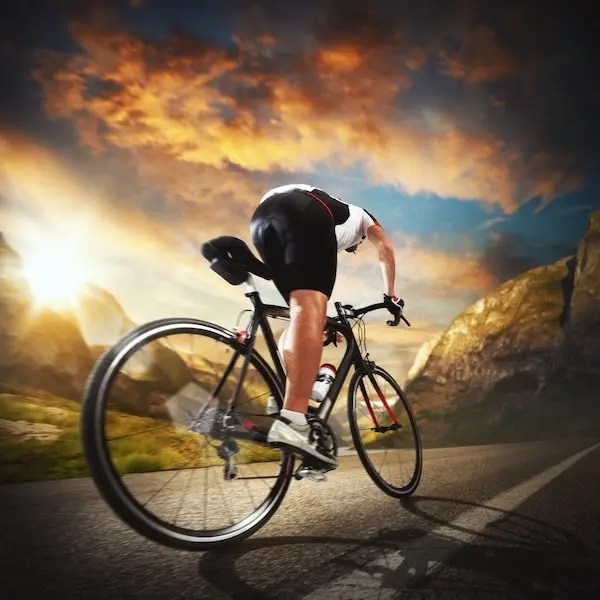
2. Optimize your position to reduce air resistance
When you pedal, especially above 15 to 20 km/h, wind resistance becomes your main adversary. About 80% of your effort is used to fight against this invisible obstacle. By adopting a more aerodynamic posture, you can save energy and gain speed without pedaling harder.
- Lower your torso: if you have a road bike, slightly bend your elbows and lean forward to bring your torso closer to the handlebars. The less surface area you offer to the wind, the better.
- Saddle height: a poorly adjusted saddle limits the power of your legs. To check: sitting on the bike, place one heel on the pedal in the lowest position (6 o’clock). Your leg should be almost straight, with a slight bend in the knee. If it’s too bent, raise the saddle. This maximizes the efficiency of each pedal stroke.
- Hand position: on road handlebars, hold the hoods (brake levers) or move your hands to the drops for a more compact posture. This position may feel uncomfortable at first, so take it in stages, for example, by forcing yourself to hold it for 5 to 10-minute sessions, interspersed with periods of relaxation.
- Mind your attire: loose clothing offers more wind resistance and therefore slows you down, whereas well-fitted clothing limits aerodynamic disturbances to promote a gain in speed.
With these adjustments, you could gain 0.5 to 1 km/h immediately.
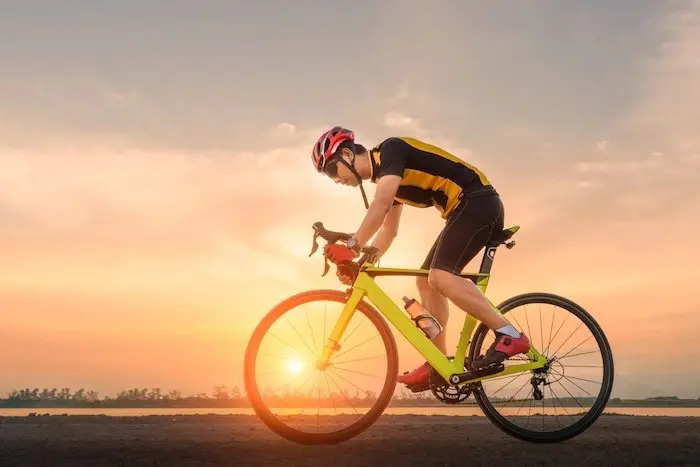
3. Improve your pedaling technique
Pedaling effectively isn’t just about pushing hard. A fluid and regular technique can increase your average speed without exhausting you. Here’s how:
- Adopt a constant cadence: aim for 70 to 90 revolutions per minute (rpm). Count your revolutions over 15 seconds (17-22 pedal strokes) to get used to it, or better yet, use a cadence sensor. A cadence that’s too low (pedaling with force) quickly causes fatigue; too high, you lose control. Find your rhythm.
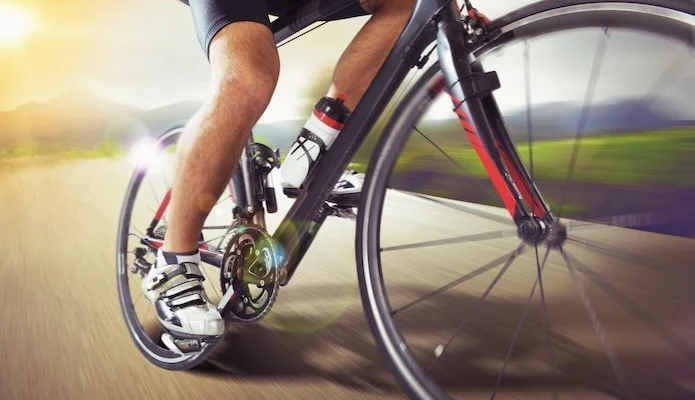
- Pedal smoothly: rather than just pushing down, imagine you’re forming a circle with your feet. Push forward at the top of the movement (12 o’clock), pull slightly back at the bottom (6 o’clock). To bring the pedal back up, think about pulling with the top of your foot, which of course implies riding with clipless pedals. This distributes the effort over the entire pedaling cycle. The one-legged drill can help you quickly optimize your technique. Pedal with one leg alternately.
- Avoid “bouncing” on the saddle: if you’re bouncing, it means you’re forcing too much or your cadence is unsuitable. Stay stable to transmit all your energy to the pedals.
With an optimized cadence, you could gain up to 1 km/h on long rides, while saving your strength.
4. Choose equipment suited to your needs
You don’t need a high-end bike to progress, but a few material adjustments can make a difference. Here are the essential points for a beginner:
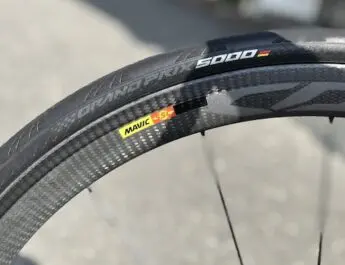
- Suitable tires: tires that are too wide or underinflated increase rolling resistance. For road riding, opt for 25 to 28 mm tires, inflated to the recommended pressure (indicated on the sidewall, often around 5 to 6 bars depending on your weight). Check the pressure before each ride: an underinflated tire can cost you 0.5 km/h.
- Basic maintenance: a dirty or poorly lubricated chain hinders your efforts. Clean it with a rag and apply a suitable lubricant (dry for dry conditions, wet for rain) every 2-3 rides. A smooth drivetrain improves your efficiency.
- Clipless pedals: clipless pedals with appropriate shoes increase the power transmitted by allowing you to pull on the pedals.
A well-maintained bike and optimized tires can bring you closer to your goal without additional physical effort.
5. Adopt a strategy on the road
Finally, how you ride influences your average speed. A few tips can transform your rides:
- Take advantage of the wind: if possible, plan your routes with the wind at your back on the way home, when you’re more tired. Avoid unnecessarily fighting a headwind by lowering your position.
- Ride in a group: if you have cycling friends, position yourself behind them to benefit from drafting. This reduces effort by 20-30%, ideal for maintaining a higher speed.
- Anticipate stops: every stop (red light, intersection) lowers your average. Restart gradually after a stop so you don’t exhaust yourself, and try routes with fewer interruptions.
By combining these strategies, you can save energy and maintain a higher speed throughout your ride.
How long to see results?
With these adjustments, the first gains can appear as early as your next rides. For example: a better position (0.5 km/h), well-inflated tires (0.5 km/h), a regular cadence (0.5-1 km/h), and smoother restarts (0.5 km/h) quickly add up. In 2-3 weeks, with a little practice and regularity, 2 km/h will be within reach.
Conclusion: small changes, big results
Gaining 2 km/h in average speed doesn’t require revolutionizing your practice, but rather refining details. Start with what’s easiest for you – adjusting your saddle, inflating your tires, testing a cadence – and gradually add the other tips. Enjoy observing your progress on your bike computer or an app like Strava. With patience and these tips, you’ll ride faster, further, and most importantly, with more satisfaction.
Share the post "Beginners: how to quickly gain 2 km/h"