Share the post "Testing the new Michelin Pro 5 tubeless tires"
Last January, Michelin unveiled its latest innovation: the Michelin Pro 5 TLR tires, designed to meet the needs of road cyclists looking for a versatile, durable tire. Available in four widths—28 mm, 30 mm, 32 mm, and 35 mm—they offer a range of options suited to different types of bikes and riding preferences. However, we weren’t entirely convinced, particularly when it came to puncture resistance.
By Guillaume Judas – Photos: ©3bikes.fr Designed to combine durability and performance for racing or training, the Michelin Pro5 TLR is aimed at cyclists seeking a balance between efficiency and reliability. Compatible with both hooked or hookless rims, it fits a wide range of rims, making it highly accessible. With this new model, Michelin continues to innovate in the field of road bike tires, drawing on advanced technologies and recognized expertise.
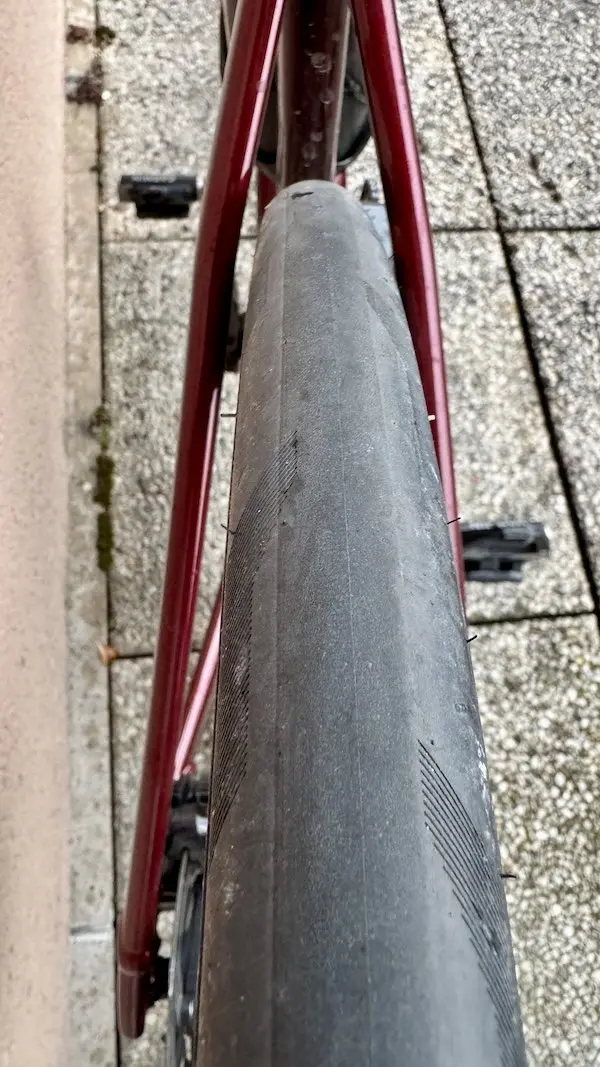 The Pro5 TLR is not intended to replace the Power Cup, which remains the model for pure competition. Instead, it complements the Clermont-based brand’s road endurance range. It’s worth noting that the Michelin Pro5 TLR is one of the most affordable tubeless tyres on the market, as it’s available starting at €45.99.
A tread pattern designed for endurance
Michelin claims the Pro 5 is a significant step forward from the Pro 4 Endurance, with a 35% drop in rolling resistance, thanks to the Gum-X rubber compound.
This design aims to improve comfort, traction, and durability, whether on dry or wet surfaces. The tread pattern, combined with an internal structure that allows for lower inflation pressures, offers better grip and enhanced safety, particularly when braking on wet roads.
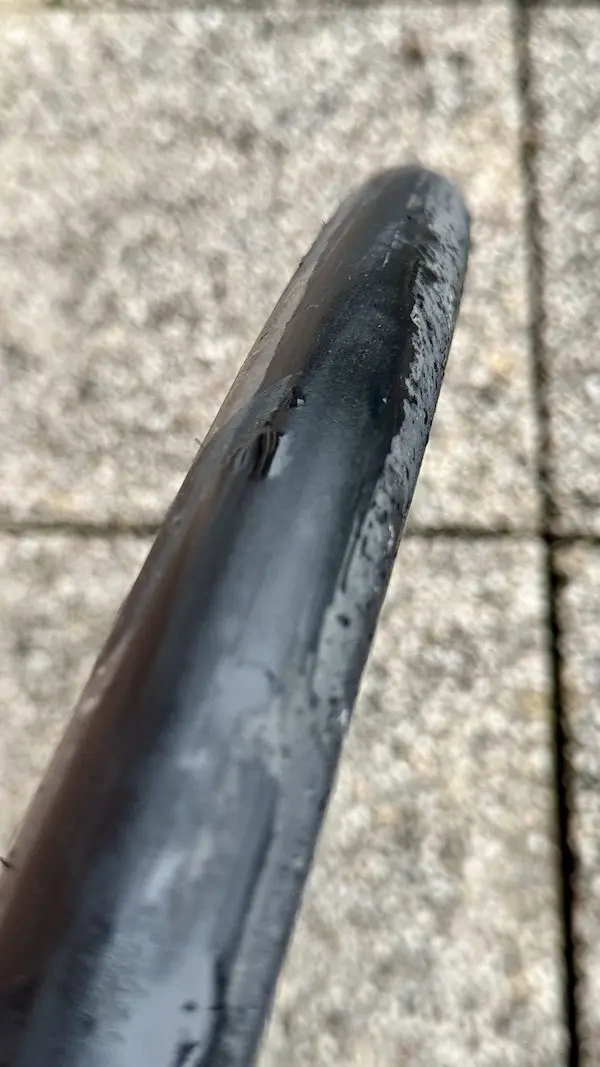
Tested over more than 100,000 km by amateur and professional cyclists, these tyres promise remarkable durability and optimised airtightness, ensuring stable pressure over time.
In addition to the four available sizes (700×28, 30, 32, 35), two colour options are available: black sidewalls or classic (brown), allowing for aesthetic customisation in line with current trends.
True to Size
I tested these Michelin Pro5 TLR tyres in 700×30, mounted on rims with an internal width of 25 mm and an external width of 29 mm. Unlike many other models on the market, the actual cross-section matches the cross-section indicated on the tire sidewalls. On the Fulcrum wheels used for this test, the Pro5’s sidewalls align perfectly with those of the rim, which is theoretically an aerodynamic advantage.
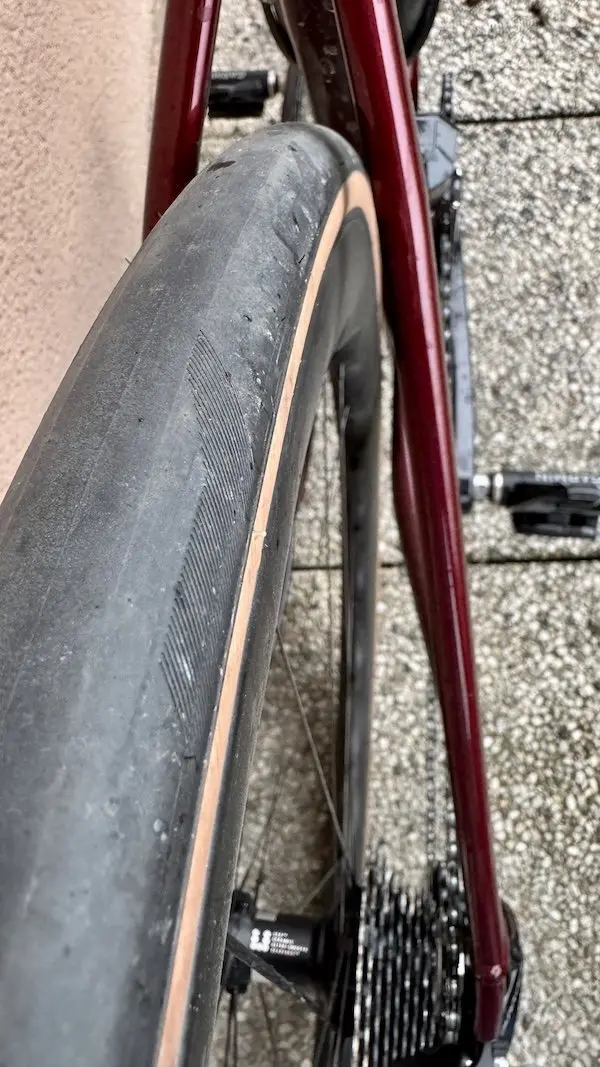
Viewed from the rider’s perspective, the Pro5 tires look quite substantial, and their rounded profile inspires confidence. With the lower inflation pressure allowed by the 30 mm section (max 4.5 bar according to the manufacturer’s data), cornering is crisp and never treacherous, whether on dry or wet surfaces. I also imagine that the tread compound plays a role in this. In short, these are tires that grip the pavement well and are never tricky to ride.
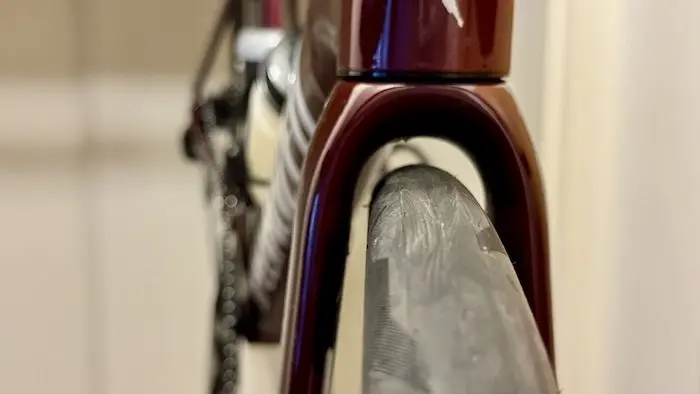 The tread pattern does a solid job when you’re riding at a steady speed. Rolling resistance doesn’t seem excessive, and the tire’s performance under these conditions comes close to that of many leading models in the category. Paired with good wheels, the Michelin Pro5 TLR tires let you rack up the kilometers at 40 km/h without any issues.
Heavy weight
Things take a turn for the worse during accelerations and climbs, with a noticeable lack of responsiveness compared to high-end tires. The culprit: weight. At 325 g in 700×30, the Michelin Pro5 TLRs are no featherweights, especially when you add the sealant (about 40 g). The combined weight is still higher than that of a good tire paired with a lightweight inner tube, and the bike’s handling suffers as a result.
I found my bike a bit clunkier than usual during frequent accelerations in the city and on a series of slight inclines. Yet on paper, the Fulcrum wheelset weighs about the same as the Mavic Cosmic SLR wheelset I used previously. The same goes for hills, where everything goes more or less smoothly when climbing at a steady pace, but where it seemed harder for me to change pace while trying to keep up with a group of eager cyclists.
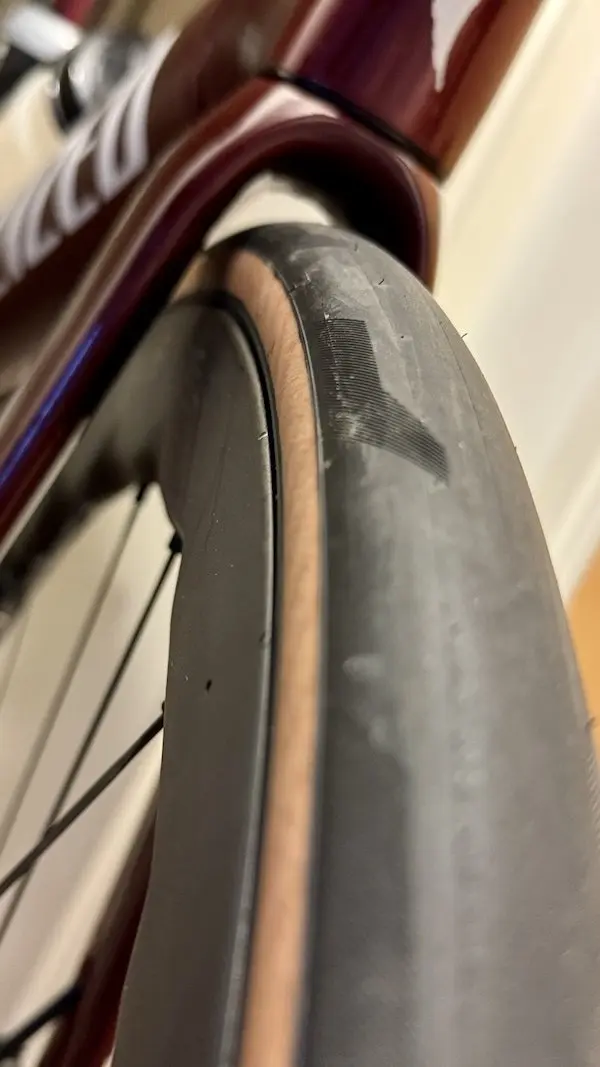
But that’s not really surprising either, considering that the Pro5 TLRs aren’t pure racing tires, but rather what are known as “endurance” tires. The tread’s durability seems to hold up after about 1,000 km of testing. Although I didn’t receive these Michelin Pro5 TLRs brand-new (they’d been ridden a bit before), I didn’t notice any particular signs of wear on the tread, and there were virtually no cuts.
Not That Durable
Despite this, I suffered no fewer than three flats in ten days, even though I hadn’t had a single flat all winter—especially during the last two months, when I was riding exclusively on fairly high-performance tube-type tyres. And each time, it happened on dry roads. None of these three flats posed a real problem for me in finishing my ride, since the puncture-prevention fluid did its job each time. However, this came at the cost of a significant drop in tire pressure—to less than 2 bar—resulting in a noticeable decrease in performance and bike control.
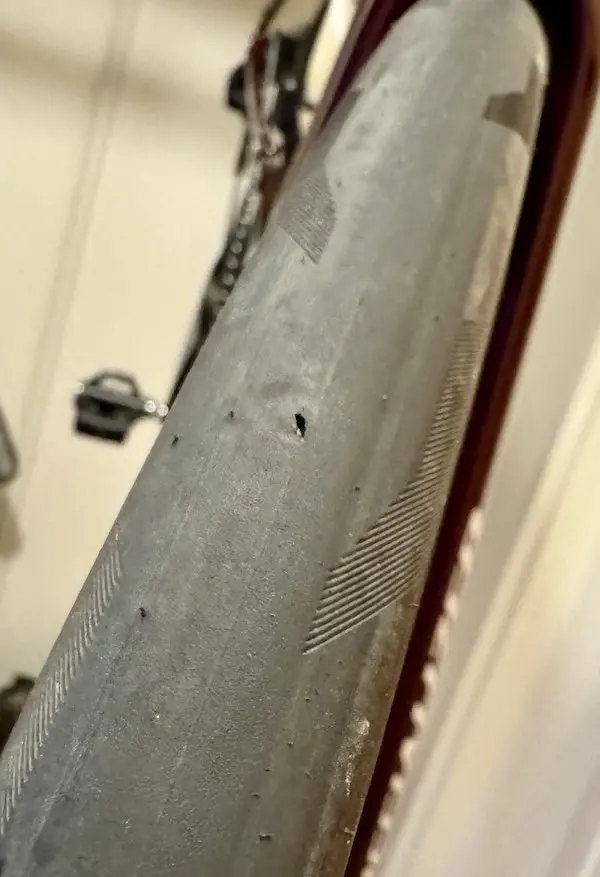
And as is often the case with this type of flat, the sealant leaking from the tire spreads onto the frame and clothing. It’s not always easy to clean off. Still, at least I didn’t have to make a repair on the side of the road, try to unclip the tire from the rim, and get my hands covered in the sealant just to slip in an inner tube—which I had to carry anyway in case a hole too big couldn’t be sealed by the liquid.
Tubeless, yes, but for racing
In short, this susceptibility to flats seems incompatible to me with a tire intended for endurance riding. But more than the Pro5 TLR tire itself, it’s the tubeless technology that once again reveals its fragility. Over the past 12 months, I’ve only had flats with tubeless tires, while riding test bikes or wheels. For my own riding, I stick with tube-type tires and I almost never get flats, even with TPU tubes. A coincidence? I don’t know. But among the cyclists I know, almost all of those who ride a lot prefer tube-type tires. Almost all of them have faced at least one logistical problem related to tubeless tires. When everything goes smoothly, it’s great, but there’s always that one time when a repair using sealant is impossible—and that’s when the hassle begins.
https://www.3bikes.fr/2024/05/02/questions-autour-du-tubeless/ Rolling-resistance tests show it: tubeless tyres have now surpassed tubulars and standard tyres in terms of efficiency. That’s undeniable. Pros ride tubeless today, except in cyclocross, where tubular tires still reign supreme. But for everyday use, the inner tube remains the preferred system for serious riders.
A Pro5 with an inner tube coming soon?
I’ve always appreciated Michelin tires. I’ve tested every generation, from the first BIBs in the late ’80s to the Power Cup, including the famous Bi-Synergic tires from the mid-’90s, which I believe were the first to truly compete with tubulars.
The Pro5 TLR has many strengths in terms of rolling resistance, grip, and comfort—and perhaps even casing durability. Its price is actually very reasonable compared to the competition. But please, Michelin engineers, release it in a Tube Type version so we can finally truly appreciate the endurance you claim it has.
MICHELIN PRO5 TLR tires at a glance…Pros: low rolling resistance, traction, comfort Cons: weight, low puncture resistance Flexible beads Tubeless Ready Compatibility: hooked and hookless Protection: Bead-to-Bead Shield Technology |
Share the post "Testing the new Michelin Pro 5 tubeless tires"