Share the post "Test of the new Specialized S-Works Ares 2 shoes"
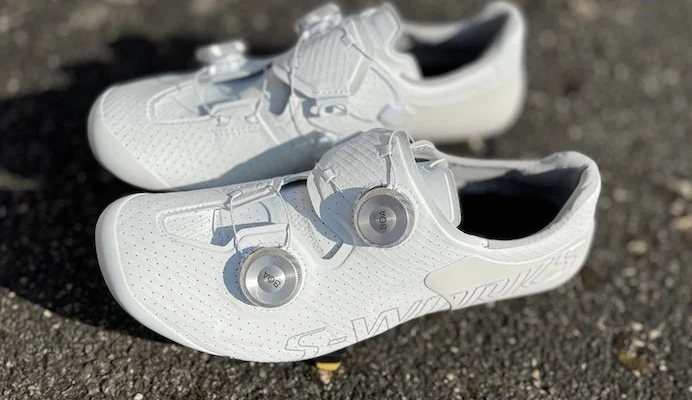
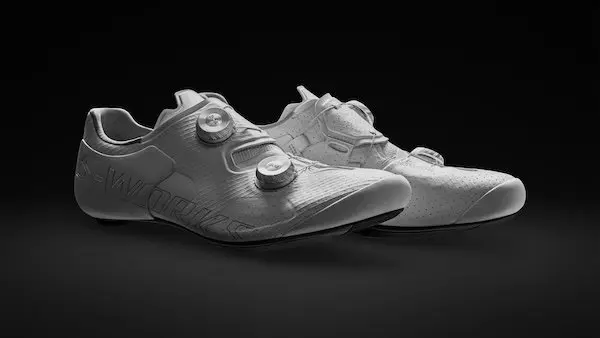
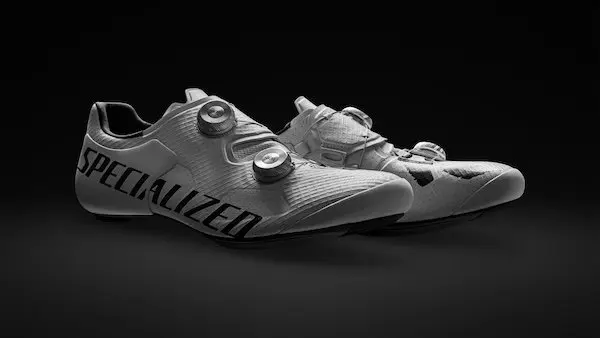
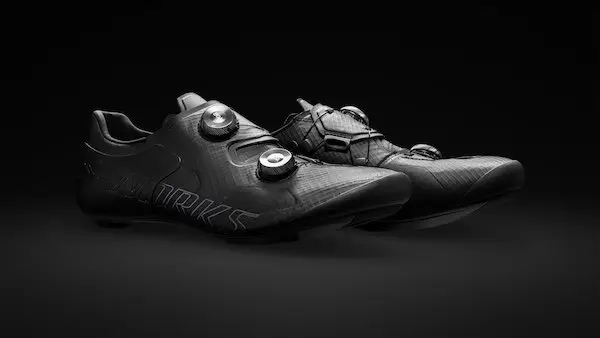
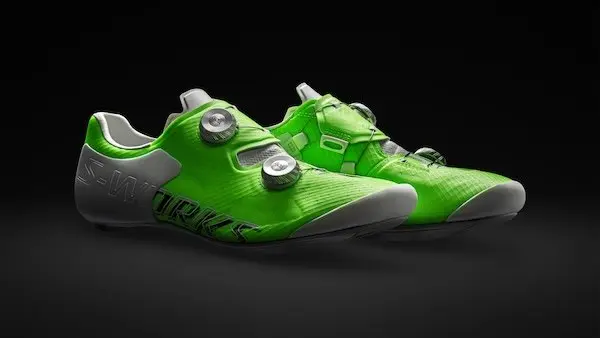
Specialized unveils the S-Works Ares 2, cycling shoes designed for competitive riders and engineered to provide a perfect connection with the bike. Designed to optimise power, precision and rider comfort, this new iteration promises improved performance while reducing pressure on the forefoot. We wanted to put this combination of performance and comfort to the test on the road over several hundred kilometers—especially given the shoe’s high price tag.
By Guillaume Judas – Photos: ©3bikes.fr/DR 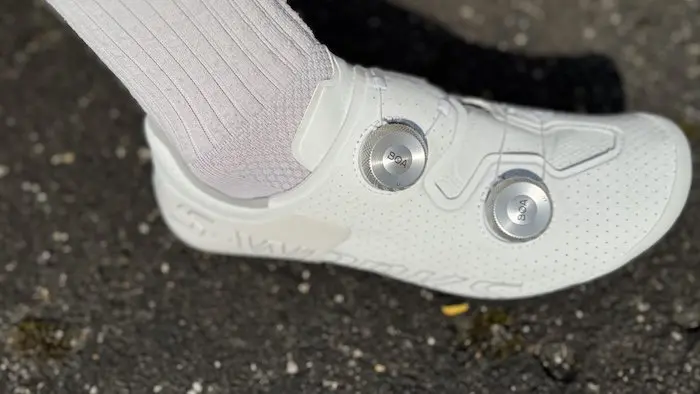
Building on the success of the previous S-Works Ares, launched four years ago and victorious at several world championships, this new version has been refined based on feedback from World Tour riders and cyclists alike. Specialized’s goal? A shoe that eliminates unwanted movement, optimizes every watt produced by the rider, and redefines the feeling of connection with the bike—all while remaining comfortable over long rides.
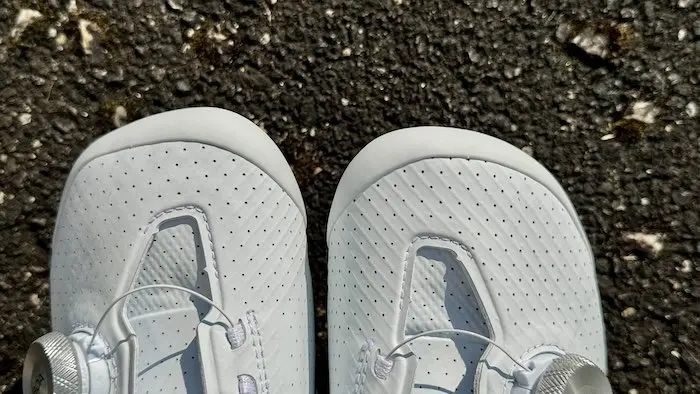
Although they incorporate a number of features specific to each of Specialized’s previous high-end models, the S-Works Ares 2 do not strictly speaking replace the current S-Works Torch. They are a complementary offering, available at the very high price of €549.
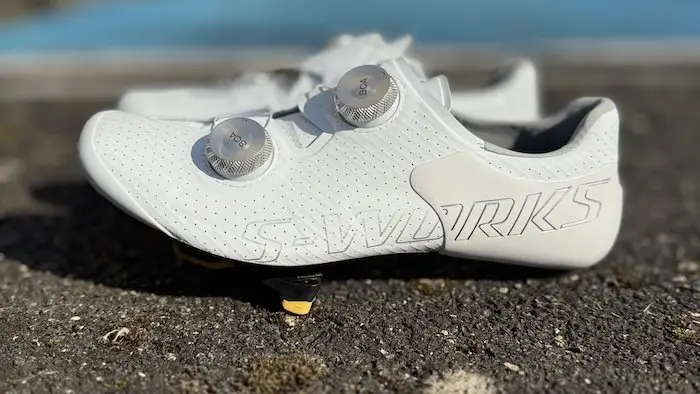
A Design Focused on Efficiency
The S-Works Ares 2 is based on the Body Geometry concept, a scientifically validated ergonomic approach. This was already the case for the brand’s previous models, such as the S-Works Torch, but the brand wanted to take it even further.
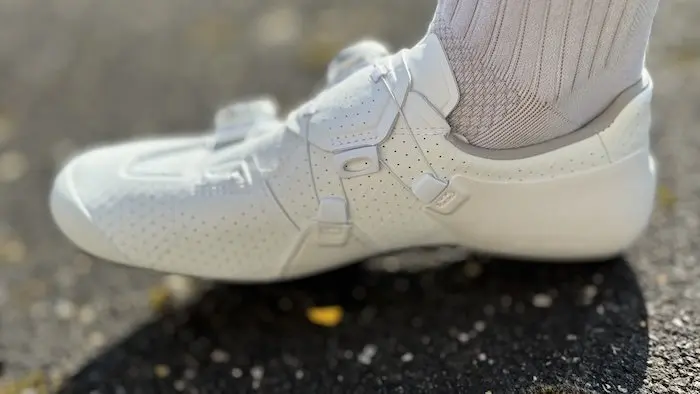
Among the new features is a new last shape that eliminates slippage to maximize power transfer. An optimised heel counter and a patented closure system with a triangular clasp give the Ares 2 a precise, firm and secure fit, establishing it as a new benchmark in the world of competition shoes.
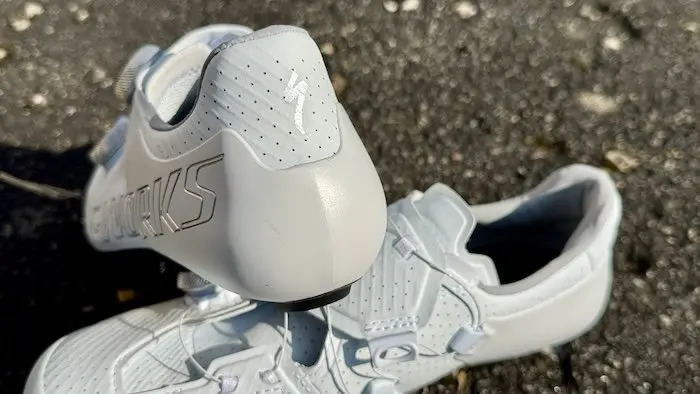
Beyond the explanations provided by Specialized, and drawing on my own experience in the field, I would summarize the new S-Works Ares 2 as follows: they feature the ultra-stiff heel support of the S-Works 7 (the flagship model from 2018 to 2021), the upper material and outsole of the S-Works Torch (launched in 2022), and the closure system of the S-Works Ares (launched in 2021). But unlike those, the toe box is slightly more rounded, with the front strap positioned a little higher.
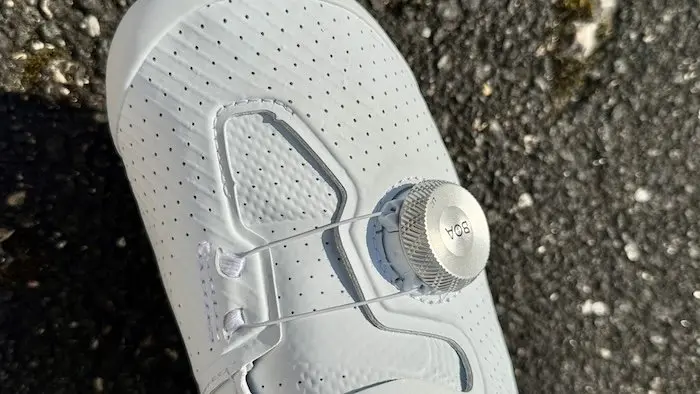
As a result, you immediately feel a very, very (yes, I’m emphasizing this!) effective fit around the heel, instep, and midfoot when putting them on, but without any compression in the forefoot. That’s a promising sign before hitting the road.
Body Geometry: Science at the Service of the Foot
Body Geometry technologies tackle common cycling issues: numbness in the forefoot, a burning sensation in the foot, a sagging arch, or even knee pain.
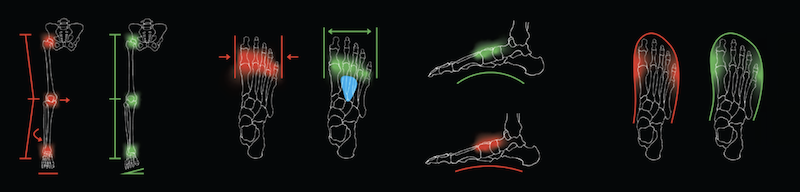 These issues, which reduce power output and increase the risk of injury, are corrected through a varus offset (a 1.5 mm outward tilt of the sole), superior arch support provided by the shoe’s structure itself, a metatarsal pad integrated into the insole, and a new forefoot fit.
 This design is the result of analyzing more than 100,000 scans from RETÜL 3D postural studies and 2,000 hours of testing. It is designed to adapt to the foot’s natural shape, with a wider toe box for increased comfort and a significant reduction in pressure on highly sensitive areas.
Power and Support Combined
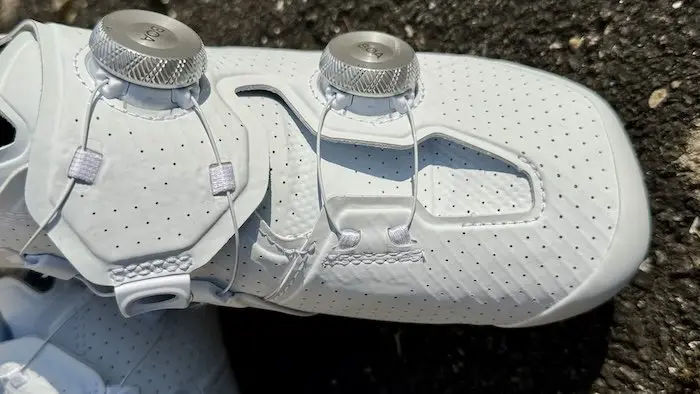
The triangulated closure system, which increases the contact surface by 20%, combined with a redesigned locking zone in the forefoot and a widened heel counter, is designed for optimal stability. Indeed, this system—already featured on the first Ares models—is highly effective. The tightening is progressive thanks to the aluminum Boa Li2 dial, evenly distributed across the top of the foot, and, above all, very secure.
It relies entirely on an upper made of a synthetic material that feels relatively soft to the touch but is non-stretchable, unlike the first-generation Ares, which used a less rigid mesh fabric. The difference between the two models is thus very noticeable in terms of the stiffness felt in the midfoot.
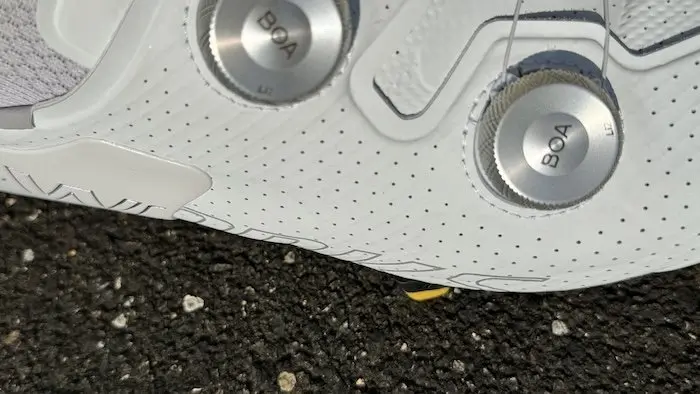 At the forefoot, the tightening mechanism has been slightly repositioned. On the first Ares models, the closure applied pressure almost directly to the metatarsals, which could sometimes be uncomfortable and restrict toe mobility. Here, it provides support slightly higher up on the foot, making it less restrictive over time, and effectively locks out unwanted twisting movements above the arch of the foot.
Locked Heel
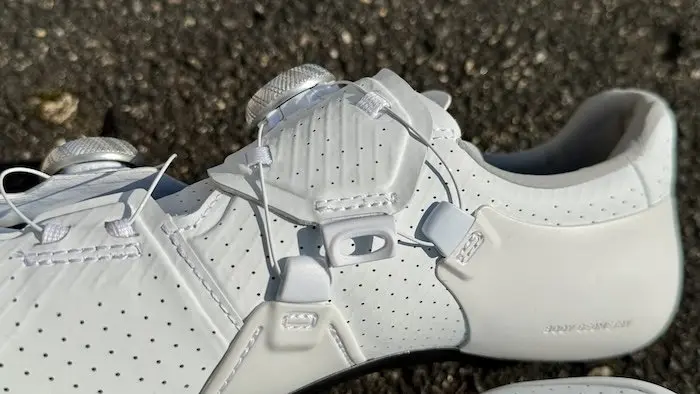
On these S-Works Ares 2, the sock-like design of the original Ares models has been abandoned in favor of a return to an almost traditional tongue, which covers a good portion of the top of the foot. Thanks to the placement of the two closure systems and the absence of pressure from the Boa cables, this tongue did not need to be reinforced or padded, which improves breathability on the top of the foot.
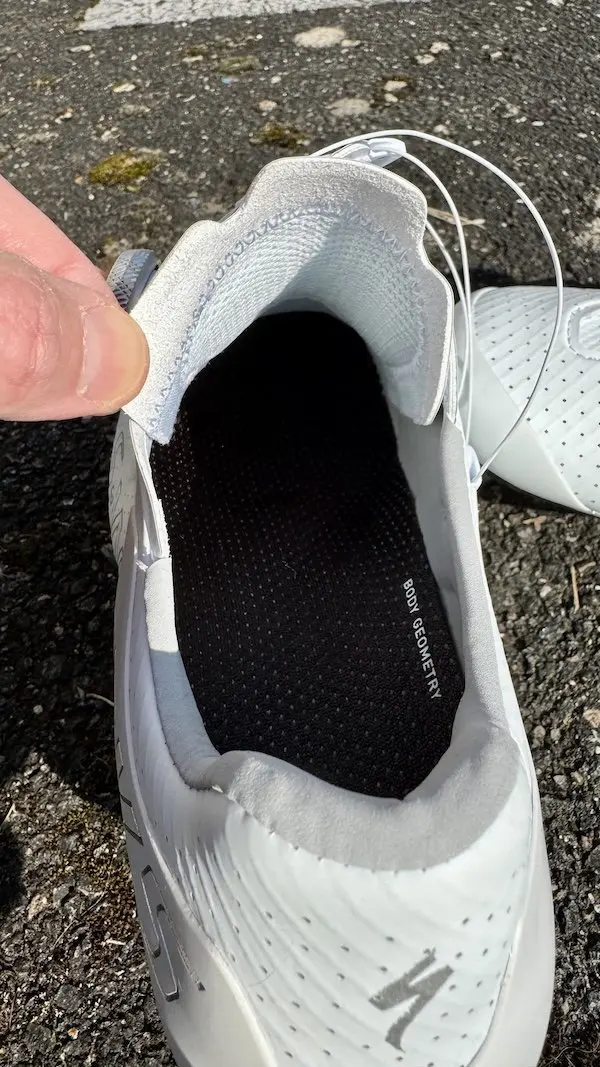
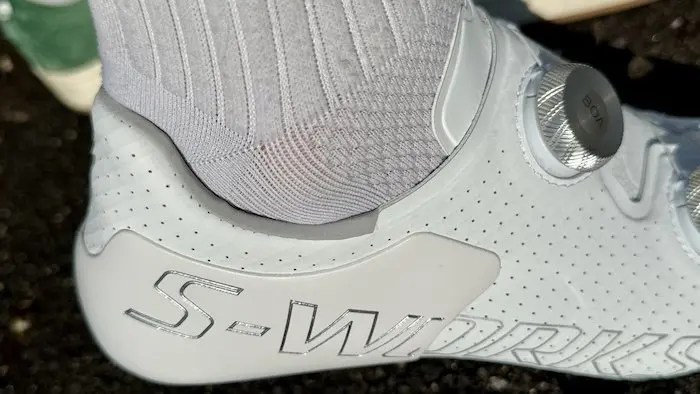
At the heel, there is rigid reinforcement on both sides, as was the case with the S-Works 7, whereas on the latest S-Works Torch, for example, the reinforcement is only on the inner side (crank side). This feature keeps the heel very firmly in place, both during the push phase of the pedaling cycle and during the pull phase. 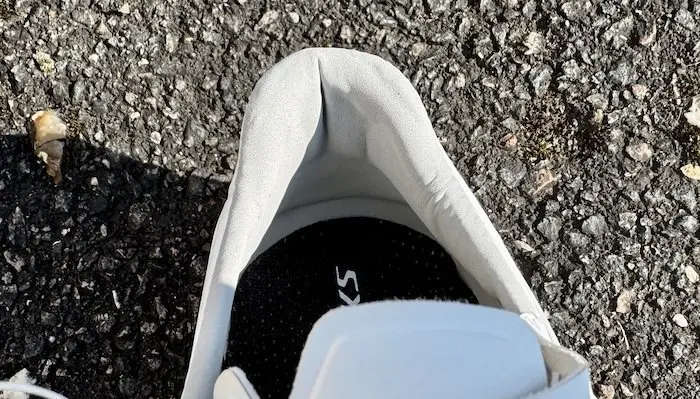 On the other hand, as with the S-Works 7, the slightly stiff ankle collar may cause some minor discomfort just below the malleolus. I felt this during my first few rides in the shoes.
Ultra-stiff carbon sole
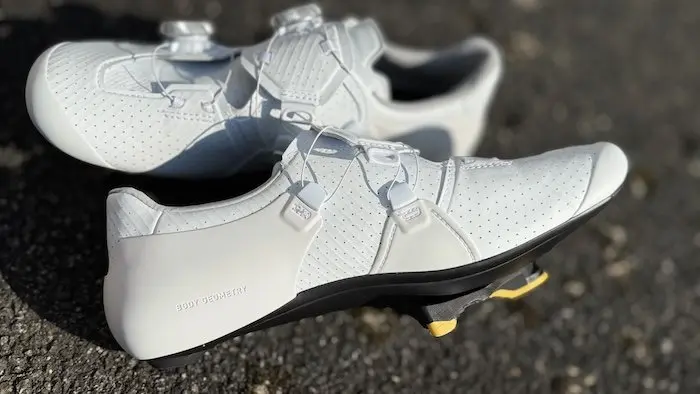
The carbon sole—which, according to Specialized’s specifications, offers maximum stiffness—complements the design to provide 360-degree ergonomic support. As with the S-Works Torch, the sole is slightly wider (4 mm) than on the first-generation Ares, and it has been redesigned to save about 20 grams. It features a trapezoidal cross-section with an internal I-beam reinforcement for stiffness and tapered edges.
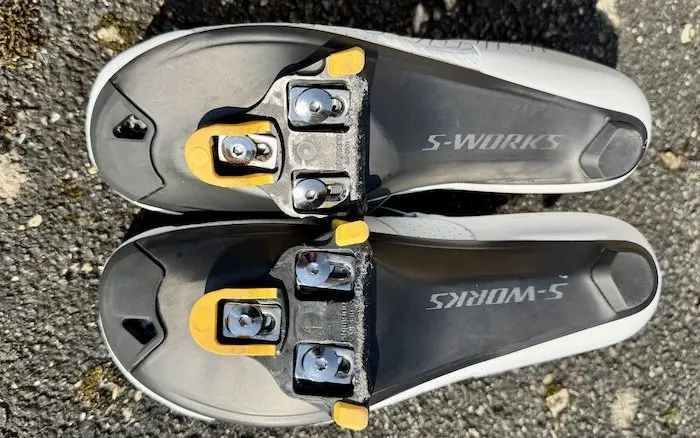
Of course, there are the three cleat mounting points, with the option to slide them backward to gain an additional 5 mm of engagement. However, the bridge on which the cleats rest is narrower than the sole surface of previous Ares models. In the case of extreme adjustments (in terms of engagement or angle), part of the cleat may end up cantilevered, which was not the case with the soles of the S-Works shoes that used the older sole.
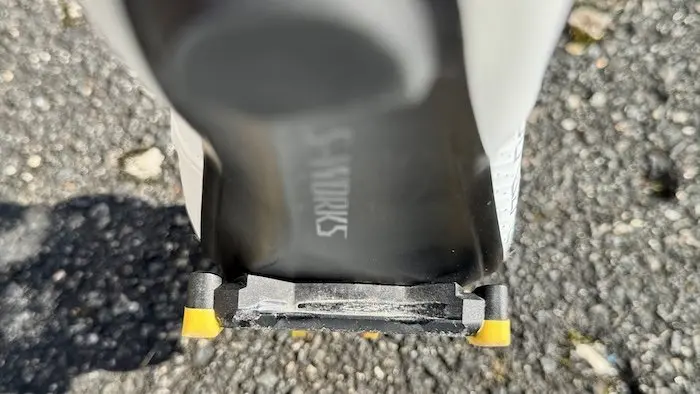
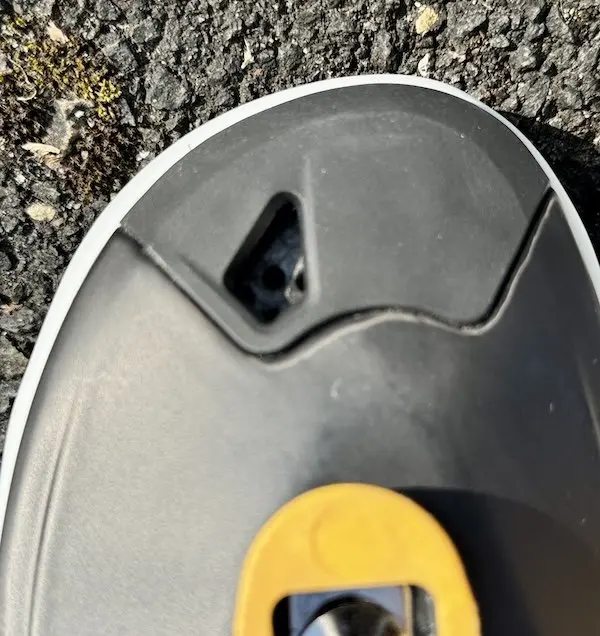
Under the sole, at the front of the foot, there’s a fairly minimalist air vent, but one that should be sufficient to prevent overheating on very hot days. This is especially important since a burning sensation in the foot often results from poor blood circulation caused by pressure points.
Interior Comfort
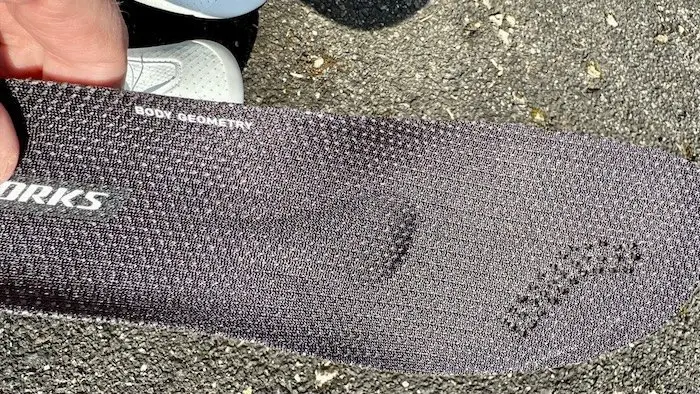
In fact, the Body Geometry insole features a metatarsal pad—a small protrusion designed to slightly spread the bones of the forefoot and improve blood circulation during exercise. Although this insole does not provide specific arch support (additional insoles are available), it is already much more sophisticated than those found in most competing models.
Note that due to the new shoe last—which is more rounded at the toe—Specialized is simultaneously launching new insoles with Body Geometry arch support alongside the Ares 2. For custom support, priced at €30.
For those who’d like to use other insoles, however, you’ll need to pay close attention to the shoe’s sizing. The S-Works Ares 2 runs very small—at least more so than the S-Works Torch. Choosing a half size larger than you would for other Specialized shoes might be a very good idea.
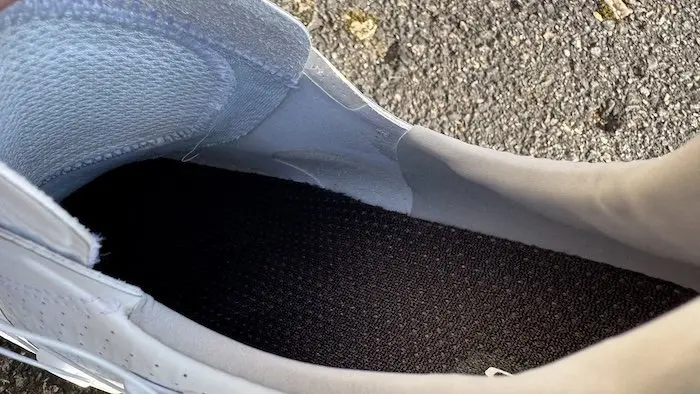
That said, once I was comfortably settled inside the shoes, my feet felt quite comfortable (except for the length)—both in terms of support and where the upper contacts the foot. Even when tightening them very hard, I didn’t feel any pressure points. So no numbness. No numb toes or hot spots either, depending on the weather conditions.
Shoes for Competitors
During my test ride, I was immediately struck by how tightly these Specialized S-Works Ares 2 shoes laced up. I have narrow feet, especially on the right. With every other model on the market, I always feel the need to crank the Boa dial at the instep, often experiencing a loose fit between my ankle and heel. Very often, I reach the maximum tightness, but it’s still not quite enough to feel a perfect connection with the bike. 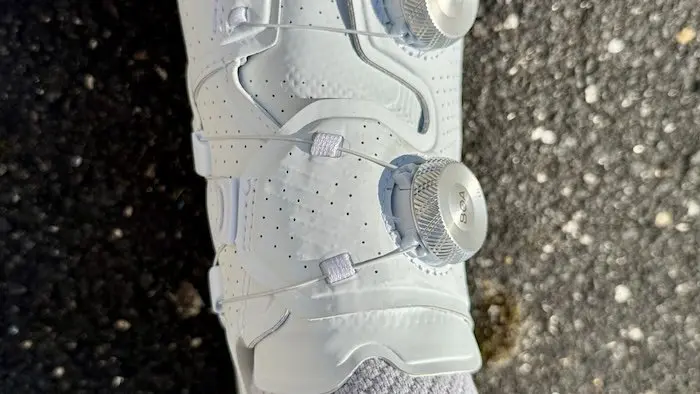 With the Ares 2, I still have some room to spare. I can feel my instep fully connected to the back of the shoe. This was something I’d already noticed with the first-generation Ares. The difference here is in the midfoot, which deforms much less. As a result, with a medium tightness, the foot retains a slight but noticeable range of motion when transitioning from a seated position to standing on the pedals. But crank it up to the max and the ankle locks in line with the foot, delivering that total connection.
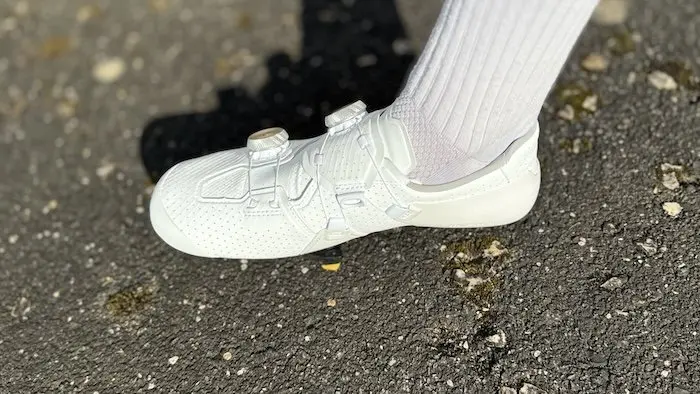 Although positioned slightly higher than on the Ares, the front strap serves only to stabilize the foot. In my opinion, there’s no need to tighten it too much here, as the fit around the top of the foot is more than enough to ensure you don’t feel any loss of energy while pedaling. And more importantly, applying pressure to the forefoot could negate the benefit of the redesigned last shape, which is meant to provide greater comfort.
Paradoxically, I found the S-Works Ares 2 to be slightly narrower than the S-Works Torch. I’m not sure if this feeling is due to a more precise fit, but in any case, I’ve never felt the need to tighten them significantly in that area.
Shoes Built to Last
That said, the closure system itself makes it a little trickier to put the shoes on or take them off. The opening is narrower than on the S-Works Torch. This is something triathletes should keep in mind, as it might be a hassle during transitions between disciplines.
For those concerned about the shoes’ very high price or their white color, it’s worth noting that the upper is easy to clean if it gets dirty—just wipe it down with a damp sponge or cleaning wipe. Previous models of Specialized shoes have generally proven to be durable, even in terms of their appearance.
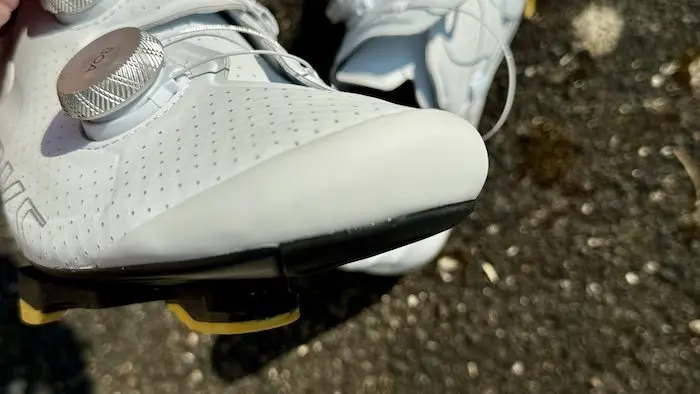
Among the details designed to ensure durability is a reinforcement at the front of the shoe. However, the small heel pad intended for walking is not replaceable. That said, I’ve never seen one that was actually worn out.
Conclusion: Locked-in Power, Unleashed Comfort
With the new S-Works Ares 2, Specialized pushes shoe technology even further, with a model meticulously designed to combine comfort with maximum efficiency.
It seems to have paid off: I’ve been cycling for 40 years, and I’ve never felt such a connection with a pair of shoes, thanks to an ultra-secure and progressive fit that’s free of pressure points. And while the Ares 2 may feel a bit stiff at first—like many competition-oriented shoes—they gradually break in after a few rides. A word of caution, though: in my experience, they run a bit smaller than other Specialized models.
The price is still extraordinary: at €549, they’re among the most expensive on the market. Fortunately, at this price point, the build quality is absolutely flawless, durability is guaranteed, and they come equipped with insoles that are more sophisticated than those of most competitors.
The SPECIALIZED S-WORKS ARES 2 at a glance…Pros: stiffness, fit, build quality, no pressure points, feeling of total connection with the bike Cons: very high price, run slightly smaller than other models from the brand Sizes: 36–49 (half sizes from 38.5 to 46.5) |
Share the post "Test of the new Specialized S-Works Ares 2 shoes"