Share the post "Changing clubs or teams: the right time and the right reasons"
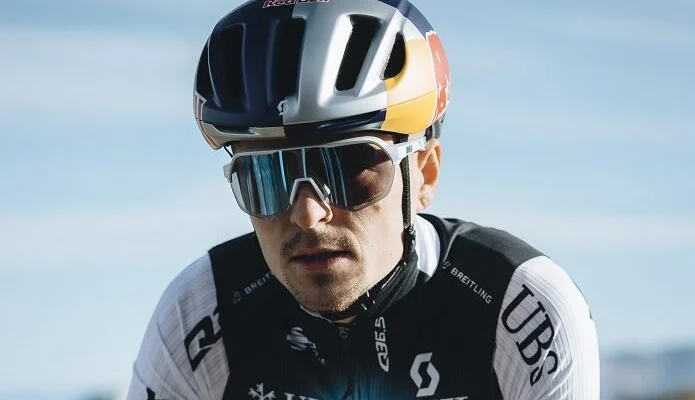
As the 2025 season begins, the first results are already providing food for thought. Bryan Coquard surprised by winning in Australia in Cofidis colors, while Tom Pidcock and Marc Hirschi are discovering their new environments. The Briton joined Q36.5 Pro Cycling, while the Swiss chose TUDOR Pro Cycling Team. Two choices that reflect the recurring questions of riders, whether amateur or professional: when should you change teams? Why? And above all, who is right and who is wrong?
By Jeff Tatard – Photos: Q36.5 Pro Cycling Team / Grok / DR
In the amateur world: between progression and enjoyment
For an amateur cyclist, changing clubs is often a decision motivated by progression or the desire to rediscover enjoyment. When a rider feels they are stagnating, that their club no longer provides them with the means to progress, or that the atmosphere no longer meets their expectations, the question of leaving naturally arises.
The level of races also plays an important role. Some clubs offer more opportunities depending on the categories, and an ambitious rider may seek better coaching, more competitions, or a more structured environment. Conversely, others may want to join a more convivial structure after years of high-level competition, to find a more relaxed approach to the sport.
And then, there are more personal reasons. As Nico, who chose to change clubs this year, says: “I wanted to race in the same club as my son. Sharing this passion together, wearing the same colors, was something that was important to me.” For him, the choice of club is no longer just a question of performance, but also of transmission and family enjoyment.

Others, like Fred, are looking for a club more in line with their current lifestyle: “I spent years in very competitive structures, but today, I want a human-sized club, where the atmosphere is more family-oriented and where the organization better suits my daily life.” His choice is primarily dictated by the balance between passion and personal constraints.
Finally, race and calendar management is important. A club that does not offer enough suitable competitions or that specializes in a type of event that does not suit a rider can become a hindrance.
Among professionals: more complex stakes
In professional cycling, changing teams is a decision with far greater consequences. The motivations are varied, but several elements systematically recur in riders’ career choices.
First, the financial aspect. A rider, even a talented one, only has a window of a few years to secure their future. A more advantageous contract can be decisive, especially for those who are not natural leaders and who must secure their place within the peloton.
Next, the role within the team. A rider can be a simple domestique in one structure and become a leader in another. This is often what motivates a change: the desire to have their chance, to race for themselves and no longer in service of another. Tom Pidcock, by joining Q36.5 Pro Cycling, perhaps hopes to find more freedom than at INEOS Grenadiers, where he was surrounded by multiple leaders.
Equipment and coaching also play a key role. Not all bikes, all training strategies, all trainers are equal. A rider may leave to benefit from an environment more conducive to their progression. Marc Hirschi, after years with UAE Team Emirates, chose TUDOR Pro Cycling, a more modest Swiss team that could offer him a more personalized framework and a more central place in his sporting project.
Finally, alignment with personal goals is essential. Some riders dream of winning the Tour de France, others want to shine in the classics or one-week races. If a team does not support these ambitions, the rider may seek a project more in line with their aspirations.

Who is right, who is wrong?
Changing teams is always a gamble. Some brilliantly succeed in their transition and reach a new level, while others find themselves in an environment that does not suit them and struggle to regain their best form.
This start of the 2025 season perfectly illustrates this dynamic. Bryan Coquard, remaining loyal to Cofidis, proves that it is sometimes good to bet on stability, by winning a great victory in Australia. On the other hand, Tom Pidcock and Marc Hirschi are still discovering their new teams, and only time will tell if their choice was the right one.
Ultimately, whether amateur or professional, the most important thing remains desire and ambition. Staying in a club or team where one no longer feels at home is taking the risk of losing motivation. And in cycling, as elsewhere, motivation often makes the difference between victory and oblivion.
Share the post "Changing clubs or teams: the right time and the right reasons"