Share the post "Review of Vittoria RideArmor TLR Tires"
The RideArmor TLR tires are Vittoria's top-of-the-line training tires, offering durability and excellent puncture resistance, as well as impressive traction in wet conditions. They’re an ideal choice for winter riding, helping you avoid a lot of headaches, even though the tires are fairly heavy and lack efficiency. By Guillaume Judas – Photos: ©3bikes.fr
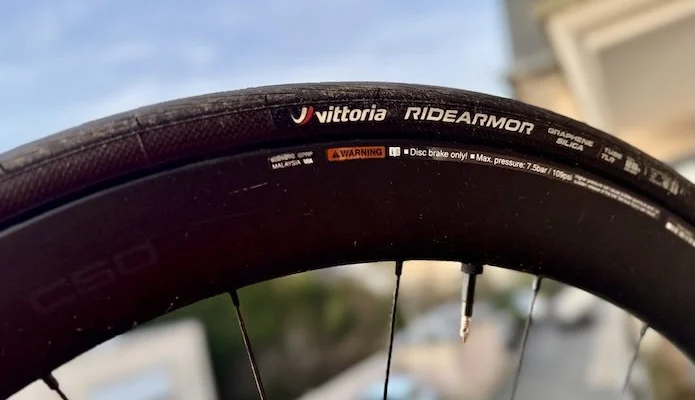
A few months after testing the Corsa Pro Speed TLR 28, I had the chance to ride with another set of high-end tires from the Italian brand Vittoria—the RideArmor TLR—which stand out from the former thanks to their impressive durability, even under very difficult conditions. After more than 2,000 km, I didn’t experience a single flat tire on the frequently wet and muddy roads of December and January in the Paris region. And even better: even though I deliberately didn’t spare them from riding on road shoulders and bike paths, their tread looks almost brand-new, aside from a single small cut. Mounted as tubeless tires, they also didn’t require frequent pressure adjustments. I only needed to pump them up once every 15 days or so to restore the 5 bar pressure I usually set for 28 tyres (even though the manufacturer recommends slightly less than 4 bar for my weight). On the flip side, the RideArmor TLRs are quite heavy (382 g in 700×28, plus the weight of the puncture-prevention fluid) and have higher rolling resistance than competition tyres like the Corsa Speed.
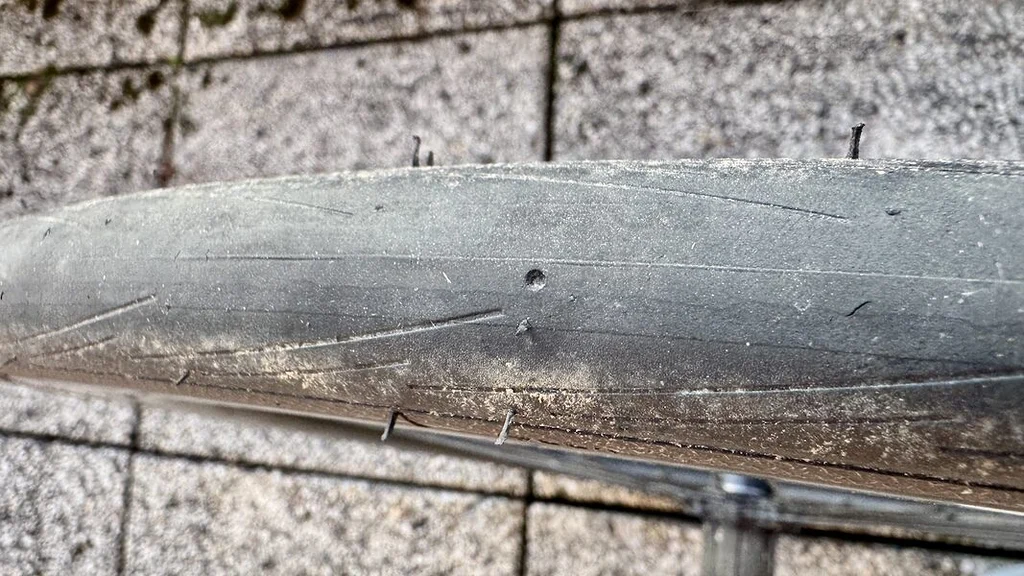
Tires Designed to Minimize Hassles
According to Vittoria, the RideArmor is the most durable performance-class road tire available, designed for the toughest conditions. This isn’t a model for city bikes or a tire designed for all-terrain riding, but it’s intended for intensive road training in all weather conditions, thanks to its high durability, comfort, and excellent traction. The RideArmor was developed to serve as true armor, protecting cyclists from their worst enemy during winter training and long-distance rides: flat tires.
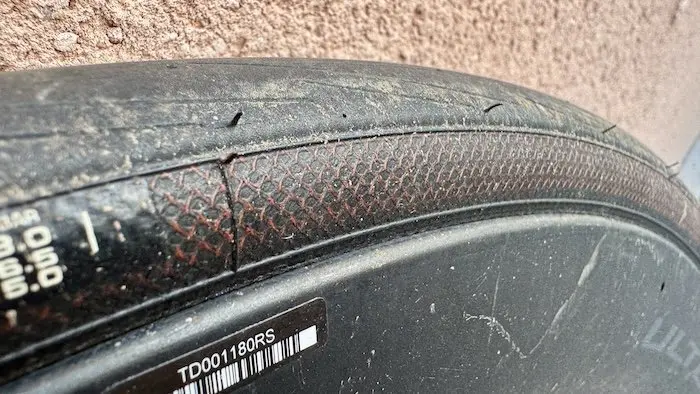
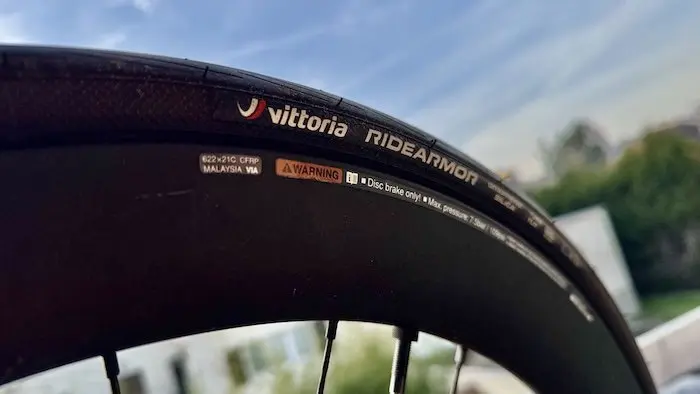
The ArmorSkin sidewall layer provides ultimate protection against cuts and abrasion. This high-quality polyamide fabric, distinguished by its coppery color, offers additional protection on any type of pavement and in all weather conditions.
The 2C Graphene + Silica compound, the brand says, delivers long mileage, puncture resistance, high traction on cold and wet surfaces, and lower rolling resistance than most so-called “solid” tires on the market. Finally, It features an additional protective layer of Kevlar. 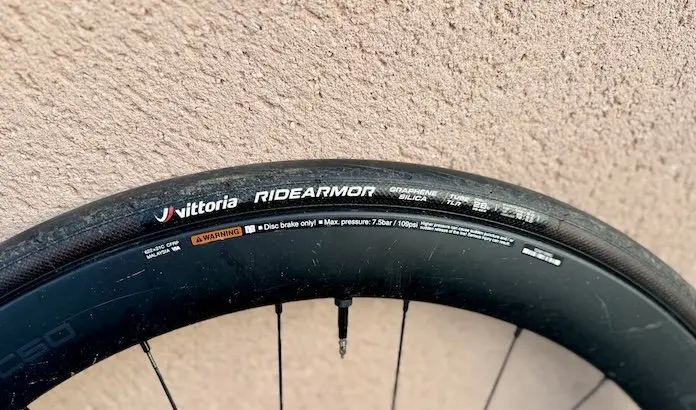
The RideArmor TLR is available in seven sizes: 700×26, 700×28, 700×30, 700×32, 700×34, 700×36, 700×38. I weighed my two 28 mm tyres at 382 g each; the width, measured with a caliper, matches the manufacturer’s specifications well on rims with an internal width of 21 mm.
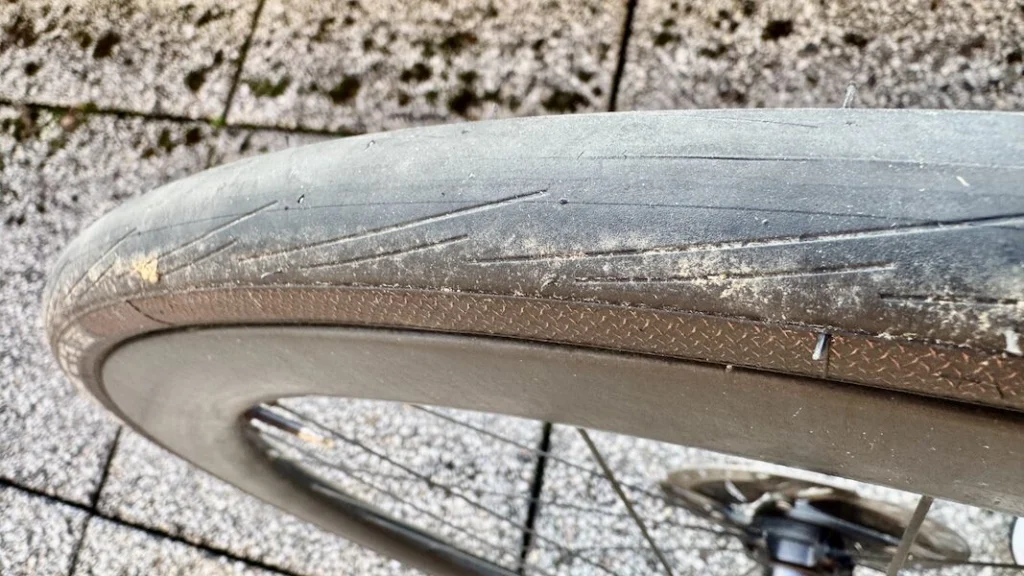
Performance Falls Short of Competition Tires
Due to their weight and multiple protective layers, RideArmor TLR tires have higher rolling resistance than most competition tires on the market. Between 5 and 8 watts of additional resistance per tire, according to bicyclerollingresistance.com. In practical terms, this means these tires are slower than lighter tires for a given effort, both when riding at a steady pace and in terms of responsiveness. However, they should be compared to other tires designed to prevent flats, which are often cheaper but also even slower. Ultimately, the trade-off here is quite good, at least in the context of sustained training, where lap times aren’t the top priority.
And unlike many other tires designed to resist punctures and wear over long distances, the RideArmor tires offer very high cornering grip, which makes all the difference here. Typically, puncture-resistant tyres use harder compounds that are also slipperier. With these Vittoria tyres, you can tackle all kinds of turns without risking a loss of grip—whether in the rain or even on slightly damp, cold, and treacherous ground—thanks to the rubber compound used and the relative flexibility of their sidewalls.
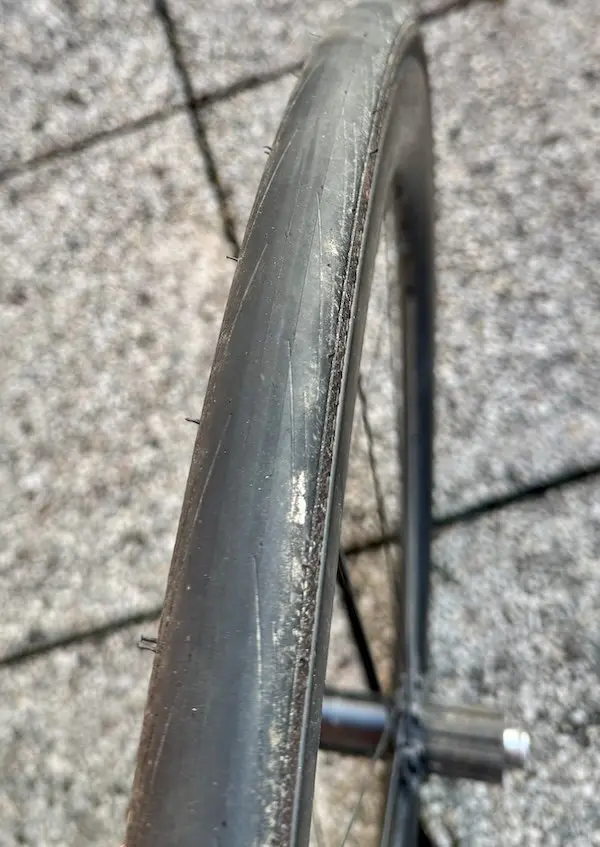
That same trait delivers welcome comfort on long rides; in fact, I could easily have run even lower pressures to amplify the effect, since these are tubeless tires.
The RideArmor TLR is priced at €59.95, which is equivalent to the price of the Hutchinson Challenger, its main competitor. It’s impossible for us to say which of the two is more durable, but the Vittoria is just a tiny bit lighter (20 g lighter) and offers even better traction. In both cases, these are tyres designed to rack up the kilometres without a single worry, when performance isn’t the top priority and the goal is to avoid any maintenance whatsoever. Just like the Hutchinsons, the Vittoria RideArmor tires are sure to make you appreciate tubeless technology. => Buy the Vittoria RideArmor TLR tire for €44.99 instead of €59.95
In conclusion
Vittoria RideArmor TLR tires offer top-notch traction, wear resistance, and puncture protection, making them ideal for winter training and even year-round use if performance isn’t your top priority. Tubeless tech also lets you run lower pressures for extra comfort, while staying totally reliable thanks to the system’s excellent seal, which provides added protection so you’ll never have to stop at the side of the road for a repair.
The VITTORIA RIDEARMOR TLR in brief… Pros: wear resistance, puncture resistance, traction, comfort; Cons: heavy, lower performance compared to racing tires Casing: 100 TPI – Bead: flexible, Tubeless Ready – Reinforcements: ArmorSkin / Kevlar® Bead-to-Bead Protection Layer / Inner Shield / Bead Shield – Tread compound: Graphene + Silica 2C Compound – Compatibility: tubeless-ready rims, with or without beads – Sizes: 700 × 26 / 28 / 30 / 32 / 34 / 36 / 38 – Weight: 382 g (verified for 700 × 28) – Price: €59.95 – Contact: vittoria.com |
Share the post "Review of Vittoria RideArmor TLR Tires"