Share the post "Alé Winter Kit Review"
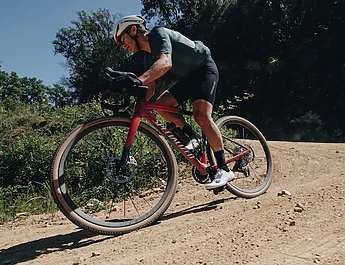
With this winter ensemble consisting of the K-Tour tights and Riparo jacket, accompanied by the Blizzard gloves, Alé offers an outfit capable of withstanding a harsh winter while pedaling in the best possible comfort.
Here is the verdict after rides carried out in various weather conditions.
Text: Olivier Dulaurent – Photos: 3bikes.fr, Alé Cycling
Alé is not the best-known textile brand, yet this Italian company offers a quality, varied, stylish, and technical range. It notably supplies the kits for the professional Bahrain Victorious team.
Furthermore, it should be noted that the brand’s origins date back over 30 years, and Alé highlights the feminine side of its history with its presence alongside several women’s teams, the fact that it was among the pioneers in taking women’s morphology into account, and finally, that 90% of its employees are women.
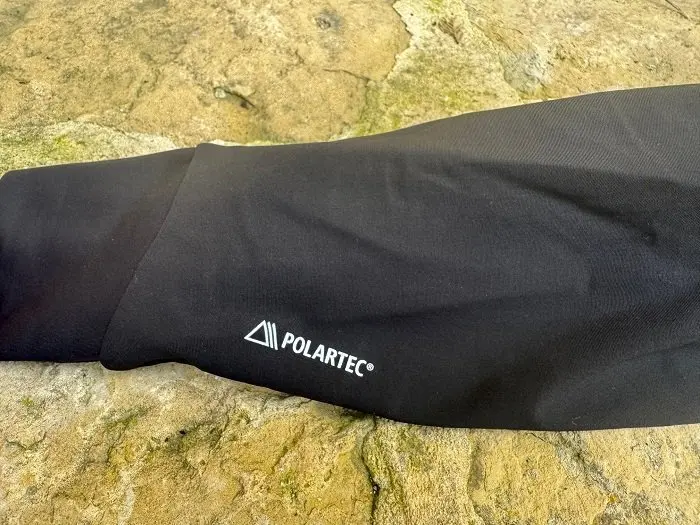
Regarding the test here, the goal was to test an outfit that is truly versatile for winter, meaning it would work for a wide range of temperatures and intensities. For this, the Riparo jacket, equipped with a windproof membrane and the famous Polartec Alpha (vaguely resembling synthetic sheep’s wool), was selected.
Riparo Jacket
Alé thus announces that the Riparo jacket was designed to keep the body warm during high-intensity rides in negative temperatures or strong winds. Insulating and breathable, the Riparo jacket – or “shelter” in Italian – would thus be the best choice for high-intensity rides, intervals in varied conditions, climbs, descents, low temperatures, and changing conditions. With its internal Polartec Alpha material, a thermoregulating fabric known for its insulation and high breathability, it is designed to support the cyclist as the effort intensifies.
Designed for active insulation, Polartec Alpha combines the ability to regulate body temperature by trapping heat against a hydrophobic exterior, meaning it releases excess body heat and moisture and dries quickly before the cyclist feels clammy.
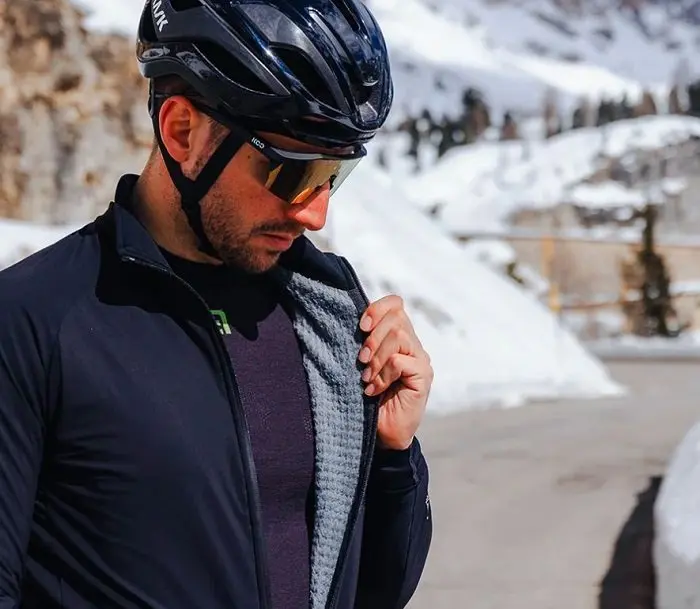
On the outside, a windproof fabric treated with a durable water-repellent finish provides protection against the elements.
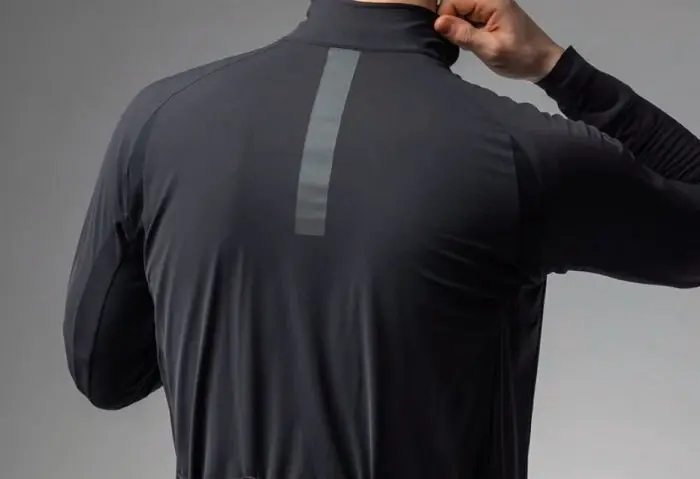
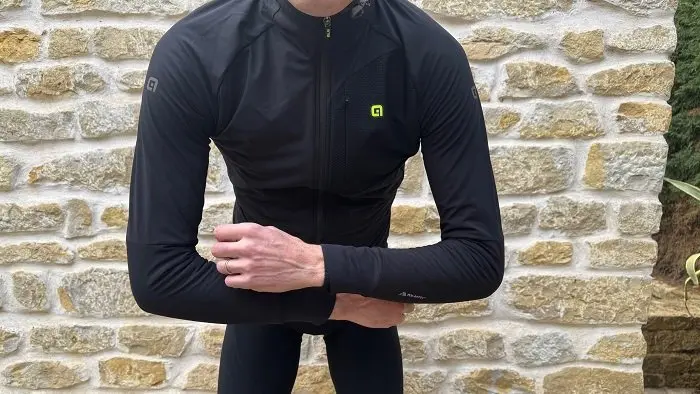
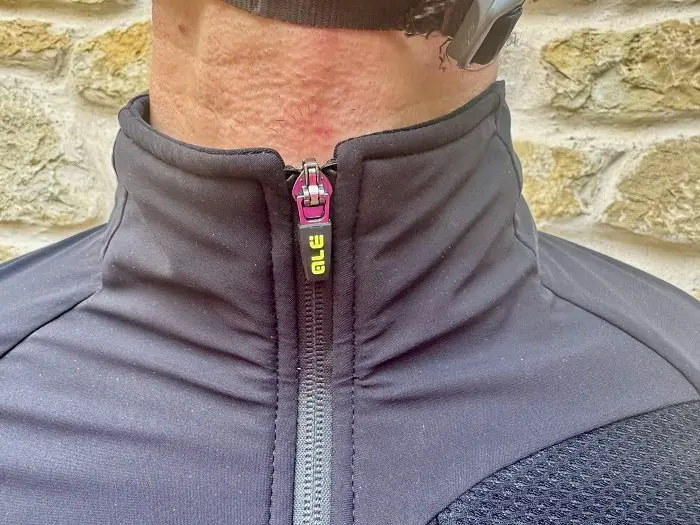
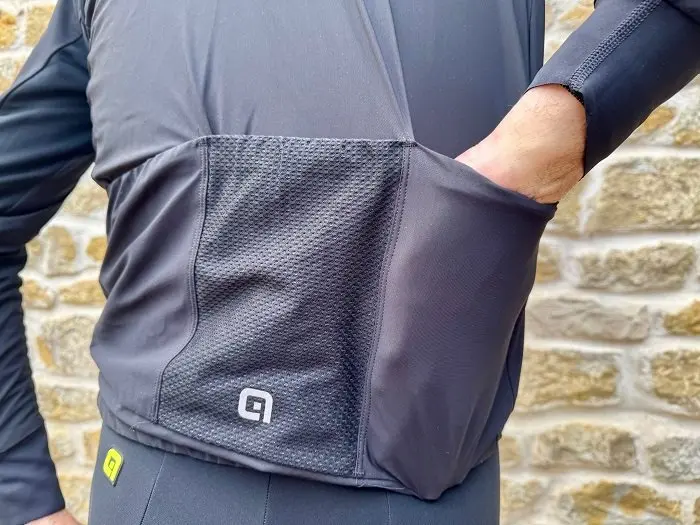
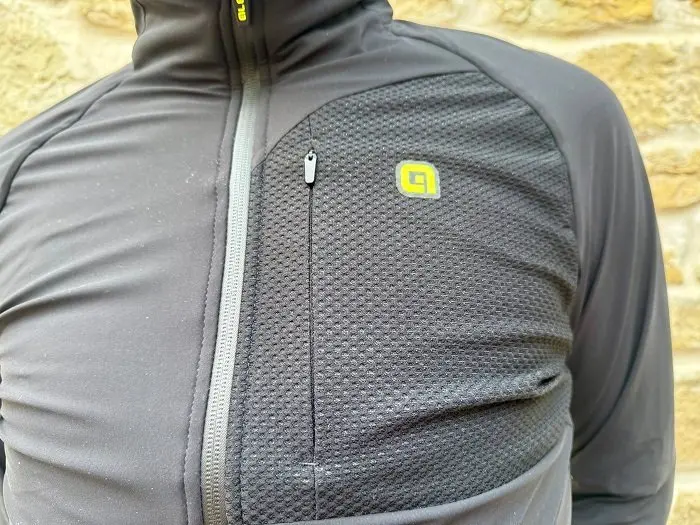
Note that the cut is designed to be close-fitting, and a small originality is that the zippered pocket is located on the chest and not on the back. The pockets are intentionally deep, to carry all essentials this season. Available in two colors, the black jacket tested here fortunately offers reflective details to be more visible during a time of year that is sometimes difficult in this regard.
K-Tour Tights
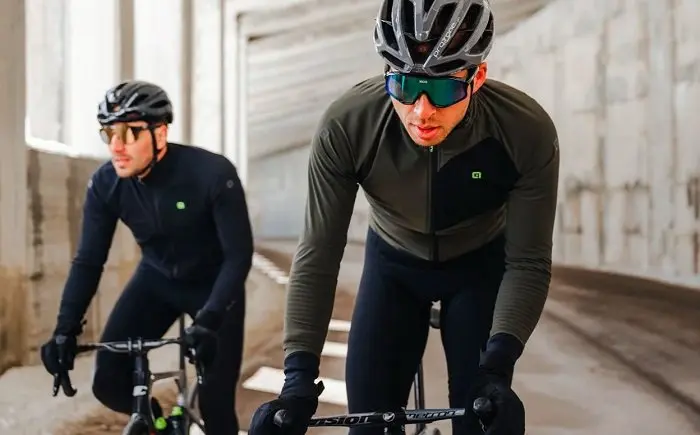
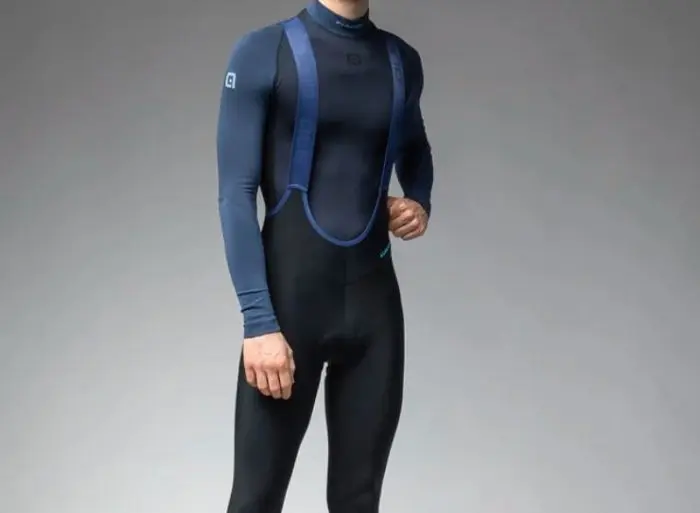
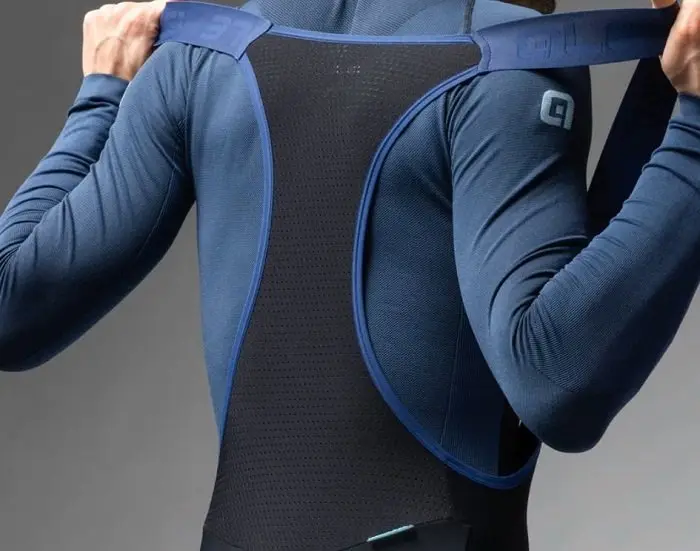
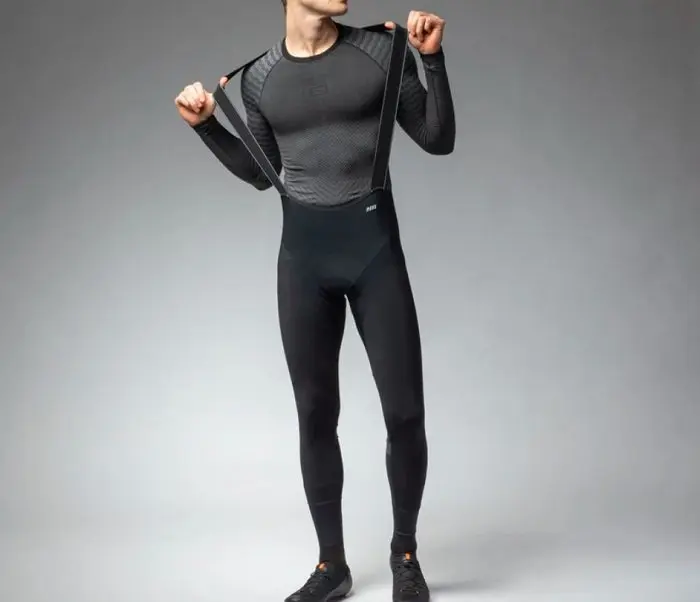
These tights, both thermal (brushed fleece) and elastic, are designed for riding on potentially wet days of a not-too-harsh winter. The cut is ergonomic and thus designed to adapt to the body like a second skin. The front and back sections are structured to adhere to the body during the ride. The DWR treatment protects against light rain and road spray while maintaining good breathability.
Blizzard Gloves
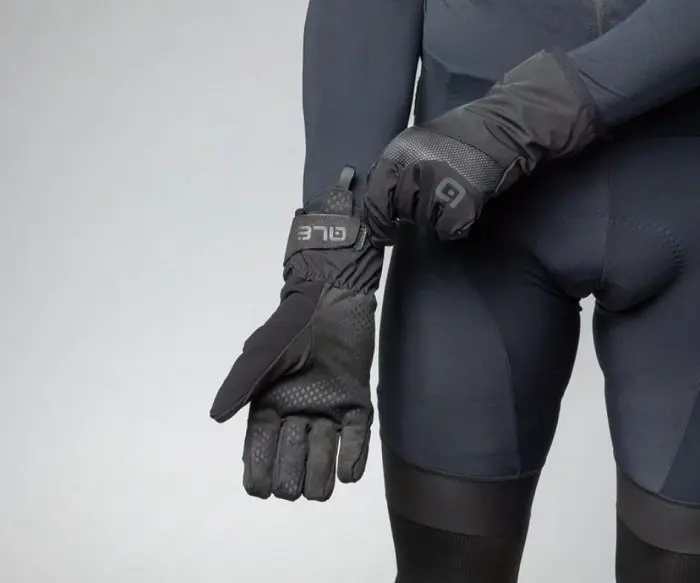
These gloves are made with a three-layer waterproof fabric (specific to Alé) as well as thermal padding and a soft fleece lining, making them suitable for cold and wet conditions. To better grip the handlebars while allowing optimal compatibility with smartphones, the gloves feature a suede-like palm material. Furthermore, the reworked fit and reduced seams are designed to prevent rain penetration. They feature a soft Velcro closure on the wrist, suede loops also for easy removal, and reflective inserts for better visibility on the back of the hand.
On the road
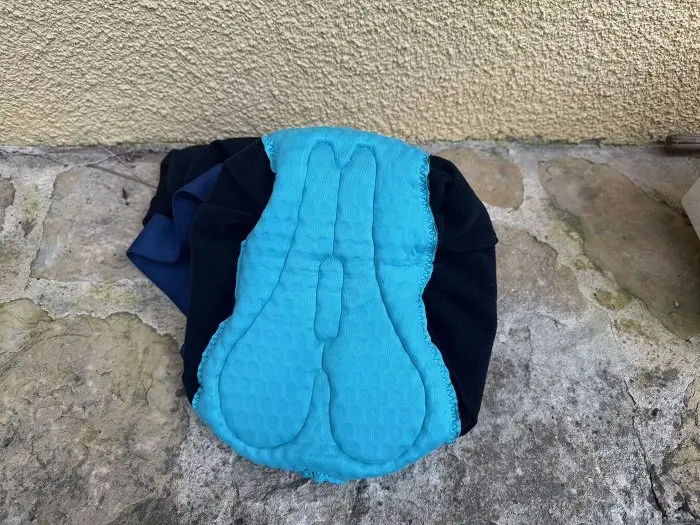
From the first pedal strokes, the overall comfort of the K-Tour tights is noticeable and particularly appreciated. There is no excess material, no areas on the legs that “pull,” nor a chamois that isn’t in contact with the perineum: all these characteristics, which seem obvious for quality tights, are not always present. Here, the different panels fully play their role to better “hug” the contours of the legs.
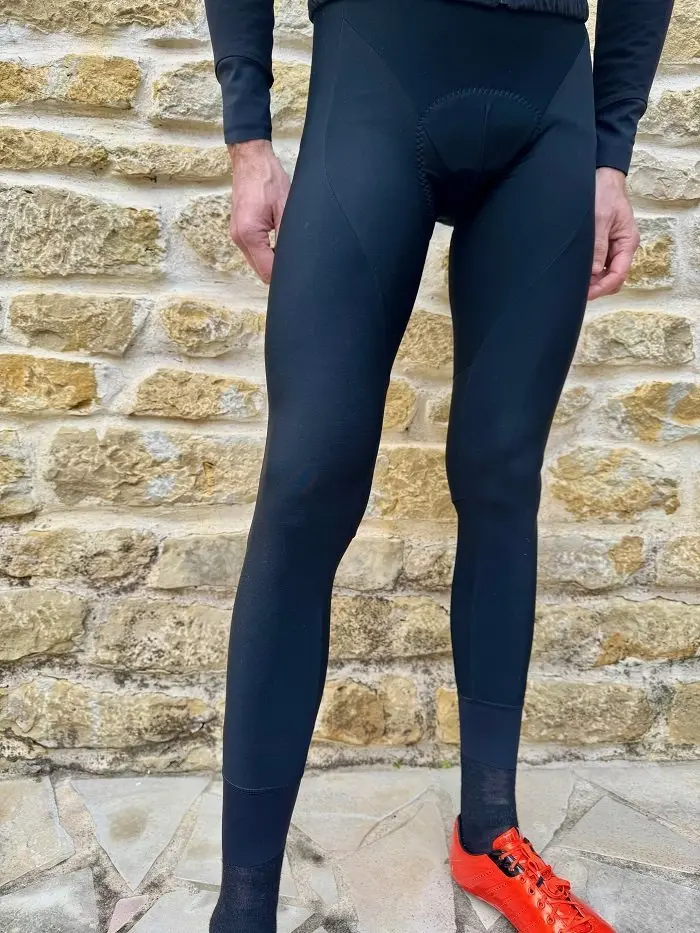
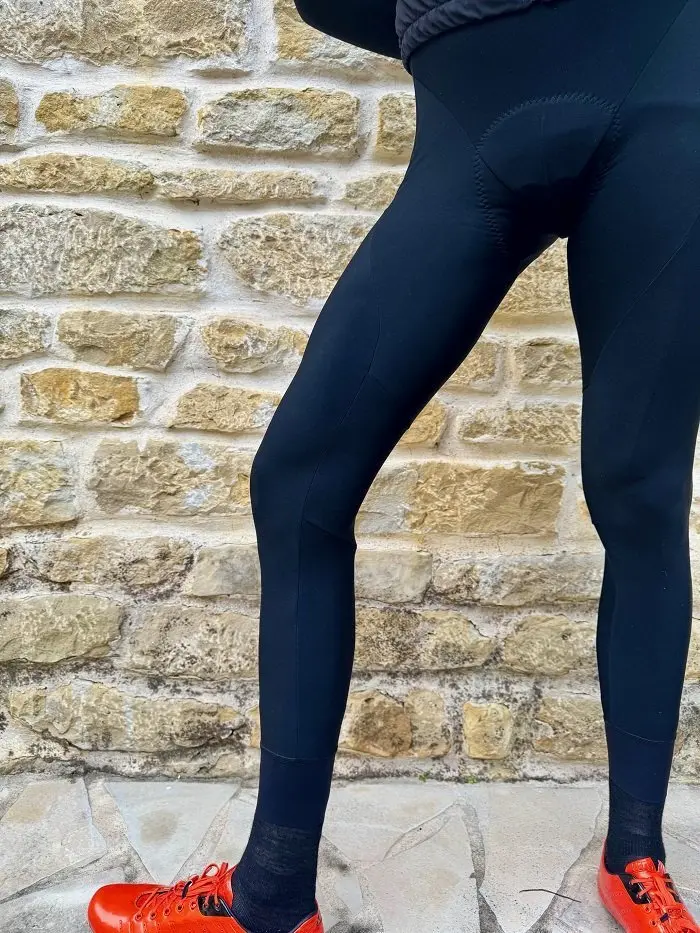
Over the kilometers, while praising the points mentioned above, the saddle comfort is felt, even on longer rides, up to 4 hours and more. Regarding the feeling in different winter temperatures, starting around 4-5 °C, the beginning of the ride seems to indicate a slight sensation of excessive cold on the thighs, but this settles down after a few kilometers.
However, for cyclists who are particularly sensitive to cold in this area, it will be preferable to opt for a model with a membrane on the front of the tights. At Alé, the Clima Warm Plus model with its windproof membrane seems ideal for this (but it has not been tested). Faced with a rain shower, the K-Tour tights meet their specifications without the cyclist feeling too cold, but in case of high intensity, it is insufficient (but this is not its specification) as tested during a memorable ride.
When putting on the Riparo jacket, it first seems to show a slight sensation of lack of flexibility in the shoulders when standing upright, almost making one believe that an additional size should have been tested (size M, for 1m90 / 72 kg). But this is especially noticeable before getting on the bike. Once in cycling position, everything falls into place, although users with a very athletic upper body would be well-advised to take one size larger than usual.
Regarding the feeling while riding, and for a person neither particularly sensitive to cold nor especially resistant to cold, 5 or 6 °C is certainly the upper limit for optimal use of the jacket. Indeed, the Polartec Alpha material combined with a windproof membrane on the front fully plays its role here. Including from the first few minutes, whereas this phase – which corresponds to the warm-up – sometimes requires feeling a bit cool to be comfortable for the rest of the ride. The jacket is thus very effective and comfortable for combating any type of temperature, down to -3°C without issues (not tested below this temperature) with a simple long-sleeved base layer.
A corollary of this cold resistance, it will be important not to layer up too much under the jacket, at the risk of limiting its ability to wick away perspiration. Thus, a thermal base layer (but no more!) will suffice because very quickly, the cyclist feels like pedaling in a cocoon that their energy expenditure is enough to heat.
This leads to specifying that for dry, milder weather (from 5/6°C and especially above) and a very high intensity ride, the jacket is almost too warm, and then sweat wicking is no longer optimal. This is why, on the one hand, one must not “overdo it” when choosing the base layer, and on the other hand, the jacket should be reserved for genuinely cold conditions. Thus, the jacket is most effective for demanding and variable weather (wind, or even alternating rain and dry weather) combined with medium to high intensity.
In use, the large pockets are very appreciated, with enough space to carry a proper waterproof jacket, an extra pair of gloves, not to mention nutrition and the inevitable smartphone (which even fits in the chest pocket).
As for the gloves, they offer a particularly well-made cut, and they fit true to size. They are very resistant to cold and ideally chosen for temperatures ranging from -3°C or even lower (depending on one’s cold resistance level) to 5°C (but not above). They prove resistant to showers or even more intense rain.
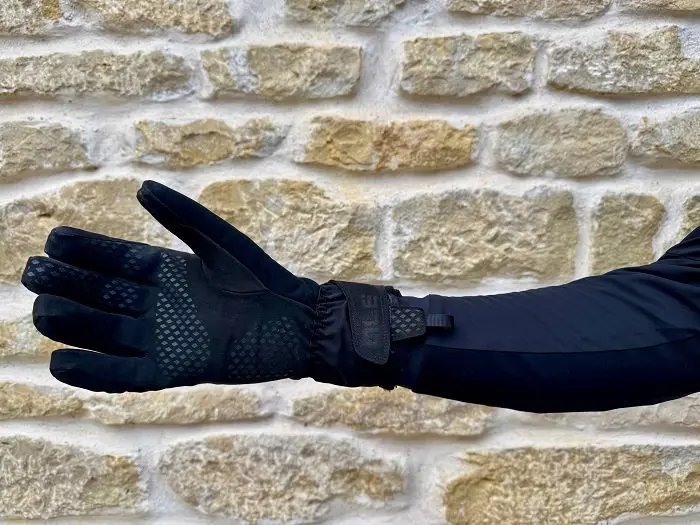
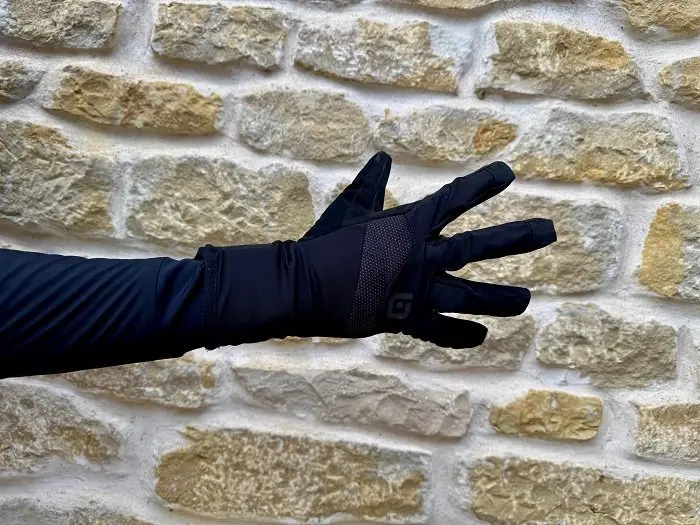
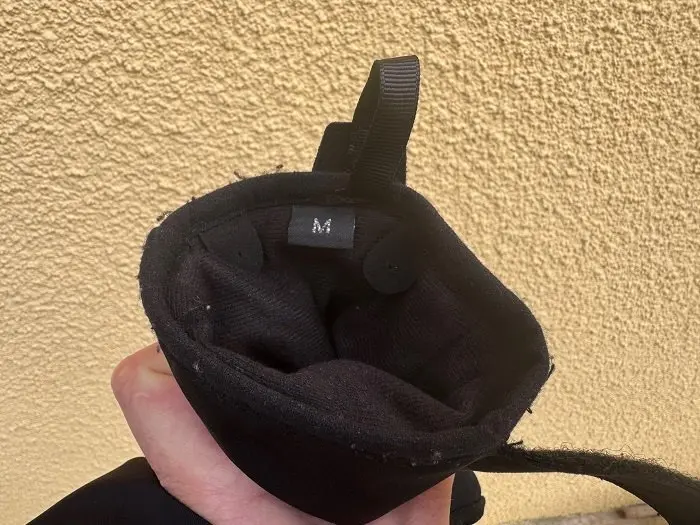
The sensation of comfort provided in fairly intense cold is therefore excellent. This can lead to good hand perspiration. A technique I usually use to do intensities while avoiding excessively wetting the gloves – and extending their effectiveness against the cold – is to take them off for the duration of a fast climb or a section with significant effort. Under these conditions, the gloves reached their limits. Indeed, there’s no problem taking them off, but when putting them back on, the thermal fabric separates too much from the membrane and tends to move, a phenomenon greatly accentuated by the fact that the gloves tend to absorb slight moisture due to the effort. It then becomes very difficult to put them back on.
The solution was found: do not remove the gloves during the ride, which in my case means keeping them for sessions genuinely carried out in the cold.
Ultimately
The Alé kit is characterized by its very distinct aesthetic and classy look. It also proves to be particularly comfortable for riding in the cold. In terms of effectiveness, it seems that the ideal operating window for the tights is for higher temperatures than that of the jacket and gloves. To speak of a temperature range, the tights are ideal for 5 to 12°C, while the jacket and gloves have proven their effectiveness below 5°C. Above that, these two products should be reserved for more relaxed sessions… or wear a different outfit.
But when the thermometer drops really low, the Riparo jacket shines with its cold resistance, enveloping the cyclist in a comfortable bubble. One will simply have to accept paying a high price for this product, while the tights are more reasonably priced in this regard.
The Alé Cycling winter kit in brief… Pros: effectiveness/versatility of the kit as a whole for winter use, fit and comfort of the three products, aesthetics, cold resistance of the jacket Riparo Jacket: Weight 365 g – Materials Klima idro-tech 2 and Polartec Alpha – Body mapping – Silicone waist gripper – Reflective details – Three rear pockets – Anatomical raw-cut cuff – Front zippered pocket – Two colors – Sizes: XXS to 4XL – Price: 294,99 € K-Tour Tights: Weight 280 g – Materials B-tour DWR and brushed mesh – “Friction-free” chamois – Anatomical raw-cut leg – Durable water-repellent DWR – Reflective details – Brushed mesh at the back – One color – Sizes: XXS to 4XL – Price: 154,99 € Blizzard Gloves: Weight 55 g – Three-layer waterproof fleece – Soft Velcro closure at the wrist – Suede loops for easy removal – Reflective inserts for better visibility – Sizes: XXS to XL – Price : 70,99 € Contact: Alé Cycling |
Share the post "Alé Winter Kit Review"