Share the post "Taping: these fluorescent tapes that intrigue… and support cyclists"
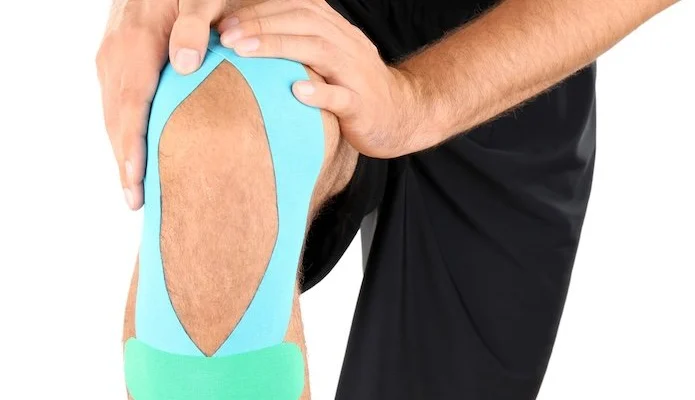
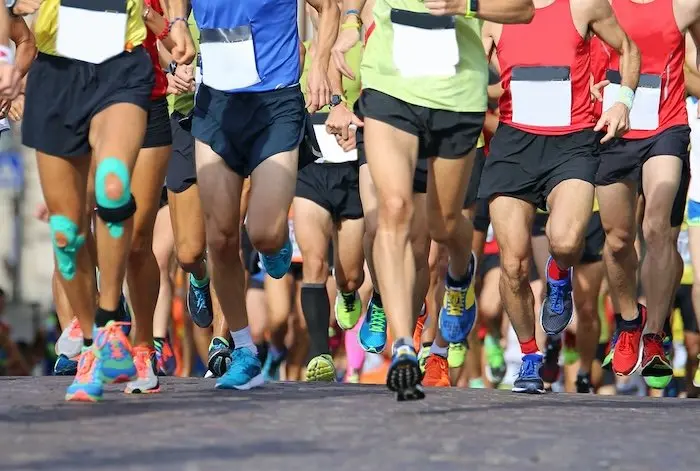
You’ve probably noticed those colored – sometimes fluorescent – tapes stuck to athletes’ skin. But have you ever wondered what they’re for? Contrary to popular belief, they’re not there to immobilize a joint or protect an injury, like a classic strap. Neuromuscular taping (or kinesiotaping) works quite differently: it supports and stimulates movement instead of blocking it. Its goal? To guide, support, and optimize the body’s natural capabilities. For cyclists, often facing muscle pain, overloads, or postural imbalances, taping is much more than a gadget. It’s a valuable tool, especially thanks to its neurological effects. Explanations, with the opinion of those who use it daily…
By Jeff Tatard – Photos: ©depositphotos.com / X / Grok
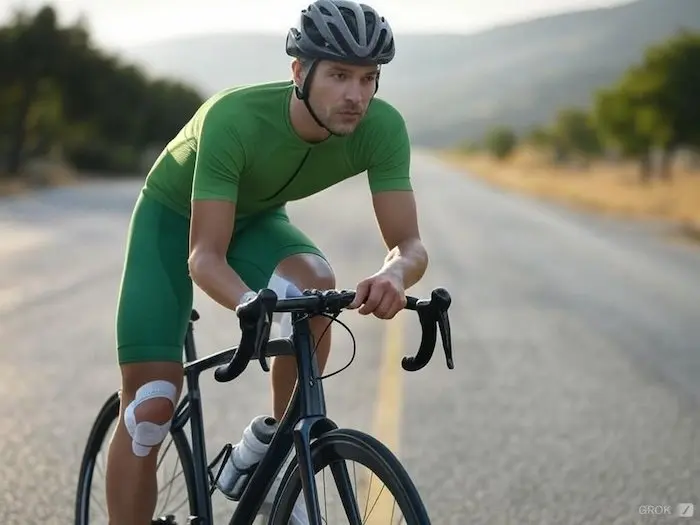
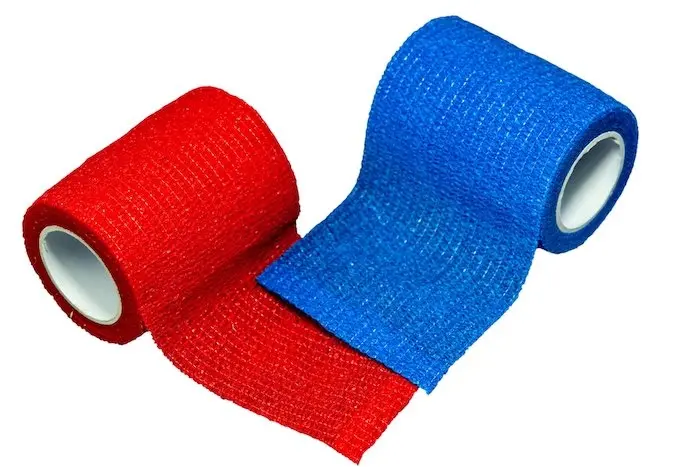
Unlike rigid strapping, neuromuscular taping is an elastic tape that acts directly on the skin’s sensory receptors. These receptors send signals to the brain to adjust muscle response and improve proprioception (the perception of the body’s position in space).
“For me, taping is a bit like a GPS for my muscles,” explains José Lopez, an amateur rider and long-distance enthusiast. “I mainly use it after a big ride to relieve tension in my quadriceps or lower back. It helps me recover faster and avoid lingering pain.”
In short, the tape doesn’t block, it stimulates. It acts on the nervous system to:
• Reduce pain: thanks to the gate control theory, the tape reduces the transmission of pain signals by promoting sensory information from the skin. The result: better management of muscle or joint discomfort.
• Correct motor patterns: poor posture or a poorly executed repetitive movement can cause pain or injury. Taping provides sensory feedback that helps re-learn correct movements.
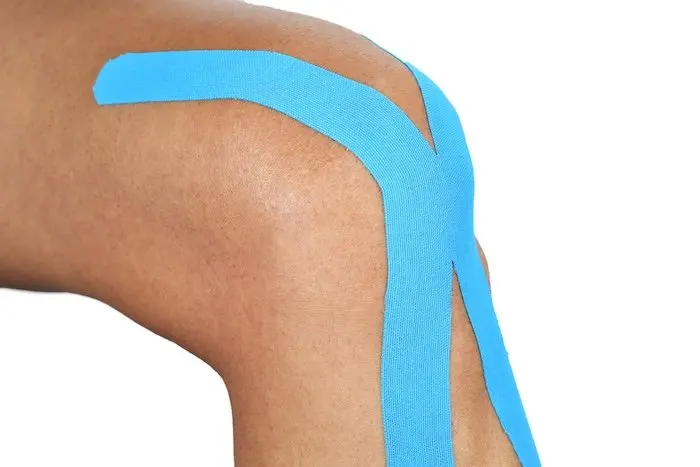
Leny Hitmi, a young cyclist who takes advantage of winter to run, adds: “When I do hill sessions in running, I use taping to support my knees. It’s not magic, but it helps me feel my foot strikes better and avoid aggravating certain tensions.”
A tool to relieve and prevent injuries
In cycling, the most solicited areas – knees, lower back, shoulders – are all targets for taping. When properly applied, it can:
• Support a fatigued muscle by reducing excessive tension or stimulating an underused muscle.
• Facilitate recovery after a long ride or competition, by improving blood and lymphatic circulation, which helps reduce inflammation or swelling.
• Aid proprioception: for example, a misaligned knee during pedaling can be corrected thanks to the sensory feedback from the tape, thus limiting the risk of tendinitis.
“For me, taping has become a reflex after long rides,” confides José Lopez. “I apply it to my calves to prevent cramps, and it allows me to get back on the bike faster the next day.”
A dynamic tool, not just a bandage
For cyclists who still think that taping is a kind of “improved bandage,” it’s time to reconsider. Taping is an active and dynamic approach that accompanies movement instead of restricting it.
Leny Hitmi summarizes the benefit of taping well: “It doesn’t replace good training or good recovery, but it acts as a little boost. And sometimes, that little extra makes all the difference.”
How to integrate taping into your practice?
To fully benefit from the advantages of taping, it is essential to be accompanied by a professional trained in this technique. The effectiveness of the tape depends on its application, which must be adapted to the specific needs of each cyclist:
• Targeted pain
• Muscle imbalances
• Or simple prevention
Taping will never replace good training, well-adjusted equipment, or adapted physical preparation. But it can become a valuable ally for cyclists wishing to ride further, stronger, and above all, with less pain.
So, the next time you see these colored tapes on a knee or back, remember: they are not there by chance. It’s not just an accessory, but a real tool that optimizes the interaction between the skin, muscles, and brain. They are there to help you better understand your body, refine your movements, and improve your performance. The goal? To ride better, but above all, to ride longer, with less pain and more pleasure.

Share the post "Taping: these fluorescent tapes that intrigue… and support cyclists"