Share the post "Review of the Elite Justo 2 Indoor Trainer"
The Elite Justo 2 indoor trainer is the Italian brand’s latest high-end model, and it competes with the Wahoo Kickr and Tacx Neo—the go-to choices for those who take indoor training very seriously. As the successor to the Direto XR, it offers improved power accuracy, automatic calibration, quieter operation, and an even more realistic riding experience. Is this the ideal indoor trainer? By Guillaume Judas – Photos: ©3bikes.fr
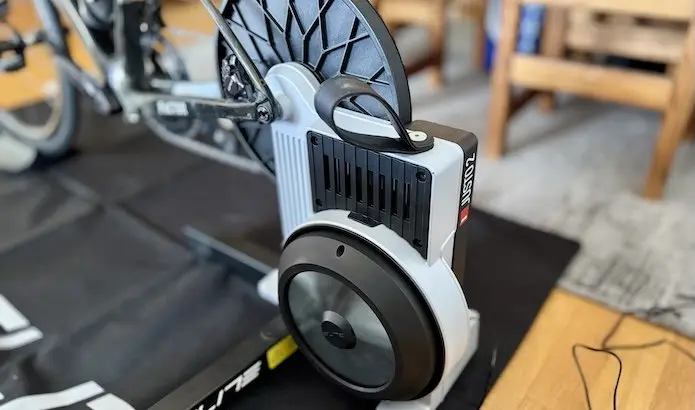
The Elite Justo 2 is an upgrade to the Justo, which was launched a little over two years ago. It introduces two key new features compared to the previous version: built-in Wi-Fi connectivity and a 12-speed cassette (11-34). Otherwise, everything remains the same, and these two improvements primarily enhance the user experience, making the unit ready to use in just a few minutes after unboxing.
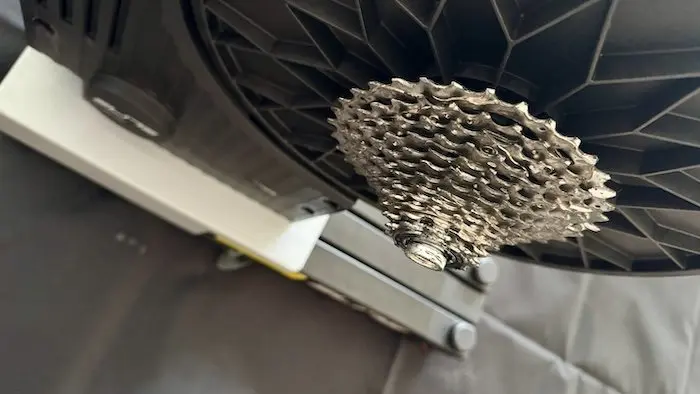
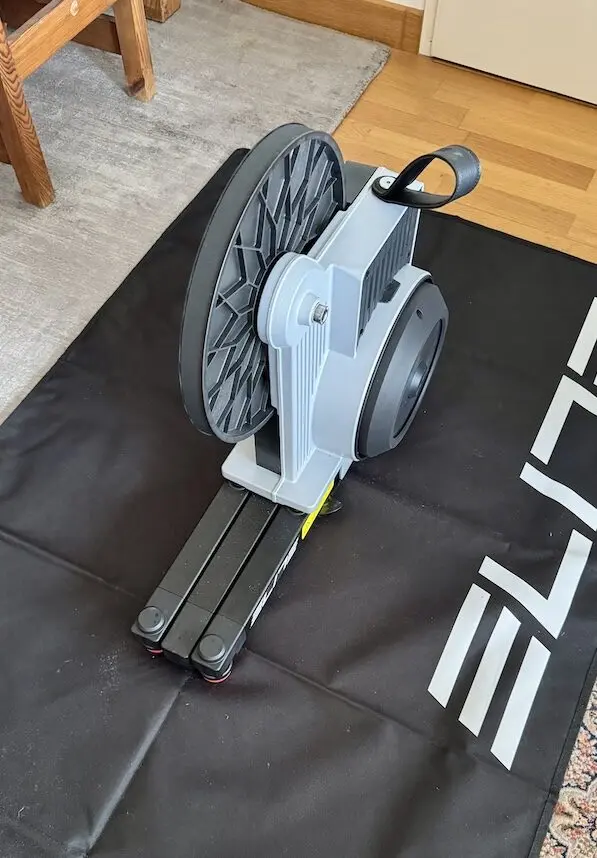
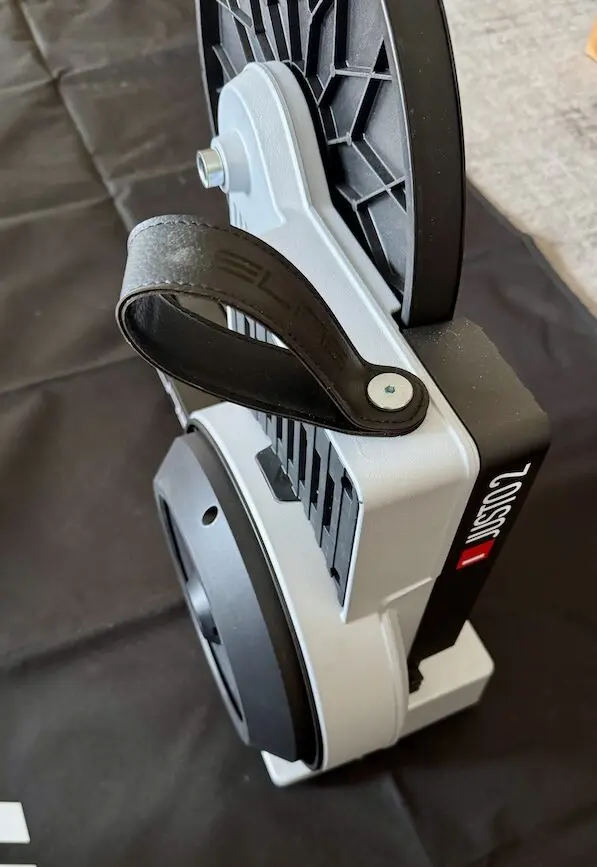
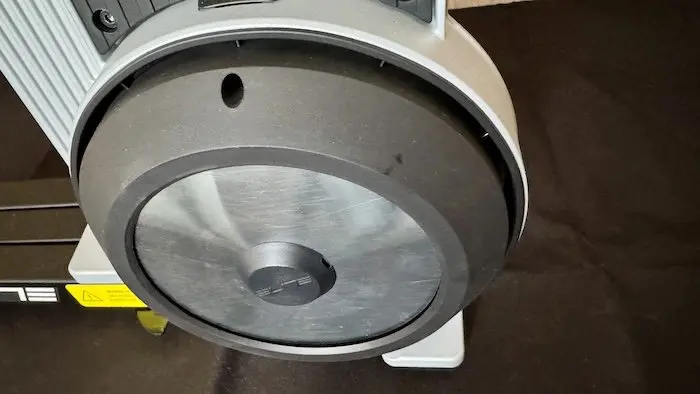
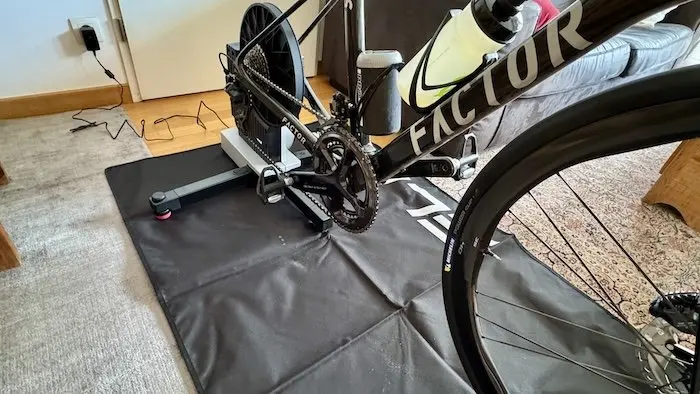
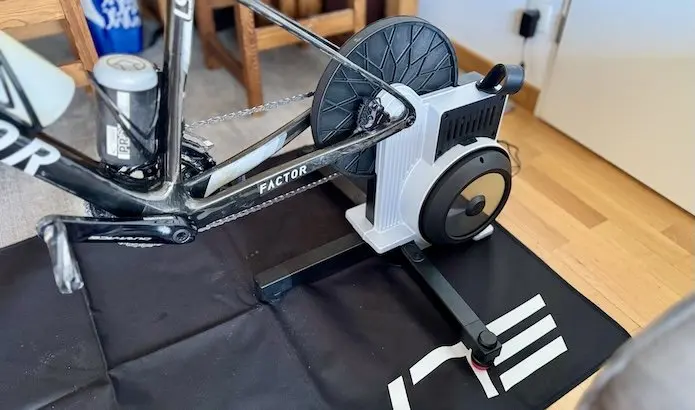
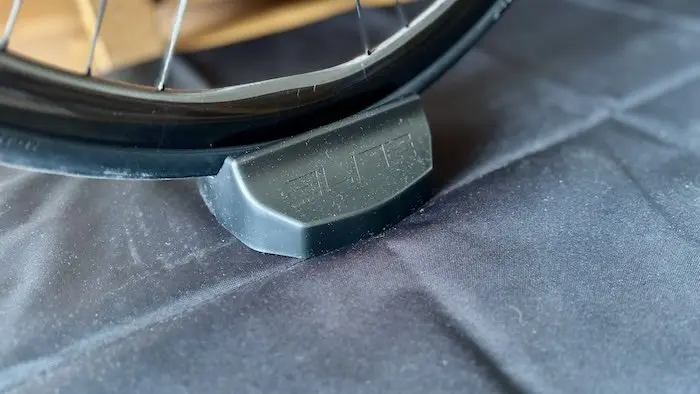
Weighing 17 kg and packed in a box that’s difficult to handle with just two arms, carrying the unit up two flights of stairs—as I had to do—is the most tedious part of the setup. After that, simply slide the Justo 2 out of its box and grab the faux-leather handle on top to position it wherever you like in the room, unfold the two side legs to ensure it’s stable, choose the right bike mounting adapters (for quick-release or thru-axle), remove the bike’s rear wheel and replace it with the indoor trainer—making sure to place the small riser pad under the front wheel. Only the flywheel cover needs to be attached to the side of the indoor trainer using two small screws tightened with a Phillips-head screwdriver.
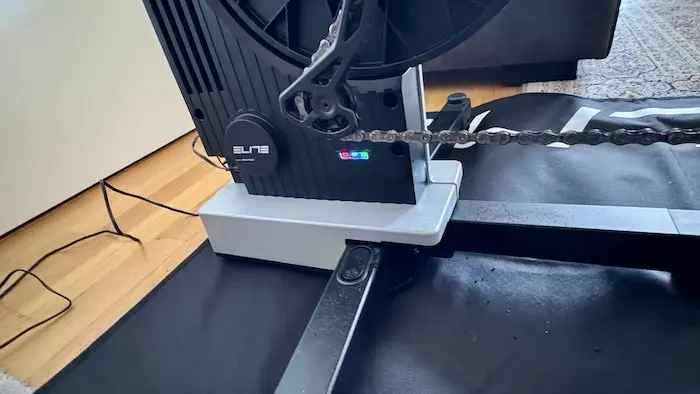
Next, plug the device into a power outlet, then launch the app you want to connect it to—whether on a computer, tablet, smartphone, or Apple TV. For this last connection, the Justo 2 can act as a bridge to transmit data from a heart rate sensor by incorporating it into its own data stream. Within seconds, the device is recognized as a source for measuring power, speed, and cadence. It supports ANT+, ANT+ FE-C, Bluetooth and Wi-Fi, letting you pair multiple devices and ensuring solid data flow during rides.
 In fact, the Justo 2 is, of course, compatible with the Elite Sterzo Smart handlebar mount and the Elite Rizer incline simulator. Thanks to its multiple communication channels, it can handle connections to these devices and centralize everything through an Apple TV.
A Step Up
Compared to the Direto XR—and building on the features of the Justo, which we hadn’t tested—the Justo 2 offers higher-quality construction and finish, though it doesn’t quite reach the level of a Wahoo Kickr, for example. Some parts are still plastic, but the overall build still feels solid. Its footprint is about one-third smaller, and once folded for storage it takes up relatively little space. Be careful, however, when folding it up: when pressing the release button on the two side legs, it can get stuck and be difficult to operate, before suddenly springing open. This caused me to violently pinch my thumb against the storage compartment.
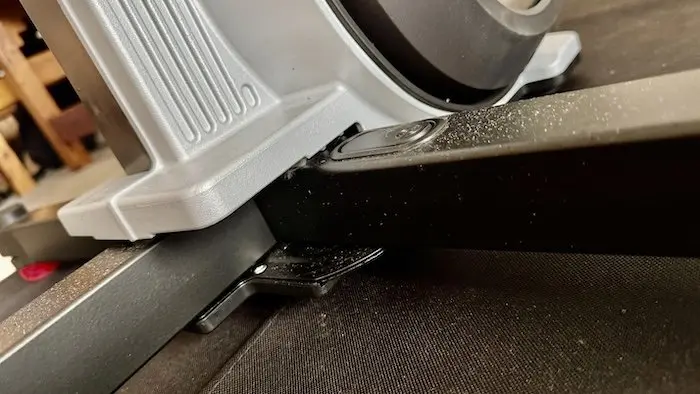
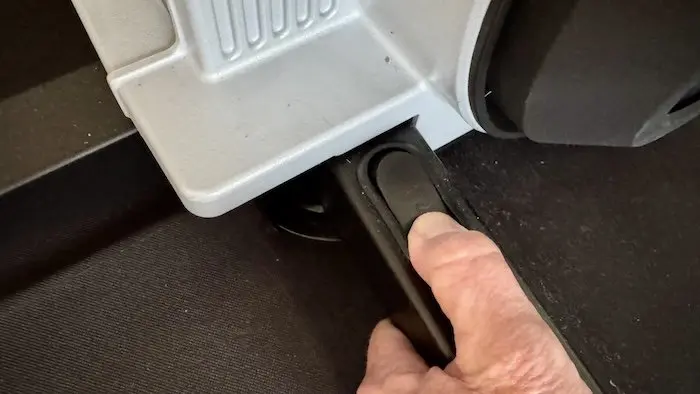

The Justo 2 stands out primarily due to the soft pads under both side feet, which provide some lateral and longitudinal flexibility to the indoor trainer while you’re pedaling. This feature helps reduce fatigue during long indoor training sessions by creating a more natural motion that complements your pedaling, and it also reduces stress on the frame when you stand up on the pedals or during very intense intervals. The bike comes with two types of pads: red ones (the most flexible) and black ones, which are likely intended for heavier riders or those who simply don’t prefer this level of flexibility.
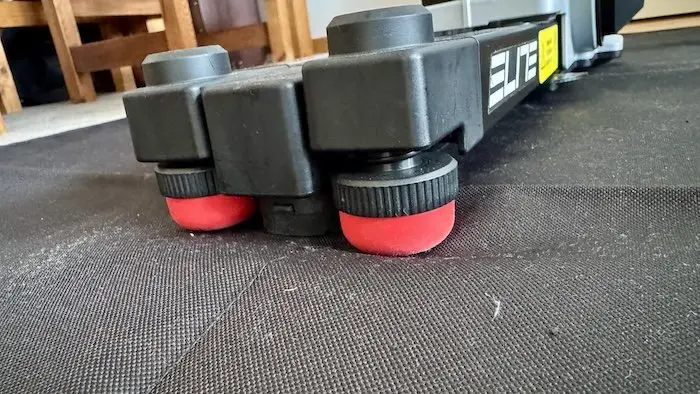
In addition, the Justo 2 (like the Justo) features a 6.2 kg flywheel, compared to 5.1 kg for the Direto XR. This is designed to improve the pedaling feel on simulated routes in various applications during virtual grade changes, even though the unit still lacks a motor that simulates descents—a feature currently offered only by the Tacx Neo.
The other improvement concerns power-measurement accuracy, now rated at ±1% compared with 1.5% for the Direto XR. The Justo 2 thus rivals the Wahoo Kickr and Tacx Neo, with the added benefit of an automatic calibration process, which in theory eliminates the need for frequent recalibration—unlike entry-level and mid-range indoor trainers. In practical terms, this means that for an actual power output of 300 watts, the device will display a power reading of 297 to 303 watts—equivalent to the measurements from the best on-bike power meters on the market. But keep in mind that the power output on a stationary bike will always differ from what you can produce on the road. For the same perceived effort, you’ll almost always generate less power indoors, since the friction isn’t the same. Your FTP (functional threshold power) or PMA (maximum aerobic power) will almost always be lower on a stationary bike, and it would be a mistake to use the same data to adjust your training program.
Finally, it’s worth noting that in addition to making life easier for users, the Justo 2’s automatic calibration limits the potential for cheating in virtual competitions—a phenomenon that was particularly evident during the rise of apps like Zwift in 2020.
=> All our indoor trainer reviews
2,300 watts and 24%
Like all indoor trainers at this level, the Elite Justo 2 is a smart device, meaning it can automatically adjust the resistance it applies to pedalling based on data sent by the app you’re using. This mainly comes down to Simulation mode, which simulates a climb that forces you to shift gears. Here, the Justo 2 can simulate a climb of up to 24%, though it’s worth noting that on Zwift, the maximum gradient encountered is 17% over a few dozen meters. By default, on Zwift, the home trainer’s resistance is set to 50%, which is a bit like expanding your gear range. By moving the slider toward 100% in the app’s settings menu, you reduce the number of available gears, but this doesn’t affect your speed relative to your power output. This feature of the Justo 2 is therefore not essential.
Next, there’s ERG mode. This is a resistance level setting that corresponds to a target power output you can set to follow a specific training plan. Whether you’re pedaling hard or at a high cadence, the device will always provide resistance that matches the selected power output. Elite claims a resistance of up to 2,300 watts, but to be honest, very few cyclists in the world are capable of reaching that level of power, even for just a few seconds. That said, with this ERG mode, the Justo 2 includes the Easy Start feature, which activates when the flywheel stops spinning and automatically removes the resistance temporarily. Once you start pedalling again, you get about 3 to 4 seconds before the previously set resistance is reapplied. This is ideal when, for example, you’re interrupted for any reason during a burst of sustained effort, allowing you to resume your workout.
The Feel of Pedaling
The increase in flywheel mass compared to the Direto XR is a major advantage here in terms of improving the pedaling feel. The Justo 2 is very similar to the Wahoo Kickr and Tacx Neo in this regard, with excellent responsiveness to every change in virtual terrain. When the road ahead climbs, you have a few dozen metres to shift gears (just like in real life, using your momentum), and when the slope levels off or descends, you can really feel the resistance ease off, whereas the effort felt with previous models was more linear. This feature enhances the enjoyment of back-to-back sessions on the indoor trainer, and even makes certain easy rides—such as spinning on the flat—more enjoyable.
I also found the Justo 2 to be fairly quiet. I never had to turn up the TV volume excessively during my training sessions, nor was I worried about disturbing the neighbors. Overall, only the bike’s drivetrain is audible at low speeds, such as when climbing a virtual mountain pass, for example. As you pick up speed, the flywheel gets a little noisier, but it’s still much quieter than the sound of a fan, if you use one. Here, too, the Justo 2 shows considerable improvement over previous generations of Elite indoor trainers.
Power Accuracy
I was able to compare the power data with Garmin Rally pedals, which also have a measurement accuracy of +/- 1%, as I usually do when testing indoor trainers. Overall, Elite delivers on its promises, with data that’s very consistent every time, whether during low-intensity workouts or during hard accelerations. I therefore consider the Justo 2 to be one of the best benchmarks on the market, among all measurement devices. Its automatic calibration process even lets you verify, with a high degree of confidence, the performance of another sensor you might have on the bike, for example. 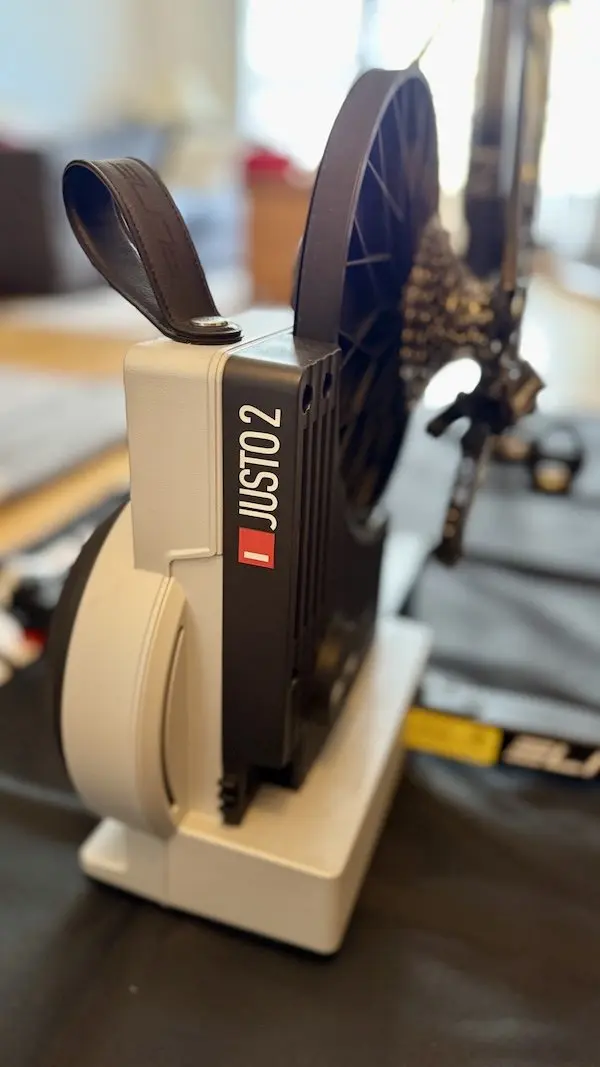 That said, I did notice some inconsistencies in the cadence display while riding fairly long virtual climbs, The numbers sometimes dropped for a second or two between 50 and 60 revolutions per minute even though I was holding a steady 75 to 80 revolutions per minute. I’m not sure if this is a data transmission issue between the indoor trainer and the computer, or if the sensor itself lacks precision under certain conditions, nor to what extent this phenomenon affects virtual performance based on power data. It’s still a minor issue for Elite to address. On the other hand, when it comes to ERG mode, performance is quite solid. Following a workout with predetermined intervals is easy, and the device responds perfectly to large power fluctuations, while demonstrating excellent stability when it comes to maintaining that same power output.
A Top-Shelf Indoor Trainer
The Justo 2 represents a significant improvement over the Direto XR, which we previously tested as Elite’s top-of-the-line indoor trainer. It’s easy to set up, features high-quality construction, and offers excellent power measurement accuracy along with a great riding experience. Automatic calibration and seamless compatibility with every device and app are also major pluses. The only issues left to address are bugs related to cadence accuracy and minor finishing details, such as the folding mechanism for the side feet. For the most part, however, it’s on par with the Wahoo Kickr and Tacx Neo, though it’s priced slightly lower at €1,099. => Buy the Elite Justo 2 for €959 instead of €1,099
The ELITE JUSTO 2 indoor trainer at a glance… Pros: smooth operation, pedaling feel, low noise, precision, soft pads under the side feet Cons: occasional glitches in cadence measurement, side feet can sometimes be difficult to fold Interactive direct drive: electronically controlled magnetic brake – Power meter: built-in OTS (Optional Torque System) Dimensions: 570 x 720 x 520 mm – Folded dimensions: 650 x 300 x 550 mm – Weight: 17 kg – Wireless connectivity: ANT+, ANT+FE-C, Bluetooth, Wi-Fi – Maximum power: 2,300 Watts – Maximum gradient: 24% – Cassette body: Shimano/SRAM 9–12-speed (12-speed cassette included) / Campagnolo / SRAM 12-speed/XDR / Shimano Micro Spline – Compatibility: direct-mount quick-release axle (130/135 x 5 mm) for bikes equipped with a quick-release axle / Thru-axle end caps (142 mm/148 mm x 12 mm) for bikes with thru-axles – Included: Free 36-month subscription to My E-Training software & app – Price: €1,099 – Contact: elite-it.com |
Share the post "Review of the Elite Justo 2 Indoor Trainer"