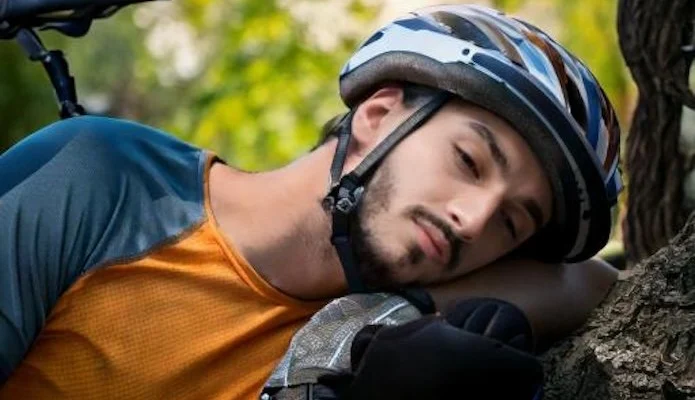
Share the post "Why do we regress in training and progress during rest?"
For any athlete, and particularly cycling enthusiasts, there is a well-known phenomenon: sometimes, even with intensive training, performance stagnates or even regresses. Surprisingly, it is often during rest that progress comes to life. This paradox is based on a fundamental principle of training: supercompensation, an essential concept for understanding how to achieve and maintain lasting performance gains.
By Jean-François Tatard – Photos: ©Adobe Firefly
Supercompensation is the process by which the body adapts and strengthens after intense exertion. During training, the body is subjected to stress that depletes energy resources, degrades muscle fibers, and creates physiological fatigue. Immediately afterward, the body seeks to regenerate. It does not simply return to its starting level, but, in a concern for prevention against future stress, it “supercompensates” by strengthening itself to be better prepared next time. This supercompensation phase is crucial: it is the reason why rest must be scheduled and integrated into the training cycle as a full-fledged session.
Why intensive training can lead to regression
Too often, athletes think that more training necessarily means more progress. However, by constantly stressing the same muscles, nervous system, and endurance, without allowing sufficient breaks, they run the risk of never letting the body enter the supercompensation phase. Instead of progressing, the body accumulates fatigue, unrepaired muscle micro-tears, and inflammation, leading to a regression in performance and even the risk of injury.
Overtraining, or lack of adequate recovery, also leads to a decrease in hormonal and immune capacities. For example, constant levels of cortisol (the stress hormone) can deplete energy reserves and reduce the body’s ability to recover. Signs of this regression can include chronic fatigue, decreased motivation, and a heavy leg sensation during training sessions.
Schedule rest as a training session
Rest must be planned and integrated into the program with the same rigor as any training session. Here are some key elements to consider to optimize this recovery period:
1. Active rest vs. complete rest : in cycling, active rest (light, low-intensity rides) can help eliminate metabolic waste and improve blood circulation, thus promoting muscle recovery. However, it is essential to also include complete rest days, especially after very intense sessions or competitions.
2. Nutrition and hydration: during the rest phase, nutrition becomes even more crucial. The body needs protein to rebuild muscle fibers and carbohydrates to restore glycogen reserves. Not neglecting hydration is also fundamental, as water helps eliminate toxins and maintain cellular processes in balance.
3. Sleep: sleep is one of the invisible pillars of progress. It is during sleep that the body produces growth hormones, essential for tissue repair and strengthening. Quality sleep also promotes better hormonal regulation, reinforcing the benefits of supercompensation.
4. Listen to your body: sometimes, the best programming requires real-time adjustments. Recovery is a science, but also an art. It is crucial to listen to the signals the body sends, such as unusual pain or persistent fatigue, and to adapt rest periods accordingly.
Rest, an indispensable ally for longevity
By integrating rest as a strategic element of the training program, cyclists can optimize their performance and prolong their sporting journey. Supercompensation relies on a delicate balance between training stress and recovery. Ignoring this principle means depriving oneself of the full potential for progress that training can offer.
Thus, to progress sustainably, it is necessary to recognize that performance is not built solely on the bike, but also in the moments when you dismount, to allow the body to rebuild and strengthen itself.
Share the post "Why do we regress in training and progress during rest?"