Share the post "The bikes, accessories, and components you dream of: are they really useful?"
In the world of cycling, there’s always that little voice whispering in our ear: “A lighter bike, dream components, a GPS bike computer that calculates your fatigue in real time… and voilà, you’ll ride like Mathieu Van der Poel or Wout Van Aert!” The average cyclist, meaning you, me, and everyone else with a bit too much dreaming in their pedals, often gets convinced that the latest trendy model will transform their performance. But, let’s be honest, is that really the case? In other words, do you absolutely have to buy everything that shines to ever hope to dominate the climbs like Pogacar (well, on the flats, with a bit of luck)?
By Jean-François Tatard – Images: Craiyon.com / All rights reserved
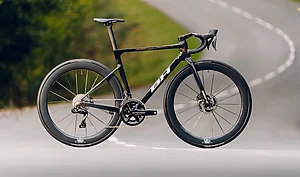
So, the dream bike: a useful investment? Let’s start with THE topic that makes every cyclist’s eyes light up: the carbon bike at €12,000 or even €15,000. Ultra-light, aerodynamic, it weighs less than a sheet of paper and is faster than your current bike. You can already see the breakaway, the climbs, the stage victory. But let’s be honest, will this bike really save you 10 minutes on your ride time, especially on flat terrain where the wind will bring you to your knees?

The truth is, most of us, lovers of beautiful machines, are not yet riding at a level where every gram counts. Yes, a lighter bike can make a difference on a climb, but if you spend your life shifting gears like a derailleur pro, perhaps it’s more about working on your physical condition and your positioning in the peloton that will save you time. In short, a carbon bike is good, but your heart (and your wallet) will thank you if you wait a bit before being tempted by the latest model.
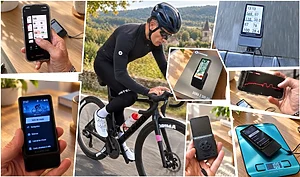
Let’s move on to accessories, because that’s a whole other topic. These little gadgets that promise wonders: state-of-the-art GPS bike computers, power meters, breathable outfits, etc. The average cyclist (or rather, the one who dreams of looking like a pro) often finds themselves wondering if they can really ride without their connected watch or GPS sensor, which calculates their fatigue level on every climb. But let’s be frank, once we have a GPS bike computer, how many of us actually look at the data during the effort? In reality, less than 10% of the information available on these devices is used during a ride. We all have that famous “ding” notification from a power meter or heart rate sensor, but in real life, we mostly use it to reassure ourselves or take a quick look at the end of the ride, just to say we’ve analyzed the performance.
The data is there, but few actually take the time to dissect it afterwards to draw useful lessons from it. Of course, for pros or cycling enthusiasts who seek to optimize every aspect of their performance, these gadgets are valuable tools. But for the Sunday cyclist, it often remains more of a toy than a real means of improving performance. Ultimately, it’s like buying a race car without knowing how to drive on a track: you appreciate the gadgets, but you don’t always get their full potential.
Ultimately, it’s like buying a race car without knowing how to drive on a track: you appreciate the gadgets, but you don’t always get their full potential
Power meters? Okay, if you’re training for an Ironman or a Grand Tour, but for your Sunday ride, that’s not what’s going to make the difference. And adding a few watts (real or supposed) won’t help you ride faster if your technique isn’t up to par. These gadgets are great for pros, but for us mere weekend cyclists, they can end up being more distracting than useful. After all, what’s the fun of riding when you’re busy checking all your data instead of enjoying the scenery?
And finally, components. The famous electronic derailleurs like the Sram one at €800, carbon wheels at insane prices… count more than €5000 for Princeton. Again, the question arises: do you really need them to be a better cyclist? Well, unless you’re an enthusiast who spends your days disassembling and reassembling your bike for every race, it’s likely that these parts won’t significantly improve your performance. An electronic derailleur is cool, it’s smooth, it’s high-tech… But if you don’t yet know how to properly adjust your mechanical gears, the gain in comfort will be almost anecdotal. As for 60mm deep carbon wheels, they won’t make you a sprinter if you don’t have the training to push them to their limits.
By the way, before finishing this article, what would the famous dream bike really look like? If we let ourselves go to our wildest fantasies, it would have a carbon frame, a weight that tickles 6 kg, wheels as aerodynamic as a supersonic jet, and state-of-the-art components. We could even imagine diamond, graphene, or even magnetic levitation bearings, just to eliminate friction and the notion of wear forever. These futuristic technologies would push the limits of performance, offering a bike where every gram saved would be a masterpiece of genius, all for a price that would undoubtedly flirt with €20,000. If you really want to play in the big leagues, let’s even add an enamel finish worthy of the artworks from Color Monkey, like on Remco’s SL8, just to have a bike that also turns heads.

But why stop there? This bike would also have an infinitely adjustable number of gears, as if you could go from flat to mountain without ever changing your pace. Or why not a revolutionary Classified transmission system, which would merge the magic of a double chainring and an internal cassette in a rear hub, all discreet and futuristic. And to top it all off, an electronic derailleur that would allow gear changes so instantaneous that they would make you think you’re on an F1 circuit, even on the nastiest climb.
But on reflection, do you really need all that? This high-tech bike may certainly give you comfort and responsiveness worthy of an astronaut, but it won’t make you an elite cyclist overnight. What matters is effort, passion, and your ability to manage the effort. Equipment, however impressive, can never compensate for poor physical condition. So, a €25,000 bike? Maybe. But let’s not forget that it won’t work miracles if your cardio is as good as a scooter.
So, is it really necessary? Not necessarily. Yes, it makes you dream. Yes, it’s classy. But will it really help you smash your records on your Sunday morning rides with friends? Not sure. What really matters is good training, optimal management of your effort, and… a little fun. Because ultimately, if you spend too much time worrying about the latest gadget, you risk losing sight of the essential: riding, breathing, and, most importantly, having a blast.
If you spend too much time worrying about the latest gadget, you risk losing sight of the essential: riding, breathing, and, most importantly, having a blast
In summary, if these latest accessories and components make you dream, why not treat yourself to a little indulgence and invest in cutting-edge equipment? But don’t forget one essential thing: it’s not the bike or the gadgets that will make you a champion, but your technique, your physical condition, and above all, your enjoyment on two wheels. Because ultimately, even the most expensive bike on the market cannot replace effort, passion, and that little something that makes you smile with every ride. So, yes, these high-tech toys are cool, but the essential thing is you on your saddle, breathing deeply, enjoying every pedal stroke, and feeling the warm embrace of the wind on your neck. And that, my friend, is truly priceless.
Share the post "The bikes, accessories, and components you dream of: are they really useful?"