Share the post "Sense of direction: the hidden gift of cyclists"
When we talk about cycling, we often mention strength, speed, endurance, or technique. However, a crucial skill, often underestimated, deserves to be highlighted: the sense of direction. This gift, present in some cyclists, allows them to return from a four-hour ride with remarkable precision, sometimes even a minute early.
By Jean-François Tatard – Photos: All rights reserved
Imagine a group of cyclists setting off into nature, with the goal of pedaling for four hours. They cross narrow trails, forest paths, and unknown places. At the end of their adventure, they return home with a loop showing 4h01. How do they manage to navigate with such precision?
To understand this phenomenon, it is essential to look at the different forms of intelligence, as defined by psychologist Howard Gardner. Among his eight intelligences, spatial intelligence is particularly relevant for cyclists. This ability to visualize and manipulate objects in space is crucial for effective navigation.
Cyclists with strong spatial intelligence are able to create a mental representation of their environment, allowing them to easily orient themselves in complex terrains. They memorize roads and visual landmarks, quickly adapting their trajectory based on the surrounding elements.
The ability to orient oneself relies on several neurological mechanisms. The hippocampus, a brain region linked to memory and navigation, plays a central role. Studies show that this area activates when a person navigates in a known or unknown space, contributing to the formation of a cognitive map.
Furthermore, kinesthetic intelligence, the ability to control one’s body and interact effectively with the environment, also comes into play. Experienced cyclists integrate bodily sensations — such as changes in terrain under their tires or wind direction — to refine their route.
While some people seem to possess an innate gift for orientation, most cyclists develop this skill over time. Each ride, each exploration of new routes refines this ability. Research indicates that experience increases gray matter in certain brain areas related to navigation. The more you practice, the more competent you become.
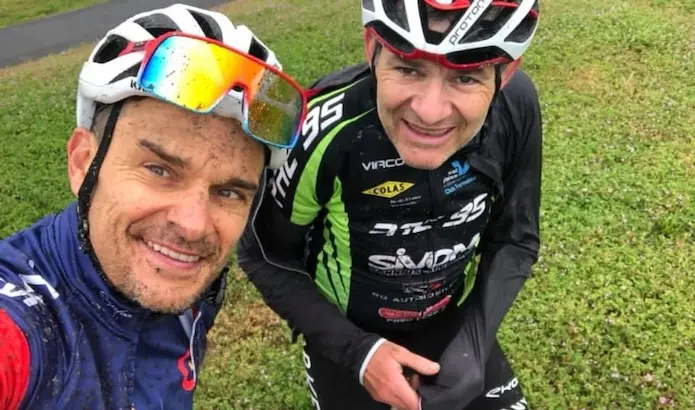
The ultimate test? Mountain biking. Mountain biking in the forest perfectly illustrates the importance of a sense of direction. The challenges of winding paths, steep inclines, and unexpected obstacles test even the most seasoned cyclists. Those who master their sense of direction transform a complex environment into a controlled adventure.
Where one cyclist would get lost, another, more experienced, will find creative solutions to navigate. This demonstrates adaptive intelligence, an ability to react and adjust to unforeseen circumstances.
The sense of direction, whether innate or acquired, is a valuable quality for any cyclist. It transforms a simple bike ride into an enriching exploration, where every turn becomes an opportunity and every fork in the road, a new discovery. This reminds us that, as in life, every pedal stroke is a chance to discover a new path.
In conclusion, whether you are an instinctive cyclist or a methodical explorer, it is essential to cultivate this sense of direction. So, hop on your bike, let your instinct guide you, and go on an adventure! Because beyond the numbers and performance, it is this ability to get lost to better find yourself that makes every ride unforgettable.
=> All our Coaching articles
Share the post "Sense of direction: the hidden gift of cyclists"