Share the post "Review of the Giant Defy Advanced SL 0"
At Giant, the road bike lineup is divided into three distinct models: the aerodynamic Propel, the lightweight and stiff TCR, and the endurance-focused Defy. But with the Defy Advanced SL 0, endurance doesn’t mean a lack of dynamism. This high-end bike delivers fun and comfort on the road, as we discovered on our usual training routes.
By Guillaume Judas – Photos: ©Vincent Lyky
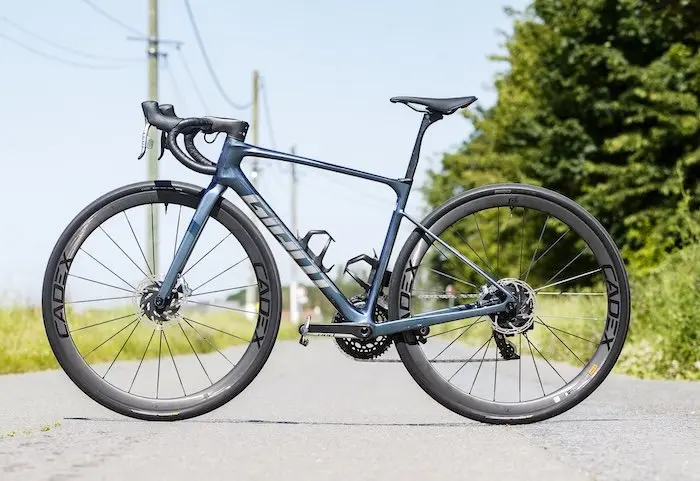
Launched at the end of the 2023 season, the new Defy is designed to be lighter, more responsive, and more efficient—according to Giant—than the models it replaces. The Taiwanese brand was, in fact, one of the pioneers in the field of comfort and long-distance bikes in the mid-2000s with the first Defy, a model that was already quite similar to the iconic TCR in terms of construction but stood out primarily for its geometry, which prioritized stability and a relaxed upper-body position.
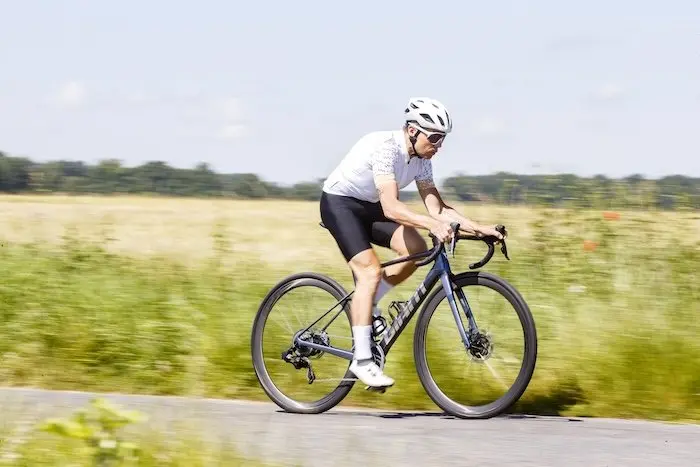
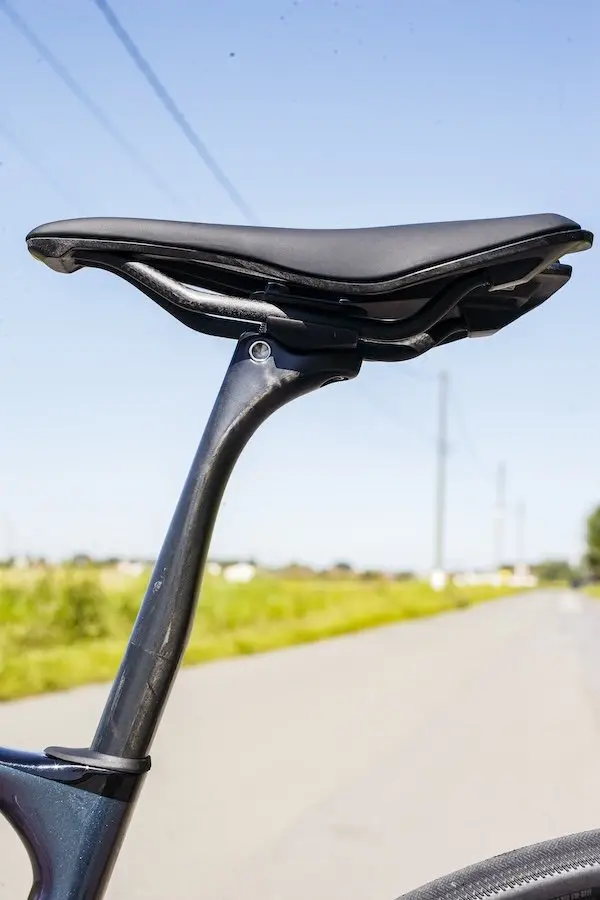
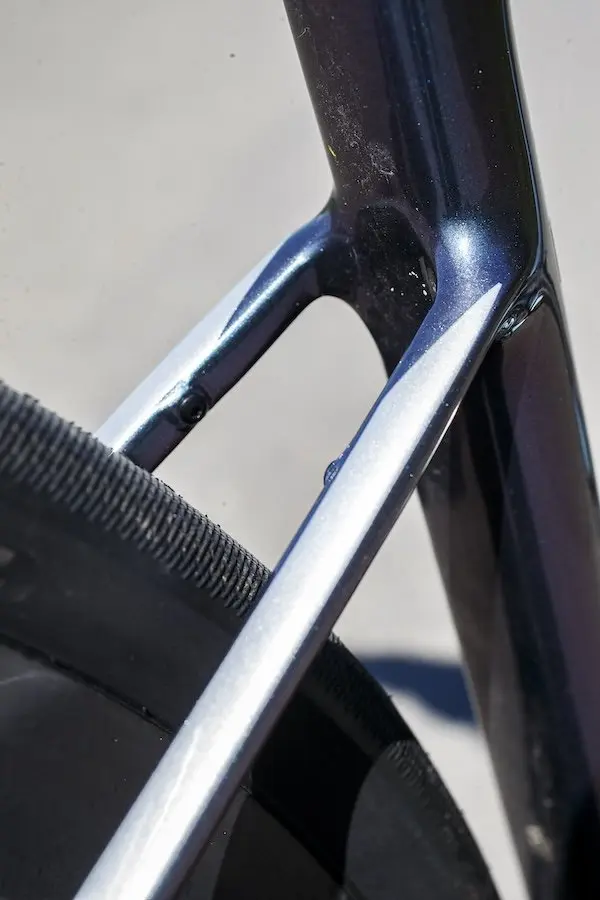
The formula hasn’t fundamentally changed with this new Defy. Unlike a Specialized Roubaix or a Trek Domane, for example, Giant does not offer a “suspension” system integrated into the head tube or the junction between the seat tube and the top tube. The frame remains simple—even streamlined—and its profile is very similar to that of a road bike. The untrained eye wouldn’t be able to tell it apart from a TCR at first glance. The very thin seatstays, however, are designed to dissipate vibrations in the rear of the frame, and the SLR D-Fuse seatpost, with its unique shape, reportedly offers 40% more flexibility than the previous version, according to Giant. The same is true of the carbon handlebar of the same name fitted to this top-of-the-line bike.
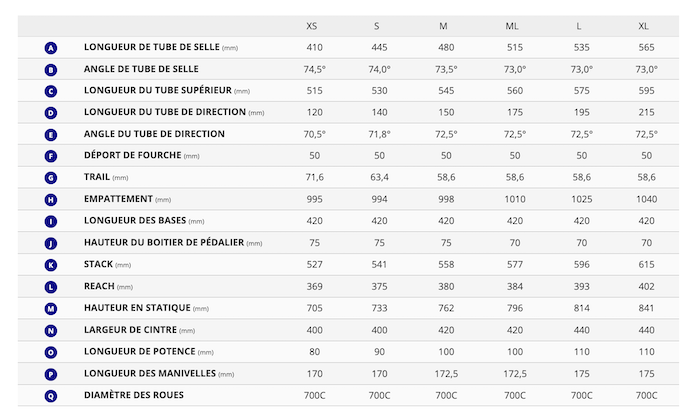
The new Defy, however, retains features specific to endurance bikes, starting with a wheelbase slightly longer than that of a race bike—with 420 mm chainstays, whereas the average is typically between 400 and 410 mm— and a head tube angle of 71.8° for a size S bike, whereas many bikes of this size tend to have an angle around 72.5°. These are just a few millimeters, but they still increase the bike’s stability on the road. And they add comfort. Continuing this trend, the Defy features the necessary mounting points at the rear and front for installing lightweight fenders.
The head tube is also raised compared to a TCR of the same size to offer, if needed, a less forward-leaning riding position—but not excessively so. On this new version of the Defy, the head tube is even 10 mm lower than on the previous model, offering a slightly sportier ride. However, a set of spacers that blends seamlessly with the frame’s aesthetics allows you to raise the handlebar position while maintaining the frame’s smooth lines.
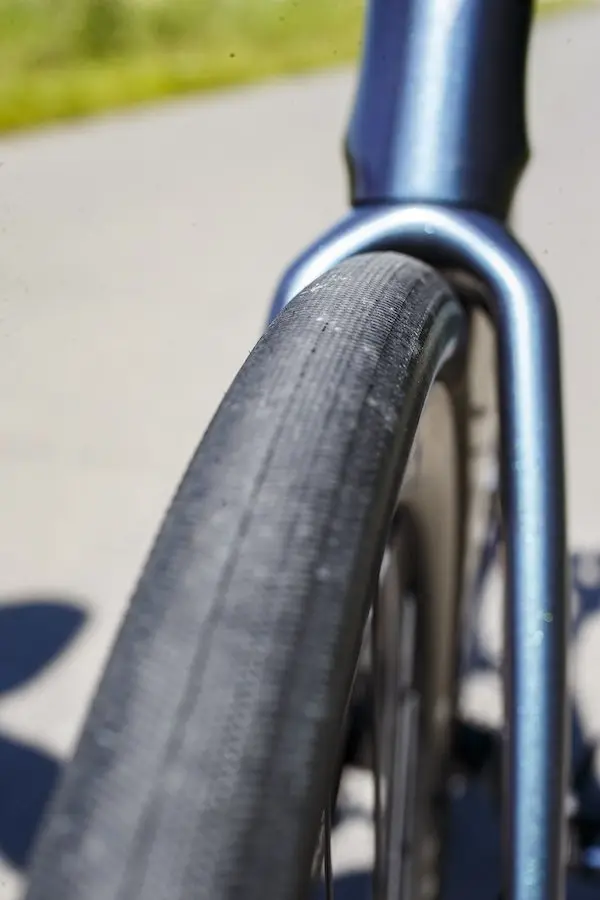
And it’s mainly thanks to its tires that the Defy offers enhanced comfort. It comes equipped with 32-mm tubeless tires that can be inflated to just 3.5 bar, and it accommodates tires up to 38 mm in width. That’s enough to tackle bumpy roads, cobblestones, or even light gravel riding. Changing the tire size is definitely the best way to improve comfort without significantly altering the bike’s overall handling.
Top-of-the-line carbon
Within the Giant lineup, the Defy is available in two frame versions across three bike tiers and seven trim levels. The Advanced SL 0 tested here is the top-of-the-line model, with a frame weight of 785 g in size M thanks to a high-performance carbon fiber construction—woven at the brand’s own composites factory—that incorporates CNT (Continuous Fiber Technology), a nanotechnology-based composite resin (Carbon Nanotube Technology), and a fusion-bonding process.
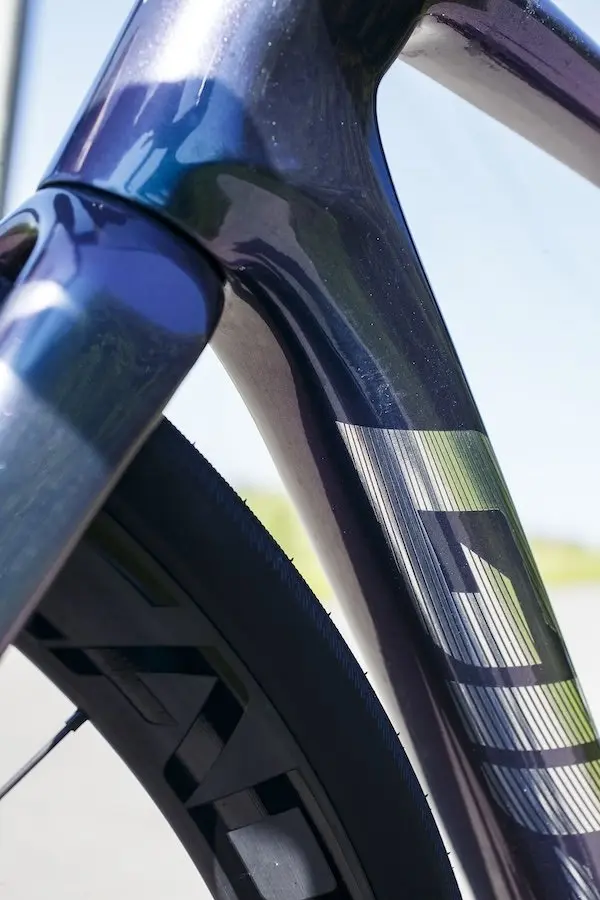
In terms of design, this new Defy features tubes engineered to provide good lateral stiffness while optimizing the frame’s aerodynamics, with brake hoses now fully integrated into the head tube.
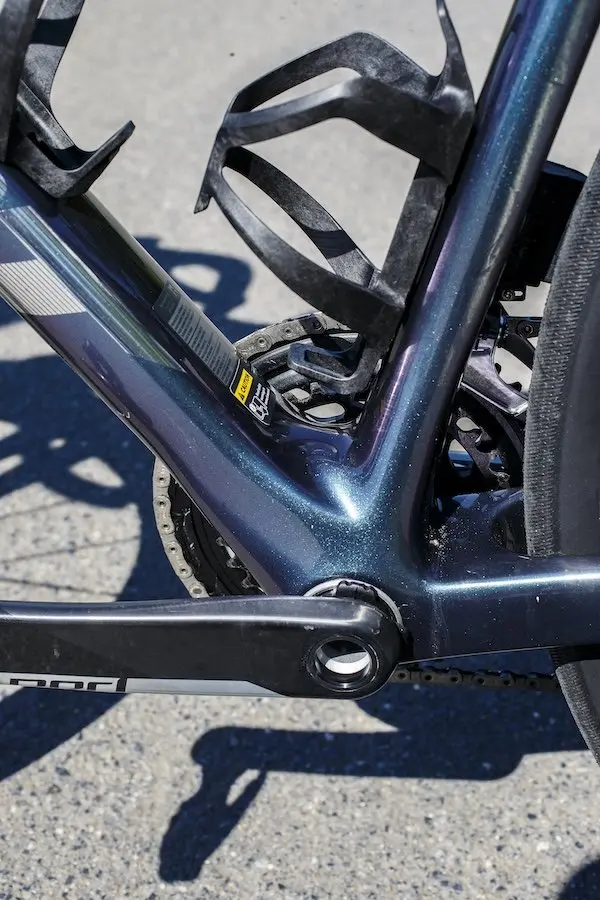
The Advanced and Advanced Pro models use a slightly heavier frame but share the same specifications, at least in terms of comfort. Of course, when it comes to dynamic performance, the Advanced SL 0—with its top-of-the-line components and a weight of just under 7 kg in size S (without pedals or bottle cages)—stands out thanks to its highly favorable weight-to-stiffness ratio. In terms of ride feel, there’s a huge difference between a 7-kg bike and an 8-kg bike—or even a 9-kg bike, which is the entry-level model in the lineup. And even so, the 32-mm tires are a bit on the heavy side here. There’s still room to shave off about 100 grams from the bike if necessary. However, these performance features come at a fairly high price, as this Giant Defy Advanced SL 0 retails for €11,800. The Defy lineup is available starting at €2,400, though, giving prospective buyers the option to choose a model suited to their needs and budget.
A Closer Look at the Specs
This 2024 Giant Defy Advanced SL 0 is still equipped with the previous-generation SRAM Red AXS groupset, as the new groupset was launched on May 15. Is this a drawback? Not at all, if you’re looking for a bike with top-of-the-line performance, featuring a precise and lightweight drivetrain, a reliable and accurate power meter, and a wide gear range. This bike has it all. But in terms of features, the new SRAM Red AXS primarily offers superior build quality and ergonomics, additional buttons on the brake levers, and more effective braking. It’s up to you to decide whether these improvements are essential and whether you’d prefer to wait for the 2025 version of the Defy Advanced SL 0, which is also likely to be more expensive.
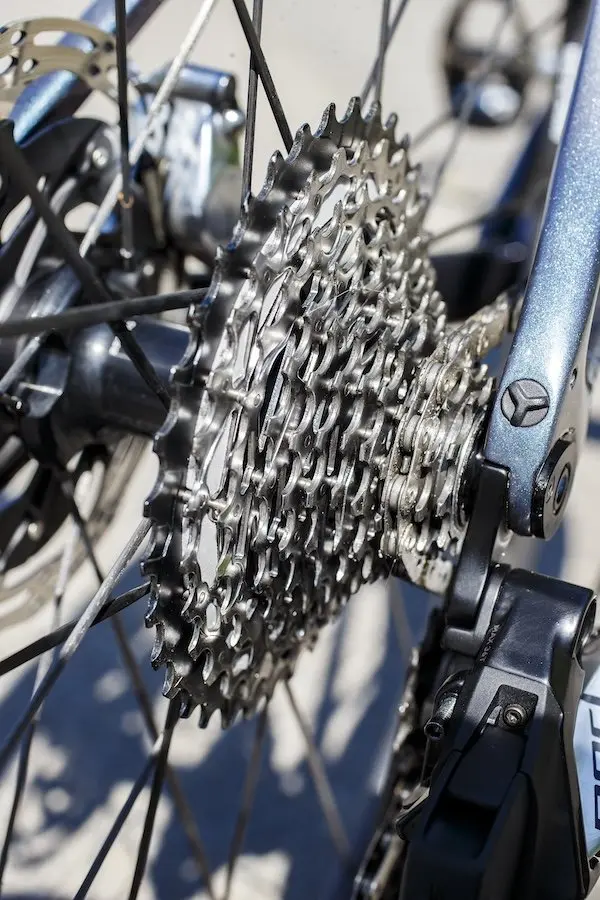
As for the gear range, it’s designed for maximum versatility with a 46-33-tooth double chainring and a 10-36-tooth 12-speed cassette. These are gear ratios I would personally use on a gravel bike, but not on a road bike, since such a cassette involves a significant gap in gear ratios between each sprocket. The Defy is certainly a bike designed for endurance riding, but I imagine that, given the price of this Advanced SL 0 version, it isn’t directly aimed at beginners or completely untrained cyclists. So I’m not sure this is the best choice. In any case, I found the cassette’s gear spacing particularly bothersome, especially on flat terrain.
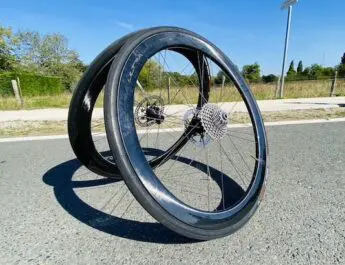
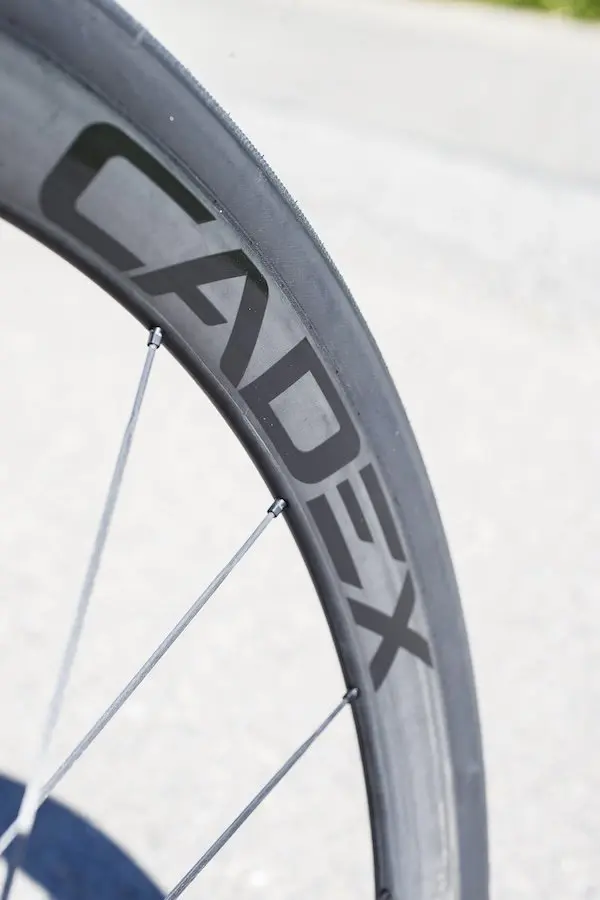
The bike also features a pair of high-performance wheels: the Cadex 36 Disc. The ultra-light carbon rims use hookless tubeless technology and have an internal width of 22.4 mm, with a rim depth of 36 mm. The carbon spokes help reduce the weight of the wheel set to 1,300 g. They’re fitted with 700×32 Cadex Classic tires (which measure nearly 34 mm wide with a caliper) designed for endurance, with a tread pattern that prioritizes durability and traction. These tires ultimately suffer from the very qualities that make them stand out: they add weight to the bike—both literally and figuratively—and slightly diminish the responsiveness one might expect from a bike of this weight.

Finally, in terms of components, the bike features a Giant SLR D-Fuse carbon seatpost and handlebars to dampen vibrations—as mentioned earlier—a massive, rigid Giant Contact SLR AeroLight stem, and a Giant Fleet SLR saddle with a short nose that’s sporty, comfortable, and lightweight.
Fun and Comfort on the Road with the Giant Defy Advanced SL 0
The Giant Defy Advanced SL 0 isn’t a race bike, but it has the responsiveness needed for quick accelerations and changes in pace, making it particularly enjoyable for most training rides. In the city, it weaves easily through traffic, makes it easy to pick up speed after a stop sign or traffic light, and lets you navigate roundabouts without even slowing down. The bike feels extremely confident right from the start.

When riding out of the saddle, the only lateral flex felt comes from the wide tires, which are actually a bit of a hindrance at low speeds when you need to power up a slight incline. Nevertheless, they remain surprisingly smooth on any road surface and perform well at a steady pace, while providing a great deal of comfort and traction.

The bike’s geometry has little impact on its handling. I expected the steering to feel a bit clunky during sharp changes in direction, but it actually remains quite maneuverable despite an angle designed primarily to prioritize stability. In that regard, the Defy is easy to control, especially since the 36-mm rim height offers a good compromise even when gusts of crosswind are blowing. However, I did notice a bit of wobble in the front wheel on a descent at speeds over 60 km/h, but I think this is due to the aerodynamic carbon spokes catching the wind and the wheel’s very light weight.

On climbs tackled in a group, the Defy handles like a high-end 7-kg bike: it’s efficient and lets you climb fast—if you have the legs for it. The frame’s lateral stiffness is definitely there, but it never feels restrictive. As for the handlebars and seatpost, which are designed to absorb vibrations, they never gave me the impression of “bouncing” and thus causing me to waste energy. I’d also like to take this opportunity to mention the seatpost clamping system, which I didn’t find very practical to use. Not only does it make some creaking noises while riding, but it also makes it very difficult to adjust the saddle to the nearest millimeter—especially without the precision of a bike shop—because the seatpost slides very poorly inside the seat tube.
On flat terrain, the Giant Defy Advanced SL 0 offers a great riding experience at speeds below 40 km/h. Above that, you can feel the bike struggle a bit, lacking momentum and requiring a lot of energy to maintain that pace. The bike obviously isn’t designed for that, but I think the size of the tires and their lack of aerodynamics don’t favor high speeds.

The Defy, as it’s set up, also allowed me to ride on bike paths and even venture onto a towpath to escape traffic—things I normally never do. It’s not really a gravel bike, but it does share some of its characteristics—notably versatility and comfort—while adding a lightweight frame and plenty of responsiveness. In that sense, it’s a lot of fun to ride on the road, and that’s what I’ll remember most from this test, even though it’s objectively less capable than a bike designed for competition.
Still, with thinner tires and the right gear ratios, this bike would be more than capable of competing for the win in a mountain cyclosportive. Ultimately, this Giant Defy Advanced SL 0 reminds us that, regardless of the philosophy behind a bike’s design, weight savings and high-end components offer a level of enjoyment that’s hard to match.
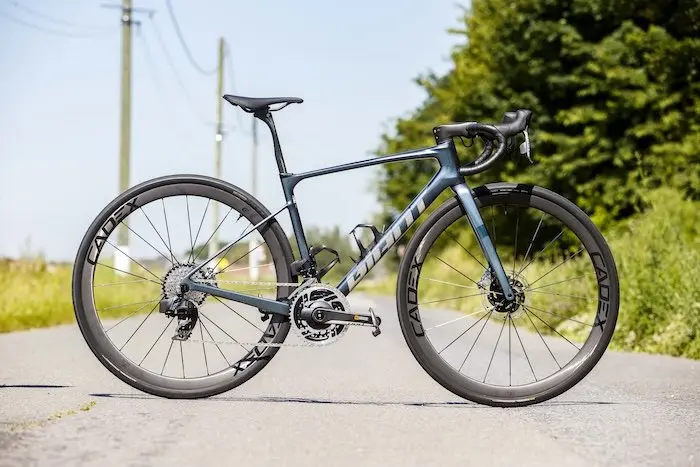
The GIANT DEFY ADVANCED SL 0 at a glance… Pros: weight, comfort, responsiveness Frame: Advanced SL-grade composite – Fork: Advanced SL-grade composite – Handlebar: Giant Contact SLR – Stem: Giant Contact SLR – Brakes: Sram Red 160/160 mm – Rear Derailleur: SRAM Red AXS 12-speed – Shifters: SRAM Red AXS 12-speed – Cassette: SRAM Red AXS 12-speed 10-36 – Chain: SRAM Red AXS 12-speed – Crankset: SRAM Red AXS 12-speed 46-33 – Wheels: CadeX 36 tubeless – Tires: Caden Classic 700×32 – Saddle: Giant Fleet SLR – Seatpost: Giant SLR D-Fuse – Weight: 6.995 kg in size S without pedals – Sizes available: 6 – Price: €11,800
Contact: www.giant-bicycles.com |
Share the post "Review of the Giant Defy Advanced SL 0"