Share the post "Review of the new Factor Ostro VAM"
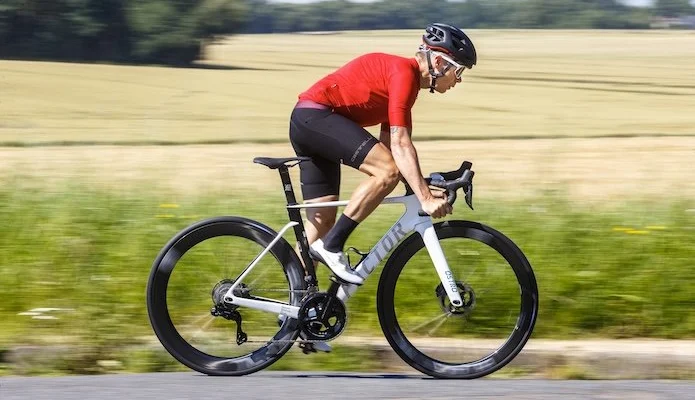
The Factor Ostro VAM is back in a version that’s slightly lighter than its predecessor and, according to the brand, even more aerodynamic. It’s paired with a set of incredibly efficient wheels, creating a package designed for pure performance. Here’s our review of a bike that makes no compromises.
By Guillaume Judas – Photos: ©Vincent Lyky 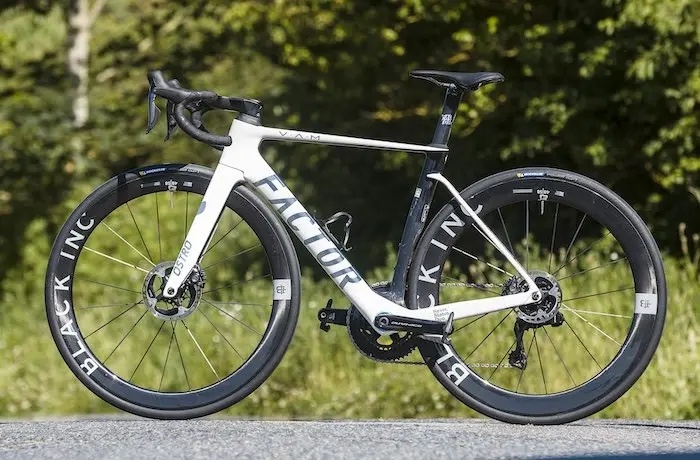
A worthy successor to the Factor One, designed to complement the ultra-light O2 VAM, the Ostro VAM quickly established itself as the pure competition model in the British brand’s lineup upon its release in 2020. It is also the bike model most frequently used by the riders of Team Israel-Premier Tech, across all terrains. Unveiled in February 2024, this new version of the Ostro VAM promises to be slightly lighter (about 50 g for the frame kit) and significantly more aerodynamic, with a 7-watt gain at 48 km/h according to Factor—which, in practical terms, translates to a 0.6-second gain per kilometer at that speed compared to the previous version.
This new Ostro VAM comes with a new pair of Black Inc. wheels developed alongside the frame, featuring a rim height of 48 mm in the front and 58 mm in the rear, an internal width of 23 mm—ideal for 28–30 mm tyres—carbon spokes, and CeramicSpeed ceramic bearings. These are clincher wheels, so they aren’t limited to a 5 bar inflation pressure, and they weigh a claimed 1,280 g per pair despite the tall rims.
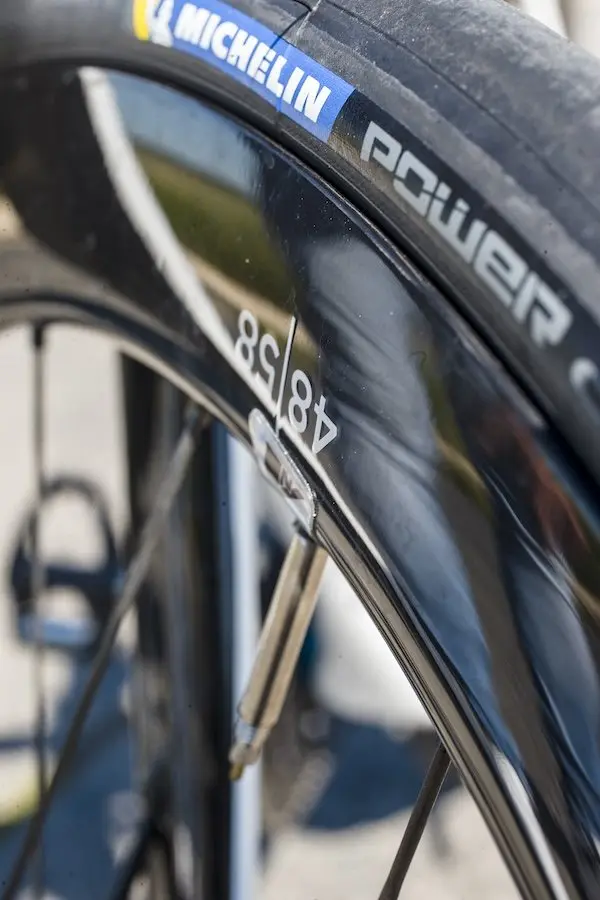 Factor says that by combining the weight savings from the frame and the wheelset, the new bike is roughly 260 g lighter than the previous version. Equipped with Shimano Dura-Ace Di2, a Black Inc. cockpit, a Selle Italia SLR Boost saddle, and Michelin Power Cup tubed tyres, the Ostro VAM tips the scales at 7.282 kg with pedals, a bottle cage and a computer mount in size 52. This makes it one of the lightest bikes used by pros, while also being exceptionally fast. Indeed, few frames with tubes that look so massive weigh as little as 820 g. To achieve this, Factor relied on particularly thin tubes, which you can feel flexing under finger pressure in certain spots. It’s a bike that demands careful handling in certain situations, especially when transporting it or leaning it against a wall.
 New Aerodynamic Standards
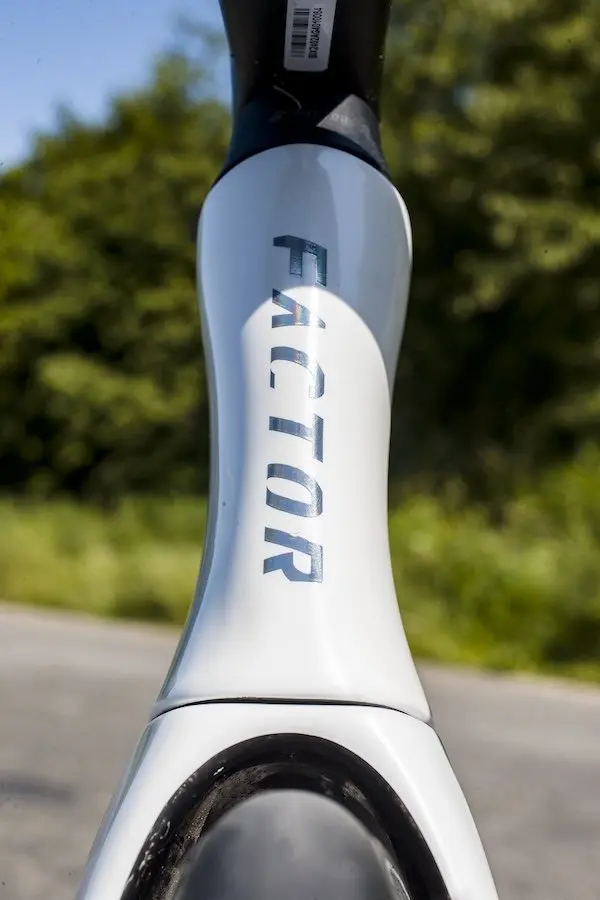
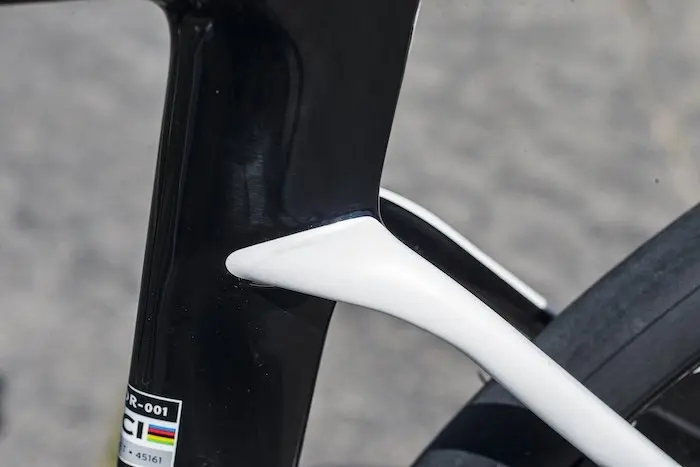
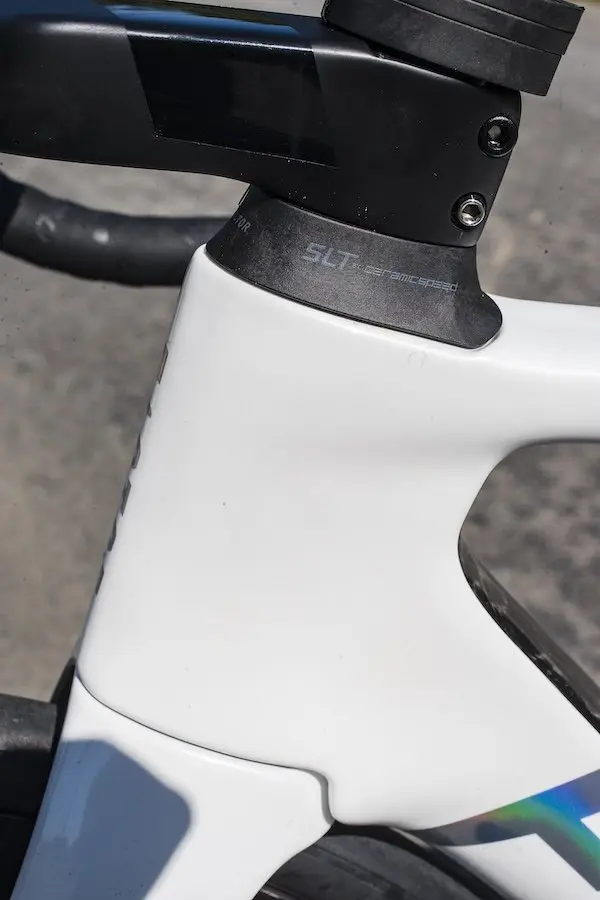
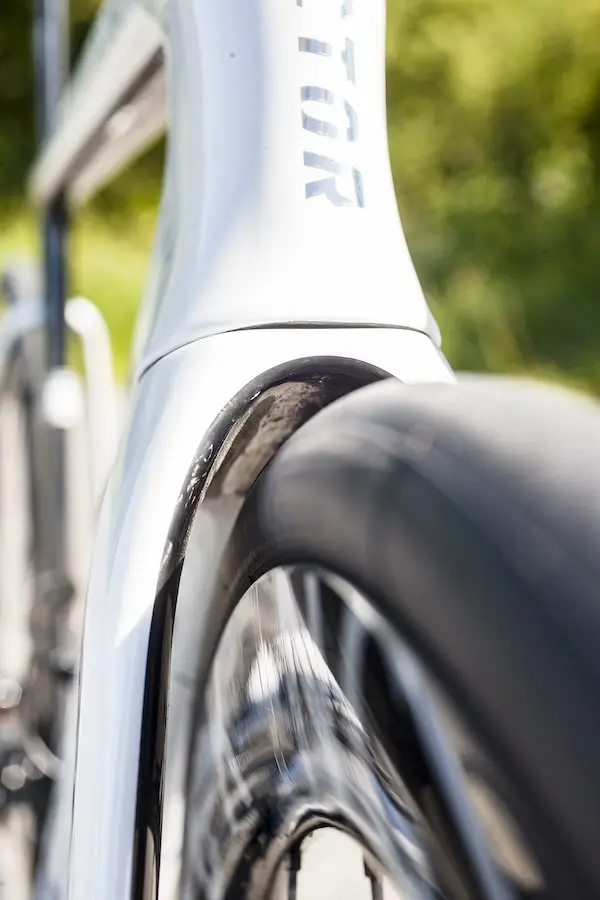
The main aerodynamic gains were achieved by taking advantage of changes to UCI regulations regarding the dimensions of the frame’s various tubes, which no longer adhere to the famous 3:1 ratio—a rule that previously limited tube lengths to no more than three times their width. This let Factor widen certain parts of the frame and refine others in order to optimise the bike’s weight-to-aerodynamics ratio. 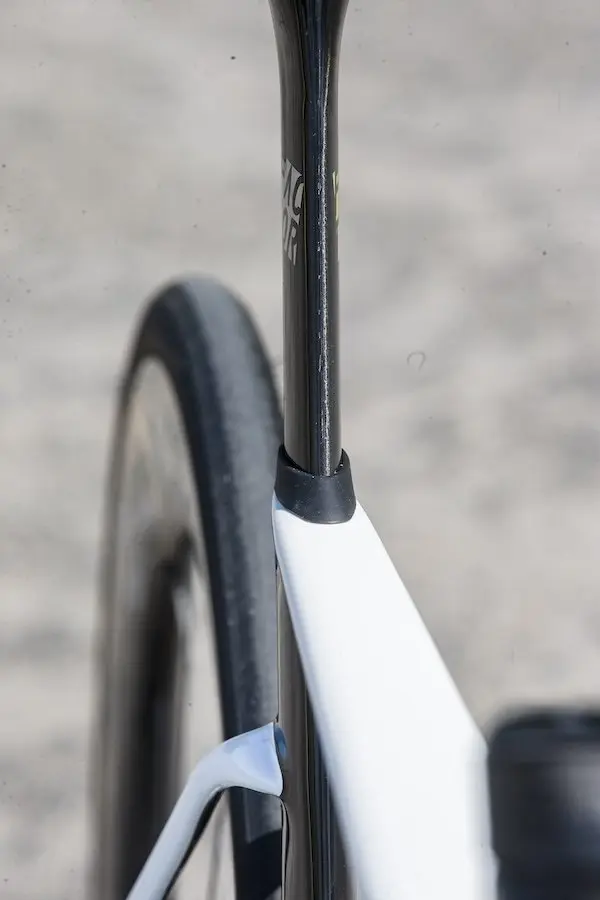 The Ostro VAM stands out first and foremost for its spectacular front end, featuring particularly wide and tapered fork legs, The head tube has an hourglass shape when viewed from the front—designed to direct airflow around the rider’s legs—and is also quite wide when viewed from the side. Next, we notice a cone-shaped top tube that tapers more noticeably toward the seatpost than on the previous Ostro. The seat tube and seatpost are narrower and, when viewed from the front, resemble a blade. Viewed from the side, this same seat tube features a cutout to fit around the rear wheel, thereby optimizing aerodynamics when paired with the 58 Black Inc. wheel and a 28 mm-wide tire. The seatstays are relatively slender, and their shape has been slightly revised compared to the previous version of the Ostro. The bottom bracket remains similar to the first model—wide and imposing—and is connected to rear chainstays that are also quite large.
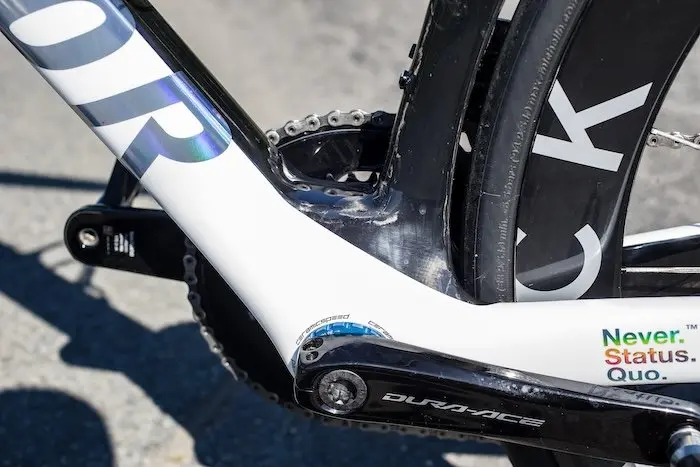
As with most modern bikes, the new Ostro’s frame profile features a front section and lower frame with wide, flat tubes to enhance power transfer, and a slimmer design around the seat area for slightly greater comfort. All of this is combined with tube profiles and dimensions designed to minimize airflow disturbances around the bike at high speeds. In addition, the Ostro VAM accommodates tyres up to 32 mm wide, offering flexibility for riders looking to absorb even more vibrations. However, according to Factor, the bike and wheelset are designed to perform as aerodynamically efficiently as possible with 28-mm tires.
The Ostro VAM is compatible only with electronic drivetrains, as was previously the case. But given the very tapered shape of the seat tube and seatpost, the battery is now housed in the lower part of the frame, near the bottom bracket.
The Black Inc. handlebar retains the same characteristics as the previous version, which was itself much more ergonomic than the Factor One we tested in 2019. It features a flared design, with the lower section 3 cm wider than the upper section. The lower section of the handlebars is parallel to the ground, which helps you feel securely positioned with your hands in this position. The upper section is long and flat, extending perfectly from the brake levers for added comfort. Finally, the top section has a slight curve that allows for a natural wrist position when your hands are at the top of the handlebars—for example, during a long climb. The brake lines run inside the handlebars and enter the head tube from the front, without affecting the bike’s turning radius or even its ability to be easily stored in a car trunk, as is the case, for example, with a Cervélo S5 or a Cannondale SystemSix. Weighing in at around 380 g, the cockpit isn’t particularly light, but it is certainly very stiff.
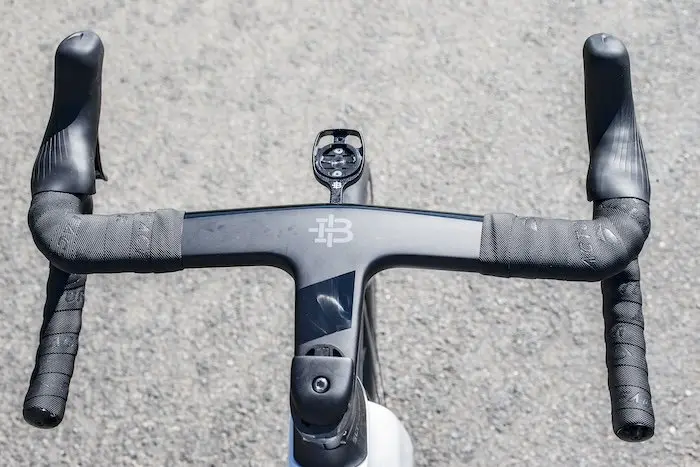 Top-Notch Components
To complement this frame designed for pure performance, Factor has spared no expense by offering a bike equipped with a top-of-the-line groupset: the Shimano Dura-Ace Di2, priced at €13,360. The Ostro VAM is also available with Shimano Ultegra Di2, the new SRAM Red AXS groupset, or SRAM Force AXS. The frame kit is priced at €5,990 (including the cockpit and seatpost), and the wheelset at €3,190. 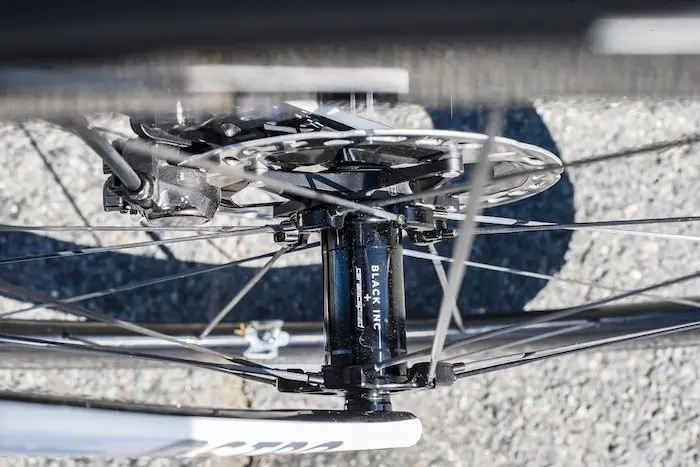 These wheels alone deserve their own article, as they appear to be both highly efficient and versatile, with the weight of a pair of climbing wheels—thanks in particular to the thin carbon spokes— but unlike other wheels that use this technology, they feature spoke tension that can always be adjusted. The top-notch finish is complemented by redesigned hubs with taller flanges to optimize lateral stiffness, and CeramicSpeed bearings that contribute to the wheelset’s astonishingly smooth ride. CeramicSpeed bearings are also found in the T47-format bottom bracket (like Press Fit 30, but threaded), further confirming—if confirmation were needed—Factor’s attention to the finest details to enhance performance on this Ostro VAM 2024.
An Exclusive Bike Among the major brands, two philosophies clash in the realm of high-end bikes. There are those that offer a “versatile” bike designed to do it all, such as Specialized with the Tarmac SL8, Pinarello with the Dogma F, or Cannondale with the new SuperSix Evo. Then there are those that offer two different bikes: one for fast, rolling routes that prioritizes aerodynamics and stiffness, and the other for climbing or greater accessibility that prioritizes weight savings and a more responsive frame. This is the case with Cervélo’s S5 and R5, Orbea’s Orca and Orca Aero, Canyon’s Aeroad and Ultimate, and Bianchi’s Oltre RC and Specialissima, for example. Factor follows suit with the Ostro VAM and O2 VAM—two bikes that are polar opposites in terms of handling, even though the Ostro is used on virtually all terrains by the pros on the Israel-Premier Tech team.
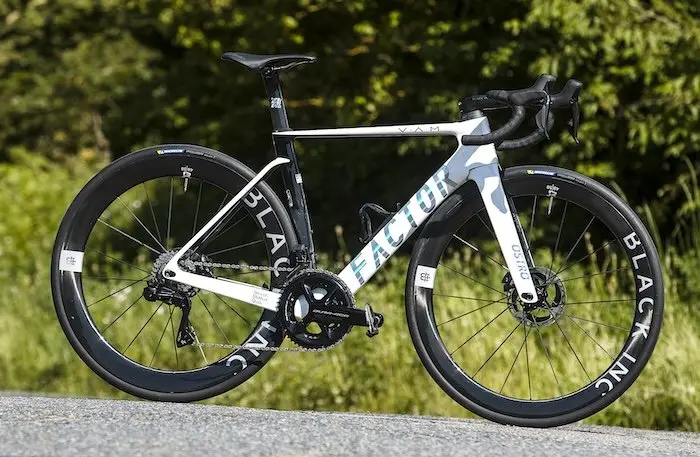
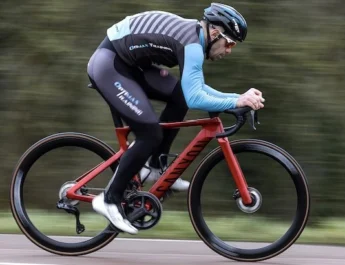
This new version of the Ostro VAM doesn’t differ radically in handling from the 2020 model. It remains a very stiff bike that prioritizes stability and efficiency at high speeds over the more forgiving—though less responsive—ride quality of bikes designed for high-altitude mountain riding. I found this bike particularly demanding under certain conditions, especially in the city on routes requiring frequent accelerations, on short, steep hills, or during interval training sessions with repeated sprints. The bike, however, performed as expected on long, wind-exposed straights, on fast descents, or even on fairly long climbs with a steady gradient.
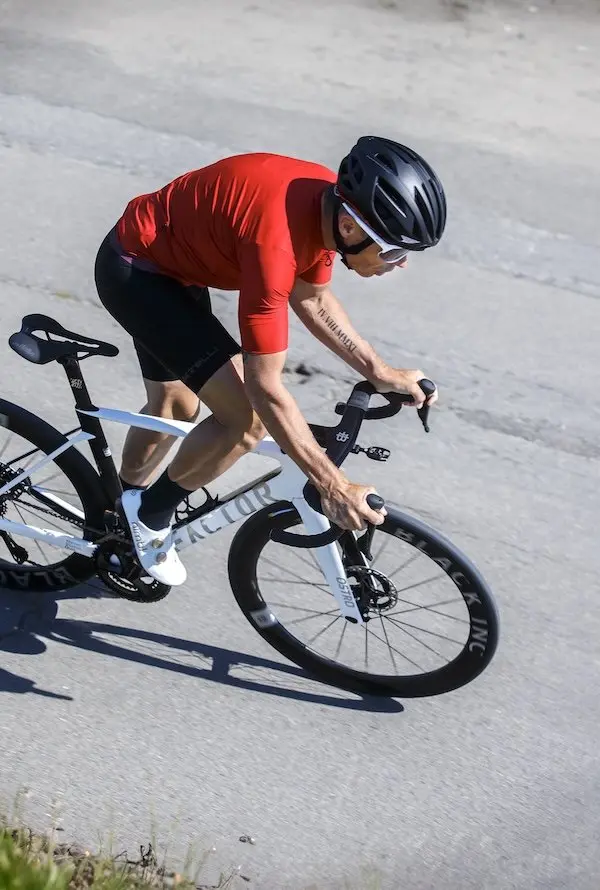
The bike is light on the scale, which translates directly into measurable gains in climb times by maintaining constant power output. This is especially true since the bottom bracket shows no weakness in transmitting every watt of power applied. On flat terrain with a tailwind or crosswind, I also appreciated how easily I could pick up speed and maintain it, thanks in large part to the bike’s stability. The Ostro VAM tracks like it’s on rails, and I never struggled to hold my line, even in 40 km/h crosswinds.
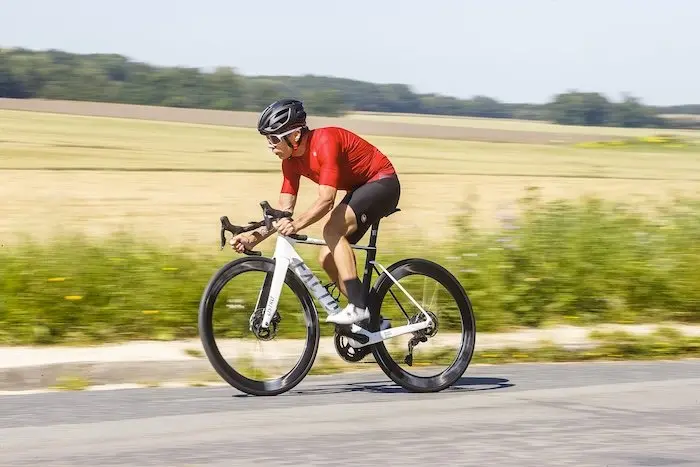
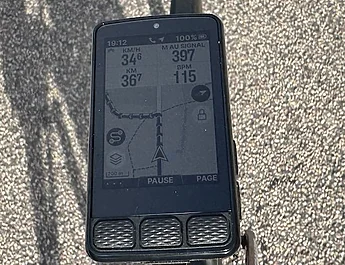
On descents, the bike picks up speed quickly and significantly. During my first ride with the Ostro, I took a straight 8% downhill stretch over 800 m: a quick glance at the speedometer showed 76 km/h, allowing me to set a personal best on a route I’ve ridden nearly 600 times according to Strava. The experience is just as impressive when the gradient is less pronounced on gently sloping downhill sections. The Ostro VAM picks up speed almost like a pure time-trial bike, proving that it’s one of the most efficient road bikes available today when it comes to battling air resistance.
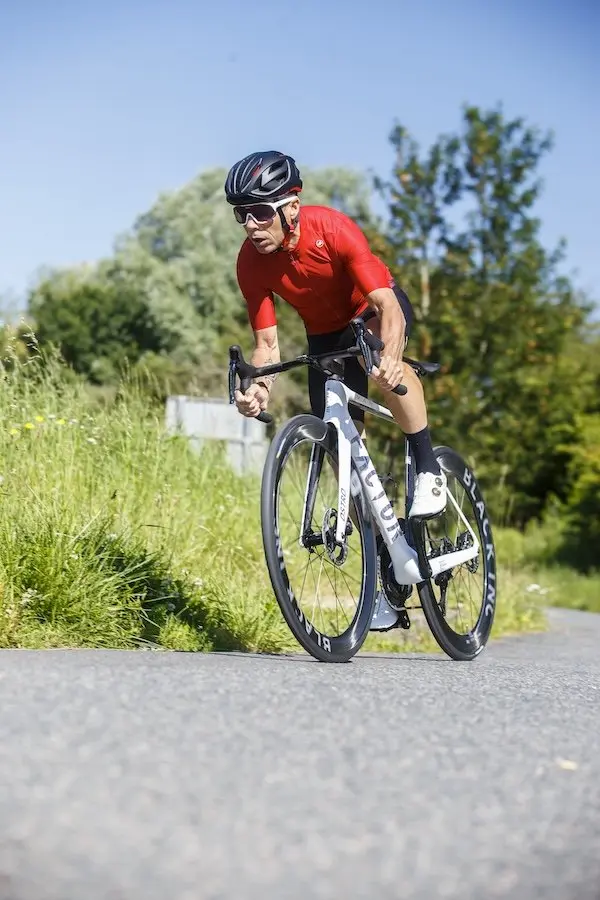
But just like a time trial bike, its stiffness is still very much present—even dominant. As a result of its high stability, the steering feels heavy and can sometimes be difficult to maneuver when avoiding a pothole at the last moment or making small handlebar adjustments while riding out of the saddle. I even had to recheck the headset bearings several times and adjust them to the very limit of play in hopes of maintaining a little freedom in the handlebar movements. As someone who likes to regularly accelerate out of the saddle, I found myself staying seated more often because of this lack of maneuverability, and ultimately struggling a bit at the top of slight inclines or small bumps that I would normally have been able to power through.

Ultimately, despite its reduced weight, its light and smooth-rolling wheelset, its excellent drivetrain, its decent comfort for a bike in this category, and the total absence of unwanted noise throughout the entire bike regardless of the road surface, I found this new-generation Ostro VAM to be quite demanding for non-competitive use. It’s a bike that seems to come alive at speeds over 40 km/h and requires a lot of effort at lower speeds, especially on urban or very hilly routes. It demands perfect coordination between pedalling rhythm and upper-body sway to avoid hitting a wall during the effort, as well as a dynamic cadence to prevent stalling against the frame’s rigidity at the slightest change in gradient. It’s an exciting bike when riding conditions are perfect, but a little less so when fatigue sets in or if you run out of power due to a lack of training. In short, it’s a true pro bike.
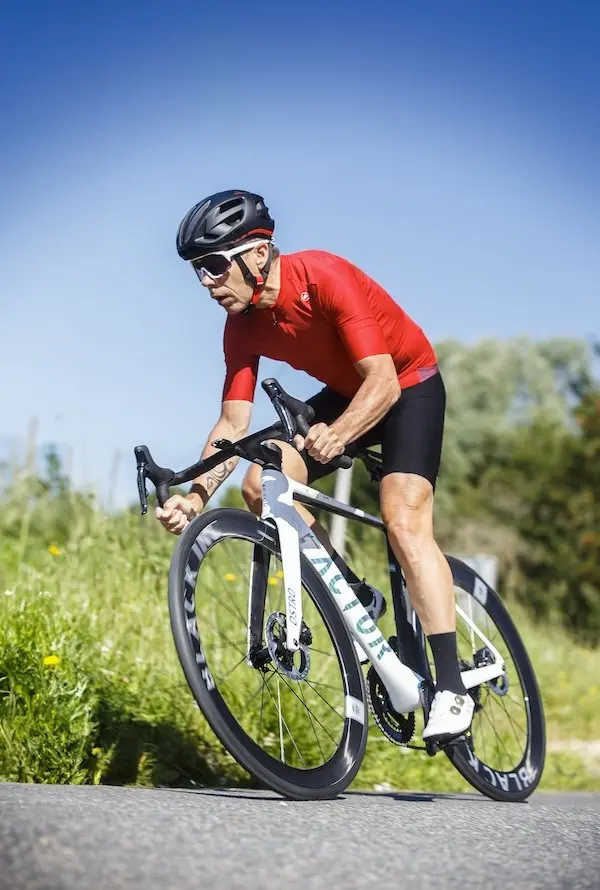
The Factor Ostro VAM 2024 at a glance… Pros: weight, efficiency on the flats and descents, stability, build quality Cons: demanding bike, steering feels a bit heavy Frame: TeXtreme®, Toray®, Nippon Graphite® Pitch-Based Fiber – Fork: Ostro Wide – Handlebar/stem: Black Inc. – Brakes: Shimano Dura-Ace 160/140 mm – Rear derailleur: Shimano Dura-Ace Di2 12-speed – Shifters: Shimano Dura-Ace Di2 12-speed – Cassette: Shimano Dura-Ace 11-30 – Chain: Shimano Dura-Ace 12-speed – Crankset: Shimano Dura-Ace 12-speed 52-36 – Wheelset: Black Inc. 48/58 – Tires: Michelin Power Cup 700×28 – Saddle: Selle Italia SLR Boost Superflow Carbon – Seatpost: Ostro – Weight: 7 kg in size S without pedals – Sizes available: 7 – Price: €13,360 – Frame kit: €5,990. |
Share the post "Review of the new Factor Ostro VAM"