
Share the post "The size of Tadej Pogacar’s cranks: innovation or madness?"
In the world of professional cycling, every detail counts. From the shape of the frame to the wheel components, every element is meticulously designed to optimize riders’ performance. However, sometimes a champion dares to defy established conventions. That’s the case this year with Tadej Pogacar, the talented Slovenian cyclist who, according to several media outlets, has reportedly opted for 165 mm cranks on his drivetrain—well below the usual standard for someone of his height, which would typically be around 172.5 mm. This seemingly counterintuitive decision raises questions about the logic behind this choice and may well reveal an innovative approach to professional cycling.
By Jean-François Tatard – Photos: Tadej Pogacar’s Instagram / DR
Although surprising at first glance, Tadej Pogacar’s decision to use shorter-than-standard cranks is certainly generating interest. This bold and potentially risky move paves the way for an in-depth examination of the benefits it might offer. To shed light on this topic, we sought the opinion of Guillaume Girout, leader of the DAGG group and a recognized expert in postural studies, who has himself been using this setup for several years now. In fact, he was the first to mention it to us and to successfully convince us to equip our bike with cranks even shorter than those used by the Slovenian champion—specifically, 162.5 mm on our Factor Ostro VAM.
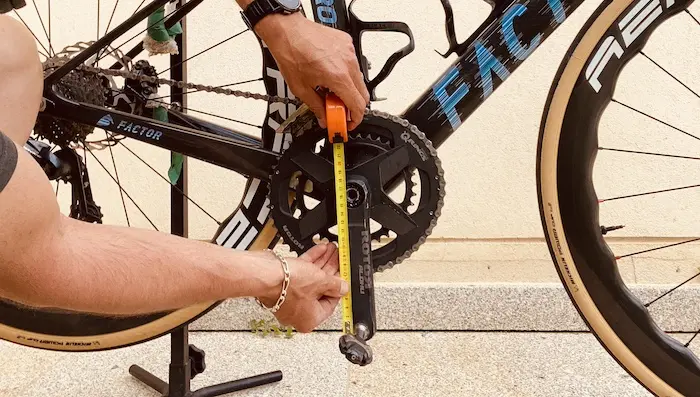
Our previous discussions with Guillaume revealed a crucial point: “Shorter cranks promote a faster leg turnover.” In Pogacar’s specific case, this reduction in crank length could lead to an increase in his cadence. This ability to maintain a high cadence—particularly valuable on steep climbs like those we’re seeing in the Giro—could be a significant advantage in the pursuit of performance.
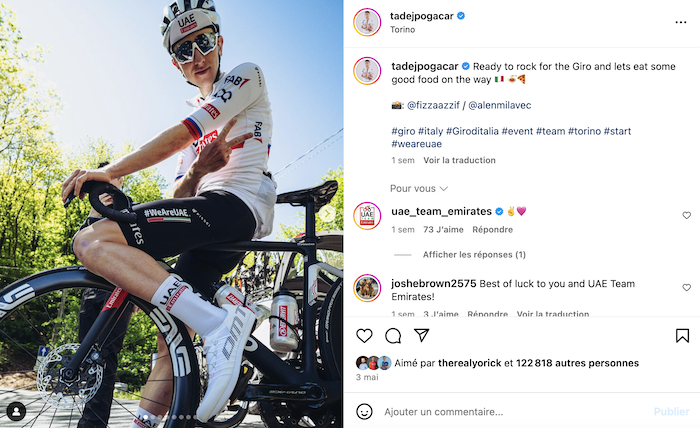
Guillaume Girout also points out that “an interesting aspect of shorter cranks is their ability to improve aerodynamics.” He adds: “By reducing the length of the lever arm on which the legs exert their force, the rider can potentially reduce aerodynamic drag.” This reduction in air resistance is part of what’s known as marginal gains—but at this level of competition, every advantage counts—a particularly crucial consideration during time trials or flat stages where every second gained matters. Our observations during the time trial stage of the 2024 Giro confirmed this theory, highlighting the potentially significant impact of this technical choice on race performance. Shorter cranks also mean a bottom bracket that is potentially lower on the frame relative to the ground, which offers less wind resistance and greater stability at high speeds.

Finally, shorter cranks allow for a more aggressive riding position, with a lower and more forward handlebar position. This is because, by reducing the angle formed by the torso and thighs with each crank rotation—thanks to the shorter lever arms—the rider can lean forward slightly more, a riding position already seen on time-trial bikes. This additional consideration reinforces the idea that Pogacar’s choice, though controversial, is the result of a meticulous analysis by Team UAE of the many facets of cycling performance.
Guillaume Girout also points out that “another potential advantage of shorter cranks is reduced muscle fatigue.” By shortening the distance his legs travel with each pedal stroke, Pogacar could thereby reduce the strain on his leg muscles. This reduction in muscular load could allow him to maintain a high level of performance over an extended period, particularly during demanding mountain stages. This observation highlights the importance of ergonomic considerations—such as crank length—in managing endurance and recovery during high-level cycling competitions.
And yet, despite the potential benefits mentioned above, Pogacar’s decision to use 165-mm cranks remains controversial. Some cycling experts question the validity of this approach. Franck Perigois, another expert consulted for this article, points out “that the potential benefits could be minimal compared to the risks of compromising power and pedaling efficiency.” This caution underscores the importance of carefully weighing the trade-offs between potential benefits and possible limitations when adopting new technologies or technical configurations in the world of professional cycling.
Ultimately, the real impact of Pogacar’s decision to opt for shorter cranks will remain to be seen over time. However, what is undeniable is that this decision is fueling passionate debates within the cycling community. It also demonstrates the Slovenian champion’s boldness and determination to push the boundaries of his sport. This decision is not merely a technical matter; it embodies the innovation and relentless drive for improvement that characterize great athletes.
As the spotlight turns to upcoming competitions, the entire cycling community is holding its breath, waiting to see if Pogacar will prove that his revolutionary technical choices live up to his immense talent on the bike. In the meantime, one thing is certain: the cycling world will continue to be amazed by these bold decisions, which demonstrate the ability of champions to constantly push the boundaries and redefine the paradigms of their sport.
Share the post "The size of Tadej Pogacar’s cranks: innovation or madness?"