Share the post "The Ups and Downs of Cycling: Understanding Performance Fluctuations"
In the world of cycling, success is not always linear. Seasons of glory sometimes alternate with periods of disappointment, even when efforts and preparation seem identical. How can these performance fluctuations be explained? On 3bikes, we try to find initial answers.
By Jean-François Tatard – Photos: depositphotos.com
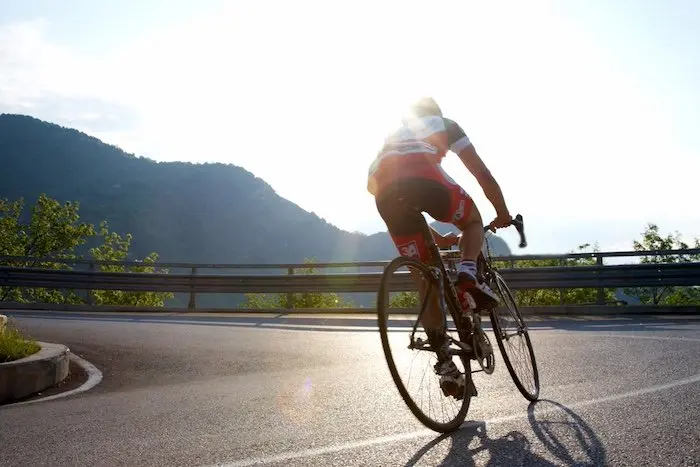
First, a cyclist’s physical fitness, or indeed that of any other athlete in any sport, is the result of various factors, including training, recovery, nutrition, and general health. Although athletes may follow a rigorous and balanced training program from year to year, their bodies may react differently depending on various variables, such as accumulated fatigue, physiological adaptations, and potential injuries. Therefore, even if the efforts expended are comparable from one season to the next and you have done exactly the same rides at the same time and speed or power, the individual response of each athlete can vary, which partly explains the observed fluctuations in form.
Also a question of mental state
Next, it seems important to us to emphasize that an athlete’s mental disposition plays a crucial role in their sports performance. Self-confidence, concentration, motivation, and stress management are all factors that can fluctuate depending on various internal and external influences. Personal events, external pressures, or even perceptions of past performance can influence an athlete’s mental state, thus impacting their ability to express their full potential on the road.
Imagine a world-renowned cyclist who, after suffering the sudden loss of a family member just before a major competition, sees their concentration and motivation affected. Despite months of intensive training, they struggle to focus on the race and channel their energy effectively, resulting in a performance below their usual capabilities.
In another way, suppose a young cycling prodigy who is making a splash on the international scene. Under the media spotlight, they feel overwhelming pressure to maintain their winning streak and meet the expectations of their fans and the media. This additional pressure can weigh heavily on their shoulders, affecting their self-confidence and their ability to perform at the highest level.
Also, we had already discussed this in a previous article on 3bikes.fr, but imagining a cyclist who experienced a memorable failure in a previous competition, such as a spectacular crash or a costly mechanical failure, they might struggle to overcome this traumatic experience. Recurring thoughts of this unfortunate event can undermine their confidence in their own abilities and make them more cautious or hesitant during subsequent races.

Finally, we know several examples of this type, but a cyclist going through a difficult divorce during the competition season. Family tensions and personal problems can have a considerable impact on their emotional and mental state, resulting in a drop in motivation, a decrease in concentration, and a performance below their usual level on the road.
These examples illustrate how personal events, external pressures, and perceptions of past performance can influence the mental and emotional state of a cyclist or other athlete, regardless of the sport, thus impacting their sports performance.
Other limiting factors
In addition, the environmental context in which an athlete operates can also influence their performance. External factors such as weather conditions, altitude changes, logistical demands, and disruptions in the social environment can all impact how an athlete feels and performs during competitions.
Finally, it is important to recognize the multidimensional aspect of sports performance, which goes beyond the athlete’s physical and mental capabilities alone. The social and cultural environment in which an athlete evolves, including the support of their entourage, technical supervision, available resources, and media pressure, especially at the professional level, can also significantly influence their overall performance.
So, to conclude, fluctuations in form and performance observed in athletes can be attributed to a complex combination of physiological, mental, and environmental factors. Understanding this dynamic not only helps explain seasonal variations but also helps athletes optimize their preparation and recovery, as well as sports journalists or outsiders to analyze and interpret sports results in a more nuanced way.
=> SEE ALSO: All our Coaching articles
Share the post "The Ups and Downs of Cycling: Understanding Performance Fluctuations"