Share the post "Review of the Lapierre Aircode DRS 6.0"
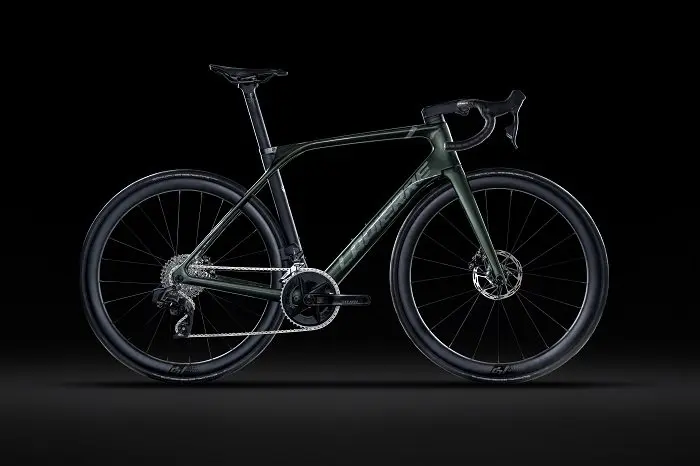
Born largely out of the Groupama-FDJ team’s sprinters’ desire to have the fastest bike possible, the Lapierre Aircode DRS is a speed-oriented bike designed to win races. But what about the rider who’s looking for a bit of versatility on all types of terrain and who doesn’t necessarily plan to pin a race bib on for a race? Related question: how does it handle in the mountains when you’re riding at low power in the granny gears and putting less stress on the frame? The answer comes from the 6.0 version of this frame family, a model priced at just €5,299.
Text: Olivier Dulaurent – Photos: ©Lapierre, ©3bikes.fr
Across the lineups of many brands on the market—and particularly among the highest-performance bikes—two philosophies clash: first, there are brands that, broadly speaking, offer one bike for mountain riding and another for speed on flat terrain. Then there are the others that aim to offer a versatile bike capable of performing on all terrains. Lapierre falls into the first category, so there’s a clear distinction between the Xelius—designed for climbers—and the Aircode, which is the focus of this article and is geared more toward sprinters. In this regard, and following a long collaboration with the Groupama–FDJ professional team that ended in late 2023, this bike was developed at the request of riders focused on the Classics and sprints, led by Arnaud Démare. Consequently, it’s easy to imagine that the development focused on creating an aero and stiff bike—two characteristics that, at first glance, seem to conflict with versatility and climbing ability.

The Aircode DRS was released in 2021, marking Lapierre’s third iteration of its aerodynamic model, which had already been put to the test by Arnaud Démare the previous year in several notable races.
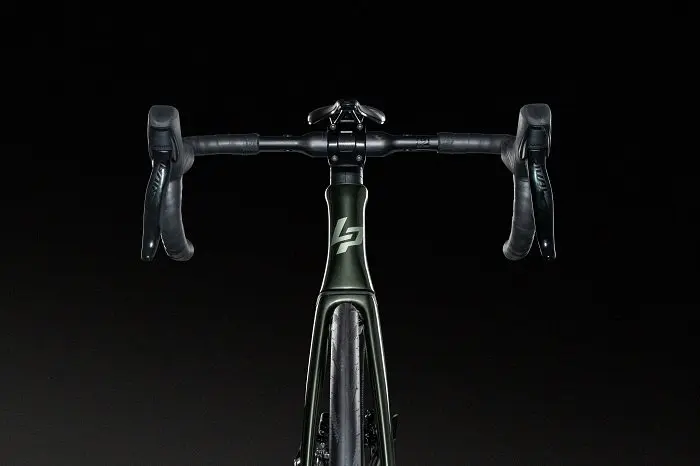
The tube shapes are derived from NACA (National Advisory Committee for Aeronautics) profiles, and in line with a general trend, the tire clearance allows for the use of 28 mm tires, although 25 mm tubeless tires were tested during this evaluation.
The DRS is also designed to address two issues commonly associated with aerodynamic road bikes: weight and comfort. In terms of weight—even taking into account the more aerodynamic tube shapes—Lapierre has managed to reduce the frame’s weight by more than 80 g, bringing it down to around 900 g.
In terms of comfort, the carbon fiber configuration and material selection have improved rear-end flexibility by 12%.
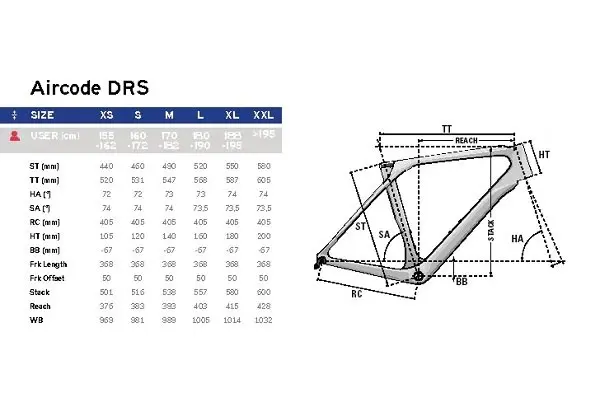
In terms of geometry, the bike’s agile and responsive handling is emphasized by a relatively short wheelbase and chainstays measuring just 405 mm—a rare measurement with modern drivetrains and disc brakes.
On the aerodynamics front, the stock handlebars are designed to accommodate aerodynamic aerobars (included with the bike), which can potentially transform the bike into a time trial machine (subject to limitations related to the frame geometry) or for competing in a duathlon or triathlon.
The seat tube is “isolated” from the rest of the frame, which theoretically allows for some flex since it isn’t connected to the seat stays. The seat stays connect to the top tube here rather than to the seat tube. This is an original alternative among modern designs, as opposed to the now-classic lowered seat stays. 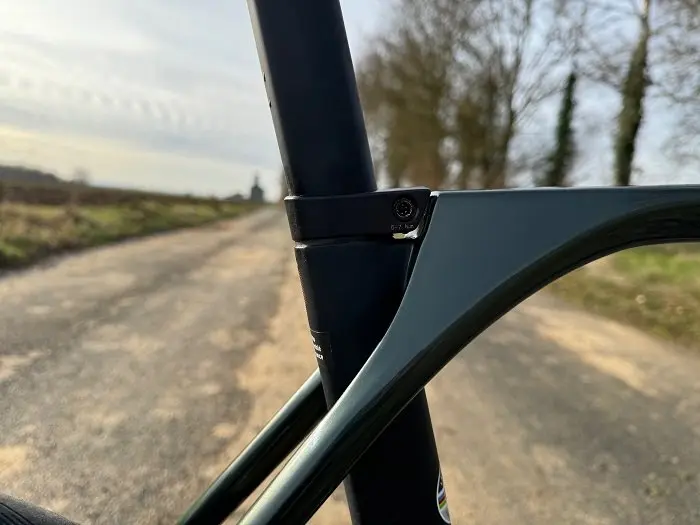
 On the road
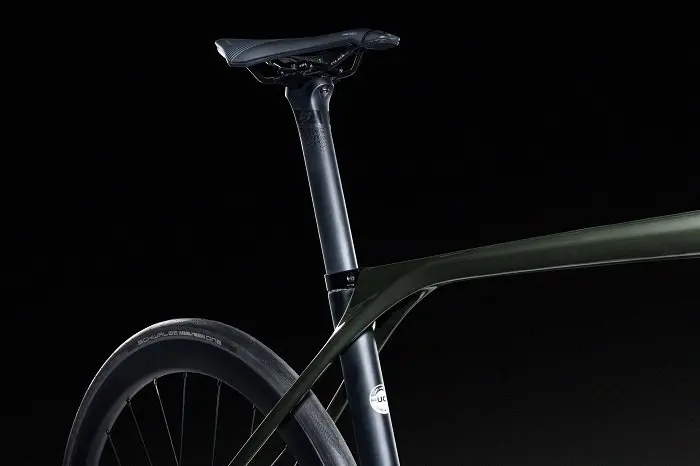
The test bike is an XL frame, the largest size available. Note that with the saddle extended to its maximum (the limit is visible on the seatpost), the saddle height is approximately 84.5 cm. While this will obviously be sufficient for the vast majority of cyclists, it may be a limitation for taller riders. In fact, the XXL size is no longer available. In terms of geometry, compared to standards for this size, the bike is within the norm for length (today we prefer to use the “reach” measurement rather than the top tube length) but is on the shorter side (a measurement now determined by “stack” rather than the length of the head tube). Furthermore, at 73.5° in size XL, the seat tube angle is relatively upright for this size, while it falls within the standard range for intermediate and smaller sizes (73.5° and 74°, respectively).
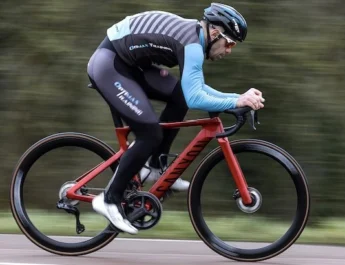
From the very first pedal strokes, the bike feels stiff but not excessively so. The bike as a whole doesn’t flex, yet it doesn’t feel sluggish either—and this is a genuinely pleasant surprise, given that its focus on speed and its ability to satisfy a rider like Arnaud Démare had raised fears of the “worst” in terms of how accessible its handling would be. Its stiffness also seems very consistent and perfectly balanced between the front (head tube) and the middle/rear (especially the bottom bracket and chainstays). This consistency makes it very pleasant and, ultimately, quite easy to handle even when riding at an endurance pace. This aspect contrasts with other bikes, such as the Cervélo R5 we tested last year, whose very stiff head tube stood out in contrast to the stiffness around the bottom bracket and even required an adjusted riding position when standing up out of the saddle. Here, on the other hand, there’s no need to adjust your form when standing up on the pedals.
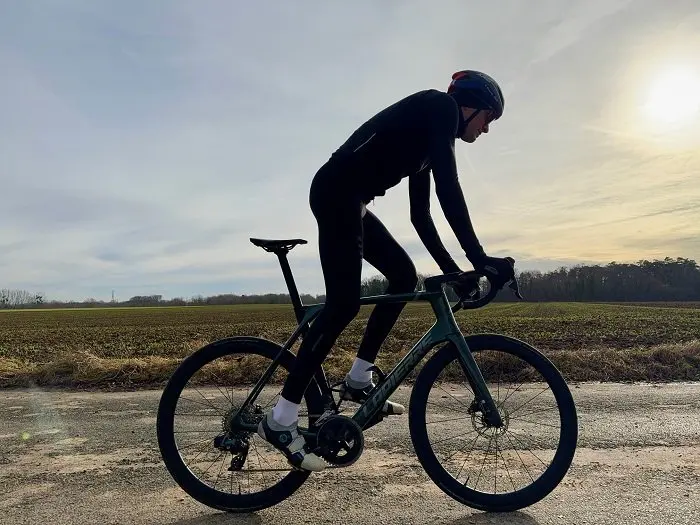
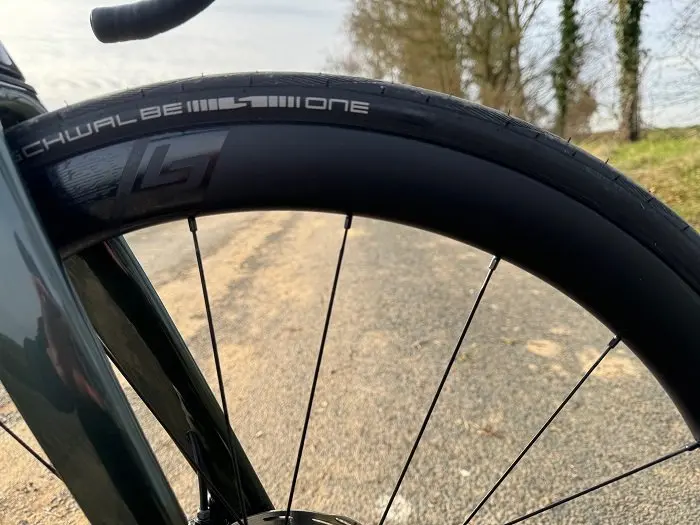
The 42-mm-tall in-house wheelset complements this handling by being versatile and sufficiently flexible under load. For use more geared toward pure performance—and racing in particular—a pair of even stiffer, taller wheels would be an excellent addition.
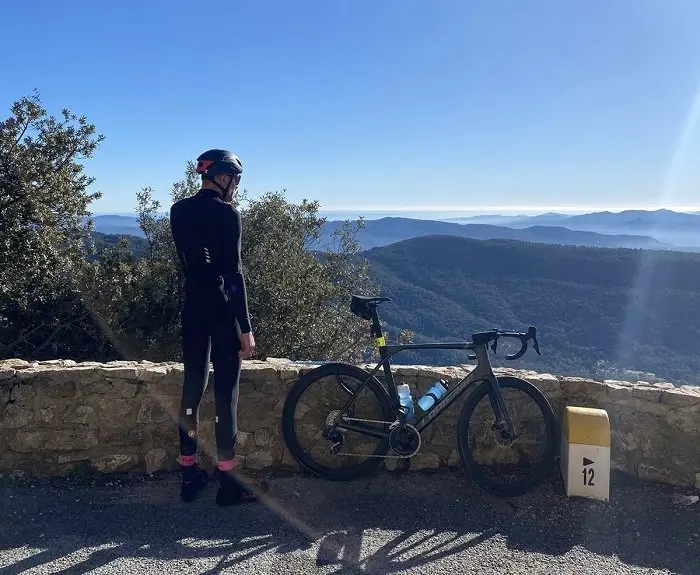
Its stiffness also seems very consistent and perfectly balanced between the front (head tube) and the middle/rear (especially the bottom bracket and chainstays).
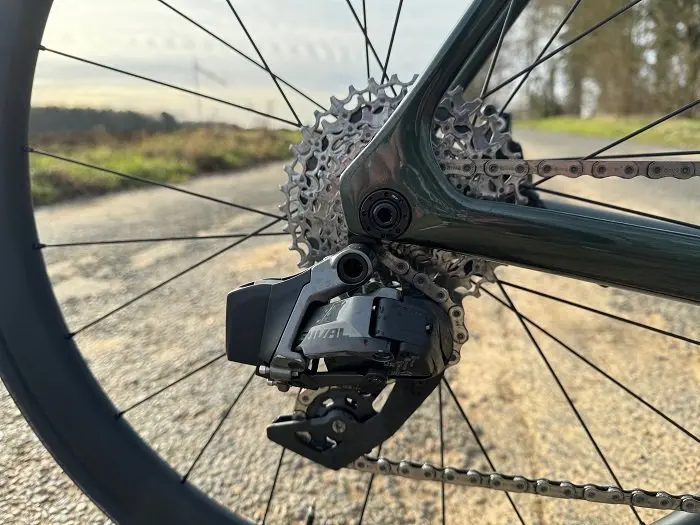
One aspect may be a bit disconcerting during the first few rides—or even beyond, depending on your preferences—and that is the gear selection. The test bike is equipped with a 48/35 chainring combination and a 10/36 cassette. While the gear range is ideal for high mountains, on less steep terrain the changes in cadence when shifting from one sprocket to another can sometimes be disruptive as you approach your own physical limits. You then have to choose between a gear that’s “too small” and one that’s “too big.” 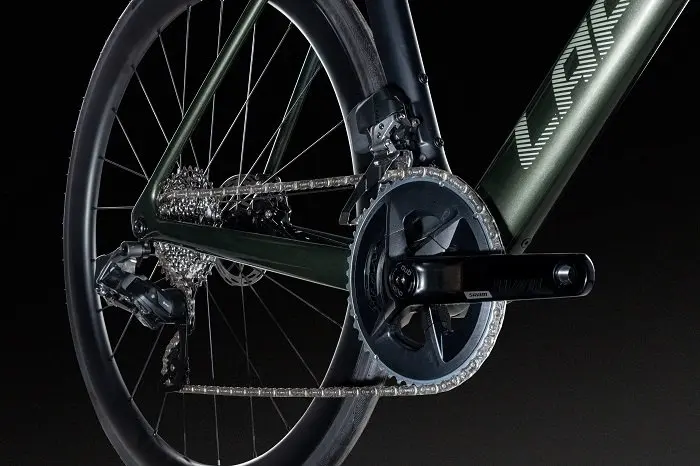
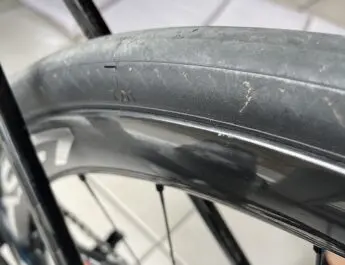
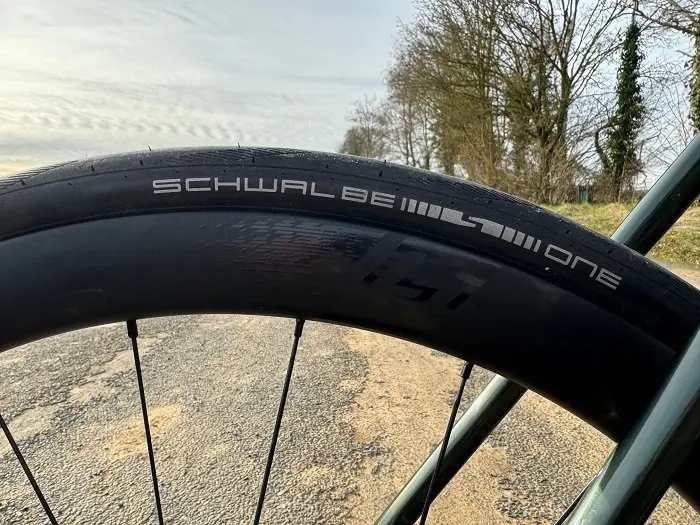
 Comfort is definitely there, despite the tires having a 25 mm width—which is “only” 25 mm by today’s standards. However, the width of the rims makes them seem almost like 28 mm tyres. Their grip was also outstanding, whether on dry or wet surfaces. It’s worth noting that there were two flat tyres (one on each wheel) during the very last ride for this test. Only the first one could be sealed by the sealant inside the tire. For the second, the hole was too large to be sealed, but since I was close to home (1 km) and still had enough air pressure, I was able to make it back without any issues.
On descents, the Lapierre Aircode strikes a good balance between stability and handling, aided by precise wheels that are not very sensitive to crosswinds—likely due to the width of the rims as well as their profile, which is well-balanced between aerodynamics/stiffness and crosswind sensitivity/handling. The bike handles tight turns perfectly, and reaching speeds close to 80 km/h is no problem either.
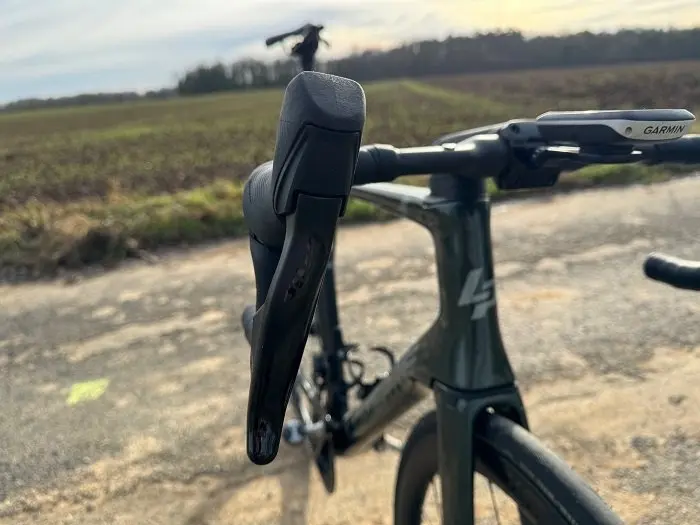
When going downhill, the only thing that falls short of expectations is the braking from the SRAM Rival groupset: the brake lever has a rather spongy travel, part of which is “dead,” it’s difficult to modulate both light decelerations and hard braking. The rider knows the brakes can apply light or heavy force, but has trouble predicting which will happen. Even with constant pressure on the lever, the deceleration itself isn’t consistent. Another example: in a peloton where slight corrections are sometimes sufficient but necessary, the long lever travel makes the process a bit disruptive. And when the bike needs to brake as hard as possible over a short distance—typically before a hairpin turn—the spongy feel prevents the rider from consistently achieving the best possible deceleration. Otherwise, and although it is only the American manufacturer’s third-tier groupset, the SRAM Rival delivers nothing but satisfaction with fast and precise shifting, whether for the cassettes or the chainrings.
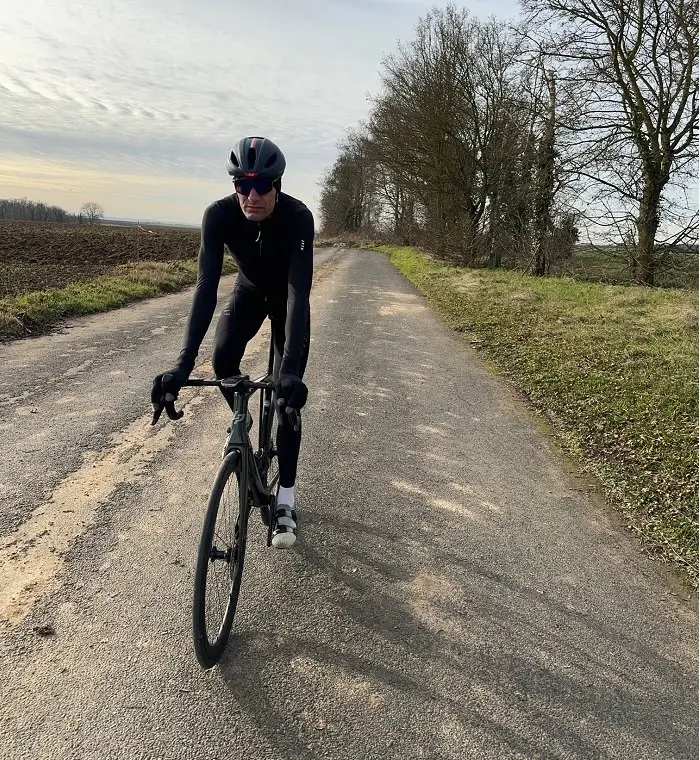
Ultimately, the Lapierre Aircode DRS 6.0’s excellent performance (versatility, speed, comfort) must be weighed against its retail price of €5,299. While this is still a significant amount, the frame used here is the same one that Groupama–FDJ riders were still using in 2023 and is still being used by the women of the FDJ–Suez team this year. And even though the SRAM Rival groupset isn’t among the most prestigious on the market, it keeps the bike’s price at one-third that of most bikes competing on the World Tour. The bike’s overall performance was a pleasant surprise given its supposed specifications. Indeed, given the bike’s positioning, one might have expected a pure competition machine, unyielding under stress. However, the Lapierre Aircode DRS also handles rides at a leisurely pace or climbs where low gears are essential with equal ease. In short, it offers excellent versatility.
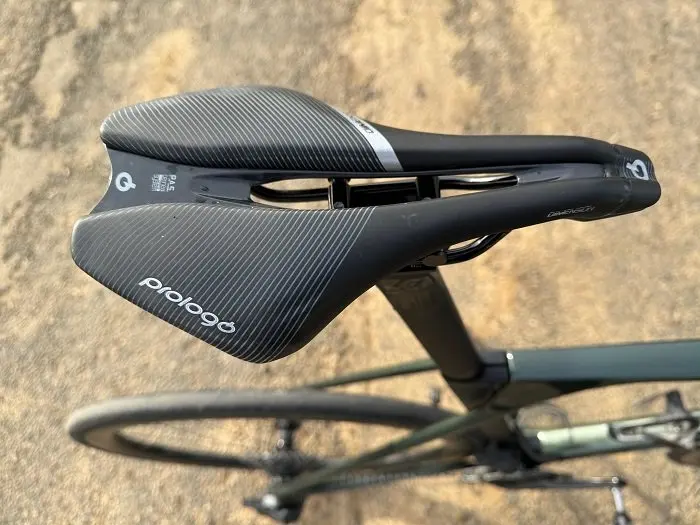
The Lapierre Aircode DRS 6.0 at a glance… Pros: well-balanced stiffness, versatility, stability-to-handling ratio, adequate comfort, smooth-rolling wheelset, fast and precise shifting, reasonable price Frame: Aircode DRS Disc Thru-Axle UD Superlight Carbon – Fork: Aerostorm DRS Disc Thru-Axle UD Superlight Carbon – Handlebar: Lapierre Aero UD Carbon, width: 400 mm (XS, S), 420 mm (M, L, XL), Drop: 130 mm, Reach: 80 mm – Stem: Lapierre, -5.7°, Ø: 31.8 mm, L: 90 mm (XS, S), 100 mm (M), 110 mm (L), 120 mm (XL) – Wheelset: Lapierre Road Disc Carbon 700x21c, 42 mm rim height, XDR driver, Tubeless Ready – Tires: Schwalbe ONE Performance TLE 25-622 – Saddle: Prologo Dimension STN rails – Seatpost: Lapierre Aero Carbon, 0 mm offset – Brakes: Sram Rival hydraulic 160/140 mm – Front derailleur: SRAM Rival AXS 12-speed – Rear Derailleur: SRAM Rival AXS 12-speed – Shifters: SRAM Rival AXS 12-speed – Cassette: SRAM Rival 10-36 – Chain: SRAM Rival AXS 12-speed – Crankset: SRAM Rival AXS 12-speed 48-33 170 mm (XS/S) / 172.5 mm (M/L) / 175 mm (XL) – Number of sizes: 5 – Price: €5,299 |
=> SEE ALSO: All our Test Articles
Share the post "Review of the Lapierre Aircode DRS 6.0"