Share the post "Good deals: how to avoid scams?"
In the world of cycling, the quest for quality equipment at attractive prices can sometimes lead to insidious traps. This warning stems from a real-life experience: the attempt to purchase Shimano S-Phyre cycling shoes at an enticing price of €58, which turned into a costly lesson. It was obviously too good to be true.
By Jean-François Tatard – Photos: Pexel.com / DR
The temptation to take advantage of exceptional offers on “exotic” sites can quickly turn into a bitter experience. The investigation begins with an enticing order for Shimano S-Phyre cycling shoes at €58 instead of €370, but the story takes an unexpected turn. It must be said that the good deal seemed serious: the advertisement was on Facebook, a well-known social network. We became interested, we asked ourselves questions, we thought about it for a few days, but the advertisement continued to follow us on the news feed of one of our favorite social networks.
The promise of massive discounts on high-quality cycling equipment is often the initial trap. The enticing advertisement attracts cycling enthusiasts with unbeatable prices, but behind these offers often hide malicious intentions.
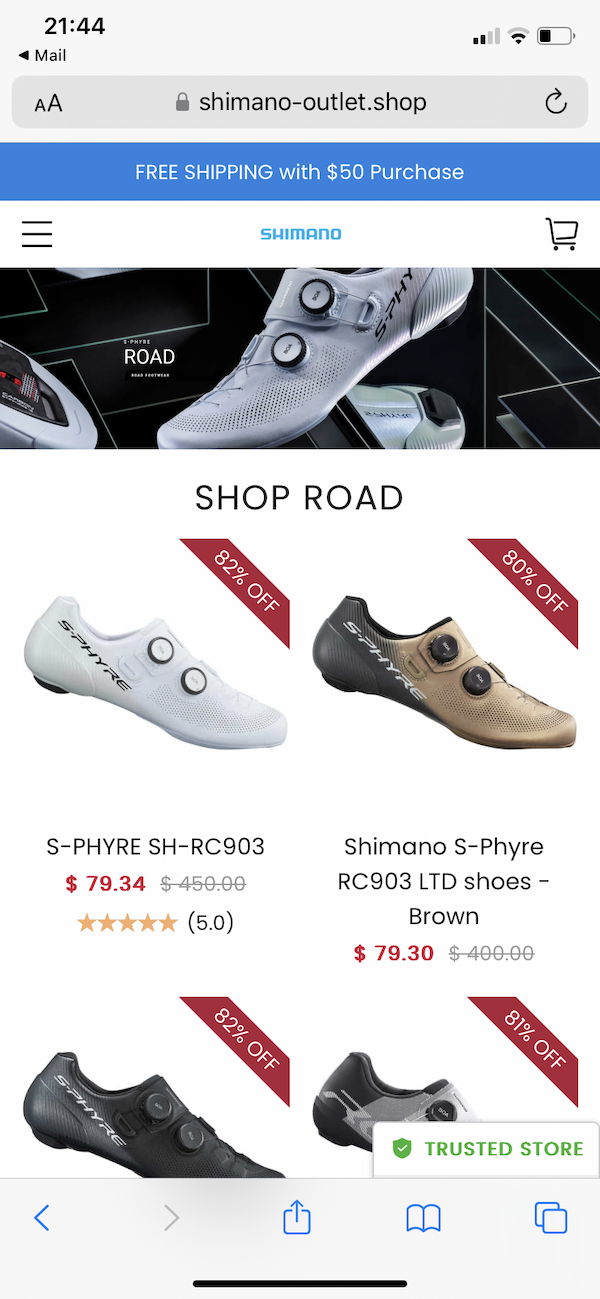
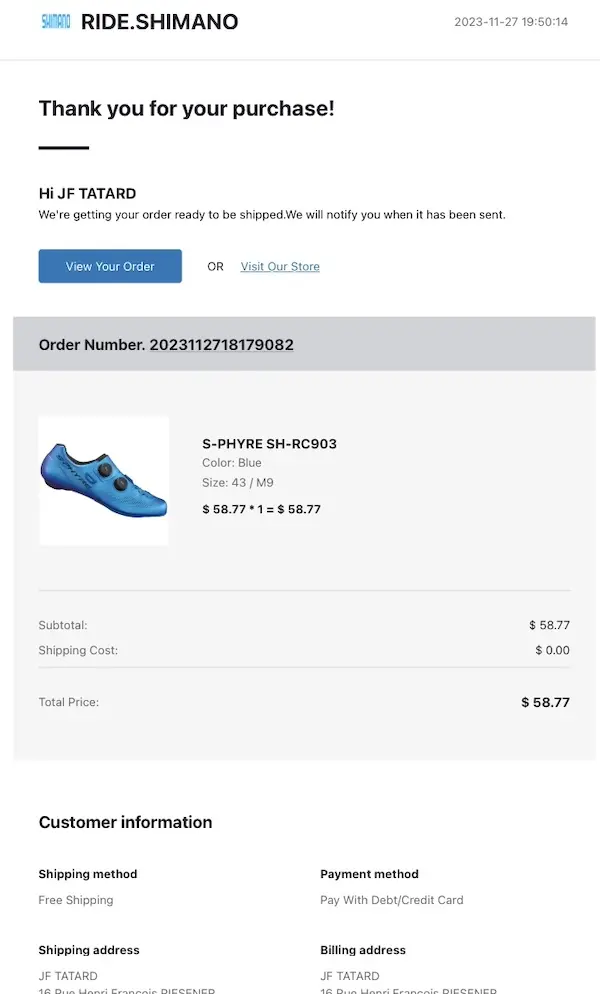
The decision to verify the reliability of such an offer thus led us to a loss of €58 without any receipt of the coveted shoes. After more than two months of delay, still nothing in the mailbox. Our reminder emails changed nothing. No response. And returning to the site where the product was ordered, the delivery is indicated “in processing”. We finally had to accept the idea that the much-hoped-for shoes had vanished, perhaps never even existed, just like the €58. A disappointing experience, but the investment now serves to warn our readers of potential dangers.
So what’s our advice? Thoroughly explore the tell-tale signs of these kinds of suspicious shopping sites. This will help you prevent future disappointments. From dubious translations to non-existent refund policies, or email addresses that don’t respond, it’s crucial to be vigilant before finalizing a purchase. Websites are obligated to publish legal notices, so you can verify the name, company name, address, and contact information of the sellers. We also advise you to enter the name of the site or product into a search engine associated with the term “reviews” or “scam”. In the search results, you can check if other internet users have already had bad experiences with the seller.
Finally, be especially wary of offers that are too good to be true. Shoes for €58 when they are sold for €350, that really looks like a trap for idiots… But we fell for it!
This unfortunate experience highlights the importance of raising awareness within the cycling community about the potential risks when purchasing online. The pursuit of savings should not compromise the financial security of cycling enthusiasts. Let’s stay informed, share our experiences, and protect the community from online scams.
=> SEE ALSO: All our Magazine articles
Share the post "Good deals: how to avoid scams?"