Share the post "Lactate in Cycling: Deciphering a Key Performance Indicator"
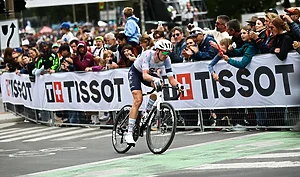
The world of high-level cycling relies on a multitude of factors to consider, and coaches are constantly looking for innovative ways to maximize their athletes’ performance. Among the cutting-edge tools in this quest for excellence, lactate measurement has become an essential practice in recent years…
By Jean-François Tatard – Photos: DR
Lactate is a biological molecule and corresponds to the ionized form of lactic acid. Before understanding the impact of lactate on cycling performance, it is essential to demystify its formation. It is the final product of anaerobic glycolysis (fermentation). If glucose consumption exceeds oxygen supply, i.e., during intense effort, pyruvate from glycolysis transforms into lactate. Contrary to a common misconception, lactate is not responsible for fatigue, but rather an indicator of effort intensity. Lactate is the primary indicator of aerobic conditioning for athletes. The body always produces a minimum amount during exercise, but a so-called aerobic intensity (low intensity) maintains a form of balance between its production and elimination, whereas, on the contrary, a higher intensity is not enough to eliminate it, thus creating muscle fatigue.
Thus, coaches measure blood lactate levels after intensive effort. This analysis provides insight into the athlete’s effort tolerance. Lactate threshold zones are identified, defining the limits within which the cyclist can maintain optimal performance. This data is crucial for adapting training plans to each individual. On average, a professional cyclist can reach lactate concentrations of 8 to 12 mmol/L during maximal effort, with notable individual variations. The equilibrium zone (threshold) is rather around 4 mmol/L.
Blood lactate measurement can be performed very quickly with a special device, using a very small drop of blood. This lactate test is almost painless, fast, and accurate.
To learn more about how lactate levels can be measured at different intensities, here is an example:
How to interpret the results?
Interpreting lactate measurement results requires a deep understanding. High levels can signal early fatigue, suggesting the need to adjust training intensity or duration. Rapid recovery, on the other hand, often indicates excellent physical condition and an ability to manage effort. Like Jumbo, high-level cycling teams have seen significant performance improvements by adjusting training plans based on individual lactate thresholds, thereby increasing athletes’ ability to sustain prolonged efforts.
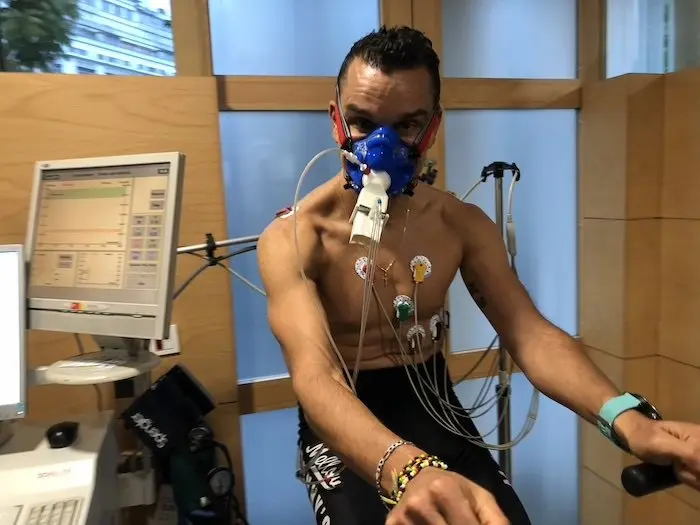
A Parameter that has become indispensable in training programming
In the field, cycling teams integrate this data into the design of specific training sessions. By adjusting the intensity and duration of sessions according to individual lactate thresholds, coaches maximize each athlete’s effort tolerance. This results in improved energy efficiency, endurance, and the ability to maintain peak performance over long distances. It should be noted that studies show a significant reduction in the risk of overtraining when training plans are based on precise lactate data, with a decrease of more than 20% in fatigue-related injury risks.
To conclude
Lactate measurement offers an intimate look into the physiology of cycling performance. By understanding how the body reacts to intense effort, coaches can personalize training for each rider, paving the way for previously unexplored performance peaks. Teams that have adopted a lactate-based approach have seen an average increase of 15% in individual performance in long-distance endurance events. Lactate, far from being an enemy, thus becomes the indispensable companion for cyclists on their path to excellence.
=> SEE ALSO : All our Coaching articles
Share the post "Lactate in Cycling: Deciphering a Key Performance Indicator"