Share the post "Long-Term Test of the RAR Even 50 Wheels and the Even 50/Magnum 60 Combo"
In 2023, choosing a set of wheels is becoming increasingly complicated: aerodynamics, weight, price, and reliability are the main criteria to consider. We continue our exploration of the RAR wheel lineup after covering the lightweight EXALT model, the EVEN 40 with brake pads, and the Magnum. The comparison presented here showcases and compares the EVEN wheels with the two available hub lines and two rim height combinations.
By David Polveroni – Photos: DR

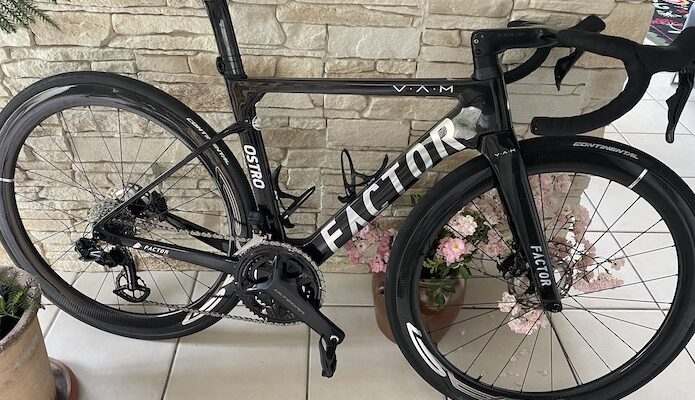
While the Exalt 20 or 40 mm models are priced beyond the reach of some budgets, RAR has something for everyone—or rather, a wheel for every bike—with the Even series, available at a more entry-level price of €1,399 for the clincher version. But how do these wheels stack up against a more advanced pair of Even wheels with different hubs priced at €2,199? That’s what we discovered over the course of 10,000 km, with wheels mounted first on a Factor O2 and then on an Ostro VAM, on everything from rolling terrain to a Tour du Mont Blanc (which we won!).
The 50/60 Combo (Even/Magnum)
The first pair is the one I used most of the time during training. It consists of an Even rim on the front and a Magnum rim on the rear. Or, to be more precise, a 50-mm rim and a 60-mm rim. With First hubs, for a retail price of €1,399.

Weighing 1,610 g, it can’t be classified as either a lightweight or a heavy wheel. It’s equipped with First V2 hubs, a second-generation hub designed by RAR. The first thing that stands out is the aesthetics of these wheels, which really enhance the look of a bike. And aesthetics are very important when you consider the impact of mental state on performance…

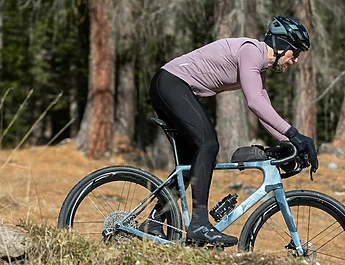
Many people think that a pair of 50/60 wheels is unusable in the mountains. I decided to take the opposite approach by using them in all my training sessions, which sometimes included very mountainous routes. The trend that’s emerging is that, yes, these wheels are harder to get going again—at least in terms of how they feel compared to a lighter, more nimble pair. They’re easier to ride with a 34/30 chainring ratio on a mountain pass, rather than having to deal with sudden jolts when standing up on the pedals. But what’s the point of lugging these wheels around on mountain passes, you might ask?
For one thing, I find it interesting to start with wheels that are harder to get moving and then switch, during a race, to a lighter model (the Even 50/50, for example, or even better, the Exalt). But I’ve also used this combo in races, like the GF BGY Airport in Italy. Because, depending on the terrain, having about fifty grams extra in the rear rim can make things a lot easier on all the fast, rolling sections or descents. The first thing that stands out about this pair is how easily they pick up speed on straightaways. Logical, you might say, but here, that logic is perfectly evident. You can easily and quickly build up speed on straights to 70–80 km/h. They also helped me in that last race, for example, during a 20-km headwind section on a downhill course, allowing me to catch up alone to a group of several riders. So these are wheels that can compensate for your weaknesses.
That’s the main reason why it makes sense to choose a 60-mm rear wheel. I’ve also never had so much fun on a descent like the Lautaret, for example, with a bike that handled perfectly—as if it were on rails—and sliced through the air while saving a few watts in preparation for the climb up Alpe d’Huez, for instance. I’m talking here about mountain riding, but for those who ride on flat terrain, these wheels are pure joy. You could optionally add a pair of lightweight Eso hubs from RAR, for an additional cost of €800, which reduces the weight by 60 g. Is the extra cost worth it? That’s the eternal question I still can’t answer, even after this test. The First hubs are a model of efficiency and durability. Washing them with water didn’t damage the bearings, and they’re still as good as new. So if you’re on a mission to shave off every gram and can treat yourself, go for the top-of-the-line model; otherwise, the wheels with the basic hubs will do just fine!

The 50 mm Even wheels
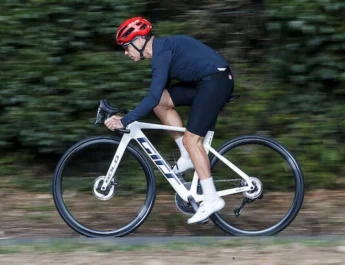
The second pair we tested—50 mm Even wheels front and rear, paired with the higher-end Eso hubs—was the one we used for Granfondos and a few more intense training rides. Switching between the two sets of wheels always highlighted the following difference: the RAR 50s are easier to handle and more dynamic, but don’t pick up speed as easily on descents.
Otherwise, they’re essentially the same type of wheels. This is the pair I’ve used for challenging cyclosports like La Marmotte, L’Étape du Tour, and the Tour du Mont Blanc. These wheels strike a pretty nice balance. Weighing in at 1,380 g, they’re still relatively easy to handle—less so than ultra-light wheels, for example—but they’re in a different league altogether.

They retain enough aerodynamics for races where you might find yourself riding alone for long stretches and where air resistance is therefore a key factor. These wheels pair perfectly with modern bikes like the Factor Ostro. That’s because a relatively stiff frame will deform slightly soft wheels, which isn’t the case here thanks to the ultra-sturdy design of the RAR Even wheels. This underscores the importance of properly matching your wheels to your bike.
Ultimately, the Even 50s are highly versatile wheels on all terrains, even for powerful riders who put out high wattages. The 50/60 combo is more specialized, but can be useful for addressing certain shortcomings during long, rolling sections. In both cases, the price difference between the version with First hubs at €1,399 and the version with Eso hubs at €2,199 is justified only by the 60-gram weight difference. It’s up to you to decide if that’s essential for your riding style.
The RAR Even 50 and Even/Magnum wheels at a glance… Rating: ***** Pros: versatility, stiffness, price, finish, performance, reliability 50 mm or 60 mm tall carbon rims with Magnum rear wheel—18 mm internal width / 25 mm external width—tube and tubeless tire compatibility – Spokes: 24 front/rear, 3-cross lacing – RAR First hubs – Weight: 1,440 g (with RAR First hubs), 1,380 g (with RAR Eso hubs), 1,610 g with Magnum rear wheel and First hubs – Includes: rim tapes, quick-release skewers, tubeless valves, and wheel bags – Options: RAR Eso hubs (+€800), with or without ceramic bearings – Price: 1,399 € Contact: roues-rar.fr |
=> SEE ALSO: All our Test Articles
Share the post "Long-Term Test of the RAR Even 50 Wheels and the Even 50/Magnum 60 Combo"